Monthly Archives: November 2012

it cannot be right for the Court of Appeal to be asked to case manage cases retrospectively.

A discussion of Re G (A child) 2012 EWCA Civ 1377

This is a recent Court of Appeal decision (and in light of my recent grumblings about the delay between summaries of decisions and the full judgments being made available, I note that the decision was made on 31st October and the judgment was available by 5th November, so kudos to those involved. 

Mild grumble,  not aimed at this case specifically we seem to be getting a raft of  RE something (a child)  2012 decisions, and a more descriptive title might not go amiss. Otherwise we will have nine Re C (a child) 2012’s and no easy way of distinguishing them save the case number, which is slightly cumbersome.)


I tread carefully on this, because I know many, though not all of those involved on a professional level, and have a great deal of respect for all of them. As luck would have it, I don’t really have to criticise any of the people involved.


The title is taken from a quotation from the Judgment, but was coined by Mr Adam Smith of counsel, and is a phrase which I am as taken with as Munby LJ clearly was. At the risk of increasing his ego, Mr Smith is a splendid fellow.


It goes to the heart of this case, and is the important principle that lifts it from being a very case-specific decision. 


The judgment can be found at


http://www.bailii.org/ew/cases/EWCA/Civ/2012/1377.html


The appeal essentially related to an aunt, who was putting herself forward to be a carer for a child. The aunt had certain disabilities and it was decided at an interlocutory hearing that the assessment of the aunt’s direct care of the child should take place at the mother’s home (that being where the child was living) with certain modifications taking place.


  1. By February 2012 the position had been reached that assessments were being awaited on the mother (who at that stage, subject to assessment, was supported by the children’s guardian as a potential carer for T) and the aunt. There was an issue as to where the aunt’s home assessment with T was to take place. It was resolved by Judge Coates at a hearing on 16 March 2012. I quote from her judgment of 9 October 2012:

“In March it was argued that [the aunt] needed to be assessed in a home environment of her ability to care for T – this court determined it should take place at [the mother’s] home and required the local authority to put in handrails to accommodate [the aunt’s] difficulties. [She] argued assessment at the maternal grandmother’s home and forcibly argued the position and I determined where the assessment should take place.”

The order made by Judge Coates was in the following terms:

“provided the appropriate handrails are fitted to [the mother’s] property the assessment of [the aunt] will take place only at [the mother’s] home and not the home of the maternal grandmother.”

The assessment never took place. Judge Coates explored the reasons why at the hearing in September 2012. As she explained in her judgment:

“I have heard evidence as to what happened thereafter … the evidence of what happened when builder came to do the adaptation that [the aunt] sabotaged the attempt to put in handrails and therefore her assessment could not be progressed.”


Certain findings were made, having heard the evidence as to whether the aunt had ‘sabotaged’ the assessment being able to take place in the mother’s home, and whether she was in a position to provide care to the child.  At final hearing a Care Order was made, the appeal immediately lodged, and a stay granted whilst the appeal was dealt with.


The Court of Appeal dismissed the majority of the appellant’s grounds, without difficulty. They were clearly matters which the Judge had heard evidence on, and that the Judge had assessed the evidence and made perfectly proper conclusions.


  1. That takes me on to the second of Ms Phil-Ebosie’s complaints, which goes to what are said to be various errors on the part of Judge Coates in relation to the aunt’s assessment. It is said, first, that Judge Coates failed to consider whether the assessment she directed on 16 March 2012 was compliant with the 2010 Act; second, that she was wrong to find that the aunt had sabotaged that assessment; third, that she failed to appreciate that, in the absence of such an assessment, she lacked sufficient evidence to reach a decision that the aunt could not care for T; and, fourth, that she was wrong to refuse to permit a risk assessment of the aunt in the light of the outcome of the fact-finding hearing. In short, it is said, Judge Coates should not have proceeded to a final determination of the care proceedings without first directing further assessment of the aunt. The aunt, says Ms Phil-Ebosie, has not been properly assessed.
  1. In my judgment there is no even arguable merit in any of these complaints.


….


  1. The two final parts of this complaint are linked, since both assert that Judge Coates’s determination of the care proceedings was premature, given the need, so it is said, for further assessment of the aunt. There is, in my judgment, no arguable basis of challenge on either point. It was for Judge Coates, as the judge managing the litigation and conducting the final hearing, to determine what assessments were going to be needed for that hearing and then, if the point arose again during the final hearing, to satisfy herself that she had all the evidence she needed – all the assessments she needed – to determine the issues fairly, justly and in accordance with the law. That is an evaluative task that the law imposes on the case management judge. Indeed, it is an absolutely central task of the case management judge, for it may well determine the shape of the final hearing. But this court can intervene only in limited and well recognised circumstances: only if (I put the matter generally) the judge has erred in law or in principle, has denied the applicant a fair trial or has come to a decision that is “plainly wrong”. In my judgment, there is simply no arguable basis for any such complaint here. This was the decision of a very experienced judge who had available to her, moreover, a mass of expert evidence, including evidence of various assessments of the aunt. I find it unsurprising that, in the circumstances she described in her judgment, Judge Coates should have concluded that further assessment was unnecessary as well as being inconsistent with T’s need for a settled placement without further delay.
  1. It is essential that appellate courts do not too readily interfere with seemingly sensible and appropriate case management decisions of judges who, in the nature of things, are likely to have a much better ‘feel’ for the case than an appellate court can ever have. Those seeking to appeal such decisions must heed not only the well-known decision of the House of Lords in G v G (Minors: Custody Appeal) [1985] 1 WLR 1 WLR 647 but also what ought to be, but I fear is not, the equally well-known decision of the House of Lords in Piglowska v Piglowski [1999] 1 WLR 1360, and in particular the speech of Lord Hoffmann.
  1. The third, and final complaint, is that Judge Coates failed to identify clearly in her judgment what the risks were of placing T in his aunt’s care and why those risks could not be managed without his removal from her care, just as she failed, it is said, to identify which of T’s emotional and other needs the aunt could not meet. For her part, Ms Lee submitted that Judge Coates also erred in giving insufficient consideration to the impact on T of separation from the birth family at this stage in his life and provided insufficient grounds to justify approving the plan for adoption. I do not agree. The judgment more than adequately explains Judge Coates’s concerns and the basis of her decision. There is, in my judgment, no arguable basis for any complaint that Judge Coates erred in her evaluation of the relevant factors or that she failed adequately to explain her reasoning. Were this court to interfere here it would be doing the very thing that Lord Hoffmann has emphasised it must not.


It is always pleasing to this writer to see the Court of Appeal honestly and rigorously applying the principles of Piglowska and G v G, which sometimes (in my humble opinion) are given lip-service before the appellant Court replace a Judge’s conclusions with their own.


The Court of Appeal were with the appellant on one point :-


  1. The first alleges breaches of various duties arising under the Equality Act 2010. It is common ground that the aunt is disabled within the meaning of section 6 of the Act. What is said is that the local authority was in breach of its duties under sections 20, 29 and 149 of the Act. The facts relied on are common to all three alleged breaches: the aunt’s complaint as spelt out by Ms Phil-Ebosie in her skeleton argument is that “the local authority refused to assess her capacity to care for T at her own home”, despite it being adapted for her needs, and “asked [her] to undertake a capability assessment at a venue” – the mother’s house – “that had not been adapted to her needs.” The proposed installation of handrails at the mother’s house was, she says, a “token gesture”, given that the aunt’s house is fully adapted with a range of equipment to assist her everyday life.
  1. This is, in my judgment, quite unarguable as a ground of challenge to Judge Coates’s order. I am not concerned with, as it were, a challenge by way of judicial review to some decision of the local authority. The matter before me is a challenge to the order made by Judge Coates on 9 October 2012. Moreover, the factual premise which underlies this ground of complaint is simply wrong. It was Judge Coates, exercising her judicial discretion in the context of the pending care proceedings, and not the local authority, who decided both where the assessment was to take place and what adaptations to the mother’s house were required. So the challenge, if there is to be one, must be to Judge Coates’s decision.


The Court of Appeal then looked at whether that case management decision was appropriate, and whether the challenge stood up to closer scrutiny.


  1. Judge Coates was plainly justified in finding that the necessary assessment was, from T’s point of view, better conducted away from the maternal grand-mother’s somewhat dysfunctional household and on territory that was more familiar to him. Judge Coates was aware of the need to accommodate the aunt’s disability and did so, in what seemed to her, having heard argument, to be the appropriate way, by directing the fitting of handrails. Even if more was sought by way of alteration to the mother’s house (and it is far from clear it was) there is, in my judgment, no sensible basis of challenge to the order which Judge Coates made on 16 March 2012 – an order which, it is to be noted, was neither challenged at the time nor subsequently. Moreover, it is apparent that the detailed arguments under the 2010 Act which the aunt now seeks to put forward were deployed for the first time at the hearing before me on 12 October 2012. I do not criticise Ms Phil-Ebosie but this is no way in which to conduct care proceedings. As Mr Smith put it, and I entirely agree, it cannot be right for the Court of Appeal to be asked to case manage cases retrospectively.
  1. The finding that the aunt had sabotaged the assessment was a finding on a matter of fact on which Judge Coates heard evidence. Judge Coates was ideally placed to evaluate the evidence, including in particular the evidence of the aunt, and was plainly entitled to find as she did. This finding of fact is unassailable.


The Appeal was therefore refused.


The key issues from the case for practitioners are therefore that arguments about Equality Act issues have to be deployed when the case is being argued and before the decision is made, if they are to give winnable grounds for an appeal. Second, that if a case management decision is made that fundamentally devastates your case, you need to consider the appeal at that point and not wait for the final hearing for orders to be made on the foundations laid down at that interlocutory hearing.   And more broadly, that you can’t reserve your best arguments for the Appeal process, you have to lay them out before the Judge determining the case.
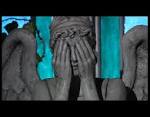

Whatever you do, don’t blink

An imaginary judgment, that will make largely no sense to you if the title above doesn’t already resonate.  [In fact, it may well be utterly unintelligible, if you don’t already know what a Weeping Angel is. sorry]


This is a most vexed and unusual  Children Act case, involving a, well, one cannot definitively say ‘child’ as that is itself litigious, and one cannot say ‘young person’ as that too is litigious.

I shall use those terms, as I will ‘mother’ and ‘daughter’ although those matters too fall to be determined. The ‘mother’ in the case, and from this point on, I shall omit the quotation marks, does not strictly speaking have a name, although all have decided to call her Eleanor Acquitane.


At the risk of a terrible pun, and I am afraid it may not be the last, she has cut a statuesque figure.

That is because, to the naked eye, she is a statue, or at least she has that appearance to our eyes. She is, however, a lifeform. The Court has been advised by Mr William Compton of counsel, representing her, that she is a lifeform of a sentient species known as Weeping Angels.

As is often said, by counsel representing parents “My client is no angel” but in Mr Compton’s case, she is. The ‘child’ in question ‘C’ is also in appearance a cherubic infant statue.

The Local Authority claim the following about Weeping Angels

1. That they are sentient and capable of reasoning

2. That whilst looking at them, they appear to be statues, or possibly even that they turn to stone whilst you are looking at them

 3. That they cannot move whilst you are looking directly at them

4. That they become ambulatory, and vividly so, if you are not looking directly at them. They can move considerable distances in the blink of an eye.

5. That they do something to human beings, if allowed to close that distance, which removes them from existence.


It is hard to say ‘kill’ as no body is found for analysis, nor any chemical substance which could be analysed for remains. There is some speculation that what actually occurs is that the person is sent back in time, but obtaining hard evidence for this is difficult. For my part, if I am sent back in time, I hope that it is to the Sixties, where I intend to forge a career as a song-writer and professional gambler.

The Local Authority contend that these matters, taken in their totality, mean that Eleanor Acquitane is not suitable to care for C and that C will be exposed to significant harm, including witnesing some form of murder on a frequent basis.

Those representing Eleanor Acquitane accept points 1-4, but refute point 5.

They also challenge a number of matters which would ordinarily be taken for granted in an application under the Children Act.

Those are the following:-

1. That the relationship between Eleanor and C can be described in any way as that between parent and child.

2. That C is in any way a child

3. That C needs any care at all

4. That the Children Act applies to Eleanor and C in any way

5. That the habits, customs and traditions of Weeping Angels are such that to attempt to judge them and critique them by human standards and mores would be as ridiculous as trying to judge a lion by the standards of a polite Kensington dinner party.

These facts are clear.

(a) Eleanor and C had been living in a London park.

(b) They moved from that park, on or about June 6th 2012

(c) They moved to a vacant flat in the Local Authority’s area

(d) Initial professional visits to the flat, following referrals, resulted in no reports being completed after the visits, and staff never being seen again.

(e) An interim care order was made on 12th July 2012, and C taken into foster care. I have heard vivid evidence about the logistical and practical difficulties in executing that order, and the Court would wish to offer sympathy to the families of the four workers who are sadly no longer with us

(f) In the short intervening period, C has had seven foster placements.

I heard evidence from the current foster carers, who have to watch C at every moment of the day and night, never taking their eyes off her in case she moves and does whatever it is that Weeping Angels do (even their infants, offspring, ‘prima facie younger versions’ do this).

This has been understandably a strain and a difficulty on them, and the momentary loss of concentration that was a prelude to Uncle Martin’s disappearance has added to that burden. It is unique, in my view, for a Court to hear from a witness in care proceedings whose final words to the Court are “For God’s sake, free us from this living hell”

(g) A psychologist was appointed to assess C and Eleanor Acquitane. The report was never completed. It was a shame that the psychologist had conducted the interview alone, and that he had declined all sensible advice to have an additional eight persons present, all fixing their gaze firmly on C and Eleanor at all times.


I have been presented with a report, which was published in a science-fiction magazine named “Mind-Expanding Tales of Wonder” in 1977, which purports to be the psychological assessment of Eleanor and C.

I have been invited, by Miss Pond, for the Local Authority, to take this into account and treat it not as fiction, but as the actual report in the case, genuinely written, as it claims, by the psychologist who had been thrown backwards in time after the Weeping Angels reached him.

I find it difficult, on basic principles of evidence, to accept that a science fiction story written in 1977 can be, in fact, a factual report which the Court directed to be prepared in 2012.

Of course, the coincidences in the fictional publication are manifold and surprising. Miss Pond pointed them out to me, and they included that the author’s name was that of our psychologist, that the descriptions of Eleanor and C (and their names) was accurate, that the article names myself as the Judge, and so forth.

Those matters are on the face of it compelling, as is Miss Pond’s submission that what has happened to all of the people who have vanished after taking their eyes off C or Eleanor have actually been sent back in time.


Mr Compton concedes that this is a possibility, and given that the other accusation against his client is that she has been disintegrating these innocent professionals attempting to do a difficult job, one can see why he would be swayed towards that explanation.

He does firmly say that without the opportunity to cross-examine the psychologist, and the uncertainty about whether the ‘story’ can genuinely be the report itself, the Court could not realistically give weight to what purport to be expert conclusions of “Both are incredibly dangerous, and the only thing to do is ship both to Antartica and hope the world never sees either of them again” .


For my part, I did not need a great deal of encouragement not to adopt those recommendations or conclusions. On the balance of probabilities, the coincidences in the ‘story’ with the facts of the commissioned report are just that, coincidences, and it would be manifestly unfair to treat them otherwise.

I have, therefore, to proceed on the basis of there being no psychological evidence before the Court, there being no-one else willing to undertake it. I should recount the unusual arrangements at Court.

It would not be safe, for anyone, on the little we do know, for Eleanor Acquitane to sit behind Mr Compton in the traditional way.

That would leave my eyes as the only ones on her, and expose Miss Pond and even Mr Compton to inordinate risk, should I have had to look at a document, or wipe my glasses, or blink.

She has therefore spent the entireity of the hearing in the witness box, and those at the bar have taken it in turns to watch her, as the saying goes, like a hawk.

I come now to the central issues in the case, as delineated by Mr Compton.

He does not dispute that IF his client were human, and C were her child, and C was witnessing at best the disappearance of other humans around her on an almost daily basis, then the threshold would be satisfied and that his client would have a mountain to climb in terms of persuading the Court not to make a Care Order.

However, as he points out, she is not human. And the Local Authority have not been able to prove that C is a child at all. She is certainly not a human child.

It has not been possible to age her – there are no dental records, and those who have seen her teeth (which happens only after a short blink or removing ones gaze) have no wish to attempt to obtain any dental examination of them. Mr Compton contends that whilst C has the outward appearance of a young cherub or infant child, the Local Authority simply cannot prove this.

Nor can they prove that C and Eleanor have any biological connection, still less that of mother and daughter. His client insists that their relationship is close to that of comrades, or colleagues and not a parent and child dynamic at all. C is entirely self-sufficient and does not require parental care. He states that the experiences of the foster carers, chilling though they are, show that none of the things that a human infant would need are needed by C, and that she is more than capable of ‘feeding’ if feeding is what is being done when ungazing people around her vanish.

It is not possible to establish the relationship by DNA testing. Firstly, it is entirely possible that both C and Eleanor do not in fact have any DNA. Secondly, rather than a swabbing process, the only way a sample could be taken is by drilling into the skin of C and Eleanor, and that is not something that the Court could sanction.

I have to consider, of course, whether the Human Rights Act applies to this case at all; and that has proven to be problematic.

On the face of it, if as Mr Compton contends (and as seems clear from the evidence) his client is not a human, she would appear to not have the protections that the Human Rights Act offers. But, says Mr Compton, one must look at the wording of Article 6, for example

ARTICLE 6 RIGHT TO A FAIR TRIAL

1. In the determination of his civil rights and obligations or of any criminal charge against him, everyone is entitled to a fair and public hearing within a reasonable time by an independent and impartial tribunal established by law. Judgment shall be pronounced publicly but the press and public may be excluded from all or part of the trial in the interest of morals, public order or national security in a democratic society, where the interests of juveniles or the protection of the private life of the parties so require, or to the extent strictly necessary in the opinion of the court in special circumstances where publicity would prejudice the interests of justice.

And

ARTICLE 8 RIGHT TO RESPECT FOR PRIVATE AND FAMILY LIFE 1. Everyone has the right to respect for his private and family life, his home and his correspondence. 2. There shall be no interference by a public authority with the exercise of this right except such as is in accordance with the law and is necessary in a democratic society in the interests of national security, public safety or the economic well-being of the country, for the prevention of disorder or crime, for the protection of health or morals, or for the protection of the rights and freedoms of others.

 Mr Compton submits  that the key word there is ‘everyone’ and that there is no stipulation that such rights are limited to humans. It does not say “Everyone who is a human being

It is true that within the Act, there is no definition of human. It was reasonable, at the time it was written, for the Parliamentary draftsmen not to anticipate that we would be sharing our planet with another sentient race. But here we are.

The Human Rights Act, Miss Pond says, clearly, even if it does not spell it out in statute must only apply to humans, and that applying the logical consequence of it applying to any living being that it does not explicitly exclude, the State would owe ants a right to private and family life. The Act, she says, applies to humans and humans only. Should Parliament wish to extend rights and protections to Weeping Angels, they would have to bring that about with fresh legislation.

Similar arguments extend to whether the Children Act 1989 gives the Court any jurisdiction at all on C.

And here, the parties reverse their positions.

Mr Compton says – his client is not human, the Act is intended only for human children, and that to widen its scope would be analogous to making Interim Care Orders for puppies and kittens.

Miss Pond says – the precise wording of the Act defines “child” as (s105) a “person under the age of 18” and that the Court may determine on the balance of probabilities that C, given her appearance is a person under the age of 18.

(This seems to get the Court into ‘age-assessment’ territory, and I have been kindly taken to the wealth of caselaw on that point, almost all of it concerning Croydon. It is fair to say that I am not particularly helped on how to age a child who has the outward appearance of a statue. As Mr Compton readily points out, if one asks how old the Statue of Eros is at Piccadilly Circus, one is more likely to answer that it is about a hundred years old than that it is about five months old)

Even if I overcome the thorny issues of whether the Human Rights Act and the Children Act apply to this case; and it seems to me that they either must BOTH apply or neither can apply – the Court cannot cherrypick on ‘the spirit of the law’ versus the ‘letter of the law’ and apply that differently on the two different Acts.

Either the Acts intend to cover only human beings though neglecting to make that transparently plain or a narrow construction of the law that it does not exclude other sentinent and conscious beings is right. I will come to that later.

But even once that is resolved, one is left with the issues of whether it is an essential part of the character of Weeping Angels to make humans disappear, and whether depriving C of that culture is to go against nature itself. Is it part of their essential make up, just as dreaming, hoping, wishing or worrying is part of our essential make up as humans? What sort of life is there for C in care, with those charged with caring for her being actually terrified of her every minute of the day and night and there constantly being the fear that the placement will break down, if she ceases to be observed for even a second or two, and vanishes her carer?

Is there, in short, as Mr Compton argues, a compelling case for striving to understand that a human trying to care for a Weeping Angel would a fruitless exercise doomed to failure. As Wittgenstein observed – if a lion could speak, we would not understand what he had to say.

Fortunately for all of these thorny issues, I have arrived at a very elegant solution and one which will please everybody.

Erm, I would ask counsel to not look at me whilst I am delivering this judgment. I appreciate that it is Court etiquette to do so, and no doubt ingrained into you all, but….

I am afraid I have been looking at my notes, and you have been looking at me. And now Miss Acquitane is no longer in the witness box and is only four inches away from me. Her teeth are very sharp. Everyone, don’t blink. Whatever you do, don’t blink

TAPE ENDS


[Writing this led me into the curious mental debate about what would happen if a Judge delivered a judgment but passed away before the order could be drawn up? Are the findings binding? How far into the judgment does a Judge have to survive into for it to be intact? What if she or he makes findings on seven of the ten allegations but passes away mid sentence before moving on to the eighth? Does the whole thing get re-tried, or only the last three allegations? If anyone knows, please tell me, because I have the sort of mind that worries about these things.  What if they’ve written the judgment down, but they die whilst reading it out?       On the unlikely event of there being any Judge who reads this blog, I am incredibly sorry to have expressed such macabre thoughts about you and your job, and rest assured, I wish you nothing but well, and that you get to the end of all of your judgments intact. ]