Author Archives: suesspiciousminds

Taking neglect seriously


Some interesting research about children’s timescales and the Court process, which has been conducted by the Childhood Wellbeing Research Council. It is the first piece of the research that was commissioned under the Family Justice Review, and therefore worthy of attention.  (More attention than it has received)


It is heavy, and I can’t say yet whether its conclusions will necessarily be unchallenged, but it is, I think, for the first time, a proper drawing together of all of the important research on delay, decision-making, impact of neglect on children and attachment issues.  If the other pieces of FJR research are going to be as important as this, I will be a very happy law geek.


http://www.cwrc.ac.uk/news/documents/Decision_making_within_a_childs_timeframe_Oct_2012_CWRC_WP_16.pdf


It is long and detailed, so my cursory summary of it is absolutely no substitute for reading it.  It also contains some important research about the impact of child abuse, particularly neglect, on children.  A lot of it is pulling together of research that is already out there, but might be less widely known than it should be.


1.1 This overview of research evidence has been commissioned in response to the Family Justice Review recommendation for consistent training and development for family justice professionals, including a greater emphasis on child development. It aims to bring together key research evidence to facilitate understanding among professionals working in the family justice system in areas relating to:

  • · neuroscience perspectives on children’s cognitive, social and emotional development;
  • · the implications of maltreatment on childhood and adulthood wellbeing;
  • · evidence concerning the outcomes of interventions by the courts and children’s social care; and
  • · timeframes for intervening and why they are out of kilter with those for children.


I am hoping to whet your appetite to read the research, because this is some big important stuff.  (I will stop nudging you in the ribs at some point, but really, this needs to be read)


 1.19 While the issues covered in this chapter are intended to help the reader develop a critical approach to the understanding of research findings they should not detract from the value of the research itself. The following chapters consider robust findings from a number of well received research studies into parents’ problems and the impact of abuse on early childhood development; family justice professionals need to be aware of this research, particularly because it points to the importance of making timely decisions when children are suffering, or likely to suffer, significant harm.


We start with some basic principles  (the first few are of the “no-s*** Sherlock variety, but the last two are perhaps startling to see in such stark form)


Summary points

  • · Children growing up with parents who experience problems such as mental illness, learning disability, substance misuse and domestic violence are at greater risk of being maltreated.


  • · Not all parents with these problems will abuse or neglect their children; however these factors interlock in complex combinations which substantially increase the likelihood of maltreatment.


  • · Protective factors such as the presence of a non-abusive partner and/or a supportive extended family, parents’ ability to understand and overcome the consequences of their own experiences of childhood abuse, their recognition that their adverse behaviour patterns constitute a problem and their willingness to engage with services can substantially reduce the likelihood of maltreatment.


  • · Where insufficient protective factors are present, parents’ problems can undermine their ability to meet the needs of their children and inhibit the child’s capacity to form secure attachments.


  • · Healthy child development depends on the child’s relationships, and particularly their attachment to the primary caregiver.


  • · The process of attachment formation begins at birth. The four basic attachment styles: secure, insecure ambivalent, insecure avoidant and disorganised illustrate different adaptive strategies in response to different types of caregiving.


  • · Up to 80% of children brought up in neglectful or abusive environments develop disorganised attachment styles. These children behave unpredictably and have difficulty regulating their emotions.


  • · Disorganised attachment is strongly associated with later psychopathology.


This is interesting :-


The risk of recurrence (of child abuse) was reduced when medical and/or legal services were involved.


So the PLO may have been onto something, when they wanted to draw lawyers for parents into the process earlier – it is just a shame that the funding system means that they really can’t come in until proceedings are almost inevitable, rather than at the Initial Assessment process, when legal advice could make a real difference.


The mitigating value of protective factors

2.10 There is substantial evidence that certain protective factors can interact positively with parental problems to mitigate their impact, thus reducing the likelihood of maltreatment and improving the chances of better long-term outcomes for children. Jones and colleaguesidentified the following factors to be particularly pertinent: the presence of a non-abusive partner; the presence of a supportive extended family; parents’ adaptation to their own experience of childhood abuse; parents’ recognition that there is a problem and their willingness to take responsibility for it; and parents’ willingness to engage with services.


Whilst these are all things that we intuitively look at in care proceedings, it is helpful to see that the things we take for granted as common sense protective factors actually are.  And the phrase ‘insight’, which we hear so often, really is instrinsically bundled up in this.


[I do wonder, on a 26 week timetable, how the “Ostriches”  – those parents who bury their heads in the sand and pretend none of this awful situation is happening to them, before finally realising, will fare.  I suspect that there will no longer be enough time to turn the Ostrich cases around to a positive outcome]


2.11 Cleaver and colleagues40 have provided a comprehensive analysis of the manner in which, where there are insufficient protective factors, parents’ problems can impact on parenting capacity and trigger maltreatment and poor child outcomes. To summarise:


  • · Parental mental illness can seriously affect functioning. For example someone suffering from schizophrenia can experience delusions and hallucinations and be preoccupied with a private world. A person who is depressed can have feelings of gloom, worthlessness and hopelessness, which may mean that everyday activities are not carried out. Mental illness can blunt parents’ emotions and feelings towards their children, cause them to be emotionally unavailable or behave unpredictably, or occasionally cause them to be violent.


  • · Learning disability can affect parents’ capacity to learn and retain the new skills that are necessary to parent a child. Parents with a learning disability may also have had a negative experience of their own childhood which can leave them with low self-esteem and a poor sense of self-worth. Consequently, parents with learning disabilities and their children are vulnerable to financial and sexual exploitation, domestic violence, harassment and bullying.


  • · Parents who abuse drugs and/or alcohol can be subject to erratic mood swings, paranoia and hallucinations, or feelings of elation and calm, diminished concentration, memory impairment and a loss of consciousness. This can leave them unable to: meet the basic needs of their children, be emotionally available to them or at times keep them safe.


  • · Being the victim of domestic violence is likely to undermine parents’ self-esteem and confidence in their parenting skills. Such parents may have their attention focussed on the necessity to placate the perpetrator rather than on their children’s needs. They may not be able to protect those of their children who get caught up in or witness an attack from physical abuse and emotional trauma. Perpetrators of domestic violence are likely to cause physical and emotional harm to their children as well as to their partners.


2.12 Behaviour patterns such as these undermine a parent’s ability to meet their children’s needs. They have a particularly damaging impact on the child’s emerging capacity to form attachments.


The report then goes on to specifically look at attachment issues – I think lawyers (and perhaps some others in the family justice system) are often a bit muddled about attachment, and what the significance or otherwise of it is.  I often see it being conflated with an concept of whether the parent loves the child and vice versa. If you know a bit about attachment theory, not much of this is new, but it is helpful to have it pulled into one place and be able to take the Courts to this one document.


The importance of a secure attachment base for healthy child Development


Young children experience their world as an environment of relationships, and these relationships affect virtually all aspects of their development – intellectual, social, emotional, physical, behavioural, and moral.


2.13 Healthy child development depends on the establishment of these relationships. Early secure attachments contribute to the growth of a broad range of competencies, which can include: a love of learning; a comfortable sense of oneself; positive social skills; multiple successful relationships at later ages; and a sophisticated understanding of emotions, commitment, morality, and other aspects of human relationships.


2.14 Howe asserts that, biologically, attachment is a means of survival. It is defined as proximity seeking behaviour to an attachment figure, the primary caregiver, by a baby or child when he or she experiences discomfort such as pain, fear, cold or hunger.This behaviour is instinctive and is based on the assumption that the primary caregiver will be able to reduce the discomfort.


The baby gradually constructs an internal working model of themselves and of their primary caregiver on the basis of their caregiver’s responses to their attachment needs:

These mental representations refer to the kind of memories, experiences, outcomes, feelings and knowledge about what tends to happen in relationships, particularly with attachment figures at times of need.


2.15 Thus, the primary purpose of an internal working model is to help regulate the negative emotions of fear, distress and anxiety triggered when a child feels insecure.


2.16 The process of attachment formation begins at birth. A newborn infant seeks care and protection through proximity to their attachment figures. Following birth, a baby is instantly alert to messages they receive about the world around them, such as those reflected in the face of their caregiver(s) and the way in which their urgent needs are met. From about the age of three months a baby is increasingly selective and begins to smile less readily for strangers, tending to target their attachment behaviours more accurately towards their significant carers. By the age of six to seven months, an infant can generally show a clear cut attachment to their primary caregiver(s), and will show distress and anxiety about being separated from them. For instance, infants of this age become less likely to tolerate being held by strangers. However, from this point onwards a securely attached infant is able to use their caregiver as a secure base for exploration.


2.17 During toddler and pre-school years children learn to define themselves and others in increasingly sophisticated ways. They develop their locomotive skills, their cognitive capacity, their communicating and negotiating abilities, and increase their knowledge and understanding of the perspectives of others. A child’s secure foundations from infancy help them to achieve these developments.


2.18 Researchers have identified four basic attachment styles, each relating to the type of caregiving received. These are: secure, insecure ambivalent, insecure avoidant and disorganised. Each of these styles of attachment illustrates different adaptive strategies in response to different types of caregiving, and are developed by children to enable them to ‘stay close and connected to their attachment figures at times of intense negative arousal’.


Whilst these categories are very useful in facilitating understanding of different attachment styles, it should be noted that in real life they are not entirely discrete entities; whilst some children will fall exclusively into one category, many children will show a mixed pattern of attachment behaviours, with elements of several styles present.


2.19 Children who are securely attached to their caregiver(s) have a relationship that is characterised by sensitive, loving, responsive, attuned, consistent, available and accepting care.51 Securely attached children have the ability to regulate their distress, either by themselves or by the knowledge that they can get help from their attachment figure should they need it.


2.20 These children develop internal working models in which they see other people as positively available and themselves as loved and likeable, valued and socially effective.Secure attachment styles are found in about 55% of a non-clinical population.


2.21 Conversely, insecurely attached children experience anxiety about the location of their caregiver at times of need, as well as uncertainty about the type and sensitivity of the response they will receive.55 There are three types of insecure attachment patterns, the avoidant, the ambivalent and the disorganised.


2.22 Children who develop an insecure, ambivalent pattern of  Attachment experience inconsistent caregiving. Their caregiver(s) tend to be preoccupied with their own emotional needs and uncertainties, and can be unreliable and emotionally neglectful. These children will exaggerate their attachment behaviour in an attempt to be noticed; in this they are not always successful, and their ambivalence reflects their simultaneous need for and anger with their attachment figures.56 About 8% of children in a non-clinical population display insecure ambivalent attachments.


2.23 About 23% of children develop insecure, avoidant attachment patterns.These children tend to experience parenting that is hostile, rejecting andcontrolling. They come to see themselves as neither loved nor loveable.They adapt to their caregivers’ rejection by over-regulating their emotions,and are anxious that any display of need, longing, vulnerability or emotionmight drive their caregiver(s) away.59


2.24 Some caregivers cannot regulate their child’s responses to stressful circumstances; as a result, their children experience feelings of danger and psychological abandonment.60 Children who are cared for by people who are frightening, dangerous and/or frightened develop disorganised attachments.61 These children may be fearful of approaching their caregivers because they cannot predict the response: sometimes they may be picked up and cuddled, but at other times they may be shouted at or smacked. As a result, these children are not able to ‘organise’ their own behaviour, and have difficulty regulating their emotions. Like their parents they may behave unpredictably. They develop highly negative and inconsistent internal working models in which they see other people as not to be trusted.


Disorganised attachment is strongly associated with later psychopathology.


There is consistent evidence that up to 80% of children brought up in neglectful or abusive environments develop disorganised attachments, although these are evident in only 15% of a non-clinical population.The effects of maltreatment on attachment behaviour will be discussed further in Chapters Three and Four.


Chapter 3 gets stuck into the neuroscience – what is happening with a child’s brain during early years and what are the effects of neglect upon child development?     I’ve felt for a while now that neglect is the poor cousin of child abuse  – it is really easy to understand and grasp the risks of sexual abuse, or a fractured skull, but neglect is so easy to minimise and belittle and so hard to get a firm grasp on  ‘what will happen to the child if this situation persists rather than improves?’


A lot of the neuroscience bit may be a bit fresher than the attachment theory previously discussed, and I think it is very important in the way we look at neglect. It may help Courts take neglect as seriously as it needs to be taken.


How the child’s relationships shape the development of the brain and the stress response system

Summary points

  • · Much of the development of the brain and central nervous system takes place after a child is born, within the first three years of life.


  • · The child’s environment of relationships – and in particular the relationship with the primary caregiver – plays a critical role in shaping the development of the overall brain architecture.


  • · Negative experiences, and in particular insufficient stimulation, adversely impact on the construction of neural connections which form the basis for cognitive and social development.


  • · By the time children are two, the foundations for their ability to speak and understand language, to reason and make plans have already been laid.


  • · Executive function skills, necessary for both learning and social interaction, begin to develop shortly after birth, with dramatic growth occurring between the ages of three and five years.


  • · There is a short window of opportunity for certain types of development. If the types of experience upon which they depend do not occur within a predetermined timeframe, children will not move on to the next stage of development and their long-term wellbeing will be compromised.


  • · Early interactions between the primary caregiver and the baby play a significant role in establishing the normal range of emotional arousal and in setting the thermostat for later control of the stress response.


  • · Both very high and very low levels of cortisol are indicative of abnormal development of the stress response and can cause long-term physiological and psychological damage.


[This last one is interesting, because it raises the possiblility of a biological/chemical test for neglect, that there’s a chemical which can be measured and considered whether it is in normal parameters – and I suspect Trimega and Trichotech are already contemplating the marketing for their Cortisol tests…  Are we ready for neglect to be determined by science?  There’s an entire blog post all on its own, I think]


3.14 The process of creating and strengthening or discarding synapses is the brain’s means of learning and the way in which a child responds to their environment. This process is often referred to as ‘plasticity’, a term that indicates the brain’s ability to change in response to repeated stimulation.


These repeated adaptations are made in response to a combination of genetics and experience. The brain is genetically pre-programmed to expect certain experiences and forms certain neural pathways to respond to them; the more the child is exposed to these experiences, the stronger the pathways become. For example, a baby’s brain is genetically preprogrammed to respond to voices. When a baby is spoken to the neural systems which are responsible for their speech and language receive the necessary stimulation to strengthen. If, however, they are not exposed to adequate stimulation through exposure to speech, the pathways which have been developed in anticipation of this exposure will be discarded:


All children need stimulation and nurturance for healthy development. If these are lacking – if a child’s caretakers are indifferent or hostile – the child’s brain development may be impaired. Because the brain adapts to its environment, it will adapt to a negative environment just as readily as it will adapt to a positive one.83


3.15 A child’s experiences greatly shape the quality of the architecture of the developing brain. Positive experiences, particularly in the first year of life, produce more richly networked brains. More neuronal connections produce better performance and more ability to use particular areas of the brain.


Conversely, as Chapter Four shows, negative experiences, and in particular insufficient stimulation, adversely affect the development of neural connections and have a negative impact on children’s cognitive and social development, their speech development and their learning and memory.


3.18 The sequence of brain development follows a logical pattern. Development of the higher regions does not commence before the connections in the lower regions have been completed.92 This is because the higher levels in the hierarchy depend on reliable information from the lower levels in order to accomplish their functions.93 Impaired development in the lower regions of the brain will therefore have a negative impact on the development of the functions of the higher regions, such as language, empathy, regulation of emotions and reasoning.


This, for me, is a big deal.  The research establishes that a major part of the formation of basic brain structure happens in the first few years of life, that positive experiences enhance this and negative ones hinder it, and that higher brain functions don’t get formed until the basic ones are completed.  So a baby that is being understimulated or mistreated will have serious consequences on that emotional development in later life.


This next bit also interested me


3.24 There are specific periods when the development of a child’s brain is more strongly affected by a certain type of experience than at other times. These periods are widely referred to as sensitive periods. At certain times the impact of experience on development can be irreversible: these are a special class of sensitive period known as critical periods.


This is then the pulling together of research on the impact of stress and how it affects children. It is sciency but important


3.34 Everyday life involves responding and reacting to varying degrees of stress.


When an individual experiences stressful events, their body responds physiologically to restore a condition of equilibrium, or homeostasis.114 The body’s stress response activates several interlocking biological systems designed to prepare an individual for events that may threaten their wellbeing.The hypothalamus, which is located in the centre of the brain, is involved in maintaining homeostasis, including responding to stressful events which upset regulatory rhythms. The amygdala reacts to social situations that generate uncertainty or fear by releasing chemical messages in various directions. The hypothalamus is activated by these messages, and in turn triggers the hypothalamus-pituitary-adrenal (HPA) axis: the core stress response system.


3.35 The stress response involves activation of the pituitary, which in turn triggers the adrenal glands to produce extra cortisol. This allows the body to generate extra energy to focus on the stress and to put other bodily systems ‘on hold’ while this is being dealt with.


3.36 Chronically high levels of cortisol have detrimental effects on health. Therefore feedback loops are present to modulate the responsiveness of the HPA axis which returns the system to homeostasis. This feedback loop is mediated by receptors located, in the main, in the hippocampus. The purpose of this regulation is to produce adaptive responses to social and psychological stressors. These prepare the body to anticipate and respond optimally to threat but return efficiently to a homeostatic balance once the body is no longer challenged.


3.37 The stress response system is not fully mature at birth. It requires an extended period of development whereby experience plays a crucial role.


An important component of this development is a baby’s attachment to their caregivers.When babies express feelings of distress or discomfort, they are dependent on their caregivers to notice these signals and to respond by providing the type of care which maintains their equilibrium, such as sensitive touch, feeding and rocking.122 A baby’s stress response system is unstable and reactive; it will produce high levels of cortisol if the baby’s needs are not being met, or if the baby is in an environment which is aggressive or hostile. Persistent and unrelieved chronic stress in infancy results in the baby’s brain being flooded by cortisol for prolonged periods.

This can have a toxic effect on the developing brain, with detrimental consequences for future health and behaviour. Please see Chapter Four paragraphs 4.38 to 4.44 for further discussion relating to the toxic consequences of chronic stress.


3.38 In some children, however, prolonged exposure to stress may be linked to abnormally low levels of cortisol. This is particularly evident in those who have experienced low-grade, frequent emotional (and sometimes physical) abuse and neglect in very early childhood and is associated with early indications of anti-social behaviour in boys.


3.39 Both very high and very low levels of cortisol are indicative of abnormal development of the stress response, and cause long-term physiological and psychological damage.

3.40 A normal adult pattern of cortisol production is highest in the morning, and then gradually declines through the day to be at its lowest in the evening.

Babies who have secure attachments to their caregiver(s) will begin to form this pattern between three to six months old; however it takes until about the age of four years before it is fully established.126 Early interactions between primary caregiver and baby therefore play a significant role in how a child develops the capacity to respond appropriately to stressful circumstances and the ability to regulate their own negative emotions if and when these occur, such as following an immunisation injection, an injury, or on the first day at school.


3.41 This chapter has shown how the brain and stress response systems develop in early childhood and are shaped by the relationship with the primary caregiver. There are indications that when the caregiver does not respond appropriately to the child’s needs, development can be impaired


Chapter Four then gets heavily stuck into the impact of child abuse on children and their development. Traditionally, this has been a difficult area, because there are obvious ethical reasons why you can’t get a bunch of children and mistreat them under scientific conditions to see what happens, and you can never be certain when looking at children you suspect have been neglected exactly what did happen to them. But there was a group of children who we knew exactly how neglected they were, and those were the babies who grew up in Romanian orphanages that were effectively given very minimal care and no stimulation.


So some of the research is drawn from that. I haven’t really discussed any of that, because it involves palpably worse neglect than we are used to seeing in a family court environment  – the Romanian orphanages had a staffing ratio of 1 carer to every 20 children, and it is clear that one twentieth of a carers time (or 1 hour 12 mins per child per day), even if they are very dedicated and devoted and hardworking, isn’t going to be enough for a baby, and even the worst of our neglectful parents must spend more than an hour and twelve minutes a day interacting with their baby.


Here is the summary for chapter four – note the last point about the correlation between childhood neglect and adult dysfunction.  [To be balanced, no doubt a parallel could be drawn about children in the care system and adult dysfunction…]


Summary points

  • · Exposure to domestic violence and/or parental substance misuse in utero can have a long-term negative impact on the unborn child.
  • · High quality care can determine the extent to which children who are genetically predisposed to mental illness or learning disability, or who are exposed to abusive or neglectful parental behaviours, are affected.
  • · Chronic exposure to trauma through aggressive, hostile or neglectful parenting can lead to stress system deregulation. Exposure to toxic stress in early childhood can cause permanent damage to the brain and have severe and long-term consequences for all aspects of future learning, behaviour and health.
  • · Neglected children may experience chronic exposure to toxic stress as their needs fail to be met. This is compounded by a lack of stimulation and social deprivation.
  • · Severe global neglect (i.e. severe neglect in more than one domain) during the first three years of life stunts the growth of the brain.
  • · Adults who have been physically abused in childhood show poorer physical and intellectual development, more difficult and aggressive behaviour, poorer social relationships and are more frequently arrested for violent crimes than their peers.
  • · Children who have been sexually abused may experience sleep problems, bedwetting or soiling, problems with school work or missing school, and risk taking behaviour in adolescence including multiple sexual relationships.
  • · Adolescents who have experienced abusive or neglectful parenting in childhood are more likely to engage in risk-taking behaviours such as substance misuse and criminal activity.


There’s a discussion on emotional abuse which (perhaps appositely) is the most emotive form of reasons for State intervention in family life and the one which gets people hot under the collar, and is the one which opponents of the Family Justice system consider to be a trivial and unwarranted justification for State intervention.   Note my underlining.


Emotional abuse and neglect

4.17 Emotional abuse is described as:

The persistent emotional maltreatment of a child such as to cause severe and persistent adverse effects on the child’s emotional development. It may involve conveying to children that they are worthless or unloved, inadequate, or valued only insofar as they meet the needs of another person. It may include not giving the child opportunities to express their views, deliberately silencing them or making fun of what they say or how they communicate. It may feature age or developmentally inappropriate expectations being imposed on children. These may include interactions that are beyond the child’s developmental capability, as well as overprotection and limitation of exploration and learning, or preventing the child participating in normal social interaction. It may involve seeing or hearing the ill-treatment of another. It may involve serious bullying (including cyber-bullying), causing children frequently to feel frightened or in danger, or the exploitation or corruption of children. Some level of emotional abuse is involved in all types of maltreatment of a child, though it may occur alone.


4.18 Emotional abuse is often considered to be the most damaging of all forms of maltreatment in early childhood because the perpetrator is almost always the primary caregiver, and their abusive behaviour represents a direct negation of the child’s ‘need for safety, love, belonging and self esteem’.

The chapter discusses the professional difficulties in determining when neglect or emotional abuse reaches the stage when intervention is required. There are some big strong statements in here, which I have underlined.


4.20 Findings from the studies in the Safeguarding Research Initiative154 showed that practitioners found it difficult to identify emotional abuse and neglect and to decide when a threshold for action had been reached. These difficulties arose for a number of reasons:

• Both types of maltreatment are heterogeneous classifications that cover a wide range of issues.

• Both emotional abuse and neglect are chronic conditions that can persist over months and years. Professionals can become accustomed to their manifestations and accepting of the lack of positive change.

Both types of maltreatment can persist for many years without leading to the type of crisis that demands immediate, authoritative action.

Without such a crisis it can be difficult to argue that a threshold for a child protection plan or court action has been reached.

• Both types of maltreatment are also closer to normative parental behaviour patterns than physical or sexual abuse, in that most parents will, on occasion, neglect or emotionally maltreat their children to a greater or lesser degree. It is the persistence, the frequency, the enormity and the pervasiveness of these behaviours that make them abusive.


4.21 Two systematic reviews of literaturethat explored the evidence in relation to neglect and emotional abuse concluded that these types of abuse are associated with the most damaging long-term consequences, yet they are also the most difficult to identify. Furthermore, relative to physically abused children, neglected children have more severe cognitive and academic deficits, social withdrawal and limited peer interactions, and internalising (as opposed to externalising) problems.


4.22 Child maltreatment is a public health issue, in that its prevalence has a negative impact not only on the individuals concerned, but also on the welfare of society as a whole. The consequences of child maltreatment can last over the course of a life time and negatively affect parenting capacity, with detrimental consequences for the next generation.


A consideration of when changes would be made is the next discussion


4.30 Ward and colleaguesstudied the life pathways of 43 infants who had been identified as likely to suffer significant harm before their first birthdays; two thirds of them had been identified before birth. This study found that those parents who were able to overcome issues affecting parenting capacity, such as substance misuse and domestic violence, had begun to address these during the pregnancy. This was often as a result of a revelatory moment when they realised they needed to make substantial changes to their lifestyles in order to protect their unborn child, and indeed to prevent the local authority from removing the baby from their care immediately following the birth. Those parents who were able to address all of their difficulties before their child was six months old were able to maintain these changes in the longer term – up to at least their child’s third birthday. Parents who were interviewed as part of the evaluation of the Family Drug and Alcohol Court pilot also identified the birth of a child as a catalyst for overcoming adverse behaviour patterns.176 The findings from these studies suggest that there is a window of opportunity for social work and legal interventions during pregnancy and in the first few months following birth when parents may be more open to address adverse behaviour patterns.

The portions on “Toxic Stress” are interesting  – this is a new term to me, and I suspect I will be hearing it more in the future.   I’m starting to wonder whether paediatric neuroscience is going to be an expert discipline which has much more to tell us about neglect than the traditional psychological assessment that tells you nothing at great expense and delay.


Toxic stress

4.38 In addition, if inadequate or damaging parent-infant interactions persist, a child’s stress response system can be activated over prolonged periods, producing chronically high levels of the stress hormone cortisol. Brief periods of moderate, predictable stress are not problematic. In fact, they are protective and essential for survival. However excessively high levels of stress and prolonged exposure to raised cortisol levels are harmful and have toxic consequences for the developing child’s brain.186 A child’s stress response system can be activated over prolonged periods if they continually feel threatened by aggressive or hostile parenting, including witnessing or hearing violence between caregivers, or if, as a result of neglectful parenting, their basic needs for food, warmth, nurture, care and affection are not met.

The stress response system starts to self-regulate at around six months, and persistent maltreatment may lead to poor emotional regulation and a maladaptive response to stress. 

Toxic stress can result from strong, frequent, or prolonged activation of the body’s stress response systems in the absence of the buffering protection of a supportive adult relationship.


4.39 Brain development can be altered by this type of stress, resulting in negativeconsequences for children’s physical, cognitive, emotional, and socialgrowth.The ability of a child’s brain to adapt to its environment,particularly during the first three years of life (and especially during the firstyear) makes it particularly sensitive to chemical changes. Therefore,persistently high levels of stress hormones, such as cortisol, can disrupt itsdeveloping architecture.190 Because the brain develops in certain setsequences (see paragraphs 3.16 to 3.18) early development impacts uponlater brain development. Therefore stress exposure early in life has thehighest potential for long-term dysfunction in neurobehavioral systems that mediate emotional responses, abstract thinking, and social interaction.


4.40 As Chapter Three has shown, the amygdala, hippocampus and prefrontal cortex regions of the brain are particularly sensitive to chronic stress (see paragraphs 3.34 to 3.41). This is because they contain an abundance of stress hormone receptors.Exposure to high levels of cortisol can cause cell damage which is reversible when exposure is brief, however when exposure is prolonged it can lead to cell death. Therefore permanent damage can be caused to these areas of the brain when a child is exposed to toxic stress.


4.41 Damage to the hippocampus can lead to impairments in memory and mood related functions, and limit the ability of the hippocampus to promote contextual learning, ‘making it more difficult to discriminate conditions for which there may be danger versus safety, as is common in post-traumatic stress disorder’.It can also lead to problems in the development of linguistic, cognitive and social-emotional skills.


4.42 Chronic stress is also associated with over activity in the amygdala which then activates the stress response system. This can result in an increase in the potential for fear and anxiety. One task of the prefrontal cortex is to suppress amygdala activity, allowing for more adaptive responses to threatening or stressful experiences. However exposure to chronically elevated cortisol levels can damage the neural pathways between the prefrontal cortex and amygdala, limiting the ability of the prefrontal cortex to inhibit amygdala activity. As a result, children may appear, ‘to be both more reactive to even mildly adverse experiences and less capable of effectively coping with future stress’.


The brain scans comparing a neglected child with a non-neglected child are staggering. I can’t reproduce them here, but go and look at them.


The last sentence of this next section is also staggering. I had never contemplated childhood neglect having a correlation with the  serious adult illnesses described here


Impact of maltreatment in later childhood and adolescence

4.50 Child abuse and neglect typically begin early in childhood; however the damage these experiences cause to all areas of development can have a cumulative effect on subsequent behaviour and health in later childhood and adolescence. Unsurprisingly, socially, emotionally and behaviourally impeded development attributed to abuse and neglect in the early years continues into middle and later childhood. Maltreated children may experience difficulties in coping with the social and academic demands of school and neglected children in particular may fall behind in their language and reading skills.Because subsequent development builds on previous milestones, abused and neglected children can continue to be challenged by normal developmental tasks.


4.51 During middle to late childhood caregiver(s) need to be good role-models and actively encourage sociable behaviour alongside firm and calm limit setting to promote good adjustment.212 Parenting which is harsh, rejecting or inconsistent is associated with poorer outcomes.213


4.52 Adolescence is a period of preparation for adulthood, when several key developmental tasks are encountered. These include physical and sexual maturation; movement towards social and economic independence; the development of identity; the acquisition of skills needed to carry out adult relationships and roles; and the capacity for abstract reasoning.


Adolescence can be a time of tremendous emotional, social and physical growth and potential, however for young people who have experienced abuse and neglect either in their past or present, this is a time of particular vulnerability.


4.53 The neglect of adolescents is a major issue that frequently goes unnoticed.Adolescents can be neglected by services as well as by their families. It is clear that neglect is age-related, and as children grow older it is defined not only by parental behaviours but also by the way in which young people experience them. Davies and Ward216 argue that some fundamental questions have barely been considered. For instance, there is little public debate or consensus as to what constitutes an acceptable level of supervision as children grow older. Furthermore, teenagers are the second most likely group of children to be the subject of a serious case review.


4.54 As children grow and develop into young adults, the cumulative effects of child abuse and neglect can have detrimental consequences for their health and welfare. Growth in the frontal lobe of the brain may be under developed in young people who have experienced abusive or neglectful parenting during their childhood. This may mean that they are more likely to engage in risk taking behaviour and live a generally unhealthy life style (see paragraph 3.17). For instance, abused and neglected adolescents are more likely to start drinking alcohol at a younger age and more likely to use alcohol as a way of coping with stress than for other social reasons.Exposure to maltreatment during childhood is also associated with tobacco use, illicit drug use, obesity and promiscuity in adolescence.


4.55 Young people who have been maltreated in childhood are also more likely to have trouble maintaining supportive social networks and are at a higher risk of school failure, gang membership, unemployment, poverty, homelessness, violent crime, incarceration, and becoming single parents.Additionally, if they become parents themselves, they are less likely to be able to provide a stable and supportive environment for their children. This creates an intergenerational cycle of adversity.221


4.56 There may also be physiological disruptions in later life as a consequence of abuse and neglect during childhood. For example, the manifestations of toxic stress can cause alterations to the body’s immune system and increases in inflammatory markers which are known to be linked to poor health outcomes.These include cardiovascular disease; viral hepatitis; liver cancer; asthma; chronic obstructive pulmonary disease; autoimmune disease; poor dental health; and depression.


The fifth chapter deals with Timely decision-making.  This is the first time that the Pro 26 week evidence has been properly set out, and in this context, it becomes more compelling  (I remain troubled by what it means for justice – I think Judges should decide on what the right timeframe for decision-making is, based on the case before them)


Summary points

  • · One of the most important issues to confront in promoting better outcomes for abused and neglected children is a mismatch between three timeframes: those of the developing child; those of the courts and those of the local authority.
  • · The birth of a baby is often a catalyst for change. Children who remain with parents who have not made substantial progress in overcoming adverse behaviour patterns and providing a nurturing home within a few months of their birth may continue to experience maltreatment for lengthy periods.


  • · Social work decisions concerning permanence are made after lengthy and meticulous deliberations. There is a tendency for delays to occur once a temporary solution has been found and the pressure to resolve a crisis has been relaxed.


  • · The Children Act 1989 embodies the principle enshrined in human rights legislation and policy that children are best brought up by their own families. Identifying the very few children whose parents will not be able to meet their needs within an appropriate timeframe requires professionals to set aside much of the culture of their training and practice.


  • · On average, care proceedings take a year to complete; data collected between 2008 and 2011 indicate that courts in only eleven local authority areas meet the previous target of 40 weeks.


  • · Factors that contribute to delays in completing care proceedings include: resource issues; waiting for parenting assessments and the results of attempted placements with parents; resolution of disputes and changes of plan.


  • · Repeated assessments of birth parents are a major source of delay, as are sequential assessments of different groups of relatives. These are sometimes undertaken in spite of obvious contraindications. There is a stark contrast between the frequency of parenting assessments and the paucity of paediatric assessments to ascertain the impact of abuse and neglect on children’s development.


  • · The more complex the case, the greater the proliferation of expert assessments and the longer the delay.


  • · Professionals encounter numerous difficulties in trying to retain a focus on the best interests of the child: attempts to ensure that parents’ rights and needs are respected can conflict with those of their children.


  • · Most children placed for adoption are aged two or older before they reach their adoptive families. This timeframe is at odds with research evidence that indicates that babies who are placed early for adoption are most likely to form secure attachments with new carers.


  • · Delayed decisions mean that children experience the cumulative jeopardy of lengthy exposure to abuse and neglect; disruption of attachments with temporary carers; unstable placements at home or in care; and prolonged uncertainty about their future.


  • · There is a relatively short window of opportunity in which decisive actions should be taken to ensure that children at risk of future harm are adequately safeguarded. Delays close off those opportunities


This is interesting, gathering some research on when and how interventions work  – the importance of gripping neglect cases early and avoiding drift is really apparent from this  – the longer the neglect has gone on, the less chance there is on intervention making a difference.


In families where children are abused or neglected, social work interventions can be effective if they are decisive and proactive and if they fit in with children’s developmental timescales.230 Actions reinforced by court orders can be more effective than those that are less intrusive, particularly where parents are reluctant to engage with support services or social workers have competing priorities.231 Where parents do not have the capacity to overcome entrenched, adverse behaviour patterns that damage their children’s welfare, placement in the care of the local authority is generally more beneficial for children than remaining at home (or returning there),232 and adoption is likely to lead to the best outcomes for very young children.233 A number of intensive, evidence-based interventions have been shown to be effective in other countries and the results of some UK pilots look promising.234

  However one of the key messages from this wide body of research is that the longer that children experience abuse and neglect without sufficient action being taken, the less effective are even the most intensive and intrusive interventions in promoting their long-term wellbeing.


5.7 The prospective study of infants suffering significant harm also showed that 93% (13/14) of the parents who were able to overcome adverse behaviour patterns sufficiently to provide a nurturing home did so within the first six months of the birth. Where children remained with birth parents who had not made substantial progress within this timeframe (12 cases), concerns about maltreatment persisted and were still evident at the child’s third birthday.


 This finding has obvious implications for timescales for decision-making and for intensive interventions. However it is drawn from the experiences of a very small number of children in what is already a relatively small study. It needs testing out with a larger sample


The research is interested in a concept called Cumulative jeopardy, where the child development, already harmed by poor parenting, is compounded by the legal process aimed at protecting them


Conclusion: Cumulative jeopardy

5.26 There is a complex interaction between child development timeframes and delayed actions by local authorities and the courts. Firstly, research on child development and the consequences of abuse shows that the longer children are left inadequately protected from all forms of maltreatment (emotional abuse and neglect, as well as physical and sexual abuse) the greater the chance that their long-term wellbeing will be compromised. Three recent English studies that explored the consequences of professional decision making in neglectful and/or abusive families all found that a high proportion of maltreated children are left in very damaging circumstances with inadequate action being taken to safeguard them, and with adverse consequences for their health and development.


Intensive interventions such as the Family Drug and Alcohol Courtscan make a difference in families, prevent recurrence of abuse and neglect and enable children to remain safely at home. They are also able to show where parents are not able to change within a child’s timeframe, so that decisions concerning alternative routes to permanence can be made in a timely fashion. However such interventions are not yet widely available in this country.


5.27 Secondly, a number of studies have shown that, once children are removed from abusive families they often spend lengthy periods in temporary placements before long-term plans are made for their future.Young children can become closely attached to interim carers, only to experience further loss when this attachment is disrupted as they move to a permanent home. Ward, Brown and Maskell Grahamfound that infants who had experienced this double jeopardy (six months or more in an abusive environment followed by a short period of stability and then a disrupted attachment) were showing severe developmental and behavioural difficulties by the time they were three, and that these persisted as they entered formal education. Again, evidence based interventions were not available for these children, and indeed some carers had difficulty in accessing any psychotherapeutic or behavioural support for them.


5.28 The long-term wellbeing of abused and neglected children can be jeopardised in other ways. Frequent changes of placements are one of the most problematic aspects of the current care system in England, as each change can have a negative impact on children’s developmental progress, and particularly their capacity to form secure attachments. Studies by Masson and colleagues284 and Ward, Munro and Deardenboth identified a relationship between delayed decisions and placement instability when children are looked after away from home. Masson and colleagues found that ‘the longer the case lasted the more likely it was that the child would move’:children moved during the proceedings in over 80% of the cases in this study. Ward, Munro and Deardenfound that very young children move at least as frequently as teenagers, and that instability is closely related to the provisional nature of decisions, as children move back and forwards between temporary, short-term foster homes and placements with own parents or new carers while they wait for permanence plans to be made.


5.29 Finally, there is also a relatively short window of opportunity in which decisive actions can be taken to ensure that children are adequately safeguarded. Delays close off these opportunities. If children are to remain at home, proactive engagement with social workers needs to begin early, particularly in view of evidence that case management becomes less active after they reach their sixth birthdays. There is a body of research evidence to show that if abuse and neglect are not adequately addressed at an early stage, as children grow older they may benefit less both from specialist interventions to address its consequences and from separation to prevent its recurrence.Early intervention is also urgently necessary where there are concerns that a child might need to be placed for adoption, for not only do children become increasingly difficult to place as the consequences of long-term exposure to abuse and neglect become more entrenched, but also adoptive carers are harder to find for older children.


5.30 The following timeline, showing best and worst case scenarios related to child development timescales where children remain with their birth parents and where adoption is the conclusion illustrates how these issues intertwine.


[I can’t reproduce that timeline, but it is well worth seeing, and probably having a copy at Court for most hearings. It has the potential to be extremely helpful and might actually start making that god-awful phrase “The timetable for the child” have some actual meaning]

 

it cannot be right for the Court of Appeal to be asked to case manage cases retrospectively.

A discussion of Re G (A child) 2012 EWCA Civ 1377

This is a recent Court of Appeal decision (and in light of my recent grumblings about the delay between summaries of decisions and the full judgments being made available, I note that the decision was made on 31st October and the judgment was available by 5th November, so kudos to those involved. 

Mild grumble,  not aimed at this case specifically we seem to be getting a raft of  RE something (a child)  2012 decisions, and a more descriptive title might not go amiss. Otherwise we will have nine Re C (a child) 2012’s and no easy way of distinguishing them save the case number, which is slightly cumbersome.)


I tread carefully on this, because I know many, though not all of those involved on a professional level, and have a great deal of respect for all of them. As luck would have it, I don’t really have to criticise any of the people involved.


The title is taken from a quotation from the Judgment, but was coined by Mr Adam Smith of counsel, and is a phrase which I am as taken with as Munby LJ clearly was. At the risk of increasing his ego, Mr Smith is a splendid fellow.


It goes to the heart of this case, and is the important principle that lifts it from being a very case-specific decision. 


The judgment can be found at


http://www.bailii.org/ew/cases/EWCA/Civ/2012/1377.html


The appeal essentially related to an aunt, who was putting herself forward to be a carer for a child. The aunt had certain disabilities and it was decided at an interlocutory hearing that the assessment of the aunt’s direct care of the child should take place at the mother’s home (that being where the child was living) with certain modifications taking place.


  1. By February 2012 the position had been reached that assessments were being awaited on the mother (who at that stage, subject to assessment, was supported by the children’s guardian as a potential carer for T) and the aunt. There was an issue as to where the aunt’s home assessment with T was to take place. It was resolved by Judge Coates at a hearing on 16 March 2012. I quote from her judgment of 9 October 2012:

“In March it was argued that [the aunt] needed to be assessed in a home environment of her ability to care for T – this court determined it should take place at [the mother’s] home and required the local authority to put in handrails to accommodate [the aunt’s] difficulties. [She] argued assessment at the maternal grandmother’s home and forcibly argued the position and I determined where the assessment should take place.”

The order made by Judge Coates was in the following terms:

“provided the appropriate handrails are fitted to [the mother’s] property the assessment of [the aunt] will take place only at [the mother’s] home and not the home of the maternal grandmother.”

The assessment never took place. Judge Coates explored the reasons why at the hearing in September 2012. As she explained in her judgment:

“I have heard evidence as to what happened thereafter … the evidence of what happened when builder came to do the adaptation that [the aunt] sabotaged the attempt to put in handrails and therefore her assessment could not be progressed.”


Certain findings were made, having heard the evidence as to whether the aunt had ‘sabotaged’ the assessment being able to take place in the mother’s home, and whether she was in a position to provide care to the child.  At final hearing a Care Order was made, the appeal immediately lodged, and a stay granted whilst the appeal was dealt with.


The Court of Appeal dismissed the majority of the appellant’s grounds, without difficulty. They were clearly matters which the Judge had heard evidence on, and that the Judge had assessed the evidence and made perfectly proper conclusions.


  1. That takes me on to the second of Ms Phil-Ebosie’s complaints, which goes to what are said to be various errors on the part of Judge Coates in relation to the aunt’s assessment. It is said, first, that Judge Coates failed to consider whether the assessment she directed on 16 March 2012 was compliant with the 2010 Act; second, that she was wrong to find that the aunt had sabotaged that assessment; third, that she failed to appreciate that, in the absence of such an assessment, she lacked sufficient evidence to reach a decision that the aunt could not care for T; and, fourth, that she was wrong to refuse to permit a risk assessment of the aunt in the light of the outcome of the fact-finding hearing. In short, it is said, Judge Coates should not have proceeded to a final determination of the care proceedings without first directing further assessment of the aunt. The aunt, says Ms Phil-Ebosie, has not been properly assessed.
  1. In my judgment there is no even arguable merit in any of these complaints.


….


  1. The two final parts of this complaint are linked, since both assert that Judge Coates’s determination of the care proceedings was premature, given the need, so it is said, for further assessment of the aunt. There is, in my judgment, no arguable basis of challenge on either point. It was for Judge Coates, as the judge managing the litigation and conducting the final hearing, to determine what assessments were going to be needed for that hearing and then, if the point arose again during the final hearing, to satisfy herself that she had all the evidence she needed – all the assessments she needed – to determine the issues fairly, justly and in accordance with the law. That is an evaluative task that the law imposes on the case management judge. Indeed, it is an absolutely central task of the case management judge, for it may well determine the shape of the final hearing. But this court can intervene only in limited and well recognised circumstances: only if (I put the matter generally) the judge has erred in law or in principle, has denied the applicant a fair trial or has come to a decision that is “plainly wrong”. In my judgment, there is simply no arguable basis for any such complaint here. This was the decision of a very experienced judge who had available to her, moreover, a mass of expert evidence, including evidence of various assessments of the aunt. I find it unsurprising that, in the circumstances she described in her judgment, Judge Coates should have concluded that further assessment was unnecessary as well as being inconsistent with T’s need for a settled placement without further delay.
  1. It is essential that appellate courts do not too readily interfere with seemingly sensible and appropriate case management decisions of judges who, in the nature of things, are likely to have a much better ‘feel’ for the case than an appellate court can ever have. Those seeking to appeal such decisions must heed not only the well-known decision of the House of Lords in G v G (Minors: Custody Appeal) [1985] 1 WLR 1 WLR 647 but also what ought to be, but I fear is not, the equally well-known decision of the House of Lords in Piglowska v Piglowski [1999] 1 WLR 1360, and in particular the speech of Lord Hoffmann.
  1. The third, and final complaint, is that Judge Coates failed to identify clearly in her judgment what the risks were of placing T in his aunt’s care and why those risks could not be managed without his removal from her care, just as she failed, it is said, to identify which of T’s emotional and other needs the aunt could not meet. For her part, Ms Lee submitted that Judge Coates also erred in giving insufficient consideration to the impact on T of separation from the birth family at this stage in his life and provided insufficient grounds to justify approving the plan for adoption. I do not agree. The judgment more than adequately explains Judge Coates’s concerns and the basis of her decision. There is, in my judgment, no arguable basis for any complaint that Judge Coates erred in her evaluation of the relevant factors or that she failed adequately to explain her reasoning. Were this court to interfere here it would be doing the very thing that Lord Hoffmann has emphasised it must not.


It is always pleasing to this writer to see the Court of Appeal honestly and rigorously applying the principles of Piglowska and G v G, which sometimes (in my humble opinion) are given lip-service before the appellant Court replace a Judge’s conclusions with their own.


The Court of Appeal were with the appellant on one point :-


  1. The first alleges breaches of various duties arising under the Equality Act 2010. It is common ground that the aunt is disabled within the meaning of section 6 of the Act. What is said is that the local authority was in breach of its duties under sections 20, 29 and 149 of the Act. The facts relied on are common to all three alleged breaches: the aunt’s complaint as spelt out by Ms Phil-Ebosie in her skeleton argument is that “the local authority refused to assess her capacity to care for T at her own home”, despite it being adapted for her needs, and “asked [her] to undertake a capability assessment at a venue” – the mother’s house – “that had not been adapted to her needs.” The proposed installation of handrails at the mother’s house was, she says, a “token gesture”, given that the aunt’s house is fully adapted with a range of equipment to assist her everyday life.
  1. This is, in my judgment, quite unarguable as a ground of challenge to Judge Coates’s order. I am not concerned with, as it were, a challenge by way of judicial review to some decision of the local authority. The matter before me is a challenge to the order made by Judge Coates on 9 October 2012. Moreover, the factual premise which underlies this ground of complaint is simply wrong. It was Judge Coates, exercising her judicial discretion in the context of the pending care proceedings, and not the local authority, who decided both where the assessment was to take place and what adaptations to the mother’s house were required. So the challenge, if there is to be one, must be to Judge Coates’s decision.


The Court of Appeal then looked at whether that case management decision was appropriate, and whether the challenge stood up to closer scrutiny.


  1. Judge Coates was plainly justified in finding that the necessary assessment was, from T’s point of view, better conducted away from the maternal grand-mother’s somewhat dysfunctional household and on territory that was more familiar to him. Judge Coates was aware of the need to accommodate the aunt’s disability and did so, in what seemed to her, having heard argument, to be the appropriate way, by directing the fitting of handrails. Even if more was sought by way of alteration to the mother’s house (and it is far from clear it was) there is, in my judgment, no sensible basis of challenge to the order which Judge Coates made on 16 March 2012 – an order which, it is to be noted, was neither challenged at the time nor subsequently. Moreover, it is apparent that the detailed arguments under the 2010 Act which the aunt now seeks to put forward were deployed for the first time at the hearing before me on 12 October 2012. I do not criticise Ms Phil-Ebosie but this is no way in which to conduct care proceedings. As Mr Smith put it, and I entirely agree, it cannot be right for the Court of Appeal to be asked to case manage cases retrospectively.
  1. The finding that the aunt had sabotaged the assessment was a finding on a matter of fact on which Judge Coates heard evidence. Judge Coates was ideally placed to evaluate the evidence, including in particular the evidence of the aunt, and was plainly entitled to find as she did. This finding of fact is unassailable.


The Appeal was therefore refused.


The key issues from the case for practitioners are therefore that arguments about Equality Act issues have to be deployed when the case is being argued and before the decision is made, if they are to give winnable grounds for an appeal. Second, that if a case management decision is made that fundamentally devastates your case, you need to consider the appeal at that point and not wait for the final hearing for orders to be made on the foundations laid down at that interlocutory hearing.   And more broadly, that you can’t reserve your best arguments for the Appeal process, you have to lay them out before the Judge determining the case.

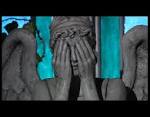
Whatever you do, don’t blink

An imaginary judgment, that will make largely no sense to you if the title above doesn’t already resonate.  [In fact, it may well be utterly unintelligible, if you don’t already know what a Weeping Angel is. sorry]


This is a most vexed and unusual  Children Act case, involving a, well, one cannot definitively say ‘child’ as that is itself litigious, and one cannot say ‘young person’ as that too is litigious.

I shall use those terms, as I will ‘mother’ and ‘daughter’ although those matters too fall to be determined. The ‘mother’ in the case, and from this point on, I shall omit the quotation marks, does not strictly speaking have a name, although all have decided to call her Eleanor Acquitane.


At the risk of a terrible pun, and I am afraid it may not be the last, she has cut a statuesque figure.

That is because, to the naked eye, she is a statue, or at least she has that appearance to our eyes. She is, however, a lifeform. The Court has been advised by Mr William Compton of counsel, representing her, that she is a lifeform of a sentient species known as Weeping Angels.

As is often said, by counsel representing parents “My client is no angel” but in Mr Compton’s case, she is. The ‘child’ in question ‘C’ is also in appearance a cherubic infant statue.

The Local Authority claim the following about Weeping Angels

1. That they are sentient and capable of reasoning

2. That whilst looking at them, they appear to be statues, or possibly even that they turn to stone whilst you are looking at them

 3. That they cannot move whilst you are looking directly at them

4. That they become ambulatory, and vividly so, if you are not looking directly at them. They can move considerable distances in the blink of an eye.

5. That they do something to human beings, if allowed to close that distance, which removes them from existence.


It is hard to say ‘kill’ as no body is found for analysis, nor any chemical substance which could be analysed for remains. There is some speculation that what actually occurs is that the person is sent back in time, but obtaining hard evidence for this is difficult. For my part, if I am sent back in time, I hope that it is to the Sixties, where I intend to forge a career as a song-writer and professional gambler.

The Local Authority contend that these matters, taken in their totality, mean that Eleanor Acquitane is not suitable to care for C and that C will be exposed to significant harm, including witnesing some form of murder on a frequent basis.

Those representing Eleanor Acquitane accept points 1-4, but refute point 5.

They also challenge a number of matters which would ordinarily be taken for granted in an application under the Children Act.

Those are the following:-

1. That the relationship between Eleanor and C can be described in any way as that between parent and child.

2. That C is in any way a child

3. That C needs any care at all

4. That the Children Act applies to Eleanor and C in any way

5. That the habits, customs and traditions of Weeping Angels are such that to attempt to judge them and critique them by human standards and mores would be as ridiculous as trying to judge a lion by the standards of a polite Kensington dinner party.

These facts are clear.

(a) Eleanor and C had been living in a London park.

(b) They moved from that park, on or about June 6th 2012

(c) They moved to a vacant flat in the Local Authority’s area

(d) Initial professional visits to the flat, following referrals, resulted in no reports being completed after the visits, and staff never being seen again.

(e) An interim care order was made on 12th July 2012, and C taken into foster care. I have heard vivid evidence about the logistical and practical difficulties in executing that order, and the Court would wish to offer sympathy to the families of the four workers who are sadly no longer with us

(f) In the short intervening period, C has had seven foster placements.

I heard evidence from the current foster carers, who have to watch C at every moment of the day and night, never taking their eyes off her in case she moves and does whatever it is that Weeping Angels do (even their infants, offspring, ‘prima facie younger versions’ do this).

This has been understandably a strain and a difficulty on them, and the momentary loss of concentration that was a prelude to Uncle Martin’s disappearance has added to that burden. It is unique, in my view, for a Court to hear from a witness in care proceedings whose final words to the Court are “For God’s sake, free us from this living hell”

(g) A psychologist was appointed to assess C and Eleanor Acquitane. The report was never completed. It was a shame that the psychologist had conducted the interview alone, and that he had declined all sensible advice to have an additional eight persons present, all fixing their gaze firmly on C and Eleanor at all times.


I have been presented with a report, which was published in a science-fiction magazine named “Mind-Expanding Tales of Wonder” in 1977, which purports to be the psychological assessment of Eleanor and C.

I have been invited, by Miss Pond, for the Local Authority, to take this into account and treat it not as fiction, but as the actual report in the case, genuinely written, as it claims, by the psychologist who had been thrown backwards in time after the Weeping Angels reached him.

I find it difficult, on basic principles of evidence, to accept that a science fiction story written in 1977 can be, in fact, a factual report which the Court directed to be prepared in 2012.

Of course, the coincidences in the fictional publication are manifold and surprising. Miss Pond pointed them out to me, and they included that the author’s name was that of our psychologist, that the descriptions of Eleanor and C (and their names) was accurate, that the article names myself as the Judge, and so forth.

Those matters are on the face of it compelling, as is Miss Pond’s submission that what has happened to all of the people who have vanished after taking their eyes off C or Eleanor have actually been sent back in time.


Mr Compton concedes that this is a possibility, and given that the other accusation against his client is that she has been disintegrating these innocent professionals attempting to do a difficult job, one can see why he would be swayed towards that explanation.

He does firmly say that without the opportunity to cross-examine the psychologist, and the uncertainty about whether the ‘story’ can genuinely be the report itself, the Court could not realistically give weight to what purport to be expert conclusions of “Both are incredibly dangerous, and the only thing to do is ship both to Antartica and hope the world never sees either of them again” .


For my part, I did not need a great deal of encouragement not to adopt those recommendations or conclusions. On the balance of probabilities, the coincidences in the ‘story’ with the facts of the commissioned report are just that, coincidences, and it would be manifestly unfair to treat them otherwise.

I have, therefore, to proceed on the basis of there being no psychological evidence before the Court, there being no-one else willing to undertake it. I should recount the unusual arrangements at Court.

It would not be safe, for anyone, on the little we do know, for Eleanor Acquitane to sit behind Mr Compton in the traditional way.

That would leave my eyes as the only ones on her, and expose Miss Pond and even Mr Compton to inordinate risk, should I have had to look at a document, or wipe my glasses, or blink.

She has therefore spent the entireity of the hearing in the witness box, and those at the bar have taken it in turns to watch her, as the saying goes, like a hawk.

I come now to the central issues in the case, as delineated by Mr Compton.

He does not dispute that IF his client were human, and C were her child, and C was witnessing at best the disappearance of other humans around her on an almost daily basis, then the threshold would be satisfied and that his client would have a mountain to climb in terms of persuading the Court not to make a Care Order.

However, as he points out, she is not human. And the Local Authority have not been able to prove that C is a child at all. She is certainly not a human child.

It has not been possible to age her – there are no dental records, and those who have seen her teeth (which happens only after a short blink or removing ones gaze) have no wish to attempt to obtain any dental examination of them. Mr Compton contends that whilst C has the outward appearance of a young cherub or infant child, the Local Authority simply cannot prove this.

Nor can they prove that C and Eleanor have any biological connection, still less that of mother and daughter. His client insists that their relationship is close to that of comrades, or colleagues and not a parent and child dynamic at all. C is entirely self-sufficient and does not require parental care. He states that the experiences of the foster carers, chilling though they are, show that none of the things that a human infant would need are needed by C, and that she is more than capable of ‘feeding’ if feeding is what is being done when ungazing people around her vanish.

It is not possible to establish the relationship by DNA testing. Firstly, it is entirely possible that both C and Eleanor do not in fact have any DNA. Secondly, rather than a swabbing process, the only way a sample could be taken is by drilling into the skin of C and Eleanor, and that is not something that the Court could sanction.

I have to consider, of course, whether the Human Rights Act applies to this case at all; and that has proven to be problematic.

On the face of it, if as Mr Compton contends (and as seems clear from the evidence) his client is not a human, she would appear to not have the protections that the Human Rights Act offers. But, says Mr Compton, one must look at the wording of Article 6, for example

ARTICLE 6 RIGHT TO A FAIR TRIAL

1. In the determination of his civil rights and obligations or of any criminal charge against him, everyone is entitled to a fair and public hearing within a reasonable time by an independent and impartial tribunal established by law. Judgment shall be pronounced publicly but the press and public may be excluded from all or part of the trial in the interest of morals, public order or national security in a democratic society, where the interests of juveniles or the protection of the private life of the parties so require, or to the extent strictly necessary in the opinion of the court in special circumstances where publicity would prejudice the interests of justice.

And

ARTICLE 8 RIGHT TO RESPECT FOR PRIVATE AND FAMILY LIFE 1. Everyone has the right to respect for his private and family life, his home and his correspondence. 2. There shall be no interference by a public authority with the exercise of this right except such as is in accordance with the law and is necessary in a democratic society in the interests of national security, public safety or the economic well-being of the country, for the prevention of disorder or crime, for the protection of health or morals, or for the protection of the rights and freedoms of others.

 Mr Compton submits  that the key word there is ‘everyone’ and that there is no stipulation that such rights are limited to humans. It does not say “Everyone who is a human being

It is true that within the Act, there is no definition of human. It was reasonable, at the time it was written, for the Parliamentary draftsmen not to anticipate that we would be sharing our planet with another sentient race. But here we are.

The Human Rights Act, Miss Pond says, clearly, even if it does not spell it out in statute must only apply to humans, and that applying the logical consequence of it applying to any living being that it does not explicitly exclude, the State would owe ants a right to private and family life. The Act, she says, applies to humans and humans only. Should Parliament wish to extend rights and protections to Weeping Angels, they would have to bring that about with fresh legislation.

Similar arguments extend to whether the Children Act 1989 gives the Court any jurisdiction at all on C.

And here, the parties reverse their positions.

Mr Compton says – his client is not human, the Act is intended only for human children, and that to widen its scope would be analogous to making Interim Care Orders for puppies and kittens.

Miss Pond says – the precise wording of the Act defines “child” as (s105) a “person under the age of 18” and that the Court may determine on the balance of probabilities that C, given her appearance is a person under the age of 18.

(This seems to get the Court into ‘age-assessment’ territory, and I have been kindly taken to the wealth of caselaw on that point, almost all of it concerning Croydon. It is fair to say that I am not particularly helped on how to age a child who has the outward appearance of a statue. As Mr Compton readily points out, if one asks how old the Statue of Eros is at Piccadilly Circus, one is more likely to answer that it is about a hundred years old than that it is about five months old)

Even if I overcome the thorny issues of whether the Human Rights Act and the Children Act apply to this case; and it seems to me that they either must BOTH apply or neither can apply – the Court cannot cherrypick on ‘the spirit of the law’ versus the ‘letter of the law’ and apply that differently on the two different Acts.

Either the Acts intend to cover only human beings though neglecting to make that transparently plain or a narrow construction of the law that it does not exclude other sentinent and conscious beings is right. I will come to that later.

But even once that is resolved, one is left with the issues of whether it is an essential part of the character of Weeping Angels to make humans disappear, and whether depriving C of that culture is to go against nature itself. Is it part of their essential make up, just as dreaming, hoping, wishing or worrying is part of our essential make up as humans? What sort of life is there for C in care, with those charged with caring for her being actually terrified of her every minute of the day and night and there constantly being the fear that the placement will break down, if she ceases to be observed for even a second or two, and vanishes her carer?

Is there, in short, as Mr Compton argues, a compelling case for striving to understand that a human trying to care for a Weeping Angel would a fruitless exercise doomed to failure. As Wittgenstein observed – if a lion could speak, we would not understand what he had to say.

Fortunately for all of these thorny issues, I have arrived at a very elegant solution and one which will please everybody.

Erm, I would ask counsel to not look at me whilst I am delivering this judgment. I appreciate that it is Court etiquette to do so, and no doubt ingrained into you all, but….

I am afraid I have been looking at my notes, and you have been looking at me. And now Miss Acquitane is no longer in the witness box and is only four inches away from me. Her teeth are very sharp. Everyone, don’t blink. Whatever you do, don’t blink

TAPE ENDS


[Writing this led me into the curious mental debate about what would happen if a Judge delivered a judgment but passed away before the order could be drawn up? Are the findings binding? How far into the judgment does a Judge have to survive into for it to be intact? What if she or he makes findings on seven of the ten allegations but passes away mid sentence before moving on to the eighth? Does the whole thing get re-tried, or only the last three allegations? If anyone knows, please tell me, because I have the sort of mind that worries about these things.  What if they’ve written the judgment down, but they die whilst reading it out?       On the unlikely event of there being any Judge who reads this blog, I am incredibly sorry to have expressed such macabre thoughts about you and your job, and rest assured, I wish you nothing but well, and that you get to the end of all of your judgments intact. ]

So tired, tired of waiting, tired of waiting for you


 (A quick look at four cases that have been decided, but that I’m still waiting for transcripts of judgments on , and one that I’ve been waiting for for ages, and which turns out to be crushingly disappointing)


Not worthy of full blogs, until I see the full transcripts, because as lovely as summaries are, they do lose the subtleties of having the entire judgment to rifle through for gems.


But anyway, here are four up-and-coming interesting cases.  (and I am aware that the section 37 case – is it an abuse of process to make multiple ICOs pegging them on s37 directions when the LA haven’t made an application, went to the Court of Appeal last week, and there will be a judgment on that in due course. I blogged about that one previously here :-


https://suesspiciousminds.com/2012/08/31/ive-got-section-thirty-seven-problems-but-a-aint-one/   )       [And where else in legal blogging do you get both the Kinks and Jay-Z?  Can I get an encore/do you want more/cookin raw / with the Brooklyn Boy]


The first, and most recent is RE H (A CHILD) (2012)


CA (Civ Div) (Thorpe LJ, Lewison LJ, Hedley J) 26/10/2012


In this case, the LA were seeking final orders, and the trial judge instead made an Interim Care Order, adjourned the proceedings for three months, and directed a placement at a parent and baby foster placement. The Court of Appeal refused the LA appeal, and determined that the Judge was entitled to make those decisions, having weighed the negative and detrimental impacts on the child of delay against the potential positives to the child.  

The interest for me on this one will be  (a) how much of a bulwark it might be against the  “26 weeks is our aspiration, finish things off quicker” philosophy that is currently so “popular” and (b) whether it is actually authority for the Court having power to compel a Local Authority to place in a parent and baby foster placement. 

I assume that this, if there is such a power, derives from s38(6) and the Munby LJ decision in Cardiff, where he determined that a s38(6) placement didn’t have to be in a residential assessment centre, but could be with a family member.  


There are two schools currently, one is that the Court CAN compel a Local Authority to place in a mother-and-baby foster placement (or parent-and-baby foster placement) using the Munby decision, and the other is that the Court CAN’T compel, but generally achieves it by rejecting a plan of ICO and separation, and making the LA decide on the ‘lesser of two evils’ between that and having the child at home under ISOs. 

[I have to confess, that I am not at all sure which of those is right. My reading of the Cardiff case is that the Judge was stretching s38(6) very creatively to get an outcome that everyone in the case desired, but that it might reach snapping point to try to do it in a case that is actively litigious. But, there are passages in Cardiff that would support s38(6) being used to place a child whereever a Judge thinks fit]


I will be interested to see if the Court of Appeal grapple with that issue at all.  And of course, Cardiff was only a High Court decision, so if so, it will be Court of Appeal backing for that authority.


Next up


RE M (A CHILD) (2012)


CA (Civ Div) (Ward LJ, Lloyd LJ, Rafferty LJ) 22/10/2012


This one may fall entirely on its own facts, or it might be incredibly important, which is why I am so keen to read the full judgment and find out.  It was an appeal against a finding of fact hearing. The child was a few weeks old and had 8 separate bruises, left forearm, right arm and right thigh.  No explanations for the bruises were provided. The medical opinion was that they were non-accidental, in the absence of an accidental explanation. The Judge also found the parents evidence to not be credible and found that the injuries had been caused by them.


The Court of Appeal considered, on the brief note I have available, that this amounted to a reversal of the burden of proof and that it was not for the parents to explain how the injuries were caused accidentally, but for the LA to prove that they were caused non-accidentally.


[This quote from the summary, on a well known law reporting website, not necessarily an extract from the judgment itself – my underlining, to illustrate what seems to be a current direction of travel on medical cases]


“The medical evidence was that the marks were imprints or pressure marks from an object, but it was not possible to say what object or even what kind of object or how the pressure was exerted. Nor was it possible to say whether there was a momentary infliction of pain or a sustained pressure. The instant case was not one of a broken limb, or a cigarette burn or finger pressure. The court simply did not know what had happened or how. The judge had accepted the evidence of one of the doctors that in the absence of a benign explanation from the parents it could be concluded that the injuries were not accidental, but that conclusion did not follow, unless the burden of proof, which lay on the local authority on the balance of probabilities, was wrongly reversed and the parents were required to satisfy the court that the injuries were non-accidental. The judge had erred in finding that the parents had deliberately caused the injuries”


It may be that the case is entirely case and original judgment specific, but it would not surprise me, given the movement of the Court of Appeal in recent months away from “listen to the doctors” towards “the Court should actively contemplate the possibility that medical opinion is not always right, even if there is consensus” if it contains some important principles.


Next


RE C (CHILDREN) (2012)


CA (Civ Div) (Thorpe LJ, Munby LJ) 12/10/2012


Which involves private law, and a finding of fact hearing / change of residence hearing. The trial judge stopped the father midway through his evidence [after he had finished in chief] and gave judgment about the allegations the father was making, essentially dismissing them and the application for a change of residence.  The father appealed, in essence saying that had the Court heard mother’s evidence and he had the opportunity to cross-examine mother, his allegations would/might have been proved.


The Court of Appeal determined  (again, the quote is from the summary of the case, and not the transcript itself)


Given that the judge had heard F’s evidence in chief, it was entirely appropriate for him to direct himself as he did, namely that F had to establish on the balance of probabilities that there were compelling reasons why the children should be moved. It was the correct exercise of his discretion for the judge to say F had failed to meet that test. There was no error of law or approach either in his determining the standard by which F’s evidence was to be evaluated or to say he was satisfied that F had failed to prove any of the matters to satisfy the court that the residence order should be changed. It was a matter for the judge to determine the form of procedure to satisfy the welfare needs of the children and he was not obliged to listen to evidence if it was not appropriate and the process would be of no advantage to the children. The judge’s view was robust, but he did not exceed the ambit of his discretion. There was no error of law or misdirection in what he had said about the burden of proof or in taking the course that he did. He had taken a decision that was plainly open to him in all the circumstances and it could not be said that he was plainly wrong.


 This may be a gratefully received judgment for all Judges dealing with private law cases faced with clearly threadbare evidence for serious allegations, as they may be able to cut them short when it is clear they are going nowhere.  [I shall not speculate as to whether the number of such cases will increase or decrease as a result of certain political decisions about funding of family legal aid]


And this one


RE P (A CHILD) (2012)


CA (Civ Div) (Thorpe LJ, Lloyd LJ, Black LJ) 05/10/2012


Where essentially, very serious allegations of sexual abuse was made against the parents. The parents indicated that they did not seek the return of the child or any contact, and that on that basis, embarking on a judicial determination of the allegations was unnecessary   (as they were content for the Court to make a Care Order and did not seek any orders in relation to contact)


This is interesting, because it throws up what the role of the Court is – is it to get to the truth, or is it to determine the applications that are placed before it? If having a fact finding hearing doesn’t materially affect the order to be made, how can it legitimately take place on the one hand.  On the other, isn’t it important for the child’s care and future to know whether he or she was the victim of sexual abuse?


The Court of Appeal remitted the decision back to the trial judge who had decided not to have a finding of fact hearing, for further consideration – notably of the expert report that having resolution of this issue would be beneficial for the child and that future uncertainty would be detrimental to the child.  They also considered that the parents stance on contact might shift (and may have already shifted) and that it was appropriate for all of these issues to be taken into account.


And oh, I see that another one I was waiting for is now up


RE (1) B (2) H (CHILDREN) (2012)


[2012] EWCA Civ 1359

CA (Civ Div) (Thorpe LJ, Kitchin LJ, Dame Janet Smith) 01/08/2012


This case goes to the issue of having a finding of fact hearing where the suspected perpetrator had considerable learning difficulties. It is pertinent for me because I had similar issues come up with a potential intervenor in a case and the law wasn’t entirely clear on how the Court should decide whether to compel them to give evidence, and how the balancing exercise should be conducted.

 The trial judge in this reported case  decided not to go ahead with the finding of fact hearing, and was appealed.


Sadly, the appeal was unopposed, so the judgment is very short.  In effect, the Court of Appeal were persuaded that the role of a finding of fact hearing is twofold  (and this may feed into the case above)


The outcome of a fact finding investigation is not only to determine whether the section 31 threshold has been crossed, but also to provide an essential foundation for the trial of the welfare issues that lead to the management decision for the future of the child.


I can therefore suggest nothing further than the tack I used in my case, which was that the Court should weigh the article 6 right to a fair trial against the rights of the vulnerable person and would have to give leeway to the witness when considering confusion about dates, times, details and sequence of events where their learning difficulty impacted considerably

One of these nights you’re gonna get caught, It’ll give you a pregnant pause for thought


 (Always nice to sneak a bit of Billy Bragg into the blog.  My favourite Billy Bragg line is, of course, from Sexuality  “I had an uncle who once played / for Red Star Belgrade”)

This is a discussion of the extraordinary case of A Local Authority v S & O [2011] EWHC 3764 (Fam)


http://www.familylawweek.co.uk/site.aspx?i=ed102837


You know that something is peculiar when a High Court Judge begins with Even by the standards of the Family Court this is a strange tale.. 


And he is not wrong.


Mr and Mrs S were a Nigerian couple, living in England. They wanted to have a baby, and heard of a fertility clinic in Nigeria, Port Harcourt.  They paid a lot of money to this clinic, and the mother had treatment there. She returned to the UK and had tests and scans with her GP, which confirmed that she was not pregnant. She rang the Port Harcourt Clinic, who told her that this was not unusual with the process and that she should come over.  She visited Port Harcourt and was sedated and then presented with a baby.


Mr and Mrs S returned to the UK with the baby.  On visiting their GP, the GP considered that the care of the baby was very good, but having determined that Mrs S had not been pregnant, was deeply troubled by the story of the delivery and contacted the Local Authority.


A DNA test was done, showing that the child had no biological connection to either Mr or Mrs S.


Care proceedings were commenced, it being apparent to the Local Authority that this child had been removed from birth parents and brought into the country and was living with people who had no parental responsibility.


The issue that fell to be determined by the Court was whether Mr and Mrs S had been deceived and hoodwinked by the Port Harcourt clinic, or whether (as the LA asserted) it was inconceivable (pardon the accidental pun) that they had fallen for this and that they had either fully known or simply turned a blind eye to the obvious truth that this had never been their baby.


Here are the contentious findings sought


“(vii)  Mr. S knew or ought to have known that Mrs. S was not pregnant as asserted.

(viii)  Mr. S knew or ought to have known that O was not their biological child.

(ix)  On a balance of probabilities, Mrs. S and Mr. S were complicit in the removal of O from her biological mother at or shortly after the time of her birth.

(x)  At the relevant date, O’s care arrangements had been based upon a fundamental deception to which Mr. and Mrs. S were knowing parties.”


Now, this is the bit I find significant, and appalling. As the DNA test had shown that this was not their child, Mr and Mrs S had no PR, and received no public funding. So, they were fighting to defend themselves against these highly damaging allegations and also seeking to care for a child who they had formed an emotional connection though not a biological one.   Whilst my gut instinct view of the allegations was that the LA were probably right, it seems to me manifestly wrong that Mr and Mrs S had no legal representation to fight this case, and it is one of those bureaucratic idiocies which makes me slightly ashamed to be British.


As luck would have it, a pro bono barrister came forward, Mr Nicholas Paul, and he clearly did an admirable job for his clients.


I think it is worth setting out the history of the matter given by the mother, as it is important in trying to establish whether this was a nod and a wink  “Oh, I’ll pay for ‘fertility treatment’ but we both know I’m actually buying a baby”  or whether the clinic was actually seeking to deceive naïve and desperate couples.


“I have been married to Simon S since 2002.  On 8 January 2011 I gave birth to O at God’s Gift Clinic Maternity in Port Harcourt, Nigeria.  The treatment started in December 2009 under Dr. Chineri Emica Precious who gave me a number of injections and tablets and capsules.

4.  In April 2010 I started to feel the symptoms of being pregnant such as bloated stomach and gaining of weight.  I returned to Nigeria in April upon Dr. Chineri Emica Precious’s request for a medical check-up and she confirmed that I was pregnant. 

5.  I returned to the United Kingdom and visited my GP, Dr. H, who was not convinced that I was pregnant in May 2010.  I asked her to reduce my blood pressure medication as I was now pregnant, but she declined until there was confirmation that I was in fact pregnant.  At this stage, my symptoms of pregnancy persisted.  I had another appointment with Dr. H in September 2010 where a body examination was done and she referred me to Homerton Hospital for a scan.

6.  On 16 October 2010 I attended Homerton Hospital for a scan and it showed no pulse or heartbeat from the baby.  This came as a great shock to me, bearing in mind what I was told in Nigeria, that I was pregnant.  I kept up my line of communication with Dr. Chineri Emica Precious in Nigeria, who assured me that it was not unusual for the baby not to be seen on the scan.  Also, I was reassured by the testimonies of others who had had the treatment before (my sister and a friend).

7.  I returned to Nigeria in October 2010 to see Dr. Chineri Emica Precious who informed me, conversely to what I was told in England by my general practitioner and scan results, that I was pregnant and she continued to treat me with injections and one big medication.  I assumed that this continued treatment was in order to maintain the pregnancy.  I had no reason to doubt her sincerity or expertise in this regard.

8.  In November 2010, Pastor B at my church in London, like other people around me, including my husband, asked me if I was pregnant as he saw that my stomach was bloated as if I was pregnant and I had gained a substantial amount of weight.

23  She continued at paragraph 13:

“In December 2010 I went to Nigeria for the yearly crossing over programme at the headquarters of MFM and later went to Port Harcourt.

14.  Soon afterwards whilst in Nigeria, I noted that I was bleeding from my back passage.  I recalled that when I was carrying E my previous pregnancy, that the baby and I were bleeding.  However, in that prior instance, the bleeding was internal and this tragically led to E suffering her disability, as this was not detected on the scan.

15.  In January 2011 during what I perceived to be the birth of O, I recall a doctor inducing labour through intravenous drip and I experienced what was labour, a very traumatic delivery and a baby was presented to me covered in blood as would have been normal in a delivery room.  I felt all the natural manifestations of labour and delivery and my baby, O, was presented to me in the manner described.  Subsequently, when both the Metropolitan Police and the Applicant suggested a DNA test, I fully cooperated and was not in any way concerned as to the outcome as I knew I had given birth to O.  I had named her as was customary and obtained a birth certificate for her.”

24  Paragraph 19:

“Since 21 March when we were informed of the DNA results that suggested that we were not the biological parents of O and she was removed from us, my whole life has been shattered and it was as if we had suffered E’s bereavement all over again.  In short, I have been depressed and traumatised.  We have struggled to maintain any level of sanity as I am now convinced that I have been a victim of a very serious fraud by those who have exploited my vulnerability and infertility for their own financial gain.  I had paid a total of 1.3 million naira (just under £6,000) to this medical practitioner at this stage for the fertility treatment.  I enclose for the consideration of this court an article in The Vanguard, a Nigerian newspaper, that clearly sets out in detail the type of scam that I have been a victim of.

21.  I have cooperated fully with the police and the Applicant in the course of their investigations into this matter.  As a family, we coped fully with E’s serious disability and maintained our composure and dignity throughout.  The fact that we have been exploited in this way and the consequent investigation, albeit legitimate, has dragged on and has been devastating for us as a family.  I categorically deny that we have been involved in any child trafficking, except to say that this is a tragic case in which we have been a victim.”

25  That ends the quote from her statement. They obviously had in fact filed an earlier position statement, I think without any benefit of legal advice, on 11 April.  In that they said this.  It was a joint statement produced by both Mr. and Mrs. S.  I read from it because it is of crucial significance:

“O was not deliberately removed from her parents in Nigeria.  She was brought into this country as I was made to believe that I gave birth to her as a result of the fertility treatment that I embarked on from December 2009.  During the treatment I went through gradual stages of pregnancy and was made to believe in the delivery procedure, under which intravenous drip and drugs were used to induce labour, that I gave birth to O.  My experience of the treatment and the testimony of others who had previously undertook the treatment built a very strong belief in me that O was my biological daughter, until the DNA test results concluded otherwise.  The strong belief in the pregnancy and birth experience led to O’s birth registration.  All due processes were followed to obtain travel documents for her to be brought to the UK as our legitimate daughter without any doubt.

The above beliefs were also responsible for us being so adamant that O was our biological child before we had the DNA results.  We complied throughout with the investigation in good faith with every assurance that the DNA results would vindicate us.  However, it was the DNA results that caused us to see ourselves as victims of crime or error.”

26  They carry on in similar vein, concluding in this way at paragraph six:

“Regardless of the DNA results, we genuinely love O as we would love our own child.  S, our nephew, has lived with us for over 11 years and we care for him and love him as our own child.  We would be heartbroken if the court allowed O to be abandoned into the hands of the social services to navigate her way through the care system.”


If what she says is right, and the clinic sedated her and gave her medical treatment intended to make her believe that she was in labour, and then presented her with a baby, then her ‘crime’ is really to have believed the clinic rather than her GP who was saying that she wasn’t pregnant.  You may think that she was gullible, foolish, perhaps even stupid; but that’s a distance from deceit and complicity.


The story seems utterly fanciful, however. A fertility clinic that goes to all the trouble of trying to make women believe that they have given birth as a charade for what is actually a straightforward sale of a baby? However…


35  Could this be a true story or is it an elaborate piece of invention?  On the face of it, the court’s first obvious and natural reaction to this very far fetched tale is to be highly sceptical, but for one crucial piece of further evidence.  It is in the form of a lengthy cutting from a newspaper, the Port Harcourt Vanguard, for 11 September 2011.  This is also available in fact on the internet.  Under the headline, “Baby Factories: how pregnancies/deliveries are framed”: “Vanguard’s investigation reveals more baby factories.”  There  appears a two full page article carried out by an investigative journalist which describes in elaborate detail the process largely described to me by the mother.  I shall read two sections from the article.  I have already read the banner headlines about baby factories and it contains a number of black and white photographs.  These passages are to be found in the article:

“Our findings reveal that the unpublicised native maternity homes use illicit means to procure babies for childless couples on the payment of huge amounts of money ranging from N750,000 to N1 million, depending on the sex of the baby.  We gather that twins go for about N1.5 million or more.  The delivery date depends on the baby seekers.  While some opt for a nine month period, some go for a fast deal of one month or two, also depending on the availability of the baby from the sources.  Investigations reveal that for those who go for a nine month period a pregnancy would be framed and a delivery date given.  The delivery date can be postponed indiscriminately based on the availability of the baby.  Their patrons are desperate women ranging from high society women, clergymen and women who most times hide the arrangements from their husbands.  Most of these centres are found in …”

36  It mentions three towns including Port Harcourt.  Then under the heading, “How Pregnancy and Deliveries are Framed” it reads:

“Investigations reveal that these clinics administer certain substances on the patients that form a sort of tumour in the womb of the expectant mothers, making them believe they were pregnant.  Occasionally, a movement is caused in the belly making it look as if a baby is kicking.  The women are warned not to go to any hospital or undergo ultrasound or any sort of scan as they would lose the pregnancy or baby in the process.”

37  It goes on in similar vein and it contains this passage further on:

“Further investigations reveal that when it is time for delivery another substance is administered on the woman which gives a false impression of labour.  Part of the growing tumour will come out through the vagina and it is cut to discharge blood and make it look as if there was an actual delivery.  A baby is then sneaked in and made to cry.  The woman is also made to believe she has been delivered of a baby.  In Precious Ogbana’s case, she told the reporter that when she had one of the babies it was recorded to a friend’s cell phone but she deleted the video a few days later.  She regretted deleting the stuff, fearing her husband would not like it, especially if the video got to a third party, adding that she went into labour and gave birth to the kids.”

38  There are a number of case studies set out in the course of that lengthy, double page article.  Having seen that article, there cannot be any doubt at all that this far fetched story is rooted most solidly in reality and that this kind of practice is common in certain parts of Nigeria.  I have described the process as a baby exchange.

39 So there can be no dispute now that the mother was indeed a participant in this elaborate scam but, as I said at the outset, the central question remains and has to be answered: was she a knowing and willing participant? 


The Judge then had to grapple with that central question, and reached these conclusions


50 How do I analyse the evidence to arrive at a conclusion in this mysterious case?  The following factors have guided my decision:

51  The mother is an intelligent woman who teaches at an adult literary college in London.  She is a God fearing practising Christian, as is her husband, to whom lying is complete anathema.  This factor has to count for something even in these cynical days in which we live.

52  The mother gave evidence to me at great length over two days and I found her to be impressive and unshakeable in relation to all important matters.  In all important respects, her versions both in writing and to the police have remained consistent.  In short, incredible though it seemed to me at the outset, by the end I was driven to believe her account.

53  By the same token, I found the husband, a responsible man in regular employment, to be a patently honest witness.  I do not think for a moment he would have gone along with knowingly assisting his wife in participating in a deception on the court. 

54  Both the mother and her husband have cooperated fully and willingly with the inquiry once they realised the circumstances of the arrival of the child and once they realised they were suspicious and they realised that these suspicions needed to be allayed.  They willingly took part in the two DNA tests. 

55  When conducting a fact finding inquiry, particularly one as strange as this, often the most important guide is to be found in the presence or absence of so-called “smoking guns”.  That is to say, factors which point to or are either consistent with or entirely inconsistent with one or other side’s version of the possible truth.  In this case, there are factors which, in my judgment, point inexorably to the conclusion that the mother is most likely to be telling the truth.  What are these factors?

56  The fact that during 2010 she went on visiting her GP, firstly to find out if she was pregnant and then to check whether she was and whether there might have been a mistake.  I find it to be unthinkable that she would have returned to the GP if she had knowingly become involved in this scam and after she had received negative tests in England.  To do so could only sensitise the GP to the possibility of something untoward happening when the child was eventually produced to the doctor later.  But that is precisely what did happen because the GP of course had the chance to examine the mother in the months preceding the so-called birth.  In my judgment, the last thing this mother would have done is to go back to the clinic to persuade the doctor to arrange a scan when she could only have known it would reveal nothing.

57  By the same token, why was the mother going backwards and forwards to Nigeria and seeing the doctor if she knew the pregnancy was an invention?  She would merely have gone out there in December, around the time of her expected delivery, and collected the child.

58  By the same token, it is unthinkable as I find that the mother would have produced the baby to the GP within three days after returning to this country if she had known the circumstances of her removal from her natural mother and Nigeria were highly suspicious or possibly criminal.  She produced the child to her GP in all innocence, expecting the GP to be delighted to be proved wrong.  Miss Watson, having to overcome this telling point, says that she took a calculated risk.  That, if I may say so, is a gross understatement.  It would have been sheer lunacy.  As Mr. Paul points out, there were other much less risky ways of proceeding which would have hugely reduced the risk of detection which, were she part of the scam, she must at all times have feared.

59  Then there is the short video clip arranged by the mother.  If there had been anything untoward going on which the mother realised, the video would have been set up and stage managed in a way which supported her having given birth.  In fact, it does nothing of the kind.  It merely shows the mother writhing in agony and a child lying in the vicinity, still attached to a placenta.  There is in fact no sign or real attempt to link the baby with the mother.  There is no sign of blood on the mother or indeed any sign that she had just given birth.  It would have been the easiest thing in the world to have linked the baby more directly with the mother to make it look as if she had just delivered.  Similarly, if this had been an elaborate deception, the camera would have had pictures of her arriving at the clinic and of the mother holding the baby etc., immediately following the supposed birth.  The video evidence is certainly excellent evidence of the scam disclosed by the newspaper article, but in my judgment it points away from the mother’s involvement.

60  I also think it is highly likely that, if the mother knew what had happened but nevertheless wanted to take her new baby to the doctor, she would not have gone armed with the camera and the clip ready to show the doctor the pictures if challenged.  In fact, the mother did not do so.  She only produced the pictures (potentially her best evidence if she was being deceptive) in response to questioning from the police and not as her first trump card and without being asked, as one would have expected.

61 All the mother’s actions, in my judgment, both in this country and Nigeria, are consistent with her evidence that she had no idea she was involved in this strange scam, designed to put together unwanted children with desperate, childless parents.  Her complete desolation when confronted with the reality, as attested to by both the police and the Guardian, further in my judgment supports her credibility.

62 What are the findings that I make based on this assessment of the evidence?  Firstly, most of the primary facts are agreed and not challenged.  Secondly, the mother was in a highly suggestible state, especially following the death of her disabled daughter at the end of 2009.  She is also, as the Guardian points out, immersed in a Christian religious environment where miracles are not regarded as impossible.  Thirdly, I am totally satisfied on an examination of all the evidence that this mother had no idea she was taking part in bogus fertility treatment, much less an elaborate and well tried system for selling unwanted babies to desperate parents in exchange for very substantial sums of money.  Fourth, both she and her husband were hoodwinked and are innocent victims so far as their involvement in these matters is concerned.  They neither knowingly participated in the wrongful removal of the child from her natural mother nor in the wrongful importation of her into this country. 

63 The highest it can be put, as I find it, is that the mother unwittingly took part in an unorthodox adoption process surrounded by an elaborate piece of play acting. 

64 Fifth, and for the avoidance of doubt, I find nothing concerning so far about the mother’s mental health any more than the general practitioner does or did.  It is perfectly plain the mother now fully appreciates what was going on and what she has been involved in.

65 Sixthly, on the face of it, the mother from what I know seems a good and experienced mother who has brought up her nephew impeccably and looked after her very disabled child over a very long period until her death. 


The Judge then invited the Local Authority to reconsider their view of the case and specifically whether Mr and Mrs S could be considered as carers. They declined to do so and an Independent Social Work assessment was therefore commissioned.


The mainstream media seem, to me, to have reported this case as being that Mr and Mrs S got the child back, and not that they had won the right to an independent assessment of whether they should.


A fascinating case, and one that I hope will be unique, although as our world gets smaller, the chances of unscrupulous practices playing a part in UK care proceedings must increase.

I wish they all could be California girls


 Utter nonsense. How to construct your perfect wish if a genie comes along and offers you one wish.


Obviously, the genie will feel that he’s been locked up tight, for a century of lonely nights, but after you release him, and he grants you one wish, take care. I advise you not to lick your lips and blow kisses his way, because that don’t mean he’s going to give it away. Baby, Baby, baby.


Your obvious starting point will be a cheat.  Genies cannot grant wishes about wishes.  So you may think you are smart and beating the system by “I wish for ten more wishes”  or  “I wish for infinite wishes”  or  “I wish that all my wishes came true”


But those are all meta-wishes and cannot be granted. You will just irritate the genie, who finds this sort of thing tiresome in the extreme.


So, one wish, not allowed to be about wishes. 


Now, take care. A detailed study of genies has shown that they will attempt to construe your wish in a way  that you didn’t intend, being obtuse and/or ludicrously literal, and a way which candidly, and to put it bluntly  “f**ks you over”


You can see this in King Midas  (I wish for everything I touch to turn to gold. But he didn’t intend that to include food and people  – although technically, air touches his mouth on the way to his lungs, so he is lucky he didn’t asphyxiate fairly instantly. Yes, this is going to be THAT geeky, bail now if it is already too much),  the Five Children and It, or even more vividly and scarily, “The Monkey’s Paw”


[If you haven’t read “The Monkey’s Paw”, I really would remedy that. It’s really short, you can probably read it online for free, and it will give you the proper Fear.  In fact, here it is :-  http://gaslight.mtroyal.ca/mnkyspaw.htm.    It’s okay, I’ll wait.   Taps foot… looks at watch.. ah, you’re back]


We were talking about how genies are legitimately allowed, whilst granting your wish, to interpret it in a way that makes you utterly miserable.


Let me give you an illustration. 


“I wish to be incredibly attractive to women”


(The genie is immediately thinking, “I can turn him into a diamond necklace, or a cute kitten, or I can make him a walking magnet, or I can make him genuinely irresistible to women but to all women including pensioners and women he wouldn’t find desirable and that they won’t take no for an answer”  and all of those options are available to the genie, who HAS to grant your wish, but has leeway to mess with you within the ambit of what you asked for, or omissions you made in being specific)


Another one


“I wish I had a billion pounds” 


(The genie is immediately thinking  along these lines – A billion pounds of.. what, exactly?  Or that you didn’t specify when, so can get it on your deathbed. You didn’t specify that it was legitimately yours, so you can have it and immediately get arrested for stealing it. Or the monkey paw route where you get the money, but by inheriting it from the savings and life insurance policies of everyone you know and love, all on the same day.   I told you to go and read it, at the top of the page, don’t complain about spoilers now.)


Or to take the Beach Boys lyric – of course any girl could be a California girl, simply by moving to California, so the genie can fulfil that without doing anything; OR he could imbue on every female in the country, nay the world,, a desire to move to California and become a “California girl”, probably wrecking the local infrastructure and irretrievably breaking the San Andreas fault, and sending their beloved State into the ocean.    [Note, my scientific underpinning of this is based entirely on Gene Hackman’s evil plot in the film Superman, and may not withstand any proper scientific rigorous testing]


There are now no girls in China, India, or Brazil, or anywhere else. This leaves the population of those places to riot, cease work  and  eventually die out, and there’s no production of any of the world’s vital resources, because every female living on the planet is in California, who will now have no chocolate, or coffee, or alcohol, or rice, or meat. Life in California will be crowded, and bereft of life’s essentials.  Everywhere else will be half-empty and bereft of life’s essentials.  Let us hope that none of the Beach Boys ever come across a genie in a bottle.  


So, how can you construct your one and only wish in such a way that you (a) get what you want, and (b) don’t get screwed by the genie being incredibly literal, or seeking a loophole or deliberately misconstruing your intention?


If a genie comes along and you get your once in a lifetime chance of a wish, you don’t want to blow it by wishing for something that will backfire on you or not deliver what you want, or end up being something really wimpy just so that you know it will happen without ill-consequence  (like  “I wish I had a really cold bottle of beer in my hands right now”)


Well, if you want to construct a binding clause with no way to weasel out of it, a lawyer is just the sort of person you want to talk to about it.  Looking for loopholes and absurdly literal interpretation of what a sentence could mean are the sort of thing that really float my boat. I could probably go into the genie business. I wish (!) that there were genies granting wishes and that  I had invented the Safe Wish Drafting business, as it is the sort of thing I could cheerfully do all day.


Sadly for me, someone has already come up with the concept of Open Source Wishing, where a bunch of like-minded people polish and hone wishes and look for loopholes that an evil genie (who is duty bound to grant wishes) would misuse, with a view to producing your perfect (and safe) wish, just in case.  Really, I’m not kidding.


http://homeonthestrange.com/phpBB2/viewforum.php?f=4&sid=ff22bddadb9da4dfbae7649b72b59777


They are interesting, in a weird sort of way, to just look at how detailed you would have to construct a Wish to make it work, but also you get into some really unusual tangents.  The generic ‘nice’ wish of world peace, gets you into some pretty dark areas about freedom of choice and Ludovico Technique about what sort of world we live in if people don’t have the ability to make horrible choices.


And the ‘wish for happiness’ one prompts all sorts of debates about what makes people happy, whether happiness can ever be achieved (when it is part of our nature to dream and desire and strive for the unattainable)


Anyway, here is the draft wish for finding the person of your dreams:-


”I wish to meet the person who will give me the most fulfilling, satisfying, and happiest sexual relationship in my life in a fashion that would be conducive to us having that relationship as soon as possible – someone who is:

a) Living and will not die until at least the moment of my own death,
b) Currently available to commit to a sexual and emotional relationship with me,
c) Physically attractive to me in this state and time,
d) Someone who would find me more physically and mentally attractive than either anyone else she currently knows or anyone else she would meet in the course of a relationship with me,
e) Someone who my friends and immediate family (or, alternatively, you could list a bunch of people whose judgement you trust) would currently deem acceptable for me to date once they knew the true history and background of that person,
f) Currently not suffering from any long- or short-term diseases or handicaps that would significantly disrupt our relationship,
g) Located in a place that I could move to.”


Have fun finding the loopholes. There are still plenty.  My immediate one is that without any of the stomach lurch of whether a person will love you back or whether they will keep loving you, or how you could make them happy – without their freedom of choice to stop loving you at any moment, is what you have here love, or is it slavery? I think that would nag away at you and corrupt the whole thing.  I would much rather that the woman of my dreams had a headache, than was compelled to frolic as a result of forces beyond their control.


Mine would be, by the way :-


I wish that I, at time of my choosing and for the duration of my choosing, could have the super powers and abilities of any fictional superhero I intentionally select, those powers manifesting themselves in the real world and under my full control,  without my  ever coming to any personal harm (physical, mental or emotional), deprivation of liberty  or inconvenience as a result, and for that to begin NOW and continue for as long as I desire it to continue.

 Some annoying people are going to want to give me a wide-berth when I am Superman, Spiderman and Wolverine all rolled into one. Snikt.

[I’m sure this ends with me heat-visioning my own foot off, somehow] 

And let’s end with a lovely bit of Steve Martin, back when he was funny.


 Steve Martin: If I had one wish that I could wish this holiday season, it would be that all the children to join hands and sing together in the spirit of harmony and peace.


 If I had two wishes I could make this holiday season, the first would be for all the children of the world to join hands and sing in the spirit of harmony and peace. And the second would be for 30 million dollars a month to be given to me, tax-free in a Swiss bank account.


You know, if I had three wishes I could make this holiday season, the first, of course, would be for all the children of the world to get together and sing, the second would be for the 30 million dollars every month to me, and the third would be for encompassing power over every living being in the entire universe.


And if I had four wishes that I could make this holiday season, the first would be the crap about the kids definitely, the second would be for the 30 million, the third would be for all the power, and the fourth would be to set aside one month each year to have an extended 31-day orgasm, to be brought out slowly by Rosanna Arquette and that model Paulina-somebody, I can’t think of her name. Of course my lovely wife can come too and she’s behind me one hundred percent here, I guarantee it.


Wait a minute, maybe the sex thing should be the first wish, so if I made that the first wish, because it could all go boom tomorrow, then what do you got, y’know? No, no, the kids, the kids singing would be great, that would be nice. But wait a minute, who am I kidding? They’re not going to be able to get all those kids together. I mean, the logistics of the thing is impossible, more trouble than it’s worth!


So — we reorganize! Here we go. First, the sex thing. We go with that. Second, the money. No, we got with the power second, then the money. And then the kids. Oh wait, oh jeez, I forgot about revenge against my enemies! Okay, I need revenge against all my enemies, they should die like pigs in hell! That would be my fourth wish.


And, of course, my fifth wish would be for all the children of the world to join hands and sing together in the spirit of harmony and peace. Thank you everybody and Merry Christmas.

Once you have eliminated the impossible


Is Sherlock Holmes’ maxim applicable to fact finding hearings? The Court of Appeal take a look


A (Children) [2012] EWCA Civ 1278


As all Holmes fans know, the Great Detective opined  “Once you have eliminated the impossible, whatever remains, however improbable, must be the truth”  *    [see footnote]


[Gratuitous Cumberbatch photo, for the female followers of this blog, including the Great Fiancee]

In this finding of fact hearing, involving a fatality to a child, the father, who ended up with the finding of fact being made against him, appealed in part on the basis that the Judge had approached this sort of formulation.


http://www.familylawweek.co.uk/site.aspx?i=ed102912


The Court had determined that the child had, on the balance of probabilities, suffered an injury.


It had then determined that the only 3 possible perpetrators were the mother, the father or an elder child ‘C’.   


The father claimed that what then happened was in effect that the Court ruled out mother and C as potential perpetrators and thus came to the conclusion that the father, being the remaining suspect must be the perpetrator, rather than carrying out the identical form of scrutiny.


(i.e, that had the Judge considered the order of suspects differently, and approached matters with a fresh eye, he might have ruled out father, then C, leaving mother; or any other sequence.  And that it just so happened that this order of events left father as ‘last man standing’. It was unfair to father to not have the same impartial eye testing whether he should be ruled out, and the burden effectively shifting to being for him to provide evidence why he WAS NOT the perpetrator)


It is probably fair that I give you now, Lady Justice Black’s concluding paragraph


23. I simply add this: that this is a case which we have considered very much on its own facts; nothing that I have said should be taken in any way to alter the established formulation of the law applicable to cases such as this. 


So perhaps the case is useless for anything other than determining the appeal that was before them, but I respectfully think that it is of interest because the precise forensic approach of how the Court approach the ‘whodunnit’ element of a finding of fact hearing, having established that something was done, and who the potential perpetrators are, is very important, and anything that adds to our pool of understanding as to the right or wrong way to go about it is therefore useful.


This is how the Court of Appeal record the Judge’s decision-making process


4. So this was a heavy trial for the judge, and it is manifest that all its concentration was upon the facts, the investigation of all relevant facts and the establishing on the balance of probabilities of the crucial facts.  That the law played no great part in the process is, I think, demonstrated by the fact that the judge deals with it in two short paragraphs.  In paragraph 28 he said:

“In these proceedings a party seeking a finding of fact bears the burden of proving it on the balance of probability: Re B (Children) (Care Proceedings: Standard of Proof) [2008] UKHL 35.  Accordingly, where I record facts or make findings, I am satisfied that they are more probable than not.”

5. In he following paragraph 29 he only added:

“Where a number of individuals might be responsible for a known injury, the test for whether it is established that a particular individual was involved is whether there is a real possibility they caused the injury: Re S-B Children [2009] UKSC 17.”

6. So, moving on from that early and brief direction, the judge explains himself essentially in paragraphs 170 and following under the subheading “Responsibility for B’s injuries”.  He considers first the position of B’s mother. He sets out in paragraph 170 under seven numbered paragraphs the matters that he was taking into account in reaching the conclusion that B was in good health when mother left the house and that he was injured in her absence. Having reached that conclusion it is not surprising that in paragraph 171 he said:

“I therefore find that M was not present when B was injured, and further that she does not know how the injuries occurred.”

7. In paragraph 172 he turned to consider the father’s position, saying:

“I turn to consider whether F’s explanation that C caused B’s injuries is credible.  If it is not, the inescapable conclusion is that they were caused by F.”

And then in paragraph 173 he set out what he described as being the combination of a large number of circumstances necessary for C to have injured B in the way that the father suggested.  There are 22 subparagraphs of such factors.

8. In paragraphs 174 and 175 he considered the father’s credibility generally as well as specifically, and he concluded that the father was an unconvincing witness.  However, in paragraph 176 he said:

“176. In assessing F’s evidence, I remind myself that although I disbelieve it, the consequence is not that he is inevitably responsible for the injuries.  Lies may be told for other reasons.  The burden of proving responsibility remains on those that allege it.”

9. In paragraph 177 he considered possible explanations for untruthfulness that would not be in any way probative of causation.  In paragraphs 178 and 179 he then states and explains his fundamental conclusion.  He said:

“178. My ultimate conclusion in relation to C is that there is no real possibility that he caused B’s injuries.  A possibility that is remote on the medical evidence alone is vanishingly improbable in the light of the evidence as a whole.  I reject F’s case.

179. I find that F caused B’s injuries.  I reach this conclusion by eliminating the only possible alternative and by rejecting F’s account.”


The father submits that paragraph 179 is effectively a reversal of proof, and placing the burden on the father to show that he was not the perpetrator, rather than on the Local Authority to prove to the requisite standard that he was.


The Court of Appeal considered that the argument was skilfully drawn, but rejected it nonetheless   (largely because of the way that the Judge at first instance had balanced matters)


10. Now Mr King’s principal criticism is of paragraph 172, which I have already cited.  He submits that this amounts to an implicit reversal of the burden of proof.  The submission is skilfully advanced and is certainly worthy of careful consideration, but it has to be taken in the context of the passage as a whole, all the paragraphs from 172 to 179, the relevant passages of which I have already cited.  It seems to me that what the judge was saying in paragraph 172 was that he had to consider whether the father’s explanation that C caused B’s injuries was a real possibility — was it plausible? — and that was certainly a permissible and indeed a sensible approach.

11. Mr King has submitted that essentially the judge has pinned the label of responsibility on the father by a process of elimination.  He has first eliminated the mother, then he has eliminated C, and therefore he has, as it were, reached the only remaining possible conclusion.  I see that that submission is also open to Mr King given that the judge has specifically said:

“I find that father caused B’s injuries. I have reached this conclusion by eliminating the only possible alternative.”

12. He might have put alternative into the plural but I do not think that that is fair to the judge overall.  He had to reach a realistic conclusion; he had to be as specific as the evidence permitted; and overall it seems to me that the conclusion was well supported by evidence and was acceptably reasoned.  Mr King has said that there was no medical evidence to force the judge’s conclusion and that there was no other evidence to force the judge’s conclusion, and that accordingly the judge should more safely have announced that there was a real possibility that the father committed the injury, but no more than a real possibility. 

13. That is essentially putting his primary submission in other words, and it does not lead me to doubt the conclusion that I have already expressed on his primary submission. 

14. It will be, I have no doubt, Peter Jackson J who conducts the second stage of this trial.  It may be that he will be persuaded to admit the police records that Mr King highlights.  In passing, I note that there seems as yet to be no explanation as to why they are belatedly produced.  That is something that requires no further speculation.  There can be no doubt at all that the kick injury inflicted by C on the carer is a subsequent development.  There can be no doubt at all on the authorities that the judge at the second trial is not only entitled but bound to have regard to that subsequent development.  Authority is equally clear that it is open to him to reconsider his earlier stated findings of fact, if he is persuaded that the subsequent development is sufficiently material.  With that observation I would dismiss this appeal.


It does seem to me, on the basis of that, that IF the Judge had approached it in the way father was suggesting of :-


  1. I have found that the child was injured
  2. I have found that this injury could only have been caused by M, F or C
  3. I have found that it could not have been caused by M
  4. I have found that it was not caused by C
  5. Therefore it was caused by F


(rather than 5 – “my analysis of the evidence given by F and the features of the case are such that I find F caused the injury”)


that this would have given rise to a successful appeal.


And therefore, the Holmes maxim DOESN’T apply to the law. The Court have to consider all of the various possibilities   (That it was M, that it was F, that it was C, that it is one of them but it is not possible to say whom, that it was one of two of them but that “X” is excluded)  and determine which is the correct finding, based on the evidence.


As we saw from Justice Mostyn’s decision earlier this year, https://suesspiciousminds.com/2012/05/04/a-county-council-v-m-and-f-2011/

   it is peculiarly lawful for the Court to examine the two possible explanations for the child’s injuries and to discount both as being inherently implausible and fall back on the burden of proof as being the determining factor.   The authority that gave rise to that, was of course, a shipping case. Shipping cases nearly always are at the bottom of any important legal principle  (that or runaway milk horses or pensioners consuming ginger ale)


[All of the principles in Re SB   http://www.familylawweek.co.uk/site.aspx?i=ed47645  still apply, of course – that it isn’t for the judge to dance on the head of a pin in trying to establish who caused the injury and if the evidence does not allow for a definitive finding, the Court should not exonerate one parent simply because another seems more likely. ]


i) “If the evidence is not such as to establish responsibility on the balance of probabilities it should nevertheless be such as to establish whether there is a real possibility that a particular person was involved. When looking at how best to protect the child and provide for his future, the judge will have to consider the strength of that possibility as part of the overall circumstances of the case”; ii) judges should avoid attributing the relative probability of who is responsible for harm where they are unable to identify a perpetrator and iii) when a perpetrator is identified there is a risk that the judge gets it wrong but that risk cannot be used to conclude that there is a risk to the child. However it was also

“Important not to exaggerate the extent of the problem. It only really arises in split hearings…… In a single hearing the judge will know what findings of fact have to be made to support his conclusions both as to the threshold and as to the future welfare of the child.”


* The Great Detective, when making this maxim, probably did not envisage just how improbable the improbable explanations for fictional crimes could become. My personal favourite, Harry Stephen Keeler, for example, managed to concoct an explanation for a murder that involved a strangler midget who disguises himself as a baby, and who descended in a portable personal helicopter to commit a murder in which a man was found dead in the middle of a field of fresh snow with only his own footprints leading to or from his body. 


http://home.williampoundstone.net/Keeler/Home.html 


I do heartily recommend Mr Keeler if you are a little jaded with traditional murder mysteries and want to glimpse what life would be like if you were somehow able to turn your brain to a totally different angle.


I am also reminded of the lovely Raymond Chandler anecdote, where in the midst of filming  “The Big Sleep”,  the director, Howard Hawks, telephoned him and frantically asked,  “Mr Chandler, I have a problem in the film. I simply can’t work out who killed the chauffeur”  and Chandler had to confess that he too had no idea either.  Read the book, it really is completely unresolved. Other than that, it is a flawless piece of writing, which dazzles on every page.

J’accuse .. no, I don’t… wait, yes I do (oh no you don’t)


A discussion of  Re W (Children) 2012 EWCA Civ 1307


 http://www.familylawweek.co.uk/site.aspx?i=ed102911


This appeal centres on whether, having made allegations and then subsequently consented to an order saying that findings in relation to them would not be pursued, a party can then resile from that and seek to reopen the findings.


An interesting appeal, arising from private law proceedings.  Within the course of the proceedings, a very detailed set of allegations was drawn up on behalf of the mother. These were very grave allegations indeed.


At a relatively early stage of the fact finding hearing, in August 2009, counsel for mother appears to have given the mother certain robust advice about the prospects of succeeding in proving such allegations.


Counsel for both parents asked to address the Judge in chambers, and taking appropriate precautions to ensure that both clients were aware and content with this and that the discussion was recorded, this took place.


5. Trying to summarise the discussion, it seems that mother’s counsel, acknowledging the standard of proof that was upon the mother and the allegations over many years on a monthly basis, said to the judge that it would be difficult to see how the court could make a positive finding or indeed a negative finding and the judge may therefore come to the conclusion she could not make a finding one way or the other.  She posed the question one has to ask, namely where that would take the court in the terms of the proceedings then before the court, which seemed to be concentrating on the father’s contact.  The judge acknowledged that, and there was therefore some discussion about the allegations set out in the Scott schedule.

6. Counsel for the mother then indicated to the judge that mother had expanded upon her complaints and was now also complaining about his behaviour to the children, though the only specific matter she could relay to the judge was an allegation that mother had seen father hitting the boy about the head.  She explained that her instructing solicitor was making further inquiries and would detail those further allegations as soon as possible during the course of that day, because the judge made it perfectly plain that she would deal with any further allegations there and then without delaying the case any further.

7. So those further inquiries were made and they are now set out on a further schedule, which recites with regard to the children that the father would hit the boy about the head almost on a daily basis and call him stupid; that he would punish the boy; that he did not treat the children equally; and fourthly that the father would touch the daughter inappropriately, not in a father-daughter manner but more intimately than expected by a father. As I read the transcript, of the proceedings I am not sure that the judge was made aware of that fourth allegation.

8. The judge, that is to say HHJ Black — pragmatically and sensibly in my view — enquired what the true nature of the dispute was going to be.  And if and insofar as it was a matter of contact, it was important, she considered, to understand the mother’s case.  She said:

“Now if that was her case so she was saying ‘No contact ever because I emotionally will never be able to deal with this’ which I would have a great deal of sympathy with, I think probably all of us would have a great deal of sympathy with and be on her side.  So this was a complete no contact case, I can understand that …

But I cannot understand…Even with the new allegations, what I will always want to know as a start point is…she is the mother of these children…  If she is coming in to say, notwithstanding all of this, ‘This is what I think is the way safe contact for my children can continue’ short term, long term et cetera, et cetera, that is how I would be informed.  And I would like you firstly to find out, whatever happens, there will be contact starting as soon as it can be sorted out.  There is no reason why it shouldn’t be.”

9. So the judge was asking instructions to be taken about whether the mother was saying no contact at all or whether she was accepting that there should be contact, which would progress if it was shown to be successful and the case was therefore adjourned for mother to be advised.

10. Counsel then took instructions and returned to the judge and, in a long passage which I need not read in full, counsel for the mother made it plain as follows:

“My client’s position is this.  That notwithstanding any of the allegations that she still generally believes are true that she would like the children to see their father in a controlled environment and if he is able to behave appropriately and have a father, child relationship with them she would wish contact to progress.”

And she then set out how that would happen. Counsel told the judge:

“She understands that that would mean drawing a line in the sand in respect of her allegations both the ones she has detailed in her statements to the court and those she has raised today in respect of dad’s conduct towards the children specifically.”

And I omit further words:

“She is very clear she wants the children to enjoy their relationship with their father.”

I omit more passages:

“Your Honour, as I say, my client does understand that this will be drawing a line under her allegations.  She is not withdrawing them in the sense that she does not accept they are fabricated and if I could say that does not strike us as a situation where this woman genuinely believes what she is saying. Whether that is objectively how events have occurred is a different matter and I know that it is a point that troubles my learned friend.”

11. So, in the light of that discussion, the judge was being asked not to proceed with the hearing before her and left it to counsel to prepare a draft order, which had recitals giving full effect to the understanding they had reached. 


There’s then what I consider to be a very neat bit of drafting, to dance on the head of a pin, and reflect that the allegations were not being pursued or relied upon in relation to the issues of contact and residence before the Court, but neither was there any acceptance on behalf of either party as to whether or not they were true.

UPON HEARING COUNSEL for each of the parties. 

AND UPON the Respondent Mother not seeking to pursue positive findings in respect of the allegations raised by her in the Scott Schedule and in the list here attached.  It being noted by the court that the allegations made on the list were first made at Court today. 

AND UPON the Respondent Mother understanding that notwithstanding that fact that she is not withdrawing her allegations, she will not be able to put forward specific allegations as reason(s) for a bar against contact or future progression of contact between the children and the Applicant Father or in relation to residence and the Mother understanding that matters will proceed on the basis that [I think it should be] no negative findings have been made against the Father. 

AND UPON the Court recording that no findings of fact have been made against the Applicant Father and that the Applicant Father continues to deny all allegations made against him by the Respondent Mother.

AND UPON the Court recording that as no allegations have been proved against the Applicant Father, no professional assessment of him should be on the basis of the concerns against him by the Mother in the Scott Schedule and list attached herewith, and any assessment should proceed on the basis of events as described by the Mother as having not occurred.”


Sadly for counsel for the mother, she was no longer representing the mother by the time of a hearing on February 2012  (perhaps due to diary clash, perhaps – as can be seen by mother’s complaints, more a clash of personality than diary), and mother instructed her subsequent counsel to seek to revive the allegations.  This is what she says in her witness statement for the February 2012 hearing.


12.  I know it sounds dramatic but I would use the word tyrannical to describe [counsel’s] approach.  I was very scared and I do not believe she gave me balanced advice.

13.  [She] suggested that she should go and see what the judge had to say and I agreed.  I recall she came back and indicated that the judge had said that she would have difficulty in making a positive or negative finding but that we could do things by way of recital.  I think at that point that [she] was doing all that she could to dissuade me from testifying and although she did not say it I was left in no doubt she thought I was wasting the court’s time.  I felt bullied and I had lost all confidence.”

17. It may be that that allegation should be contrasted with how she had earlier approached the hearing before HHJ Black.  In a witness statement of 22 December 2009, that is to say some four months after the hearing before HHJ Black, she said only this:

“I am aware I am no longer allowed to bring these matters into the Children Proceedings, but can confirm I am still on the waiting list to see a counsellor from the Portsmouth Rape Crisis Team but I will not let the past, in respect of myself, have any weight to my views and the children’s views of contact with their father.”

In the same witness statement she dealt with the harm that the children could suffer and she said:

“I am aware this cannot be brought up again in these proceedings.”

18. There are certainly no mention of bullying or of her not fully understanding the nature of the compromise there had been effected.  She put in her own witness statement in January 2012 when she was without legal advice and there she said:

“When the fact-finding hearing came up I had an alternative barrister, who advised me that the hearing would not achieve anything, as the Judge viewed the evidence and had said that even with testimony from all the parties involved, she would find it very difficult to make a decision either way.  It was not made clear to me at the time that the fact finding hearing it was necessary for the facts of the case to go on record, whichever way the Judge ruled.  I felt, and still feel that some elements are central to the case, and [father’s] ability to parent (such as the fact that he abused me and raped me throughout our marriage, and that I was in fact under the age of consent when he first attacked me)”

Again, there is not a complaint of being put under pressure by counsel through bullying nor of a failure fully to understand the compromise she had reached.

The Judge on 12th February refused to reopen the allegations and to undo the order made, and this is the order that was appealed.


Counsel for mother in the appeal put her case skilfully (and as the Court of Appeal describe, valiantly) on the basis that the allegations are so serious that they cannot sensibly be ignored and a determination of them central to the issues in the case.


The Court of Appeal declined to overturn the case management decision of 12th February 2012, saying that it was not only not plainly wrong but that was plainly right.


24. I, of course, entirely agree that it is in the interests of justice and in the interests of the children that the truth be known where the truth can be established, but in all of these cases the court is required by Section 1 of the Act to have regard, among other matters, to delay which is inimical to the well-being of the children.  In this case there is nearly three years of delay or two-and-a-half years of delay and, as HHJ Marston rightly observed, matters had moved on considerably since that hearing.  Matters had moved on because mother had suffered a further breakdown in her mental health.  She was unable to care for the children.  They were placed with father.  They were subject to supervision by the social services department, who were well aware of the fact that these allegations had never been tried out one way or the other, but being alive to that fact nonetheless came to the very firm conclusion, as I have recited from the report of the social worker, that the best interests of the children lay with their remaining with their father.

25. The appeal has to be, in my judgment, an appeal against, in effect, a case management decision by HHJ Marston as to whether or not this matter should be re-opened.  It may be a matter of debate as to whether the more appropriate course would have been to have appealed.  This is not a case where the court is being asked to consider fresh evidence or different evidence from that which had been presented to the court which had undertaken the exercise.  Here, in effect, the gist of the application is to set aside HHJ Black’s order and to have a rehearing. That, one may think, was better a matter for appeal rather than to go back to the same or a different county court judge, but I need not express a concluded view on technical issues of that sort.

26. Treating this as an exercise of discretion, Ms Earley attacks it as being plainly wrong.  In my judgment it was plainly right. The judge was fully entitled to look at delay, to look at the way of the mother’s allegations of bullying had gradually grown as the case progressed, and to have regard to the fact that the mother was perfectly happy to leave these children in the father’s care unsupervised and unsupported for weekends and over holiday periods.  She consented to all of those orders.  She was aware of the effect of the compromise in August when she agreed those orders.  She did not then complain.  She complained only when the case had changed and she was now the one seeking residence from father, who had the backing of the social services in retaining the children in his care. 

27. To re-open the matter would undoubtedly cause further delay; the effect on the boy who suffers sadly from a problem of his ill health would be severe; and the judge, taking all of those matters into account, was fully entitled to say that it was far too late to re-open matters.  He was correct, moreover, to take the view that it would have been disproportionate, because one has to ask what prospect was there on the face of the papers before the court of mother succeeding in establishing the vague allegations she was relying on, allegations over many years with no corroboration apart from a broken tooth, which could have been explained as easily on the father’s account as on her account.  There was little medical evidence, it seems, to corroborate her account.  She was on her own admission inconsistent in her explanations of misconduct, in her reports to the psychiatric team who were advising her.  She was inconsistent about the events of March 2011 when she suffered an injury, as she at first put it, in the course of sexual activity, which was to say the least unusual.

28. Taking a view as to the prospects of her success, they could not be put as anything like reasonable.  On the contrary, they appear, as the judge concluded, to be weak.  What was the benefit to the children?  In my judgment not a great deal.  The allegations against the mother do not appear to have impacted upon his treatment of the children, who as I have repeatedly said are thriving in his care. 

29. For all those reasons, I conclude the judge was right to draw the line where he did.  I would therefore dismiss this appeal.


Much of this obviously turns on its facts – the huge passage of time between the allegations being ‘left on the file’ and the attempt to resurrect, the lack of credibility given later evidence filed that mother had been ‘bullied into this by counsel’ and the inconsistencies in mother’s allegations, but there are the wider points that it is legitimate for a Court to conclude a finding of fact hearing with an agreed order on the basis set out in August 2009, and that the parties need to be advised with care that reopening such findings laid to rest may be extraordinarily difficult if not impossible, and that they should be sure about that before consenting to such an order.


The importance of being formal


A discussion of the private law case of Re K (A child) 2012 EWCA Civ 1306.


The judgment of the Court of Appeal can be found here


http://www.familylawweek.co.uk/site.aspx?i=ed102441


Normally I start with – the facts of this case are quite straightforward, but in this one, they aren’t.


There are four children, A, S, G and B.  The children were all the biological children of one woman, the mother.  A and S were the children of the father.  G and B were, the mother says, fathered by two different men who had raped her, years apart.


A, S, G and B all lived with the father, who although not being the biological parent of G and B was a father figure to them.


A younger child from another relationship, D, lived with the mother.


There were serious allegations that mother had emotionally mistreated the children, and the section 7 report was clearly in favour of the children residing with the father, and indeed had gone further in saying that if there was a shift in residence, the Local Authority would commence care proceedings to protect the children from the risk they considered mother to pose.


The appeal arose as a result of a review hearing in residence and contact dispute.  At the review hearing, set up by a previous directions hearing ordering the author of the section 7 report to attend and be cross-examined, the positions of the parties were this :-


Mother invited the Court to appoint a Guardian and a child psychologist, so that the issues in relation to the children’s wishes and feelings could be explored.


Father invited the Court to make final Residence Orders and conclude the case.


An odd feature of this appeal was that the tape machine had not been working, and thus neither the judgment, nor the hearing itself had been recorded.  Therefore, any criticisms I make of those representing mother are with the caveat that the matters which seem to be omissions might well have been dealt with and just not recorded. And they arise from the criticisms made by the Court of Appeal.


The Judge dismissed the applications for a Guardian or a child psychologist to be appointed, made Residence Orders and made an order for contact which was  “as directed by the Local Authority”, making it plain that the orders were not “set in stone” and that mother could bring a fresh application if things were not working.


The mother appealed on these grounds :-


  1. That the decision to refuse a child psychologist or a Guardian was plainly wrong.
  2. That the Judge had effectively abdicated decision-making about frequency and duration of contact to the Local Authority
  3. That he had made a final order at a review hearing and had not heard evidence from either parent (although he had heard evidence from the social worker)
  4. That the allegations made against mother, and the cross-allegations of domestic violence were not determined at a finding of fact hearing.


The Court of Appeal rejected the mother’s arguments about instruction of a Guardian or child psychologist, considering the judge’s reasoning on this to be solid and it being a valid case management decision.


The lead judgment was delivered by Lady Justice Black.


35. I can deal robustly and swiftly with the question of the appointment of a guardian and/or a psychologist.  I am not persuaded by the mother’s arguments in this respect.  The judge had the benefit of input from the local authority, who had been very much involved in the case over a period of time.  They were not abandoning the case but were intending to continue their attempts to persuade G to see his mother and would continue to enable B to do so.  It was certainly open to the judge to take the view that it was difficult to see what more another expert could offer and that this was not the moment to take the course of involving another person in the children’s lives.  Furthermore, appointing a guardian or instructing a psychologist would inevitably take time and he was entitled to put into the balance in this respect that the children needed to be settled and to return to normality.  Protracted court proceedings would not help with that.


The Court of Appeal also considered the Judge’s position on contact to be acceptable.


36. I am not persuaded by the mother’s argument that the judge abdicated responsibility for solving the contact issue either.  He determined that contact should be taking place and he made the decision to continue to entrust the furtherance of it to social services because he thought that G would come round.  He made clear that this was not a final decision and that the mother could bring the matter back to court if it did not progress.  Keeping the proceedings open for a further year and expressly providing for liberty to apply, which was not necessary in law and must therefore have been included as a deliberate message that the decision was not as the judge said “set in stone”, underlined this.  The judge was entitled to take the view that this was the course that was in G’s best interests for the moment.


But it was the summary disposal of the case that concerned them.


The Court of Appeal note that from the notes of the hearing that they had been supplied with, those representing the mother had focussed on their application for adjournment and had not addressed the Court specifically on the mother giving evidence, or the need for a finding of fact hearing, or the reasons not to make final orders in accordance with father’s case.


[As indicated earlier, it may be that all of those things were done, but it was not recorded on the notes of hearing that the Court of Appeal were supplied with. I don’t want to cast aspersions on those representing mother, as that would be unfair given that I wasn’t there, and haven’t seen a full transcript]


40. I can well understand how it was that the judge took the approach that he did, that is not hearing from the parents.  He was anxious, rightly, that the proceedings should not be drawn out any longer, and no doubt he was influenced by the weight of the evidence in support of the factual case put forward by the father and supported by the local authority’s investigations, and also by the practical difficulties in the way of the mother’s application for residence.  Time had run out for the hearing, almost certainly because of the pressure of work in the court and it was already late in the day, and perhaps most importantly the judge was not asked by counsel for the mother to hear evidence from her or to permit cross-examination of the father.  Counsel for the mother seems to have been taken by surprise by the judge’s final determination of matters.  He was, as I have said, concentrating on persuading the judge that the matter should be adjourned for the intervention of a guardian or a psychological report and he did not expect that the judge would not only dismiss that application but also proceed to make final orders. 

 41. There are certain situations in which it is correct for a court to deal with applications summarily or on very limited evidence, but if that is to occur it is normally necessary for there to be some argument as to whether that is an appropriate course and a determination by the judge that it is for reasons which he articulates. 

42. In this case the course that was taken does not seem to have been the subject of such a process.  I am driven to the view, in all the circumstances, that the procedure adopted by the judge was rather too pragmatic and resulted in a hearing that was not entirely fair to the mother. 


So the Appeal was allowed.  Between the initial decision and the appeal hearing, there were some extraordinary developments. That is a massive understatement.


43. A few days ago the father’s solicitors wrote to the mother’s solicitors saying that contact with B, the only child who had been seeing the mother without problems, was going to be suspended.  This was said to be because of a series of incidents which had given rise to concern about B’s safety and the father’s. They included the following.  A man who called himself Stuart had turned up at B’s school claiming to be B’s father.  A man who gave a different name had turned up at the contact centre wanting to join in contact with B.  A third incident involved a man trying to snatch B from the father on a tube station platform. 

44. The mother’s solicitors replied to the father’s solicitors saying that in mid-July, when at Homebase, the mother had recognised the man who raped her and had approached him and told him that B had been born as a result of the rape.  The man (Stuart), had subsequently attended at B’s school and at the contact centre.  Stuart told the mother that the father was behind the rape, having instructed Stuart to beat the mother up and rape her, and said that if he did not do so he would be paid a visit in relation to money that he owed the father for drugs and could not afford to pay. 

45. Both parties concede that, in the light of this new and presently untested material and the suspension of contact with B, the case will have to return to the county court judge in any event now and that findings will have to be made about factual allegations

 Now that will be an interesting finding of fact hearing. Given that as we know, the Court findings are binary (a thing either is proved to have happened, or it is proved to have not happened; there is no ‘not proven’ or ‘not sure’)  either the father recruited and paid a man to rape the mother, or the mother has made the most scandalous and false allegations about the father. Either eventuality has huge implications for the children and their relationship with both parents. It is hard to see how they could go on to have a meaningful and full relationship with both parents after the determination of which of these two possibilities is true.

It is worth noting that the two other Appeal Court judges, whilst granting the appeal, expressed quite a bit of sympathy with the trial judge, and the Court as a whole communicated the need for all court hearings to be properly set up with clear and recorded ambit for the hearing , and for the formalities to be observed.


50. I would just add one short postscript.  Family practitioners and judges have become adept at dealing with situations that are continually developing, which are not straightforward, and which require speedy decisions for which there is often insufficient court time.  Conscious that children await their decisions they respond valiantly by getting on with the job without insisting on too many formalities.  However, it is important that everyone understands the issues that are to be determined at each hearing and addresses the form that the hearing will take, ensuring that the process is robust enough, not too robust. The mother in this case had not filed a formal application for residence and contact and it would have assisted in an understanding of the matters that had to be determined had she done so.  Indeed, it may be helpful generally if rather greater attention is paid to the formalities in family proceedings. 

51. Secondly, a word about review hearings.  Hearings at which there is to be a “review” of a case are not at all uncommon, but they do carry a risk that there is a misunderstanding as to what will be addressed by the court.  It is important that in advance of such a hearing, there is as much clarity as possible about its form and ambit, the issues that will be addressed, whether evidence is contemplated and whether the orders that result will be case management orders or orders of substance and, if the latter, whether interim or final


And


Lord Justice Aikens


53. I would just wish to add two comments, however.  First, I can well understand why in the circumstances the judge took the robust and pragmatic course that he did.  In particular I would note that the judge’s course should be seen against the fact that the mother, represented by counsel, did not apply for the mother to be heard or for the father to be cross-examined; she did not submit that there should be an interim residence order and did not seek an adjournment.

54. My second comment is this. I entirely agree with what my Lady has said about the need for requisite formalities in family cases.  If those formalities had been observed in this case, it is possible, to put it no higher, that the current position could have been avoided


I think it would be unlikely that someone appealing in the future on the grounds that a Judge had not heard from their client would be likely to succeed if they hadn’t made representations before the Court that their client should give evidence, for example.


No matter how confident one might be that your application for an adjournment will be granted, it is absolutely necessary to make sure that you deal with the counter applications that are being made, to ensure that the Court know that you resist those and the reasons why.  Likewise, if a finding of fact hearing is sought, a schedule of allegations ought to be drawn up and lodged and a formal request made for such a determination.


The comments about review hearings are, I think, very sensible. The term is so widely drawn that it covers everything from a quick look to see that everything is on track, to interlocutory arguments about experts and evidence, to “well, it might be possible to conclude the case”  and it is better to record clearly on the face of the order what the issues to be reviewed are, and what is envisaged might be achieved at such a hearing.

Are you trying to tempt me, because I come from the land of plenty?

A discussion of the South Australian Parliamentary apology for forced adoptions.

[I have edited this, due to stupidity on my part on not realising that the Australian definition of ‘forced adoption’ is different from that used by critics of our UK system. It nagged away at me, so I looked at it more carefully and cleaned this up. Apologies to anyone who has had to read it twice, and potentially been given a misdirection by the first version, which was rubbish. My apology is heartfelt, but not as moving as the Australian apology that I’m blogging about]

The Australian term ‘forced adoption’ refers to the policy in the 60s and 70s of compulsory and wholesale removal of babies and infants from Aboriginal mothers (*and I am corrected by a helpful commenter, also from white mothers, both in massive numbers)  and placement with more middle class  families.  It is vital to realise that this policy was not only lawful, but came about because professionals who believed this was in the best interests of the children had persuaded legislators that it was right.  The value of the apology is therefore chiefly about recognising that what can be accepted good practice on the State’s role in the lives of children can in later years seem not only catastrophically wrong, but actually abusive.

The Australian ‘forced adoption’ , although much more pernicious and racially dubious, is more akin I think to our UK Victorian values whereby unmarried mothers either gave up their babies or were committed to madhouses.

I know that this is a different country, and I don’t like the term ‘forced adoptions’  (just as, I suspect, Ian Josephs of the Forced Adoption website doesn’t like an awful lot of the terms that are used in Court proceedings, like ‘family justice’, so fair play)

I’m aware that Australia’s level of adoption is about half that of the UK, and much much lower than the US.  I suspect that adoption remains an emotive topic in Australia, and some of the language used in the apology can really be embraced by the critics of our current system.

But Australia doesn’t seem all that different to us (apart from the being tanned and good at sports thing).  We have a common language, and a fairly similar country. So when they condemn the practice of adopting children against the wishes of the parents, it bears a bit more listening to than when you hear that some country that we share no cultural overlaps with have done it.

I’m not in a position to argue whether the UK approach is right, or the Australian approach is right, but if two countries with fairly similar outlooks on life and one presumes broadly similar social problems, can reach such markedly different conclusions, then there’s a genuine debate to be had.

  In any event, it highlights the point that what is culturally acceptable and considered good practice may appear abhorrent to a later generation, and we should have an eye on the fact that dogma can be wrong.  No doubt our critics will say that such an apology may come in the future, and is long overdue. Who am I to say that they are wrong? If you had asked the Australian legislators and professionals whether history would judge them harshly, I’m sure they would have robustly denied this as a possibility.

This bit is from the Premier,  John Wetherill

“These adoption practices were the product of multiple failures. They failed to meet a basic standard, whether or not they were in accordance with the law at the time. They reflected a failure to apply a simple test of human conduct – a test which we should all try to apply to ourselves every day. They reflected a failure to ask what has become a famous question: how would I feel if this were done to me? For those failures, and for everything they led to, we are sorry…”


“We apologise for the lies, the fear, the silence, the deceptions. We apologise for the lack of respect, the disbelief, the grief, the trauma and loss. We offer this unreserved apology not just as an act of atonement but as an expression of open-hearted admiration and support for those to whom it is owed. I commend the motion to the house.”

And this bit is the speech given by their equivalent of Ed Milliband, but don’t hold that against him, he seems like a nice chap.  You can read that HERE

http://www.johngardnermp.com.au/parliament/speeches/951-18-july-2012-forced-adoption-apology.html

but I’m going to publish the whole thing, because it is (A) interesting and (B) it took me forever to find it, so at least publishing it makes it slightly easier to find for someone else.

Mr GARDNER (Morialta) (11:36):Today our galleries are full to overflowing. It is sadly ironic, perhaps, that on a day when we gather here as a special sitting of this house to acknowledge the past adoption practices that have caused such distress, it is because of another overhang of the 19th and 20th centuries—the asbestos in the House of Assembly chamber—that we are denied the opportunity to have that chamber available, where so many more people might have had the opportunity to see this directly.I welcome all those mothers, sons, daughters, family members and other people who have been affected to our galleries today. I acknowledge also those in other rooms of the parliament who are watching this live and those people who are watching the web stream. We are grateful that that has been made available on this occasion. Many more people, of course, are watching through that online.I recognise the contributions made by the Premier, the minister, and the Leader of the Opposition on behalf of the Liberal Party in particular, but also in seconding the motion to the parliament. This afternoon, members of the Legislative Council will have an opportunity to comment on the apology, and other members of the house in due course.It is an important day for the South Australian community. It is an important day for this parliament and the institutions that this parliament is responsible for. Most importantly, of course, it is an important day for those affected by past adoption practices: the mothers, the sons and the daughters, and their families, so many of whom are here bearing witness today. Madam Speaker, with your leave, I seek leave to directly address my opening remarks to them.

To the mothers who had their babies taken away from them, we know that an apology cannot return a child who was taken for so many years. The loss of a son or daughter taken cannot be restored by a simply apology. Words alone cannot heal the hurt that you have suffered over decades. We hope, though, that they may provide some comfort. You may at least walk from this building feeling vindicated that your community understands that you did not freely give up your child and that your children and your community understand that you never gave up on your child either.

The coercion that led to your child’s adoption, whether it was overt or whether it was subtle, was brutal and wrong. It was inappropriate, it was unethical, it may have been illegal, and today this parliament makes a statement that it is condemned. It is condemned by this parliament on behalf of the institution itself and on behalf of the South Australian community.

On behalf of the parliament, which shares in the responsibility for these actions, we are sorry. In this day and age, children are put up for adoption in South Australia only when there is genuinely no opportunity for family to stay together and we work very hard to ensure that the very few adoptive parents who have this opportunity are everything that they might be; but in our history we have not always been so virtuous.

To the adoptees, to the sons and daughters who were taken at birth, I imagine that your experiences in life have been varied and diverse. Many of you may have been adopted into loving families who did their best for you at every turn. Some of you were not so fortunate, and your negative experiences make this apology all the more important.

Whatever the nature of your experience growing up, you share an understanding, a shared experience, a common bond; only you can truly understand what it is like to go through life for years—decades even—knowing that there is a missing piece. What was done to you, what was taken from you, the denial of a mother’s love and the kinship of your blood brothers and sisters, was wrong, and, on behalf of this parliament, which shares in the responsibility for these actions, we are sorry.

While the centrepiece of this apology is an acceptance and an expression of sorrow for the denial of informed consent when children were taken from mothers at birth, its terms are broad, and with good reason. I commend the government for the framing of this motion. We are apologising for a wide range of practices that have caused hurt and distress. We are apologising for a range of practices that have led to a varied set of experiences.

My own experience was to grow up knowing a beautiful, loving big sister. She was adopted with love by our father and her mother. She has done well in life. She has been successful in her career. She has the most beautiful, charming and caring daughter that any of you here are ever likely to meet. However, what I could not have understood growing up was her sense that there was a missing piece in her life. Nearly 30 years later, she discovered that she had been separated at birth from her twin brother who now lived across the country. Last night she wrote to me on Facebook, in a sign of the times, with her thoughts on what we are doing today. She said:

It is such an important day for all adoptees, their adopted families and their mothers that gave up their babies so many years ago. Tomorrow—

this was written last night—

is a day to reflect on the past. I have been one of the lucky ones who have found both my twin brother…and also been able to tell our birth mother that we do not blame her for what has happened in the past and that we look forward to the future as brother and sister. Thank you for your support in this.

Despite not knowing each other for nearly the first 30 years of their lives, they have a bond of iron that stretches from Perth to Brisbane.

Twins were separated at birth all over the world, just as they were in South Australia, but that does not make it right. That does not make it acceptable. For that, and for so many other practices undertaken in our community by our government and non-government institutions with the endorsement of the parliaments of the day, either tacitly or overtly, we are sorry.

Members of parliament on both sides over the last several months in particular, but for a number of years before, have heard so many stories from mothers and adoptees about things that have happened to their families: stories of mothers prevented from seeing their child during and after childbirth; stories of mums hearing their babies’ cries and wanting to hold them but being denied; stories of mums who could not hear their babies’ cries and wanting to find out why but who were held down and denied the opportunity; stories of mothers drugged to reduce their resistance to the coercion and drugged to dry up their milk.

In originally moving this motion encouraging the government to undertake this apology on 29 March, I said that in addition to the lack of financial support provided to unwed mothers there were also cases where they were subjected to grooming by those around them and pressure, including from state institutions. Moved from their community into the confines of a home, women were told that adoption was the right thing to do and the best thing for the child. Women had the details of their pregnancy and the future of their child concealed, while alternatives to adoption and information on potential financial assistance was often withheld. Relinquishing a child for adoption was often a traumatic process, and mothers have detailed their accounts to us and to the Senate inquiry, and the minister, the Premier and the Leader of the Opposition have detailed some of those accounts today.

In many cases consent was surrendered under duress, others were denied the right to revoke consent and some had the right to consent withheld altogether. There is no excuse that it is based on the understanding, the morality, of the time. There were people at the time who were saying that these practices were wrong. There is record of that. There was no Christian morality in what was going on there. I have had calls recently to be reminded of the Ten Commandments in relation to another matter, and I can tell you that commandment 4 is, ‘Honour thy father and thy mother.’ These children, these adoptees, were denied the opportunity to do that. Commandment 7 is, ‘Thou shall not steal.’ These children were stolen. There was no morality in this.

The value of an apology is important. It is a moment of healing, reconciliation and opportunity for the parliament to demonstrate to those who are hurt that we have respect for you and that you are vindicated—those who have felt hurt all these years. When we as individuals going about our business commit a wrong we apologise, and when an institution commits a wrong its representatives must apologise, and we do so today.

We follow in the steps of the first apology of this nature in Australia undertaken on 9 June 2009 by the Royal Brisbane and Women’s Hospital, the Western Australian parliament on 19 October 2010, a number of other non-government institutions and churches that have done so since then, the Senate inquiry reporting in February (and I look forward to further activity at a federal level), the support of the Liberal party room, the Greens, the Labor party room, the government and bipartisan support in this house.

It is a time for healing and reconciliation, and we applaud those who have had the courage to come forward and to contribute to this apology. I conclude by reflecting the words of the Premier earlier:

This South Australian parliament recognises that the lives of many members of the South Australian community have been adversely affected by adoption practices which have caused deep distress and hurt, especially for mothers and their sons and daughters, who are now adults.

We recognise that past adoption practices have profoundly affected the lives of not only these people but also fathers, grandparents, siblings, partners and other family members.

We accept with profound sorrow that many mothers did not give informed consent to the adoption of their children.

To those mothers who were denied the opportunity to love and care for their children, we are deeply sorry.

We recognise that practices of our past mean that there are some members of our community who remain disconnected from their families of origin.

To [the adoptees] who were denied the opportunity to be loved and cared for by their families of origin, we are deeply sorry.

To those people who were disbelieved for so long, we hear you now; we acknowledge your pain, and we offer you our unreserved and sincere regret and sorrow for those injustices.

To all those hurt, we say sorry.

Honourable members: Hear, hear!