Category Archives: assessment of risk

Genuinely shocking


The Court of Appeal in Re A-S (children) 2015 had to deal with an appeal, the facts of which were genuinely shocking to me. And that is as a lawyer who has been dealing with Children Act 1989 cases for over twenty years now.

http://www.bailii.org/ew/cases/EWCA/Civ/2015/748.html


Within care proceedings, a range of findings were made against the mother, the most serious of which was that she had deliberately drowned her baby (who survived and is fine now). The mother’s case, including her case on appeal, was that she had been negligent in leaving her child unattended in the bath, where he became submerged, but that it was an accident.


You may be thinking that it must be very difficult to establish to the requisite standard of proof whether the incident of drowning was deliberate or accidental. The shocking thing about this case is not merely the incident itself, but that the whole thing was recorded by way of a 999 call.


The call lasted for around 15 minutes.  The mother telephoned 999 to say that there had been an accident, that her baby had been left unattended in a bath and had slipped under the water.  However, that 999 call is recorded, and the medical experts (and indeed the Judges) who listened to it had three major concerns :-


1. That up until around the nine minute mark, the baby can be heard making normal baby noises that would not be consistent with a child who had nearly drowned.

2. That at around the nine minute mark, the mother stops speaking although the paramedics can be heard trying to talk to her and engage with her. And the sound of running water is heard.

3. That after that period, a scream is heard from the mother, and thereafter, the noises made by the baby are consistent with a child having been immersed under water –  the baby is heard again grunting and coughing then in further respiratory distress and suddenly stops breathing at 10 minutes 48 seconds  – and he was in this position until the paramedic arrived and resuscitated him at around the 15 minute mark.


There was also evidence from several medical professionals that it was just not possible that a child would have nearly drowned, showed no ill effects for nine minutes, then stopped breathing and required resuscitation by a paramedic. The sequence of events is just wrong.

“Diana Howlett … is a consultant paediatrician of 20 years. She and two of her colleagues of similar experience, Dr Goldsworthy and Dr Linton, who had been asked to listen to the recording of the call. Her report is at G87. Putting its contents very simply all the three doctors say there is a disparity in their view between the history given by the mother (the child had been found drowned a few minutes prior to the phone call) and the “auditory history” of the child on the call, ie the crying and other sounds L was making in the first 10 minutes of the call and his presentation when medical help arrived at the house. They concluded that they can hear the sound of running water after 10 minutes and the explanation is that it is at this point the child is being drowned. In their written submissions Mr Ekaney QC and Miss Evans ask me to treat this evidence very carefully. The doctor said in cross-examination “we were asked to give an opinion but none of us would consider ourselves experts in this area. It raises more questions really”. I do not intend to put any significant weight on this evidence. They heard what they heard, the baby appeared to be crying while mother was shouting things like “don’t die”, “stand up”, and in particular “wake up, wake up” when from the noise he was making he appeared to be awake. I have to say I heard that too.”


  1. I turn to the report of Dr D S James of the Wales Institute of Forensic Medicine at Cardiff University. It was accurately and sufficiently summarised by Judge Marston in his judgment as follows:

    “He says if you ignore the content of the 999 call M’s description of immersion, apparent respiratory arrest, gradual recovery after rescue breaths and presentation to paramedics after 10-15 minutes wet, cold and in respiratory distress but responding well to oxygen with an eventual good recovery is in keeping with the pathology of near drowning. If the child was not in respiratory distress and apparently vocalising normally for an infant of his age ie “well”, the description of a very unwell infant, cold, quiet and collapsed raises the question why there has been a significant and sudden deterioration in his condition. In his report the doctor puts two possibilities, either it is a complication of the immersion or “there has been a further episode of immersion causing L to collapse”. In his conclusions he says the baby would not usually be normal for 10 minutes prior to a sudden deterioration but the consequences of near drowning are complex and variable and there are pathophysiological mechanisms which merit consideration by paediatric clinicians.”

  2. Finally, I go to the report of Dr Stephen Playfor, Consultant Paediatric Intensivist in the Paediatric Intensive Care Unit at the Royal Manchester Children’s Hospital. Dr Playfor’s report contains a very careful and detailed analysis of what can be heard on the recording of the 999 call. He constructed what he called “a robust timeline of events”. His opinion, on the balance of probability, was that L was drowned during the interval of 49 seconds between 21.43:28 and 21.44:17. (Since the recording started at 21.34:48, this corresponds with the interval between 8 minutes 40 seconds and 9 minutes 29 seconds.) He opined that the likelihood of the respiratory distress which can be heard subsequently on the recording occurring as a physiological response to an episode of drowning before the making of the 999 call is “very small (<5% chance).” He said:

    “A single episode of drowning occurring before the recorded 999 call … is not compatible with the sounds contained within that recording.”

    He added:

    “L can be heard to vocalise and cry normally during the first 8 minutes and 40 seconds of the recorded 999 call without any sign of respiratory distress. During this period I am confident that he was conscious, ‘near normal’ and not in any need of resuscitation.”


The conclusion that the Judge was inexorably drawn to was that the mother had made a 999 call when there was nothing wrong with the child, but during the course of the call had done deliberately to the child what she was claiming had happened accidentally.


About the only argument that mother could deploy is that this seems unbelievably improbable, and so she deployed it.

“I now turn to consider the final part of [the] jigsaw, M’s evidence. She deploys a number of powerful points before she even gets into the witness box. First there is the inherently unlikely nature of the allegation that a mother would drown her own child. Her father, for example, thought such a possibility here as absurd. That does not of course change the standard of proof but it is something I must have strongly in mind when considering the case. Next there is something called the wider canvass. Here I am dealing with the loving, kind mother who it is said was without external stressors and who gave a consistent account throughout.”


It was, of course, a very significant finding for the Judge to make, particularly in a case where there’s nothing in the background features of the case that would cast any light on why the mother would do something as peculiar and harmful as this.

The judge’s conclusion is in a passage which I must set out in full:

“The medical evidence all points in the same direction. The baby was normal until about 8/9 minutes into the 999 call. There is no reason related to an earlier drowning incident that would cause the post 10 minutes in collapse. The Mother’s evidence of what happened is not substantiated by any external matters eg a pan of burned food or a full baby bath, there is some evidence of what might be brown flecks of faeces in the bath but no other bit of the Mother’s story is supported The Mother’s evidence is shot through with so many lies and so much vagueness that I am forced to conclude she is trying to hide something. The only thing that she can possibly be attempting to hide is that there was no incident of drowning in the bath and that she is responsible for attempting to drown the child after 8 minutes and 40 seconds of the phone call for about 47 seconds. Most likely this was under the tap in the conservatory. I cannot speculate on why she made the call in the first place or why she did what she did. It seems to me that at the point where she seeks reassurance from Mr Mahony that the baby will be alright and he says the child is seriously ill she becomes hysterical because she realises what she has done. It may be that she did not intend to kill the baby. Until the mother tells the truth we are left with speculation.

I find [the] allegation proved on the balance of probabilities.”

The Judge added a clarification about the mother’s motivation for making the 999 call

“With regard to the 999 call I have to conclude that the 999 call was instigated for a reason I can only speculate about, and I do not think it is appropriate for me to speculate. My finding is that at the start of that call the child had not been subject to an incident of drowning. I made that finding specifically on all of the evidence that I heard; the medical evidence; the evidence from all of the parties who gave evidence; and the witnesses that were called. I do not know why the mother was distressed during the first part of the call. She was certainly at the time of the arrival of the paramedic in a calm condition, and became distressed – in fact hysterical according to the paramedic – after she was told, as I pointed out in my judgment, the condition of her baby was very serious. I rely on the totality of the evidence about the 999 call. I gave only marginal weight to the three paediatricians who were not jointly instructed experts and who, one of whom in Mr Kenny’s cross-examination, conceded that they were only again marginally connected with the case. I obviously give a great deal more weight to the jointly instructed experts, and I have listened to the call myself and read the transcript.”

This is one of the sad truths about Court hearings – sometimes even after every scrap of paper is obtained and every witness is scoured in cross-examination, the Court doesn’t get to the Truth, the Whole Truth and Nothing But the Truth.  We will never know what made the mother do what she did here, and speculation was quite rightly put out of the picture by the Judge.

The appeal was on the basis largely that the Judge had gone too far in making a finding that the mother had deliberately injured the baby by drowing it, after making a 999 call.

The problem that mother’s team had to overcome was that the 999 recording was not only compelling evidence for the medical experts, but that it was striking and easy to follow for anyone listening to it, including the Court of Appeal Judges.

  1. This appeal comes before us in forensically unusual circumstances. As I have already remarked, at the heart of the appeal is the question of what it is that can be heard on the recording of the 999 call; crucially, what exactly it is that can be heard of L. Each of us has listened to the recording. I have listened to the recording more than once. We are therefore in almost as good a position as the judge to come to a conclusion.
  2. The experts described what they had heard on the tape during the first nine minutes or so of the recording. It is apparent from his judgment and his subsequent clarification that their descriptions accorded with what Judge Marston heard. It accords with what I heard when I listened to the recording.
  3. Two points emerge:

    i) First, during the first nine minutes or so of the recording one hears what Dr Howlett and her colleagues described in their report as “Normal baby vocalisations”including “polysyllabic babble and normal multi-tonal crying.” Equally important is what one does not hear: coughing, grunting, wheezing or other sounds of respiratory distress.ii) Secondly, the layman’s impression is confirmed by expert opinion: what can be heard is not compatible – the words used both by Dr Howlett and her colleagues and by Dr Playfor – with a previous drowning.

    Put very simply, a baby who presented as L did to Mr Mahoney when he arrived, would not have been vocalising, indeed would not have been capable of vocalising, as L was during the first nine minutes or so of the recording, if he had drowned before the 999 call was made.

  4. It was this which drove Judge Marston to his conclusion as to the timing of L’s drowning. That was plainly a conclusion properly open to him. Indeed, I would without hesitation have reached the same conclusion. L was not drowned before the 999 was made; he was drowned some nine minutes or so after the recording began.
  5. That being so, the only remaining question is whether this drowning was itself accidental or, as the judge found, deliberate. Judge Marston inferred that it was deliberate. In my judgment hewas entitled to come to that conclusion. Mr Ekaney submits that the judge was here in the realm of mere speculation. I do not, with respect, agree. Two factors point compellingly in this direction. First, it follows from the ascertainment of the true timing of the drowning, that the mother’s 999 call was false. L had not at that time “fallen in the water”. There had been no negligence on the mother’s part. What an astonishing coincidence that, some ten minutes later, L should actually have suffered an accidental drowning, that precisely what the mother had fabricated should so soon become reality. Secondly, if this drowning was in truth accidental, then why on earth did the mother not say so? Why should she persist in her lies? It would of course expose her to the charge that she had made a false 999 call, and wasted the time of the emergency services, but surely better that than being found to havedeliberately drowned her own baby.
  6. Where Judge Marston did, correctly, say that he would be entering into the realm of speculation was in relation to two matters: first, the mother’s reasons for making the false 999 call and then deliberately drowning L; and, secondly, as to the mechanism she adopted. The fact that, in relation to these crucial matters, he could only speculate no doubt gave Judge Marston pause for thought, just as they have me.
  7. Given his, and my, inability to provide anything except the most speculative answers, could he be confident, can I be confident, in relation to the timing of the drowning? That, at the end of the day, as it seems to me, is what this appeal really comes down to.


The appeal was dismissed, but the Court of Appeal went further than saying that His Honour Judge Marston was not shown to be wrong.


  1. So far as concerns Judge Marston, I have no doubt that the appeal must be dismissed, essentially for the reasons so succinctly articulated by McFarlane LJ. Despite all Mr Ekaney’s very considerable and very skilful endeavours, Judge Marston’s ultimate conclusion is, in my judgment, unassailable. In the light of all the evidence, and in particular in the light of what he heard when listening to the recording, he was entitled to conclude as he did and for the reasons he gave.
  2. That suffices to dispose of the appeal, but in these very unusual circumstances I can, and should, go further. As I have said, having listened to the recording, I am convinced that the judge was right. What I was listening to during the first nine minutes or so was a baby who had not then been drowned. From this it follows inexorably, given all the other evidence, that the mother’s 999 call was false and that the drowning which took place at some point thereafter but before Mr Mahoney arrived was indeed deliberate. I have anxiously asked myself whether I can truly be that confident, given that I am left speculating, as was Judge Marston, on important matters to which such a finding necessarily invites attention. I can only say that, despite my inability to provide more than speculative answers to those questions, I am convinced by what I heard. The recording is, to anyone who has heard it, extraordinarily compelling. It drives one inexorably to the conclusion at which Judge Marston arrived.


This must have been a very terrible case to deal with. I’m sure that in order to deal with it properly, those involved had to listen to that harrowing tape many many times. Having had to listen to that sort of tape myself , I know that it stays with you very vividly for many years, and never completely leaves you.


Cases like this are of course, very very rare.  When children are injured, it is more usually a momentary lapse, a loss of self-control or careless handling without thought to the strength that an adult can bring to bear.  Sometimes, as in this case   Cumbria CC v Q 2015http://www.bailii.org/ew/cases/EWFC/HCJ/2015/59.html , something that looks like horrific abuse can actually have an innocent explanation.  That case took 18 medical witnesses to arrive at the juidicial finding that the baby had rickets and thus had a propensity to fracture more easily than an average child.  Up until that point, there had been features  that would have led anyone to be deeply suspicious (both parents had convictions for violent offences, the parents had given inconsistent evidence and lied about things, the injuries were multiple, serious and ‘classic’ nai type injuries)


It really is very rare, that as here, something happens that leads a parent to deliberately set out to harm their child.


From what is reported here, there was nothing that could have led anyone to predict that this might happen, and so we are fortunate that mother made the 999 call and that a paramedic arrived. This does not appear to have been something that could have been predicted or prevented before it happened.  If someone had ever alleged that such a risk was likely, or even theoretically possible, before it happened, they would have looked a fool.  Hopefully nothing like this will ever happen again.


Very superstitious, writing’s on the wall

Re R (fact finding) 2015  http://www.bailii.org/ew/cases/EWFC/OJ/2015/B95.html

May I pass my hearty congratulations on to Her Honour Judge Atkinson, who has conducted and reported a case which has allowed me to use a Stevie Wonder reference.   Any Judge who is keen to appear on these pages would have a good chance if they name their case Re A (Sir Duke) 2015….


Also, it is a case where the Judge’s summary of the legal principles on a finding of fact hearing is done impeccably and with brevity and verve.  I will be lifting this for months to come, and I commend it to others.    [It borrows heavily from Re BR, which is also a thing of beauty. https://suesspiciousminds.com/2015/05/21/proof-of-facts-high-court-guidance-on-disputed-injuries/   ]


Look upon her works, ye mighty and erm, hit Ctrl C then Ctrl V  :-


  1. The Law
  2. The local authority brings this case and it is for the local authority to prove the facts. The standard of proof is the balance of probabilities: I have to be satisfied that it is more likely than not that the event occurred. It is as simple as that. Where an allegation is a serious one, there is no requirement that the evidence must be of a special quality. Nor does the seriousness of the consequences of a finding of fact affect the standard to which it must be proved. To quote Jackson J: Re BR (Proof of Facts)[2015] EWFC 41

    ” It is exceptionally unusual for a baby to sustain so many fractures, but this baby did. The inherent improbability of a devoted parent inflicting such widespread, serious injuries is high, but then so is the inherent improbability of this being the first example of an as yet undiscovered medical condition. Clearly, in this and every case, the answer is not to be found in the inherent probabilities but in the evidence, and it is when analysing the evidence that the court takes account of the probabilities.”

  3. Evidence comes in many forms and in my discretion the different forms of evidence will be more or less persuasive. In this case there has been evidence from experts and from lay parties. There is no magic in the evidence of an expert. All witnesses come to the witness box as equals. They may not leave as equals but that is a matter for me to assess. The medical evidence is important, and the court must assess it carefully, but it is not the only evidence.
  4. The evidence of the parents is of the utmost importance and the court must form a clear view of their reliability and credibility. Each piece of evidence must be considered in the context of the whole.
  5. Whilst it is not for the parents to provide an explanation as to the possible causes of any injuries, there are situations in which the medical and other evidence points to the fact that the absence of any explanation is of significance. To quote Jackson J again (Re BR supra): “It would of course be wrong to apply a hard and fast rule that the carer of a young child who suffers an injury must invariably be able to explain when and how it happened if they are not to be found responsible for it. This would indeed be to reverse the burden of proof………. Doctors, social workers and courts are in my view fully entitled to take into account the nature of the history given by a carer. The absence of any history of a memorable event where such a history might be expected in the individual case may be very significant. Perpetrators of child abuse often seek to cover up what they have done. The reason why paediatricians may refer to the lack of a history is because individual and collective clinical experience teaches them that it is one of a number of indicators of how the injury may have occurred. Medical and other professionals are entitled to rely upon such knowledge and experience in forming an opinion about the likely response of the individual child to the particular injury, and the court should not deter them from doing so. The weight that is then given to any such opinion is of course a matter for the judge.”
  6. It is common for witnesses in these cases to tell lies in the course of the investigation and the hearing. The court must be careful to bear in mind that a witness may lie for many reasons, such as shame, misplaced loyalty, panic, fear and distress, and the fact that a witness has lied about some matters does not mean that he or she has lied about everything (see R v Lucas [1981] QB 720).
  7. Finally, when seeking to identify the perpetrators of non-accidental injuries the test of whether a particular person is in the pool of possible perpetrators is whether there is a likelihood or a real possibility that he or she was the perpetrator (see North Yorkshire County Council v SA [2003] 2 FLR 849). In order to make a finding that a particular person was the perpetrator of non-accidental injury the court must be satisfied on a balance of probabilities. It is always desirable, where possible, for the perpetrator of non-accidental injury to be identified both in the public interest and in the interest of the child, although where it is impossible for a judge to find on the balance of probabilities, for example that Parent A rather than Parent B caused the injury, then neither can be excluded from the pool and the judge should not strain to do so (see Re D (Children) [2009] 2 FLR 668, Re SB (Children) [2010] 1 FLR 1161).


Seriously, if you set up a competition to set out the legal principles involving physical injuries, I’d be very impressed if anyone could beat this entry.


Anyway, on to the superstition bit.


Things hadn’t started well for the family when they moved into new accommodation, that had been previously occupied by others.


There has been evidence from each of the parents that on the blinds in the bedroom it looked as if the word “hell” or possibly “help” had been written. The mother joked about it being a sign of something bad in the house. The father undoubtedly found it unsettling.


[okay, the writing was on the blinds, not on the wall, but the case is about superstition, and writing being on something… I’ve been far more tenuous in the past, and will be in the future]

One of the features in the case was the father’s superstitions and his belief in ‘bad spirits’   (and explicitly whether this was an indicator that of the two parents, he was the one responsible for the injuries to the child)


  1. The concerns expressed regarding father’s belief in “bad spirits”
  2. A major part of his evidence was directed towards the issue of his religious beliefs. This part of the evidence has troubled others more than it has me. I note that even the Guardian alerted the parenting assessors to his belief in “evil spirits”. It was put to him from early on in his evidence that he had told the police in his interview that he believed his son to be occupied or possessed by the devil/ an evil spirit. This has caused some to insist that he has a possible mental health issue. There is no other evidential basis for this assertion.
  3. I have found this young man to be completely open and frank about his religious beliefs and from where they emanate. He has been brought up by a mother whose religious beliefs might be considered by some to border on “superstition”. However, when you peel it back and give him the opportunity to explain I have found nothing concerning in his views.
  4. I am quite satisfied that what he was seeking to explain in his police interview and in his evidence before me was a strongly held belief that something other worldly and possibly disruptive, evil if you like, bringing bad luck could be warded off through prayer. There is nothing unusual in such a belief. Many mainstream Christian faiths have their homes blessed by a priest before occupying. Other faiths have prayers written on paper rolled up into a container and nailed above the door to keep their home safe. The crucifix over the entry to the home. The blessing of a baby by a practising catholic before christening lest anything untoward might happen. Crossing your fingers. In my judgment these are all examples of the same thing.
  5. He denies that he has been accurately reported by the SW. I have not heard the evidence of the SW – it has not been necessary but I am prepared to believe that even if it she accurately recorded what she believed he was saying it was misunderstood and I am prepared to believe that because of the reaction I have seen to this subject – the excitement that is has caused – just in this hearing.
  6. In his interview with the police he was questioned for 3 ½ hours without a legal representative. He is led by the officer questioning him on many of these issues such that it is not clear what he might have volunteered. He didn’t have a chance. I am afraid that I consider that he has not been given the chance to explain himself to his partner and her family either. I think it entirely possible that in this case everyone has been looking for an explanation as to how this baby has suffered such significant injuries in the care of a couple about which there have been no contra-indications to date. As a result, those investigating seem to have been prepared to latch onto anything apparently unusual. In my view this issue about extreme religious beliefs is a red herring.


The Court did make findings that the injuries were caused by one of the parents, but that there was not sufficient evidence to identify which or exclude either of them.


To finish off I am going to indulge myself and you, with some of the greatest songs ever   [waves at Camilla Wells from 1 Crown Office Row]:-


Della was his secretary, Drake’s sat on the desk with Perry


In the High Court, in the case of Wirral Borough Council v KR 2015 http://www.bailii.org/ew/cases/EWFC/HCJ/2015/54.html     some serious Perry Mason moves were pulled.

If you don’t know who Perry Mason is (hello Rachel Gymsocks) then I’m somewhat surprised that you are reading a law blog.  He is a fictional lawyer, American and suave, who had the inherent luxury of only ever representing people who were wrongly accused, and he would prove their innocence during the trial with some flamboyant move or surprise witness or dragging a confession out of a witness who had ostensibly only come to Court to say that “yes, they saw the rake that morning and it had some orange paint on the handle”.


[See also Johnny Cochrane, for a real world example, and his notorious “If the glove doesn’t fit, you must acquit” defence.  Of course, cough, in that case, perhaps he didn’t enjoy all the inherent luxuries enjoyed by Perry Mason. See also “The Chewbacca defence” http://rationalwiki.org/wiki/Chewbacca_Defense

https://www.youtube.com/watch?v=xwdba9C2G14  ]

You will see that in fiction, a Perry Mason move is a lawyer doing something outside the box that proves that their innocent client is innocent, whereas in real life, a lawyer doing something outside the box to get their client off is generally more of a Chewbacca defence.  This case is a Perry Mason move. There is a real, and important distinction. If the lawyer involved hasn’t been boring her clerks senseless with her tale of how she did this, I’ll be very surprised. I’d be telling this story every day for months if I’d pulled it off.

I suspect that the conversation from this point on will be


Barrister “Did I ever tell you about the time I….”


Clerk (wearily and quickly) “Yes”


This was a case involving alleged non-accidental injuries to a child.

To put the Perry Mason move into context, the LA turned up to the fact finding hearing with no case summary, no chronology and no schedule of findings sought.  One of the people under suspicion was the mother’s partner, JL, who did not have legal aid and was thus unrepresented.


  1. First, the bundle lodged by the local authority in this case failed completely to comply with the requirements of PD27A. In particular, it failed to contain any of the documents specified at paragraph 4.3 of the Practice Direction, the so called ‘Practice Direction documents’. Thus, until 9.00am on the morning on which the hearing commenced the Court was without an adequate Case Summary, a Chronology, any Position Statements and, most significantly given the Court was being asked to make findings regarding alleged inflicted injury to an 11 month old child, no Schedule of Findings. Further, in addition to the absence of these documents, JL, as a then litigant in person, had not been provided with any of the other documents contained in the bundle (save for some very limited documentation received from the mother’s solicitor at an earlier date).
  2. Whilst the failure to comply with PD27A was a plain breach of that Practice Direction, it is also the case that the failure of the local authority was of particular detriment to JL and placed his right to a fair trial in significant jeopardy.
  3. The absence of a schedule of findings meant that the respondents to this application did not have proper notice of the particulars of the allegations made against the mother and JL. In the mother’s case this difficulty was in part, but only in part, mitigated by the fact that she had lawyers to advise her. However, as a litigant in person, JL arrived at court on the first day of the hearing without any notice of the allegations made against him or of the totality of the evidence on which the local authority relied to make good those allegations, and with no real idea that the local authority was that very day intending to invite a judge of the High Court to find that he had injured deliberately an 11 month old child. It was the most remarkable and unsatisfactory state of affairs.
  4. After the Court expressed its extreme displeasure at the approach of the local authority towards JL, and to avoid the need for an extended adjournment while he got to grips with the issues and, from a layman’s perspective, the relatively complex evidence in this case, the local authority agreed to fund representation for JL. The Court is grateful to Mr Jamieson of counsel and to those who agreed to come on the record to instruct him for stepping into the breach. The court is further grateful to Mr Jamieson for discharging his professional duties with evident skill notwithstanding the short notice given to him.
  5. Whilst the local authority is to be commended for agreeing to fund representation for JL, I must observe that such a step, whilst of course desirable, would not have been necessary had the local authority complied with the requirements of PD27A and provided JL with a properly constituted bundle.
  6. The requirements of the Practice Direction are clear and the President of the Family Division has recently reiterated in the strongest terms in Re L (A Child) [2015] EWFC 15 the need for it to be complied with to the letter. The requirement to give proper notice to respondents of allegations made against them, and of the evidence in support of those allegations is equally firmly established in law and applies with equal force to cases involving litigants in person. The local authority is under a heavy obligation to ensure that the procedure at all stages is both transparent and fair, both in and out of court. The fact that a party or intervener in public law proceedings may appear in person does not relieve a local authority of its responsibilities in this regard. Indeed, it requires the local authority to be even more diligent to ensure that those responsibilities are fully and properly discharged.


To be fair to everyone involved, I am asking myself what on earth happened at the previous court hearings in this case?  These were all blindingly obvious matters that the Judge who dealt with it previously ought to have set out in an order, even if none of the advocates had suggested it in their draft order. The Court have to own some of this screw up.


The Local Authority pay for the legal costs of their major suspect (and stretching their powers to spend money under the Local Government Act well past breaking point, like two hungry yard-dogs fighting over a Stretch Armstrong toy) and STILL get told off.

So that’s the context – before the hearing began, nobody had received the proper documents from the LA setting out precisely what findings were to be sought.

It was during the cross-examination of the paediatrician by mother’s counsel that the Perry Mason move emerged.


  1. Towards the conclusion of her cross examination of the consultant paediatrician, Ms Howe on behalf of the mother proceeded to produce a photograph which had been shown to the other parties and to the consultant but not to the court. The consultant had not been asked about the photograph during her evidence in chief. The photograph, which was undated and not exhibited to any statement describing the circumstances in which it was taken nor what it purported to show, appeared to show a bruise to the back of A’s thigh sustained, it was said by Ms Howe, when he sat down heavily on a toy whilst in his kinship placement with the maternal grandmother.
  2. This was the first time that the court had been put on notice that there had been an independently witnessed incident that was said to replicate the explanation advanced by the mother for the bruising to A’s thighs. The consultant paediatrician had received little better notice of it than the court and, as previously noted, had not been asked to comment on it during her evidence in chief.


I did wonder when I read this, whether Ms Howe of counsel was about to absolutely cop it from the Judge. It isn’t the done thing to produce material evidence during the course of cross-examination of an expert, having not shared it with the other side.

However, any criticism she was perhaps going to receive was completely forgotten about when THIS happened

  1. Upon the photograph being produced by Ms Howe, counsel for the local authority Ms Banks rose and announced to the court that the allocated social worker, Mr Morris had been present at the maternal grandmother’s property during the incident to which the photograph was said to relate, had witnessed A sit down heavily on a plastic toy and had observed a red mark on the back of A’s thigh resulting from that incident. As will become apparent, when giving evidence Mr Morris confirmed that whilst the mark had not developed into a bruise by the time he left the house, the bruise shown on the photograph corresponded to the location of the red mark that he had witnessed following A’s impact on the toy. Despite the obvious relevance of this evidence, the local authority had not prior to this hearing secured a statement from the social worker placing that evidence before the court.
  2. Thus it was that at the end of the cross examination of the medical evidence in this case the court was for the first time made aware of the existence of photographic and witness evidence central to the court’s determination of whether a mechanism advanced by the mother for some of the injuries to the child, which the local authority contended were inflicted by the mother or JL, could constitute a reasonable explanation for those injuries. I directed that a statement be taken from the mother exhibiting the photograph and that a statement be taken from Mr Morris detailing what he had witnessed.
  3. The mother makes clear in the statement taken from her at court that she had only appreciated the significance of the photograph when she spoke to Ms Howe at court. During closing submissions Ms Banks informed the court that the photograph had only been the subject of discussion between the parties at the outset of this hearing, at which point she was informed by the mother’s team that it was being said Mr Morris had witnessed the event. Ms Banks further submits that the mother did not raise the possibility of A sitting on his toys as a cause of the injury until her statement of 26 January 2015.


So there you go, a genuine Perry Mason move.

  1. It is nonetheless a matter of great concern that this evidence had not been identified well before the commencement of the final hearing and shortly after the mother advanced her explanation in the statement of 26 January 2015. Had it been identified, the evidence could have been produced before the court in form which complied with the rules of court and the consultant paediatrician could have been given proper notice of the evidence and a chance to consider and comment upon the same before attending court. Once again, it was an entirely unsatisfactory state of affairs.
  2. There is a heavy burden on those representing parties to care proceedings to ensure that their respective cases are rigorously prepared such that all evidence relevant to the advancement of those cases is identified and placed before the court in good time. This heavy burden applies equally to local authorities and includes a duty to identify and disclose evidence that may assist a respondent’s case. Discharging this burden effectively will often involve close questioning of clients in conference as parents and social workers may well not immediately appreciate the forensic significance of events, documents or photographs until advised by their lawyers.
  3. Whilst I am aware that it is, regrettably, less common than it used to be for the advocate who ultimately undertakes the final hearing to have an early conference with their client and thereafter continuing intimate involvement in each stage of the case management process, and acknowledging as I do the impact of an increasing scarcity of resources, such input is vital in circumstances where the early identification of issues requiring resolution at the IRH or determination at trial, and of the evidence relevant to the resolution or determination of those issues is central to our system of case management and to the just and efficient resolution of cases.
  4. This is not a case in which the making of a finding of non-accidental injury would have resulted in the children being permanently separated from their birth family by way of adoption. However, were I to have found that the local authority had demonstrated that the injuries had been inflicted to I, and had the mother refused to accept those findings, the local authority would have invited me not to return the children to their mother’s care. That this was a possible outcome had the advocates not discovered, at the very last minute, the evidence concerning the independently witnessed incident outlined above should serve to concentrate minds.


It will not surprise you to learn that on examining all of the other injuries and listening to the family members give evidence, the Court decided that no deliberate injuries to the child had occurred and no orders were made.


[There is a less polite term for when you as a lawyer ask a question and the whole case disintegrates as a result of that question having been asked, which would also apply here,  like when you say “Do you accept that you, Francis Black, struck the child with a toffee hammer?” and the witness says “Yes”.   It is called a “F**k me question” because it is really hard when you hear the answer, not to immediately say “F**k me, I wasn’t expecting THAT” under your breath]


[Have also just thought that “Wirral going on a summer holiday” would be a good headline for a blog post, so if you work at the Wirral, please can you engineer a law report that is about a conflict about whether a child can go on a summer holiday? Thank you! Ideally, the holiday will be where the sun shines brightly, and where the sea is blue]

A happy(ish) ending to a sad story

On 1st January 2014, a little boy was rushed to hospital. He was seven months old at the time and had stopped breathing. The hospital examined him and found that he had bleeding inside his brain (what is called a subdural haematoma) and bleeding in his eyes (what are called retinal haemorrhages).  Those things are commonly associated with a child having been shaken.  Older readers may recall the trial of Louise Woodward, an English girl acting as a nanny in America, who was on trial for murder as a result of a baby who died with those presentations.

The hospital at the time made a diagnosis that the boy had suffered injuries to the brain as a result of having been shaken. The Local Authority issued care proceedings (very quickly) and the Court went on to hear the evidence and make the decision.


Re N (a minor) 2014

http://www.bailii.org/ew/cases/EWFC/HCJ/2014/54.html

The issue in the case was quite simple  (although the evidence involved in proving it is very complex)

1. Did this child stop breathing and mother then shook him (too hard) in an understandable attempt to revive him?

or

2. Did one of his parents pick him up and shake him, causing the injuries?


What happened in this case, when the finding of fact hearing took place, is that the lead medical expert wanted to know more detail about the parents evidence about the night in question, and having done so, gave his opinion that what they described was wholly consistent with explanation 1, which is what they said had happened.

At the end of the evidence, when the Local Authority were making their submissions, they indicated that they were in agreement that what had happened was version 1 – what the parents had said. The Judge told them that he agreed and that they were right to have accepted that.


At the outset of this fact-finding hearing the local authority invited the court to find that N had been the subject of an abusive non-accidental injury at the hands of one or other of his parents. Having listened to all of the evidence, in particular that of the Consultant Paediatrician Dr Cartlidge, I was told at the beginning of submissions this afternoon that the local authority had modified its position and now accepted that this was an ill-advised resuscitative shake by the mother of N in circumstances which I shall describe in a moment. I indicated that I wholly agreed with the assessment and conclusions of the local authority, and I applaud the local authority for taking the very realistic and sensible course that it has taken in this case


The Judge set out that the hospital were right to have acted as they did, and so were the Local Authority

Accordingly, whilst I in no way criticise the hospital for the approach that they took suspecting non-accidental injury, and in no way criticise the local authority for initiating the child protection procedures that it did making N the subject of a care application and placing him in foster care, I am entirely satisfied, particularly on the basis of the evidence of Dr Cartlidge but also on the basis of the evidence of the parents, that this was an accidental injury. The mother may have been ill-advised to shake, but she did it with no malicious intent, quite the reverse, she did it because she thought she was helping her son. Both the mother, with the benefit of hindsight, and the father in the course of their evidence said words to the effect that the mother may have over reacted in terms of the vigour with which she shook N. Given that I accept that this was a resuscitative shake, it is being too critical in my view to criticise the mother for failing to judge to a nicety that which she did in the extreme panic which I accept she was in at that time. So accordingly I find that N’s injuries resulted from an innocent but ill-advised resuscitative shake by his mother in the early hours of 1 January 2014


That innocent action, though it had terrible consequences for N, was not something that amounted to threshold, and so N would return home to his parents.

The reason why it is only happy(ish) rather than happy, is that the judgment on this case did not get delivered until the end of November 2014 (published today), and so N was living apart from his family for around eleven months whilst this all got sorted out.  That seems a dreadfully long time.  This is the other side of the coin in the 26 week debate – I grouse all the time about how 26 weeks can be unfair to parents, but if you were these parents, you would really want the case to be finished as soon as possible, because they did nothing wrong but had to live apart from their sick child until the Court could hear the evidence and the truth emerge.


It isn’t really clear from the judgment why it all took so long, but these cases are not easy to deal with. Experts have to be identified and to report, all the records have to be tracked down, where the case is in the High Court it can be difficult to find the time for long hearings. It all adds up.

I don’t know whether anyone has ever done follow-up studies on the impact of children on being apart from their family for this sort of length of time and then successfully rehabilitated.  We tend to just walk away thinking of the happy outcome, but it must be really hard for everyone involved to adjust. This young boy of course now has life-altering consequences from his tragic injury, and that’s hard in itself; but you also have two parents who love him who missed out on 11 months of his 17 month life.  Will that just repair itself, or will there be knock-on effects on the family for years to come?


I hope not, and I wish them all well.


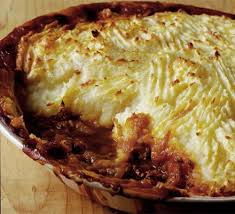
Shepherd’s pie

Long long time ago, when I was young and full of vinegar, and the other thing, I had a case. Private law proceedings. About twenty minutes into the mother’s evidence, the Judge carefully and deliberately closed his bundle, screwed back the cap on his fountain pen, looked at us and said “We are going to be in Court for five days on this. Is the whole case really going to be about shepherd’s pie?”


So I will reassure the reader now that this whole post is not going to be about shepherd’s pie. But I quite often use shepherd’s pie as an illustrative point when I talk to social workers about ‘good enough’ parenting.

mmmmm. (sorry to any vegetarian reader, but it really is delicious)

mmmmm. (sorry to any vegetarian reader, but it really is delicious)

We all have a pretty reasonable sense of what threshold criteria is – as a lawyer I have to look at a long chronology, or a semi-rambling email and find the bits that might actually amount to threshold.  Social workers understand threshold criteria and what it looks like. That’s what you need to get the child into care. That’s what decides whether the Court has the legal ability to make an order.


But what do you need to get the child back?  Well, firstly, there’s a misapprehension that once the child is in care, the onus is on the parent to show they’ve changed, to show that they don’t do heroin any more, to show that the ex-boyfriend really is an ex, to show that they can keep on top of the housework.  Remember that the burden is on the Local Authority, not the parent.  That’s not to say that if the concerns in the case are about heroin, that you are going to be fine if you keep taking heroin (because you’re not).

And then, the second misapprehension is about what is being looked for. Everyone hears and knows the expression – good enough.  We’re not looking for perfection, we’re looking for ‘good enough’.


My question, is where are we putting that bar of ‘good enough’ to see if the parent is above it, or below it?  I’ve done this exercise before when training, and we can do it now.

Imagine that you’ve got 1000 children, selected at complete random. How many of them do you think will be receiving care that’s not ‘good enough’ or better ?  Do your answer firstly just on gut. Just what genuinely comes into your head.

If you are honest, it is probably somewhere between 100 and 500.  Because the expression “good enough” immediately makes you think about average, or below average.  The anchor is immediately making you think about ‘good’ parenting.

But ‘good enough’ care isn’t about the care being comparable to an average child’s experience, or even a below average.  It is about the level of care that would mean that the child was suffering significant harm that wasn’t harm that could be realistically managed.

Looking at the care demand by population statistics, the very highest area in the country, currently Torbay, would be in care proceedings for 2 of those 1000 children. There are a handful that would be nearly 2, but most of them would be 1 or less than 1.  Of a million random children, somewhere between 100 and 230 children would be receiving care that was below good enough.

If you said 1 or 2 out of 1000 as your gut answer, either congratulations, or you are a liar, or you have heard me do this routine before.


So, if you are looking at the care that a child would be likely to receive and thinking about whether it is ‘good enough’,  it doesn’t help to be anchoring your mental picture as being average, or even in the bottom 10%. You are really talking about lining all of the children up in terms of the quality of care that they get, and only the bottom 0.1% would be getting care that wasn’t “good enough”


I’ve worked in many authorities (my current one is not that fixated about it) where the parenting assessments used to feature prominently an attempt to teach the mother how to cook shepherd’s pie from scratch (see, we did get back to it). Go to the shops, buy the ingredients, cook a shepherd’s pie.  It can be quite a nice exercise – it gets the children a nice meal, home cooked and full of good stuff, teaches a parent about planning, budgeting, organising, making time to do something. I can see why people do it.

But line up those 1000 children again – how many of them didn’t get a homemade meal yesterday? Or over the last week?  It can’t be a barometer of ‘good enough’ care, whether someone can cook a shepherd’s pie from scratch.  It is nice, it probably improves the child’s life, but that’s not a test of ‘good enough’ – a parent’s case doesn’t become not ‘good enough’ because they give their kid oven chips and Crispy Pancakes rather than homemade shepherd’s pie.  And if you are wincing at the idea of a child eating that sort of food, ask yourself how you would feel about a child (or an adult) eating Marks and Spencer’s  Chicken Alfredo ready meal, or Tesco’s Finest Boeuf Bourguignon?  It isn’t better, just because it is middle-class. Neither of them are home cooked, both of them are made in ways that you wouldn’t really want to think about.

Of course we want children to eat well. Of course we want a balanced diet with all the food groups, and five a day, and lots of fibre. And of course children who eat crap aren’t going to have such a good quality of life as the ones that do eat well, with parents who make them food from scratch. It just isn’t that relevant in assessing good enough parenting, that’s all.

The other classic meal that we try to teach parents to make from scratch is spaghetti bolognaise.  We’re really into mince in a big way.

It’s quite reminiscent of a 70s childhood, or as Sean Locke puts it in this clip  (terrible quality on the clip, sorry)  – the Seventies were pretty much just a sea of plates of mince in various forms being put in front of him – and he didn’t drink water till he was 15, subsisting on squash  (usually squash that was full of Tartrazine)

https://www.youtube.com/watch?v=n-3g1g_UO44


The thing about ‘good enough’ care being the test is that it is massively subjective.  Someone – a lawyer, a social worker, a Guardian, a Judge, is thinking about ‘good enough’ care and what they are doing it is comparing the parents care, or how they think the parents care would be, against their own notional idea of what ‘good enough’ care would be like.  If those people don’t even agree on how many of those random 1000 children would be receiving care that wasn’t ‘good enough’ or better, then how do they do the next bit which is imagining what care that is not ‘good enough’ would be like?   And your anchoring of what ‘good enough’ care is like is probably comparing what this child’s home might be like with ones that you know – your home, your home as a child, the home of the friend that you had where you never wanted to stay for dinner…   If you are thinking that this child’s home won’t be as nice as those, even the bad ones, then you have a bar that is too high.

I prefer, to be honest, to use the term ‘barely adequate’ rather than ‘good enough’.  Of course, nobody wants to talk about the outcome for a child of care proceedings being that they go back home for a life that is’barely adequate’ – it feels like we’re letting the child down, like we should have fixed more of the problems, that things ought to be radically improved by the end of care proceedings, not just a smidge better than when we started.  I completely get that. And there’s nothing wrong with aspiring to do those things – there’s absolutely nothing wrong with ending the case with a mum who DOES know how to cook Shepherd’s Pie from scratch. It is just that she doesn’t fail to be ‘good enough’ if she can’t do it.

If we put the bar of ‘good enough’ at home cooked meals from scratch, we’re asking parents to pole vault over that bar, when the reality is that the bar is a really low limbo bar that they just need to step over.  And if you want to know whether the parent is above or below the bar, it really does help to know where that bar is.


The President even distilled it in Re S and T today,


But it is fundamentally important that children are not to be adopted merely because their parenting is less than perfect, indeed, perhaps, only barely adequate. To repeat what was said in Y v United Kingdom (2012) 55 EHRR 33, [2012] 2 FLR 332, para 134, “It is not enough to show that a child could be placed in a more beneficial environment for his upbringing.”


not really, it is mince again! you know you want it

This is a vegetarian shepherd’s pie, to make it up to those poor veg loving readers

composite threshold – a living example


I wrote about the difficulties of composite thresholds here https://suesspiciousminds.com/2015/05/28/composite-threshold-documents-in-which-a-tightrope-is-walked/  particularly where a document is produced that sets out what everyone says but doesn’t end up with clarity as the precise way that threshold is said to be met.


This judgment by Her Honour Judge Owens  http://www.bailii.org/ew/cases/EWFC/OJ/2015/B73.html  OCC v B and T 2015 is a really good example of that.

Particularly since the Judge includes a suitably anonymised version of the threshold at the end of the judgment. I commend that, I think it makes far more sense when considering what decisions was made by a Court to see the factual background set out.  I really like it.

The version provided is a composite document, set out in tablular form (and again, I like the way that this is produced, it is really helpful in terms of seeing what the allegation is, where the evidence is for it and what the parents say).


But it is a composite document. It doesn’t end up by setting out the findings that the Court was either making by agreement or was asked to adjudicate upon. So it isn’t a final threshold.

And then, there’s this bit in the judgment itself

Threshold is no longer in issue in this case. A composite threshold document has been agreed and the Local Authority accepts that the concessions recorded in that document are sufficient for threshold purposes. They do not therefore seek findings in relation to the issues not accepted on that document and I adopt that threshold document as my threshold findings in this case and make no findings in relation to items 1 (e), 3(a) and (b) on that schedule. A copy of that schedule, suitably redacted in relation to the identities of the parties, is appended to this Judgement


All very sensible and practical – the LA deciding not to push for additional findings where there is agreement and the concessions are sufficient.

However, when I look at the composite document, I see that whilst mother accepts all of the matters that remain (3 a) and (3b) were the only bits that she disputed, father was disputing just about EVERYTHING.  And the LA were accepting that they did not seek any findings in relation to matters that were disputed, so effectively all of those matters are just crossed out of the threshold.

Here is what father actually concedes, in totality


1(b) I accept arguing which can be seen as verbally abusive but not aggressive.  [Really hard to see in the light of Re A and Re J – and even before then, that this amounts to threshold]

1(c) The mother made allegations of domestic abuse against father but then withdrew them.   [Well, that’s not threshold unless the assertion is that the allegations were true OR that the making of false allegations caused emotional harm to the child, neither of which are asserted]

1(d) Both parents sent abusive text messages and Facebook messages to each other

2 The father had an argument with the Health Visitor because she came to the home for an important meeting without a sign language intepreter  (again, that’s not threshold)

4. The father accepts that he had some convictions, the most recent of which was ten years ago.


5. The father accepts that his other children were placed on the Child Protection Register but disputes that this was the right decision.


As we’ve previously discussed, it is possible that on a line by line basis, each individual allegation in and of itself would not amount to threshold, but that taken as a totality, it would. But that’s also not the case here. [Given that para 5 as drafted by the LA contains reference to his two older children being adopted, the Court could have been asked to find that the threshold relied upon and found in those proceedings was sufficient to establish a risk of harm from father, depending upon what was in it and how historical it was, but that didn’t happen]


Given what the Judge says about threshold  – LA don’t invite Court to make findings on any matters in dispute and that those matters which are accepted are how threshold is established, then those are the only concessions that are agreed by both parents.  The Local Authority could have invited the Court to find that the threshold was met on the basis of the mother’s concessions, and the Judge would then have had to rule on the matters that father disputed, but that’s not what happened. The LA invited the Court to make a finding that threshold was met on the basis of father’s concessions.

Now, just imagine for a moment, drafting a threshold that contains only those matters set out above. As a stand alone document, saying that this is why the children are at risk of significant harm.  It appears to me that this would be very short of threshold.


[There are 3 matters that relate chiefly to mother that father does not dispute, so we could add those in. She wasn’t always honest with professionals, she went to a refuge and then went back to father, and refused to go into a refuge just before the Court proceedings were issued.  IF the Court established that father was domestically violent, then those are matters which could add to the threshold, but there isn’t such a finding.  On the threshold that the case has ended up with, the very high point of the findings made is that harsh words were exchanged between mother and father (both verbally and via text messages/facebook) ]


I’ll be clear,

(a) The allegations set out by the Local Authority in their original document (the first two columns of the composite document) were more than capable of meeting threshold

(b) From reading the judgment, I would be confident that most, and perhaps all of them, would have been found had the LA pushed for this – the evidence was there to do so

(c) I’m fairly sure that all involved were approaching the case on the basis that it was not in dispute that there had been DV between father and mother and that he posed a risk to the children

(d) But actually there was. Father’s response to threshold disputed this. And that became a live issue as to whether his admissions were sufficient or whether the Court needed to deal with the disputed issues on threshold

(e) In my opinion, the actual concessions made and accepted, are way short of threshold  (particularly threshold for deciding that the children should be permanently separated from their mother – whilst there is only one section 31 threshold criteria it is plain from the Supreme Court in Re B that the Court’s final orders have to be proportionate to the harm suffered or a risk of being suffered.  )


I think there was ample evidence for the Court to find that father was a risk to the children and that mother had been subjected to domestic violence and had not been able to protect. And reading the totality of the judgment, I think that’s the basis on which the Court approached the case. Additionally, there were three significant  findings made which could properly go into a finalised threshold, and given that the Judge set these out in passages of her judgment that were explictly considering ‘risk of harm’ I would legitimately be putting them into a final threshold document.  BUT that would have been dependent on the Judge’s paragraph about threshold adding ‘and the specific matters that I found in my judgment in relation to risks of harm to the children’ or something similar.


  If they return to the care of their mother, however, I find that the likelihood is that this placement would breakdown due to her inability to apply the required parenting skills to a good enough standard

I find and the only conclusion I can draw is that she is simply not capable of working openly and honestly with the local authority in the best interests of her children.

The stakes are therefore very high indeed for them and the risk of them suffering further disruption and emotional harm is, as I have found, high


The Judge also makes comment that mother failed to understand the risk that father poses (and that’s very important, but it is equally important to remember that the Court hasn’t actually made findings about the level of risk father poses, and the adverse findings against him relate to mutual exchanges of harsh words between him and mother. )


There is also reference to what was probably the most important incident

On the 9th December 2014 RB moved to a place of safety following an alleged assault on her by ST on 8th December 2014. This assault was witnessed by a member of the public and ST was arrested. The Police records of this assault are at F110-112 and F129 – 144 and I have also seen the DVD recordings of ST’s Police interview and RB’s statement to the Police about this incident.


Although that is in the LA threshold document, at 1(d),  it is disputed by the father, and because of the formulation of words in the judgment about threshold (which I’ll repeat here) it is NOT a finding made. The Judge had done sufficient to make a decision about that allegation, and would probably have made the finding if asked, but was not in fact asked to do so.


Threshold is no longer in issue in this case. A composite threshold document has been agreed and the Local Authority accepts that the concessions recorded in that document are sufficient for threshold purposes. They do not therefore seek findings in relation to the issues not accepted on that document and I adopt that threshold document as my threshold findings in this case and make no findings in relation to items 1 (e), 3(a) and (b) on that schedule.


It is really obvious that the Court is proceeding throughout on the basis that it is established that father is a risk to the children and indeed to the mother.

BUT the threshold findings that were actually made by the Court were astonishingly low – far lower than I suspect anyone involved really grasped. And if there had been a second threshold document, one that went beyond just setting out a Scott Schedule  (we say,she says, he says) and into just setting out the precise allegations that were actually agreed i.e a final threshold, looking at that on a piece of paper would have made it clear that the concessions given were not sufficient to cross threshold and that the Judge would have to be invited to make findings.

IF this father were to be involved in future Court proceedings, someone picking up this judgment might consider that the Court had made findings that he posed a risk to his children and that he had been domestically violent to the mother   (and I’m sure that’s what those involved thought had happened) BUT as a matter of law, the findings against dad that were made were only those things that he admitted to – which amount to an exchange of harsh words with mother and an argument with a Health Visitor.  Would the actual findings that were made by this Court be sufficient to establish a likelihood of harm with future children?


I don’t mean to be critical of anyone involved – this is just an illustration of how a composite style threshold can pose a problem. Had a second document that sets out, taking into account just those matters that were accepted, it would have been really plain that the LA needed to go above and beyond just the accepted matters and into asking the Court to make findings on the central issue (was father domestically violent towards the mother and was he a risk to the children?).   I am sure that all involved took those matters as a given – I’m sure that if father had been fighting the allegations he would not have succeeded, but the approach that the concessions themselves were sufficient to meet the threshold doesn’t seem to stack up when you look at it with fresh eyes.


There’s a lot of other stuff to praise in this judgment, it is just a shame about that one element.


“Immigrants who beat their children should get special treatment”


This was the headline of a piece in the Daily Telegraph, similar stories in other newspapers.

http://www.telegraph.co.uk/news/uknews/immigration/11663029/Immigrants-who-beat-their-children-should-get-special-treatment-says-judge.html


It ticks all of the boxes for a Telegraph story – we have here a High Court Judge (and as she is female, for some reason it is considered appropriate to set out within the story her marital situation and how many children she has), social workers, ‘secret’ family Courts and immigrants being treated more favourably than UK nationals. It’s a great story for the Telegraph.


The story leads with this

Immigrants should be allowed to “slap and hit” their children because of a “different cultural context” when they are new arrivals in Britain, a High Court judge suggested yesterday.

and it has some quotations from the Judge, and a bit of rent-a-quote from a politician.


Is it accurate?

Well, I don’t think is misleading. I don’t think that the Judge intended to convey that meaning, but the meaning that the Telegraph have derived from it is the fault of the judgment not the fault of the reader. I also don’t think that the Telegraph have sensationalised it or are wrong to report it. I don’t think that it says everything that the Telegraph believes that it says, but I think that their reading of it is one that a common sense reader would derive from it.


Re A (A child: Wardship) 2015

http://www.bailii.org/ew/cases/EWHC/Fam/2015/1598.html


[I’ll quickly hold up my hands – I read this on Tuesday when it came out and my reading of it was that the case was far too dull to blog about – I missed paragraph 67 when I first read it. I’m like the guy who decided that Fred Astaire ‘can’t sing, can dance a little’ ] 

This is the paragraph that has caused all of the fuss


67.I do not believe there was punitively harsh treatment of A of the kind that would merit the term physical abuse. Proper allowance must be made for what is, almost certainly, a different cultural context. Within many communities newly arrived in this country, children are slapped and hit for misbehaviour in a way which at first excites the interest of child protection professionals. In this instance, and on the basis of his ABE interview, A did not appear to have suffered more than sadness and transient pain from what was done to him.


A common sense reading of that is that we must make allowances in law for a parent who has just come to this country and that social workers should treat them differently. Which is the Telegraph’s take on it. They aren’t misquoting or misleading – they report what the Judge said and then report how an ordinary person would read those remarks.


The allegations were being made in private law proceedings (the argument being between mum and dad , rather than public law proceedings where the argument would be between social workers and parents).

The allegation made by mum was that the father had slapped the child twice. The child  when interviewed by the police said that dad had hit him with a belt, causing him pain and leaving marks which went quickly. Father said that he smacked the child as part of normal discipline.  The job of the Judge therefore was to decide which of these three versions (if any) was correct, and what impact that this would have on any decisions about whether the child should see his father and spend time with him.  [There were also a lot of allegations between mother and father as to domestic violence, and the Judge found that father had been violent to the mother including an attempt at strangulation with a head scarf and a violent push]


  1. One of the last matters for discussions arises from A’s physical assault allegations comprised principally within his ABE interview. In the context of a question from the officer about what he did on 17 October – and seemingly out of the blue – A said, “I did my homework … With his belt, he kind of hits me.” A little later, A is asked, “OK and how does he hit you?” A who was by then looking directly at the officer, said, “With a belt … A long belt.” He described being hit on his back and leg and said it was “kind of fast, to hit me.” Asked how he felt, A said “Sad … But I’m little brave … I’m not scared of him… But normally I’m sad.” In response to questions as to whether it hurt, did it leave marks and whether they ‘went quite quickly’, A did not reply verbally but nodded his head to all three inquiries.” Towards the very end of the interview, A responded affirmatively when asked if he missed his father.
  2. The father wholly denies ever striking A with a belt or otherwise. He described with evident emotion that if he could not see A he does not “want to live.” He can “only say (he) never hit A with a belt” and he is “dying to see A.” The father also described what he meant by a “slap or a tap” the words used when he was interviewed by the police in connection with A’s allegations. He said this was not to slap A “badly but to keep him disciplined.”

At the end of my determination on this issue I make the following observations. I did believe the mother when she told me she had not said anything bad about the father although it had been for her “really horrible being separated from her son.” The mother also said that during the time they were together, she had seen the father slap A twice and there had been occasions when he had been pushed and shouted at. She had not told her Solicitor because there had been “so many things.”


The conclusion of the judgment is that what father did to the child was not something that amounted to physical abuse (and thus, that it would not amount to any criminal offence).


The law in this country is that it is lawful to lawfully chastise a child (that’s a bit redundant, but I was trying to use the emotive word ‘smack’). The line is crossed where the physical discipline becomes a criminal offence.

The Telegraph piece says:-

The Children’s Act 2004 made it illegal for parents in England and Wales to chastise children if blows led to bruising, swelling, cuts, grazes or scratches, with the offence carrying up to five years’ imprisonment.

This is what the Children Act 2004 actually says (it is much, much much less clear cut than the Telegraph summary ) – picking through all of the legal jargon, what it says is “If you have hit a child in such a way that a criminal offence may have resulted, it is not a defence to cite reasonable punishment’  – for most of those offences, the impact on the child would be that the injury caused bruises, marks or fractures (ABH, GBH) or cuts or breaks to the skin (Wounding), but the offence of cruelty or battery don’t require those things.

If you were thinking that the Telegraph has given you legal advice that you can beat your child as long as you don’t leave marks or break the skin, you’d be wrong.  [For example, the sack of oranges scene in the Grifters]


58Reasonable punishment

(1)In relation to any offence specified in subsection (2), battery of a child cannot be justified on the ground that it constituted reasonable punishment.

(2)The offences referred to in subsection (1) are

(a)an offence under section 18 or 20 of the Offences against the Person Act 1861 (c. 100) (wounding and causing grievous bodily harm);

(b)an offence under section 47 of that Act (assault occasioning actual bodily harm);

(c)an offence under section 1 of the Children and Young Persons Act 1933 (c. 12) (cruelty to persons under 16).

(3)Battery of a child causing actual bodily harm to the child cannot be justified in any civil proceedings on the ground that it constituted reasonable punishment.

(4)For the purposes of subsection (3) actual bodily harm has the same meaning as it has for the purposes of section 47 of the Offences against the Person Act 1861.

(5)In section 1 of the Children and Young Persons Act 1933, omit subsection (7).


Right, so let’s get back to that first paragraph of the Telegraph story – the lead of the whole article

Immigrants should be allowed to “slap and hit” their children because of a “different cultural context” when they are new arrivals in Britain, a High Court judge suggested yesterday


I think that it is a fair reading of the case that the Judge suggested that. I don’t think it is quite what she meant, but it is a common-sense reading of what paragraph 67 says.

If, however, someone reads this to mean that immigrant parents have a ‘get out of jail card’ or that they can hurt their children in a way that would get a British parent into trouble but they would get off scot-free, and that this is now the law in this country, that wouldn’t be right.

Firstly, as the case was not decided on that particular point, the remarks would not be binding on any other Court.

Secondly, the Judge wasn’t deciding here that as a matter of principle different standards apply. She was taking into account the individual circumstances of the parents in deciding whether what happened to this child constituted something that would be a barrier to the father having contact with him.


I can’t defend the case entirely. I think it is significantly flawed. When I read it, I can’t ascertain whether the Judge found that

a) As the child said in the police interview, father hit him with a belt on his back and legs and that it hurt, it left marks but the marks went quite quickly; OR

b) as the mother said, she had seen father slap the child twice; OR

c) as the father said, that he slapped or tapped  the child as reasonable discipline


It is such an important point that it is really quite problematic that the Judge doesn’t say whether she concluded that the child’s account was right or that father’s account was right.

For example, if the Judge had said :-

I find that the father did smack his child on the back of the leg for being naughty, but that this caused no lasting harm to the child.


I suspect that it wouldn’t really be in the Press to the extent that it is. I certainly think that the majority of the Telegraph’s readers (and possibly mine too) would nod in agreement with that sentiment.

Whereas the reading of

The father hit his child with a belt, but that’s okay because he was an immigrant

is obviously newsworthy.  [And the readership of the Telegraph and my readers would not be nodding in agreement, but reaching for either a pen, a keyboard or a revolver]


And because such an important piece of information is not clear in the judgment (we know that the Judge concluded that WHAT happened to the child was not that serious, but not WHAT she concluded had happened), it does cause legitimate confusion.

The inference has to be that it was the hitting with a belt that she believed happened (since if it was the smack for reasonable punishment, then most of paragraph 67 doesn’t need to be said at all, since this would be within the boundaries of acceptable parental behaviour, whether the parent was from Clapham or Calcutta)

and that then leads to the Press reporting that the Judge is suggesting that a parent from Calcutta in this situation is to be treated differently to a parent from Clapham.


Going back to my original question – is the Telegraph piece accurate?  Well, it isn’t inaccurate. The judgment here is unclear about what father was found to have done, but then goes on to excuse what he has done. Part of that is because the effect on the child was very temporary and transient * , but part is the cultural issue set out in paragraph 67.


* There might be those who consider that this is not a helpful way of looking at it – a child can recover from the physcial signs of  a bruise on the face in a few days, but the emotional impact can be much more than that. I haven’t been a child for many many years, but I can still vividly recall each and every occasion that an adult struck me in rage as a child.  Whereas the reasonable smacks I got for being naughty are long forgotten. The bruises from a violent assault fade much more easily than the memories.

I think that paragraph 67 is not terribly helpful, and if an argument was being developed in that way it needed more space within the judgment.  I don’t read anyone within the case as having run the argument as “Father did X, but we do X in India”

Father’s case was that what he had done was reasonable chastistment (in Clapham) not, that what happened might have been unreasonable in Clapham but it was reasonable in Calcutta.


I’m not sure that the controversial parts of para 67 needed to go in the judgment at all, or play any part of the decision-making. This wasn’t one of those cases (and they do happen) where a parent says “I did do X, and I now know that X is considered wrong in this country, but it isn’t where I’m from”


It would be worrying if as a result of the reporting of the story  (and I’ll stress that I don’t think the Press are either inaccurate or irresponsible in their reporting on this), that social workers formed the view that if they are told that a recently arrived immigrant had hit their child with a belt, they should not take that seriously and not take action if they consider it appropriate.  Or that a lawyer thought that as a result of this case, that wouldn’t be capable of establishing threshold.  It would also be worrying if a parent thought that they are being treated more harshly than a parent just arriving from another country would be.  OR that a parent who is in a relationship with someone recently arrived from another country thought that it was okay for their partner to discipline the child with a belt.

For me, the cultural issues are about understanding, rather than condoning. There are parts of the world that tolerate, support, believe in Female Genital Mutilation, and we can understand that parents who have arrived in the UK might have those views, but we can’t condone them acting upon them.  We have to judge all parents on the standards of what is acceptable and lawful in the UK, though we can understand that those standards can be different in other countries.


Who has the burden of proof?


Well, that’s a stupid title for a blog post.  The burden of proof  – whose job it is to prove whether something happened, and whose job it is to persuade the Court to make the order is the applicant. In public law cases, that’s the Local Authority (the social workers).  It isn’t the parents job to prove that they didn’t injure a child, or that the Court should NOT make a Supervision Order. It is well known, and requires no thought or analysis at all by a lawyer – all of us know that already.

There is, of course, a reason why I am asking that question in the title.  It is because a High Court decision has just emerged that makes me call that obvious truism into question.

Here’s the issue – in a case where consideration is being given to a child being removed from a parent under an Interim Care Order, there’s a specific question to be answered. That is, does the child’s safety require immediate removal.  And in deciding whether to make any order at all, the Court has to consider that the child’s welfare is paramount.  So, a Court won’t make an ICO with a plan of removal unless (a) the child’s safety requires immediate removal and (b) the order is the right thing for the child.  The burden of proof would be on the applicant, the social worker.


In the case of Re N (A Child: Interim Care Order) 2015 decided by His Honour Judge Bellamy, but sitting in the High Court, here is how the social worker answered those questions.


http://www.bailii.org/ew/cases/EWFC/HCJ/2015/40.html


46.         On the key issue of removal, the social worker said that in her opinion ‘N’s immediate safety does not require separation’. On the contrary, she considers that any changes in the current care arrangements ‘will be detrimental to N’s well-being and emotional safety’.


So, no the child does not REQUIRE separation as a result of immediate safety risks, and no the child’s removal would not be in the child’s best interests.


If the Local Authority case was that the two tests were not satisfied (and that was the evidence given), and the burden of proof falls on them, then the order can’t be made, surely?

Well, that’s why this case is challenging, because the Court DID make the Interim Care Order, did say that that the child’s safety requires immediate separation and did say that separation would be in the child’s best interests.

Hmmm.

Let’s look at this logically. The ultimate decision as to whether the two tests are met is of course the Judge. If the social worker had said “yes, the test is met”, that isn’t the end of it. A Judge can hear all of the evidence and come to a different conclusion.  So, surely the reverse must also apply – if a Judge hears all of the evidence and DOES think that the tests are made out, he or she does not have to accept the evidence given by the social worker as being right, or determinative.

The Judge can, as here, decide that the social worker’s analysis of risk and what is best for the child is wrong.  It would obviously be wrong for a Judge, if they felt that, to simply ignore it and not give their own judgment and reach their own conclusions.

That’s the pro argument for a Judge making an ICO where the LA case hasn’t been made out on their own evidence.

The con argument is that the burden of proof is there for a reason – it is for the LA to prove their case. By the end of their evidence, they ought to be over the line. Yes, a parents evidence might retrieve the situation for the parents case and lead to a decision that the right thing is something else. Or the parents evidence might make the LA’s case even stronger. But by the time the LA close their case, there ought to be enough evidence to say “Yes, looking at everything at this snapshot moment, the tests are made out”.  If the LA case isn’t made out by the time they close the case, and reliance is placed on the later evidence of the other parties, that is smacking of a reversal of the burden of proof.

Otherwise, why have a burden of proof at all? After all, hardly any cases end up exactly 50-50, with the Judge unable to make a decision, with the burden of proof being the final feather that tips the scales.  (The only family case I’ve ever seen like that is the Mostyn J one  A County Council v M and F 2011  https://suesspiciousminds.com/2012/05/04/a-county-council-v-m-and-f-2011/ ) so the burden of proof is more than simply how to settle a tie, it has to be about more, surely?


The case here is further complicated, because it wasn’t the Local Authority asking for an Interim Care Order and removal.  It is one of those cases that started as private law proceedings, the Court became increasingly concerned about the child’s well-being  (to be honest, the FACTS of this case probably warrant their own blog post and discussion – in a very short summary, they are about whether the mother had been indoctrinating the child into a form of Jehovah’s Witness belief and practice which was making it impossible for him to have a relationship with his father who did not hold those beliefs – it was an intolerance for non-believers that was the key issue, rather than what the mother and the child were choosing to believe in a positive sense) and made a section 37 direction. And an Interim Care Order with a direction to the Local Authority that the child should be removed and placed in foster care.

That order was the subject of an appeal, and the ICO was stayed pending that appeal. Five months passed, and the LA reported in the section 37, saying that they did not seek removal at an interim stage, but did intend to issue care proceedings. Mother withdrew her appeal.

Care proceedings were issued, and this contested ICO hearing came about as a result of a request from the child’s Guardian.

So, the LA weren’t seeking the ICO, or separation. Although both could only come about as a result of the application that they had lodged for a Care Order.  So, was the burden of proof here on the Local Authority (who had applied for a Care Order) or on the Guardian (who was asking the Court to make an ICO and sanction removal)?  Or was it an application that the Court simply had to hear and determine?  I am honestly a bit legallly stumped on this. My brain says that the legal burden of proof has to be on the party seeking the order, so the Guardian. Just as within care proceedings where the LA is the applicant, a party seeking an adjournment has the burden of proof to persuade the Court to grant the adjournment, even though a formal application might not necessarily be lodged.

An additional complication here was that the LA were saying that not only did they not want an ICO and did not want the power to remove the child, they didn’t intend to exercise that power even if the Court sanctioned it.

In essence, the LA were saying that the religious messages being given to this child were messing him up, but that removing him from mother at an interim stage might mess him up even more. It might make his relationship with his father even more damaged, if he blamed his father for him being taken away from mother and put in foster care.


Given that all of this arose from the Judge originally making an ICO and sanctioning a plan of separation, who had the burden of proof for that order?  It seems opaque.  One presumes that the Court was being invited to do this by one of the parties, so the burden would fall upon them. But what if the Court was doing it of their own motion? Then the burden of proof falls upon the Court, who become then both player and referee in the contest.  The section 37 ICO power is a very practical way to allow the Court to intervene to protect a child who seems to be at risk, but as the case law on removal has developed over the years, section 37 ICOs become something of an anomaly. It is very difficult to see how a Court making one of its own motion can avoid a perception that having raised it as a possibility themselves it is then fair to determine an application that they themselves set in motion…


The case is complicated STILL FURTHER, because both the LA and the mother indicated that IF the Judge was to make an ICO with a recommendation for removal, in the teeth of the LA saying that they did not want it, they would each appeal.

The Court however felt that the risks did warrant making an ICO and that the child ought to be removed, even if the LA were not willing to do so.


I am satisfied that N has suffered emotional harm. The social worker agrees. I am satisfied that the fact that N has been immersed by his mother in her religious beliefs and practices has been a significant factor in causing that emotional harm. The social worker is not convinced. I am satisfied that since the hearing last November N has continued to suffer emotional harm. The social worker agrees though attributes this to the conflict between the parents, not to religious issues. I am satisfied that in the absence of significant change in N’s circumstances there is a risk that he will continue to suffer harm.

  1. Since the shared care order was made N has suffered and continues to suffer significant emotional harm. If the present arrangements continue I am in no doubt that N will continue to suffer that harm. Persisting with the present shared care arrangement is not in his present welfare interests at this moment in time.
  2. I am not persuaded that placement with father is appropriate. For the reasons articulated by the guardian, I accept that the likelihood is that placement in the father’s primary care would have an adverse impact on N’s relationship with his father.
  3. I am satisfied that the change required is that N be removed from the care of his parents and placed with experienced foster carers.
  4. The social worker disagrees. As a result of the position taken by the local authority, if I make an interim care order there is no certainty that the local authority will remove N and place him in foster care. There is no clarity as to the time it will take local authority managers to decide how to respond to an interim care order. If they do not respond positively there could be an impasse between the court and the local authority. For the local authority, Mr Sampson has already indicated that if removal is required he anticipates that the local authority will consider whether there are grounds for appeal. Even if the local authority did not seek leave to appeal, experience suggests that the mother would seek leave. The last time she did so the appeal process took three months. The final hearing of these care proceedings is fixed to take place in mid-August. Against that background, acknowledging the uncertainty about whether an order requiring N’s removal into foster care would be implemented ahead of the final hearing, should the court adopt what might be called the ‘pragmatic’ approach and defer a decision about removal until the final hearing or should the court put that uncertainty to one side and make an order which reflects its assessment of the child-focussed approach required by s.1 of the Children Act 1989?


The Judge felt empowered by the remarks of the Court of Appeal in Re W  (the Neath Port Talbot case) in imposing a care plan on a Local Authority who were resistant to it. The Judge concludes that if he makes an ICO with a care plan of removal, the LA’s reaction to it if they disagree must be to appeal and seek a stay NOT to refuse to execute it.   (I think that respectfully, the Judge is wrong there, but I’ll explain why in a moment)


         In resolving that issue I derive assistance from the decision of the Court of Appeal in Re W (A Child) v Neath Port Talbot County Borough Council [2013] EWCA Civ 1277. In that case the first instance judge made an assessment of risk which the local authority did not accept. On appeal, the question for the court was whether the judge was wrong to have made a care order on the basis of a care plan with which she did not agree and in the circumstance that the order was opposed by both the local authority and the mother. The leading judgment was given by Lord Justice Ryder. The following passages from his judgment are relevant to the problem which I have identified:

  1. The courts powers extend to making an order other than that asked for by a local authority. The process of deciding what order is necessary involves a value judgment about the proportionality of the State’s intervention to meet the risk against which the court decides there is a need for protection. In that regard, one starts with the court’s findings of fact and moves on to the value judgments that are the welfare evaluation. That evaluation is the court’s not the local authority’s, the guardian’s or indeed any other party’s. It is the function of the court to come to that value judgment. It is simply not open to a local authority within proceedings to decline to accept the court’s evaluation of risk, no matter how much it may disagree with the same. Furthermore, it is that evaluation which will inform the proportionality of the response which the court decides is necessary.
  2. …Parliament has decided that the decision is to be a judicial act and accordingly, the care plan or care plan options filed with the court must be designed to meet the risk identified by the court. It is only by such a process that the court is able to examine the welfare implications of each of the placement options before the court and the benefits and detriments of the same and the proportionality of the orders sought…
  3. …The decision about the proportionality of intervention is for the court…It should form no part of a local authority’s case that the authority declines to consider or ignores the facts and evaluative judgments of the court. While within the process of the court, the State’s agencies are bound by its decisions and must act on them.


  1. There is a second issue and that relates to the extent of the court’s power to enforce an interim care order requiring removal in circumstances where the local authority disagrees with that plan and comes to the decision that although it is content to share parental responsibility it is unwilling to remove because, notwithstanding the court’s evaluation, it considers removal to be disproportionate. The law is clear. Although the Family Court dealing with care proceedings can make a care order (whether a final order or an interim order) and express its evaluative judgment that the child should be removed and placed in foster care, it has no power to order removal. If the local authority decides not to remove the child the only mechanism for enforcement of the court’s evaluative judgment is by separate process in the form of judicial review.
  2. On this issue, in Re W (A Child) Ryder LJ makes the following observations:
  3. …once the no doubt strong opinions of the parties and the court have been ventilated, it is for the family court to make a decision. That should be respected by the local authority. For the avoidance of doubt, I shall be more plain. If the local authority disagree with the judge’s risk evaluation they must in a case where it is wrong appeal it. The appellate court will be able to consider such an appeal, where that is integral to the order or judgment of the court. If the welfare evaluation is not appealed then it stands and the local authority must respect it and work with it while the proceedings are outstanding. To do otherwise risks disproportionate, irrational or otherwise unlawful conduct on their part.
  4. There is no purpose in Parliament having decided to give the decision whether to make an order and the duty to consider the basis upon which the order is made to the judge if the local authority that makes the application can simply ignore what the judge has decided and act as if they had made the decision themselves and on a basis that they alone construe.


  1. In Re W (A Child) the issues related to a final care order. In this case I am concerned not with a final care order but with an interim care order. Does that make a difference? In my judgment it does not. The observations made by Ryder LJ are equally relevant to interim orders. Parliament has determined that it is for the court and not the local authority to evaluate, on the basis of its assessment of the evidence, whether an interim care order on the basis of removal into foster care is necessary and proportionate. The way to challenge that decision is by appeal and not by decision of senior managers not to remove.

100.     At the hearing in November I came to the clear conclusion that in light of the emotional harm N had suffered and was continuing to suffer it was proportionate and in N’s best welfare interests for him to be removed into foster care under an interim care order. As a result of the mother’s appeal against that order (an appeal which was subsequently withdrawn) N has remained in the care of his parents. Six months later, I find that N has continued and still continues to suffer emotional harm in the care of his parents. I am in no doubt that the child-focussed approach required by s.1 of the Children Act 1989 requires that he be removed from the care of his parents and placed in foster care without further delay. I accept that steps which may now be taken by the local authority and/or the parents may have the effect that my order may not be implemented ahead of the final hearing in August. I am satisfied that that possibility should not deter me from making orders which I consider to be in the best interests of N’s immediate welfare. I shall, therefore, make an interim care order. I make it clear that that order is premised upon an expectation that the local authority will immediately remove N and place him in foster care


I don’t think that this strong reading of the dynamic between Court and LA  survives either the statute, the House of Lords decision on starred care plans or the President’s own guidance in the Court of Appeal case of Re MN (an adult) 2015 which corrected any misapprehension that might have been caused by Re W a child.   (I have always felt that Re W went far too far with its concept of mexican stand-offs and judicial reviews, and that Re MN puts the relationship between judiciary and Local Authority on care plans in the correct way)

MN (adult) 2015 – Court of Appeal pronouncements


  • It is the duty of any court hearing an application for a care order carefully to scrutinise the local authority’s care plan and to satisfy itself that the care plan is in the child’s interests. If the court is not satisfied that the care plan is in the best interests of the child, it may refuse to make a care order: see Re T (A Minor) (Care Order: Conditions) [1994] 2 FLR 423. It is important, however, to appreciate the limit of the court’s powers: the only power of the court is either to approve or refuse to approve the care plan put forward by the local authority. The court cannot dictate to the local authority what the care plan is to say. Nor, for reasons already explained, does the High Court have any greater power when exercising its inherent jurisdiction. Thus the court, if it seeks to alter the local authority’s care plan, must achieve its objective by persuasion rather than by compulsion.
  • That said, the court is not obliged to retreat at the first rebuff. It can invite the local authority to reconsider its care plan and, if need be, more than once: see Re X; Barnet London Borough Council v Y and X [2006] 2 FLR 998. How far the court can properly go down this road is a matter of some delicacy and difficulty. There are no fixed and immutable rules. It is impossible to define in the abstract or even to identify with any precision in the particular case the point to which the court can properly press matters but beyond which it cannot properly go. The issue is always one for fine judgment, reflecting sensitivity, realism and an appropriate degree of judicial understanding of what can and cannot sensibly be expected of the local authority.
  • In an appropriate case the court can and must (see In re B-S (Children) (Adoption Order: Leave to Oppose) [2013] EWCA Civ 1146, [2014] 1 WLR 563, para 29):

    “be rigorous in exploring and probing local authority thinking in cases where there is any reason to suspect that resource issues may be affecting the local authority’s thinking.”

    Rigorous probing, searching questions and persuasion are permissible; pressure is not.


The Court can, as explained in the next passages of Re MN, give a judgment setting out how they perceive the risks and how they could best be managed, and invite the LA to file a care plan addressing those matters. BUT, if there remains resistance, the Judge cannot compel the LA to remove.  The Court CANNOT dictate to the Local Authority what the care plan is to say.

The division of powers is very plain – the Local Authority CANNOT remove a child unless there is a Court order and the Court decides whether to grant such an order. But the Court cannot impose a removal on a Local Authority who do not want to remove.

Of course, in a very practical sense, a Judge who gives a judgment saying that having heard and tested the evidence, he considers the child to be at danger if the child were not removed, places the LA in a huge predicament. If the Judge is right  on his analysis of risk (and Judges get paid to be right and to analyse risk), and something goes wrong, then the LA will be absolutely butchered at an Ofsted Inspection, a civil claim, a Serious Case Review or heaven forbid, an inquest. It really is an “on their head be it” issue.

It would be a courageous Local Authority who took a judgment forecasting dire consequences for a child and sanctioning removal and decided not to remove. But it has to be their choice. That’s the responsibility that they have.

The LA and mother both said that they would appeal this decision. I would expect that appeal to be successful, based on a reading of Re MN (a child) 2015. However, if the appeal is chaired by Ryder LJ, who had those strong views in Re W that the Court could exert considerable pressure on a LA to change their care plan and woe betide them if they did not,  then I would expect them to lose the appeal.  And frankly, I  personally think that each of the major Appeals on the use or misuse of section 37 ICOs, the Court of Appeal has got each of them badly wrong, so I would not be marching down to the bookies on any prediction.


I wonder if the Court of Appeal will clarify the burden of proof issue, or whether it will just get bogged down in who has bigger muscles to flex on care plans, Courts or Directors of Social Services?


ISIS and children being taken to Syria

I have to say, even after years and years of doing child protection law, I never actually thought I’d see cases in Court where parents were trying to get their children to become terrorists and fight in a war. But we are seeing these cases, and as I understand it, the reported cases are the tip of an iceberg.

If you are advising someone in this situation, or advising a Local Authority where such a thing is suspected, the President’s decision in Re M (Children) 2015 is going to be mandatory reading. It is particularly useful since it sets out in detail the orders made to protect the children and to recover them, and is an excellent route-map for future cases. Rather than drafting from scratch and having to invent what needs to be done  (and I’ve an inkling of just how hard that is in such cases), there’s now a source for how to assemble a workable order that will do the job.


Click to access re_m_20_5_152.pdf

There is one final point I must emphasise in this connection. It is the point made by Hayden J in the Tower Hamlets case (para 18(iv)):
“All involved must recognise that in this particular process it is the interest of the individual child that is paramount. This cannot be eclipsed by wider considerations of counter terrorism policy or operations, but it must be recognised that the decision the court is being asked to take can only be arrived at against an informed understanding of that wider canvas.”

There’s a very good summary by Marilyn Stowe here, and I recommend that also  http://www.marilynstowe.co.uk/2015/05/21/high-court-considers-family-who-vanished-with-their-children/


All agencies worked amazingly quickly and creatively to get these children back into the UK and save them from what would really be unthinkable, that they be pushed by their parents into taking up arms in a war zone.

Proof of facts – High Court guidance on disputed injuries

This is a very short judgment, with not a single word wasted, and it sets out not only a helpful summary of the state of the law on resolution of disputed injuries but clarifies some areas where there has been doubt and confusion.

It does not really need my ham-fisted attempt to summarise it, so I will simply alert you to its existence, and recommend heartily that you read it. [I am inferring that this judgment is setting out points of general principle arising from the Poppy Worthington case – that particular judgment of the facts in the case is not going to be published until the Autumn, when the re-hearing is underway]


BR (Proof of Facts) 2015

Mr Justice Peter Jackson

http://www.bailii.org/ew/cases/EWFC/HCJ/2015/41.html

Mr Justice Peter Jackson:


  • A fact-finding hearing into how a baby came to have a very large number of fractures took place in March and in April I gave a judgment that cannot be published at this stage. This short published judgment touches on three topics of more general relevance, described below.
  • The context is that the local authority alleged that the injuries were inflicted by the parents. They denied this and relied on expert medical opinion that the injuries may have been the manifestation of a condition as yet unknown to medical science that caused transient fragility in the baby’s bones. Other expert medical opinion considered it more probable that the fractures and other appearances were the result of assaults. It was common ground that there is no known medical condition that might explain the fractures, but that the radiological appearances were highly unusual.
  • The topics that I extract from the fact-finding judgment are these:


(1) Proof of facts.(2) Evidence about a child’s likely pain response, discussed in a recent decision of HH Judge Bellamy: Re FM (A Child: fractures: bone density) [2015] EWFC B26 (12 March 2015).

(3) An analysis of generic risk factors and protective factors.

Proof of facts


  • The court acts on evidence, not speculation or assumption. It acts on facts, not worries or concerns.
  • Evidence comes in many forms. It can be live, written, direct, hearsay, electronic, photographic, circumstantial, factual, or by way of expert opinion. It can concern major topics and small details, things that are important and things that are trivial.
  • The burden of proving a fact rests on the person who asserts it.
  • The standard of proof is the balance of probabilities: Is it more likely than not that the event occurred? Neither the seriousness of the allegation, nor the seriousness of the consequences, nor the inherent probabilities alters this.


(1) Where an allegation is a serious one, there is no requirement that the evidence must be of a special quality. The court will consider grave allegations with proper care, but evidence is evidence and the approach to analysing it remains the same in every case. In my view, statements of principle (some relied on in this case) that suggest that an enhanced level of evidential cogency or clarity is required in order to prove a very serious allegation do not assist and may lead a fact-finder into error. Despite all disclaimers, reference to qualitative concepts such as cogency and clarity may wrongly be taken to imply that some elevated standard of proof is called for.(2) Nor does the seriousness of the consequences of a finding of fact affect the standard to which it must be proved. Whether a man was in a London street at a particular time might be of no great consequence if the issue is whether he was rightly issued with a parking ticket, but it might be of huge consequence if he has been charged with a murder that occurred that day in Paris. The evidential standard to which his presence in the street must be proved is nonetheless the same.

(3) The court takes account of any inherent probability or improbability of an event having occurred as part of a natural process of reasoning. But the fact that an event is a very common one does not lower the standard of probability to which it must be proved. Nor does the fact that an event is very uncommon raise the standard of proof that must be satisfied before it can be said to have occurred.

(4) Similarly, the frequency or infrequency with which an event generally occurs cannot divert attention from the question of whether it actually occurred. As Mr Rowley QC and Ms Bannon felicitously observe:

“Improbable events occur all the time. Probability itself is a weak prognosticator of occurrence in any given case. Unlikely, even highly unlikely things, do happen. Somebody wins the lottery most weeks; children are struck by lightning. The individual probability of any given person enjoying or suffering either fate is extremely low.”

I agree. It is exceptionally unusual for a baby to sustain so many fractures, but this baby did. The inherent improbability of a devoted parent inflicting such widespread, serious injuries is high, but then so is the inherent improbability of this being the first example of an as yet undiscovered medical condition. Clearly, in this and every case, the answer is not to be found in the inherent probabilities but in the evidence, and it is when analysing the evidence that the court takes account of the probabilities.


  • Each piece of evidence must be considered in the context of the whole. The medical evidence is important, and the court must assess it carefully, but it is not the only evidence. The evidence of the parents is of the utmost importance and the court must form a clear view of their reliability and credibility.
  • When assessing alternative possible explanations for a medical finding, the court will consider each possibility on its merits. There is no hierarchy of possibilities to be taken in sequence as part of a process of elimination. If there are three possibilities, possibility C is not proved merely because possibilities A and B are unlikely, nor because C is less unlikely than A and/or B. Possibility C is only proved if, on consideration of all the evidence, it is more likely than not to be the true explanation for the medical findings. So, in a case of this kind, the court will not conclude that an injury has been inflicted merely because known or unknown medical conditions are improbable: that conclusion will only be reached if the entire evidence shows that inflicted injury is more likely than not to be the explanation for the medical findings.
  • Lastly, where there is a genuine dispute about the origin of a medical finding, the court should not assume that it is always possible to know the answer. It should give due consideration to the possibility that the cause is unknown or that the doctors have missed something or that the medical finding is the result of a condition that has not yet been discovered. These possibilities must be held in mind to whatever extent is appropriate in the individual case.


Evidence about pain response


  • In the present case, the medical experts commented upon the absence of an account by the parents of any pain response at the moments when the multiple fractures must have occurred. All the doctors stated that fractures are painful, whether bones are normal or not, and that a distinctive pain reaction would be expected from a baby when a bone breaks. The nature of the acute reaction might vary depending upon the bone. The nature of the chronic reaction in the hours and days afterwards might be confused with other childhood ailments.
  • The cause of the fractures was undoubtedly the application of force to the baby by an adult, who must have been touching the baby at the moments when the bones broke. The fractures did not occur spontaneously and the baby did not cause the injuries to itself. The question was whether the bones could have been weakened so that they fractured on normal handling.
  • On behalf of the parents, reference was made to an aspect of the judgment of HHJ Bellamy in Re FM (above). In that case, the allegation was that a mother was responsible for causing bilateral leg fractures to a child of just under a year of age. Accepting the evidence of Dr Allgrove, who was also a witness in this case, the judge found it possible that excessive use of a mid-strength topical eczema cream might have led to bone demineralisation and a propensity to fracture in a child with some degree of hypotonia and hypermobility of her joints. He concluded that the local authority had not proved its case and dismissed the proceedings.
  • The relevant part of the judgment concerns the judge’s observations on the medical evidence about a child’s likely reaction to a fracture at the moment that it occurs. A paediatrician had given evidence that it must have been “a memorable event”. At paragraph 115, the learned judge said this:


“As I have noted, that opinion is frequently given by paediatricians in cases such as this. In my judgment the contention that there must have been a ‘memorable event’ is unhelpful and potentially prejudicial to carers. Not only is it a formulation which invites an inference as to the veracity of any carer unable to describe a ‘memorable event’ [but] in my judgment it also comes perilously close to reversing the burden of proof, suggesting that a carer should be able to describe a ‘memorable event’ if the injury really does have an innocent explanation.”


  • Since this passage has been cited to me, and may be cited elsewhere, I will say something about it. It would of course be wrong to apply a hard and fast rule that the carer of a young child who suffers an injury must invariably be able to explain when and how it happened if they are not to be found responsible for it. This would indeed be to reverse the burden of proof. However, if the judge’s observations are understood to mean that account should not be taken, to whatever extent is appropriate in the individual case, of the lack of a history of injury from the carer of a young child, then I respectfully consider that they go too far.
  • Doctors, social workers and courts are in my view fully entitled to take into account the nature of the history given by a carer. The absence of any history of a memorable event where such a history might be expected in the individual case may be very significant. Perpetrators of child abuse often seek to cover up what they have done. The reason why paediatricians may refer to the lack of a history is because individual and collective clinical experience teaches them that it is one of a number of indicators of how the injury may have occurred. Medical and other professionals are entitled to rely upon such knowledge and experience in forming an opinion about the likely response of the individual child to the particular injury, and the court should not deter them from doing so. The weight that is then given to any such opinion is of course a matter for the judge.
  • In the present case, an adult was undoubtedly in the closest proximity to the baby whenever the injuries occurred and the absence of any account of a pain reaction on the baby’s part on any such occasion was therefore one of the matters requiring careful assessment.


Risk factors and protective factors


  • On behalf of the Children’s Guardian, Mr Clive Baker has assembled the following analysis from material produced by the NSPCC, the Common Assessment Framework and the Patient UK Guidance for Health Professionals.


Risk factors

  • Physical or mental disability in children that may increase caregiver burden
  • Social isolation of families
  • Parents’ lack of understanding of children’s needs and child development
  • Parents’ history of domestic abuse
  • History of physical or sexual abuse (as a child)
  • Past physical or sexual abuse of a child
  • Poverty and other socioeconomic disadvantage
  • Family disorganization, dissolution, and violence, including intimate partner violence
  • Lack of family cohesion
  • Substance abuse in family
  • Parental immaturity
  • Single or non-biological parents
  • Poor parent-child relationships and negative interactions
  • Parental thoughts and emotions supporting maltreatment behaviours
  • Parental stress and distress, including depression or other mental health conditions
  • Community violence

Protective factors

  • Supportive family environment
  • Nurturing parenting skills
  • Stable family relationships
  • Household rules and monitoring of the child
  • Adequate parental finances
  • Adequate housing
  • Access to health care and social services
  • Caring adults who can serve as role models or mentors
  • Community support


  • In itself, the presence or absence of a particular factor proves nothing. Children can of course be well cared for in disadvantaged homes and abused in otherwise fortunate ones. As emphasised above, each case turns on its facts. The above analysis may nonetheless provide a helpful framework within which the evidence can be assessed and the facts established.