A happy(ish) ending to a sad story

On 1st January 2014, a little boy was rushed to hospital. He was seven months old at the time and had stopped breathing. The hospital examined him and found that he had bleeding inside his brain (what is called a subdural haematoma) and bleeding in his eyes (what are called retinal haemorrhages).  Those things are commonly associated with a child having been shaken.  Older readers may recall the trial of Louise Woodward, an English girl acting as a nanny in America, who was on trial for murder as a result of a baby who died with those presentations.

The hospital at the time made a diagnosis that the boy had suffered injuries to the brain as a result of having been shaken. The Local Authority issued care proceedings (very quickly) and the Court went on to hear the evidence and make the decision.


Re N (a minor) 2014

http://www.bailii.org/ew/cases/EWFC/HCJ/2014/54.html

The issue in the case was quite simple  (although the evidence involved in proving it is very complex)

1. Did this child stop breathing and mother then shook him (too hard) in an understandable attempt to revive him?

or

2. Did one of his parents pick him up and shake him, causing the injuries?


What happened in this case, when the finding of fact hearing took place, is that the lead medical expert wanted to know more detail about the parents evidence about the night in question, and having done so, gave his opinion that what they described was wholly consistent with explanation 1, which is what they said had happened.

At the end of the evidence, when the Local Authority were making their submissions, they indicated that they were in agreement that what had happened was version 1 – what the parents had said. The Judge told them that he agreed and that they were right to have accepted that.


At the outset of this fact-finding hearing the local authority invited the court to find that N had been the subject of an abusive non-accidental injury at the hands of one or other of his parents. Having listened to all of the evidence, in particular that of the Consultant Paediatrician Dr Cartlidge, I was told at the beginning of submissions this afternoon that the local authority had modified its position and now accepted that this was an ill-advised resuscitative shake by the mother of N in circumstances which I shall describe in a moment. I indicated that I wholly agreed with the assessment and conclusions of the local authority, and I applaud the local authority for taking the very realistic and sensible course that it has taken in this case


The Judge set out that the hospital were right to have acted as they did, and so were the Local Authority

Accordingly, whilst I in no way criticise the hospital for the approach that they took suspecting non-accidental injury, and in no way criticise the local authority for initiating the child protection procedures that it did making N the subject of a care application and placing him in foster care, I am entirely satisfied, particularly on the basis of the evidence of Dr Cartlidge but also on the basis of the evidence of the parents, that this was an accidental injury. The mother may have been ill-advised to shake, but she did it with no malicious intent, quite the reverse, she did it because she thought she was helping her son. Both the mother, with the benefit of hindsight, and the father in the course of their evidence said words to the effect that the mother may have over reacted in terms of the vigour with which she shook N. Given that I accept that this was a resuscitative shake, it is being too critical in my view to criticise the mother for failing to judge to a nicety that which she did in the extreme panic which I accept she was in at that time. So accordingly I find that N’s injuries resulted from an innocent but ill-advised resuscitative shake by his mother in the early hours of 1 January 2014


That innocent action, though it had terrible consequences for N, was not something that amounted to threshold, and so N would return home to his parents.

The reason why it is only happy(ish) rather than happy, is that the judgment on this case did not get delivered until the end of November 2014 (published today), and so N was living apart from his family for around eleven months whilst this all got sorted out.  That seems a dreadfully long time.  This is the other side of the coin in the 26 week debate – I grouse all the time about how 26 weeks can be unfair to parents, but if you were these parents, you would really want the case to be finished as soon as possible, because they did nothing wrong but had to live apart from their sick child until the Court could hear the evidence and the truth emerge.


It isn’t really clear from the judgment why it all took so long, but these cases are not easy to deal with. Experts have to be identified and to report, all the records have to be tracked down, where the case is in the High Court it can be difficult to find the time for long hearings. It all adds up.

I don’t know whether anyone has ever done follow-up studies on the impact of children on being apart from their family for this sort of length of time and then successfully rehabilitated.  We tend to just walk away thinking of the happy outcome, but it must be really hard for everyone involved to adjust. This young boy of course now has life-altering consequences from his tragic injury, and that’s hard in itself; but you also have two parents who love him who missed out on 11 months of his 17 month life.  Will that just repair itself, or will there be knock-on effects on the family for years to come?


I hope not, and I wish them all well.


Shepherd’s pie

Long long time ago, when I was young and full of vinegar, and the other thing, I had a case. Private law proceedings. About twenty minutes into the mother’s evidence, the Judge carefully and deliberately closed his bundle, screwed back the cap on his fountain pen, looked at us and said “We are going to be in Court for five days on this. Is the whole case really going to be about shepherd’s pie?”


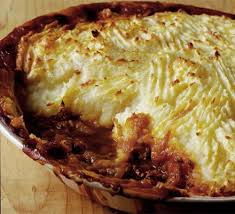
So I will reassure the reader now that this whole post is not going to be about shepherd’s pie. But I quite often use shepherd’s pie as an illustrative point when I talk to social workers about ‘good enough’ parenting.

mmmmm. (sorry to any vegetarian reader, but it really is delicious)

mmmmm. (sorry to any vegetarian reader, but it really is delicious)

We all have a pretty reasonable sense of what threshold criteria is – as a lawyer I have to look at a long chronology, or a semi-rambling email and find the bits that might actually amount to threshold.  Social workers understand threshold criteria and what it looks like. That’s what you need to get the child into care. That’s what decides whether the Court has the legal ability to make an order.


But what do you need to get the child back?  Well, firstly, there’s a misapprehension that once the child is in care, the onus is on the parent to show they’ve changed, to show that they don’t do heroin any more, to show that the ex-boyfriend really is an ex, to show that they can keep on top of the housework.  Remember that the burden is on the Local Authority, not the parent.  That’s not to say that if the concerns in the case are about heroin, that you are going to be fine if you keep taking heroin (because you’re not).

And then, the second misapprehension is about what is being looked for. Everyone hears and knows the expression – good enough.  We’re not looking for perfection, we’re looking for ‘good enough’.


My question, is where are we putting that bar of ‘good enough’ to see if the parent is above it, or below it?  I’ve done this exercise before when training, and we can do it now.

Imagine that you’ve got 1000 children, selected at complete random. How many of them do you think will be receiving care that’s not ‘good enough’ or better ?  Do your answer firstly just on gut. Just what genuinely comes into your head.

If you are honest, it is probably somewhere between 100 and 500.  Because the expression “good enough” immediately makes you think about average, or below average.  The anchor is immediately making you think about ‘good’ parenting.

But ‘good enough’ care isn’t about the care being comparable to an average child’s experience, or even a below average.  It is about the level of care that would mean that the child was suffering significant harm that wasn’t harm that could be realistically managed.

Looking at the care demand by population statistics, the very highest area in the country, currently Torbay, would be in care proceedings for 2 of those 1000 children. There are a handful that would be nearly 2, but most of them would be 1 or less than 1.  Of a million random children, somewhere between 100 and 230 children would be receiving care that was below good enough.

If you said 1 or 2 out of 1000 as your gut answer, either congratulations, or you are a liar, or you have heard me do this routine before.


So, if you are looking at the care that a child would be likely to receive and thinking about whether it is ‘good enough’,  it doesn’t help to be anchoring your mental picture as being average, or even in the bottom 10%. You are really talking about lining all of the children up in terms of the quality of care that they get, and only the bottom 0.1% would be getting care that wasn’t “good enough”


I’ve worked in many authorities (my current one is not that fixated about it) where the parenting assessments used to feature prominently an attempt to teach the mother how to cook shepherd’s pie from scratch (see, we did get back to it). Go to the shops, buy the ingredients, cook a shepherd’s pie.  It can be quite a nice exercise – it gets the children a nice meal, home cooked and full of good stuff, teaches a parent about planning, budgeting, organising, making time to do something. I can see why people do it.

But line up those 1000 children again – how many of them didn’t get a homemade meal yesterday? Or over the last week?  It can’t be a barometer of ‘good enough’ care, whether someone can cook a shepherd’s pie from scratch.  It is nice, it probably improves the child’s life, but that’s not a test of ‘good enough’ – a parent’s case doesn’t become not ‘good enough’ because they give their kid oven chips and Crispy Pancakes rather than homemade shepherd’s pie.  And if you are wincing at the idea of a child eating that sort of food, ask yourself how you would feel about a child (or an adult) eating Marks and Spencer’s  Chicken Alfredo ready meal, or Tesco’s Finest Boeuf Bourguignon?  It isn’t better, just because it is middle-class. Neither of them are home cooked, both of them are made in ways that you wouldn’t really want to think about.

Of course we want children to eat well. Of course we want a balanced diet with all the food groups, and five a day, and lots of fibre. And of course children who eat crap aren’t going to have such a good quality of life as the ones that do eat well, with parents who make them food from scratch. It just isn’t that relevant in assessing good enough parenting, that’s all.

The other classic meal that we try to teach parents to make from scratch is spaghetti bolognaise.  We’re really into mince in a big way.

It’s quite reminiscent of a 70s childhood, or as Sean Locke puts it in this clip  (terrible quality on the clip, sorry)  – the Seventies were pretty much just a sea of plates of mince in various forms being put in front of him – and he didn’t drink water till he was 15, subsisting on squash  (usually squash that was full of Tartrazine)


The thing about ‘good enough’ care being the test is that it is massively subjective.  Someone – a lawyer, a social worker, a Guardian, a Judge, is thinking about ‘good enough’ care and what they are doing it is comparing the parents care, or how they think the parents care would be, against their own notional idea of what ‘good enough’ care would be like.  If those people don’t even agree on how many of those random 1000 children would be receiving care that wasn’t ‘good enough’ or better, then how do they do the next bit which is imagining what care that is not ‘good enough’ would be like?   And your anchoring of what ‘good enough’ care is like is probably comparing what this child’s home might be like with ones that you know – your home, your home as a child, the home of the friend that you had where you never wanted to stay for dinner…   If you are thinking that this child’s home won’t be as nice as those, even the bad ones, then you have a bar that is too high.

I prefer, to be honest, to use the term ‘barely adequate’ rather than ‘good enough’.  Of course, nobody wants to talk about the outcome for a child of care proceedings being that they go back home for a life that is’barely adequate’ – it feels like we’re letting the child down, like we should have fixed more of the problems, that things ought to be radically improved by the end of care proceedings, not just a smidge better than when we started.  I completely get that. And there’s nothing wrong with aspiring to do those things – there’s absolutely nothing wrong with ending the case with a mum who DOES know how to cook Shepherd’s Pie from scratch. It is just that she doesn’t fail to be ‘good enough’ if she can’t do it.

If we put the bar of ‘good enough’ at home cooked meals from scratch, we’re asking parents to pole vault over that bar, when the reality is that the bar is a really low limbo bar that they just need to step over.  And if you want to know whether the parent is above or below the bar, it really does help to know where that bar is.


The President even distilled it in Re S and T today,


But it is fundamentally important that children are not to be adopted merely because their parenting is less than perfect, indeed, perhaps, only barely adequate. To repeat what was said in Y v United Kingdom (2012) 55 EHRR 33, [2012] 2 FLR 332, para 134, “It is not enough to show that a child could be placed in a more beneficial environment for his upbringing.”


not really, it is mince again! you know you want it

This is a vegetarian shepherd’s pie, to make it up to those poor veg loving readers

Adoption and American immigration

I have been waiting since Re B-S for one of these cases to come up, and it finally has.

Where a family member is put forward to care for a child, and that family member lives in America, the net effect of American immigration law is that in order to be able to get the child into the country to live with that family member, you’d need an adoption order. Nothing less than that would do for American immigration authorities. BUT, does that amount to ‘nothing else will do’ for the English family Court?


Re S and T (children) 2015  looks at that issue.

http://www.bailii.org/ew/cases/EWHC/Fam/2015/1753.html


Much of the case also involves the horrid rigmarole because in order to apply for an adoption order in England, the prospective adopters need to be habitually resident in England or Wales AND to have had a home in England for 10 weeks before the application.  (In practice, this is an utter nightmare in any case where the relatives are American, as it just causes logistical problems that don’t arise in any other country).  So if you are interested in those matters  those are in the early parts of the judgment, and it shows you the tangle that the process can become.

But my real interest is in the analysis of whether the US immigration requirements of ‘adoption or you’re not coming in’ amount to ‘nothing else will do’

This case is made more complex because they were initially private law proceedings brought about because the father removed the children to Pakistan, their mother later died of cancer, and it seems that the children have been actually living in America since July 2014  (as a result of a ‘holiday’ order made by Singer J, permitting the children, who were wards of Court, to go and stay with their maternal great aunt and great uncle for a defined period of time.  It is the great aunt and great uncle who applied for an adoption order under s84 Adoption and Children Act 2002, with the intention of later applying for an adoption order under US law.


[There are complicated technical reasons why they had to do it that way round, but basically if the English Court didn’t make an Adoption Order, they wouldn’t be able to get one in America, and the children wouldn’t be able to live with them]


The father was not consenting to the plan of adoption, and was actively opposing it, and there was no Placement Order (or application for a Placement Order)

  1. The issues: can the father’s consent be dispensed with?
  2. The father opposes the making of any adoption order and any order under section 84 of the 2002 Act. The applicants submit that his consent can be dispensed with. He disputes this.
  3. In my judgment, it is clear that there is nothing in section 84 itself to preclude the court dispensing with the father’s consent. Regulation 11(1)(p) is clear recognition that section 52(1) applies to an order under section 84. Moreover, Form A61, the application form to be used in applications under section 84, contains, in Part 3, para (j), provision for an application to dispense with parental consent. The father’s argument, however, is based on the wording of Articles 4 and 16 of the Convention which, he submits, plainly contemplates that a Convention adoption such as is proposed in this case cannot proceed in the absence of parental consent.
  4. I have set out the relevant passages already, but for convenience I will repeat the critical wording. Article 4(c)(2) provides that an adoption can take place “only” if:

    “the persons … whose consent is necessary for adoption … have given their consent freely.”

    Article 16(1)(c) provides that the Central Authority of the State of origin “shall”:

    “ensure that consents have been obtained in accordance with Article 4.”

    Article 16(2) provides that the Central Authority of the State of origin “shall”:

    “transmit to the Central Authority of the receiving State … proof that the necessary consents have been obtained.”

  5. The Convention does not contain any provisions identifying what consents are necessary. On a plain reading of the Convention, it leaves it to the domestic law of the State of origin to determine what, if any consents, are “necessary”. This is borne out by paragraph 129 of the Explanatory Report on the Convention drawn up by G Parra-Aranguren:

    “The persons whose consent is necessary on behalf of the child are determined by the applicable law: it will usually include … the child’s biological parents.”

  6. English domestic law enables the court to “dispense with” a parent’s consent in accordance with section 47(2)(c) of the 2002 Act if the requirements of section 52(1)(b) are satisfied. Those provisions apply both where the application is for an adoption order and where the application is for an order under section 84: see regulation 11(1)(l). They likewise apply in a Convention case: see regulation 55.
  7. The point is, ultimately, a very short one, incapable of much elaboration, but, in my judgment, where the court has “dispensed” with a parent’s consent in accordance with sections 47(2)(c) and 52(1)(b), that parent’s consent is no longer “necessary” within the meaning of Article 4(c)(2). It is not “necessary” because it has been “dispensed with”. It follows, in my judgment, that the court can in principle, as the applicants contend, dispense with the father’s consent in the present case.


The President having decided that the Court COULD dispense with father’s consent, then had to decide whether it SHOULD.

  1. The issues: should the father’s consent be dispensed with?
  2. The father submits that, even taking all the available material at its highest, there is no basis upon which the court could properly dispense with his consent and that on this ground alone I should dismiss the applicants’ claim here and now.
  3. In short, the father’s case is that, although he has been the subject of many serious findings – a proposition not challenged before me – they cannot be determinative. Indeed, it is said, they are not sufficient, on a proper welfare analysis, to justify the severing of the children’s relationship with him through adoption.
  4. It is properly common ground before me that, if the father’s consent is to be dispensed with, the applicants have to demonstrate that “nothing else will do”: see In re B (A Child) (Care Proceedings: Threshold Criteria) [2013] UKSC 33, [2013] 1 WLR 1911, [2013] 2 FLR 1075, In re B-S (Children) (Adoption Order: Leave to Oppose) [2013] EWCA Civ 1146, [2014] 1 WLR 563, [2014] 1 FLR 1035, and Re R (A Child) [2014] EWCA Civ 1625. As the Strasbourg court said in Y v United Kingdom (2012) 55 EHRR 33, [2012] 2 FLR 332, para 134, “It is not enough to show that a child could be placed in a more beneficial environment for his upbringing.” The local authority makes the same point when it observes, and I agree, that what might ‘tip the balance’ in a private law case does not necessarily suffice to justify adoption in the face of parental opposition.
  5. Putting the issue into context, there are two striking features of this case. The first is that the local authority, having considered the matter very carefully, has doubts (a) whether the ‘threshold’ in section 31 of the 1989 Act is met and (b) whether, even if threshold is met, it would apply for a care order, let alone a placement order. The second is that, in truth, adoption is being considered here only because of the seeming imperatives of United States of America immigration law. As the local authority puts it, the issue of adoption would certainly not have arisen but for the stance of the United States of America’s authorities. Counsel for the guardian was equally explicit: “It is purely the immigration requirements of the USA which dictate that although the dispute is between family members, a placement with the applicants will require an adoption process.”
  6. I make clear that neither of these factors can alone, or in combination, be determinative. One can, for example, conceive of a case in which “nothing else will do” precisely because of a requirement of foreign immigration law. But they are, nonetheless, very striking features of this case which must, at the very least, give one pause for thought.


The President is saying there that the US immigration requirement for adoption as a pre-requisite for the child living in the country MIGHT amount to “nothing else will do” or it MIGHT not. It isn’t determinative either way, and will depend on the merits and background features of the case.  [It appears that with strong reasons why the child can’t live with birth parents and has to live elsewhere, the immigration component might tip the balance, but where the ‘threshold’ component is weak, that it might not]


In looking at what might amount to ‘threshold’ against father, the President identified these matters


  1. What are the matters alleged against the father? They include, but are not limited, to the specific matters found by Sir Peter Singer as set out in his judgment given on 1 October 2014:

    i) Domestic violence of the father inflicted on the mother in August 2012 (judgment, paras 28-29): details can be found in the maternal uncle’s statement dated 11 April 2014.ii) The fact that the father removed the children to Pakistan in December 2012 without the mother’s consent (judgment, para 80(i)) – something emotionally abusive of both the mother and the children.

    iii) The fact that the father in effect abandoned the children between March 2013 and April 2014 (see paragraph 2 above), though he claims this was on the basis of legal advice he received in Pakistan.

    iv) The unlikelihood of the father fostering any kind of relationship between the children and the maternal family (judgment, para 79) – though this is something he now says he will do: see his statement dated 31 October 2014.

    v) The fact that the father put forward two bogus documents: a purported will of the mother dated 29 August 2013 and a purported “confession” of the mother (judgment, paras 80(ii) and 80(iii)).

    vi) The fact that the father “laid the ground for attempting” to obtain the insurance monies arising out of the mother’s death (judgment, para 80(v)).

    I am of course concerned with those matters which are relevant to the children’s welfare. It is hard to see that (v) and (vi), however deplorable, go to that issue.

  2. As against this, the following matters have to be borne in mind:

    i) Sir Peter Singer’s finding that the applicants and the children’s maternal uncle “deliberately” did not inform the father of the death of the mother “in order, as they sought, better to advance their own case for the children to remain with the mother’s family and in order to distance themselves from him for reasons which, because of his behaviour, are apparent” (judgment, para 80(vi)).ii) The quality of the contact between the father and the children as demonstrated, for example, by the records of contact sessions on 15, 17, 21 and 23 October 2014


I think that the Guardian’s conclusions are interesting and telling  (it is not really a right way to approach the law)


“I do not believe the father can meet the children’s global needs to the extent that [the applicants] can. I have sought in this report to delineate the differences between the father as a potential long term carer for the children in Pakistan and their great aunt and uncle in the USA.

The father’s position is not without merit and this is a finely balanced decision. If there was no one but the children’s father to care for them it is likely that despite his deficits he might be considered good enough. However if there is an alternative, and I accept that the mechanism for achieving an adoption placement for the children in the USA is inchoate, I take the view for the reasons adumbrated within this report, that this is preferable and in the children’s best lifelong interests than living with their father in Pakistan.

I fall back on the aspiration that this Court can do better for these children than place them with their father in Pakistan; it can honour and make possible their mother’s legacy because she knew what was best for her daughters.


That comes very close to (if not actually arriving at) a conclusion that if there were no  relatives in America, the children should be with their father, but because the children would have a better life with the relatives in America, adoption is the right plan.  That’s precisely the opposite conclusion of Y v United Kingdom 2012  (the case that launched Re B and all that followed it)  http://www.bailii.org/eu/cases/ECHR/2012/433.html “It is not enough to show that a child could be placed in a more beneficial environment for his upbringing.”

If the Court were approaching this as a pure ‘beauty contest’  – who comes across better, who might be able to meet the child’s needs better, with whom might the child have a better life, the maternal great aunt and great uncle would have won hands-down.  It is decidedly possible that if the great aunt lived in Ilford, not Illinois, and the order was a private law order rather than adoption, that the Court would have gone with that option.  There’s no presumption in private family law that a father would beat a grandparent or aunt. Re E-R 2015 for example http://www.familylawweek.co.uk/site.aspx?i=ed144557


But that’s not the approach with adoption.


It clearly isn’t the strongest set of ‘threshold’ or risks that father might pose the children, and the Guardian’s analysis whilst intending to be a reason why the Court should make the adoption order and allow the children to live /stay with their maternal family in America actually makes the legal argument as to why the Court shouldn’t.


  1. In these circumstances, the first question I have to consider is whether, on the evidence currently before me, I could be satisfied that the father’s consent “requires” to be dispensed with (the language of section 52(1)(b) of the 2002 Act) within the principles set out in Re P (Placement Orders: Parental Consent) [2008] EWCA Civ 535, [2008] 2 FLR 625, and In re B-S (Children) (Adoption Order: Leave to Oppose) [2013] EWCA Civ 1146, [2014] 1 WLR 563, [2014] 1 FLR 1035; whether I could be satisfied that “nothing else will do.” The short answer is that I could not be so satisfied. I agree with the father that the material at present before the court falls far short of meeting the required standard. Taking the matters I have summarised in paragraph 68 above at their highest, the case for adoption is simply not made out. One really only has to consider what is said in the reports of LB and JP and, equally significant, what those reports do not say.
  2. This being so, the second question is whether the proceedings should nonetheless continue. This comes down to two questions: (1) Is there some solid, evidence based, reason to believe that with further forensic activity – the testing of the existing evidence by cross-examination or giving the parties an opportunity to adduce further evidence – the conclusion might be different? This requires a robust and realistic appraisal of what is possible, an appraisal which is evidence based, with a solid foundation, not driven by sentiment or a hope that ‘something may turn up’. (2) Is there some solid advantage to the children in continuing the proceeding?
  3. In my judgment, there is no basis in the materials currently before the court for any belief that prolongation of the process carries with it any realistic prospect of the court ever being satisfied that the father’s consent requires to be dispensed with, that nothing else will do. The deficit in the existing evidence is simply too great to imagine that there is any realistic prospect of the gap being bridged. And in the circumstances, not least bearing in mind the length of time these proceedings have been going on, far from there being any solid advantage to the children in continuing the proceedings, their welfare requires finality now.
  4. The proceedings should now be brought to an end.
  5. I am very conscious that the consequence of this, in a sense, is that the father wins by default. The children go to him because the only alternative is ruled out because adoption is ruled out. But it is fundamentally important that children are not to be adopted merely because their parenting is less than perfect, indeed, perhaps, only barely adequate. To repeat what was said in Y v United Kingdom (2012) 55 EHRR 33, [2012] 2 FLR 332, para 134, “It is not enough to show that a child could be placed in a more beneficial environment for his upbringing.”


So the children were to be brought back to England by August, and to go back to the care of their father.

This, I think, is only the second reported case where a child was taken from prospective adopters who had been caring for the child for a significant period of time, and placed with either a parent or family member. The first of course was Holman J’s https://suesspiciousminds.com/2014/12/05/i-would-put-this-as-a-must-read-adoption-case-dynamite/


In that case, the interest of the child being placed with an aunt outweighed that of remaining with prospective adopters, in this one, the interest of the children being placed with dad outweighed that of remaining with prospective adopters who were family members.  (Blood is thicker than water, but parental blood is thicker than blood, perhaps)

Of course this one is rather different, since there hadn’t been any Court determination that adoption was the right plan for the child, and the plan of adoption arose solely as a result of US immigration law, but it does show that the Court is willing to implement the philosphy of Y v UK in real life cases and to reach decisions that it feels to me would not have been made in 2011.

Good luck anybody running a case with an American relative in getting the case done within 26 weeks.


composite threshold – a living example


I wrote about the difficulties of composite thresholds here https://suesspiciousminds.com/2015/05/28/composite-threshold-documents-in-which-a-tightrope-is-walked/  particularly where a document is produced that sets out what everyone says but doesn’t end up with clarity as the precise way that threshold is said to be met.


This judgment by Her Honour Judge Owens  http://www.bailii.org/ew/cases/EWFC/OJ/2015/B73.html  OCC v B and T 2015 is a really good example of that.

Particularly since the Judge includes a suitably anonymised version of the threshold at the end of the judgment. I commend that, I think it makes far more sense when considering what decisions was made by a Court to see the factual background set out.  I really like it.

The version provided is a composite document, set out in tablular form (and again, I like the way that this is produced, it is really helpful in terms of seeing what the allegation is, where the evidence is for it and what the parents say).


But it is a composite document. It doesn’t end up by setting out the findings that the Court was either making by agreement or was asked to adjudicate upon. So it isn’t a final threshold.

And then, there’s this bit in the judgment itself

Threshold is no longer in issue in this case. A composite threshold document has been agreed and the Local Authority accepts that the concessions recorded in that document are sufficient for threshold purposes. They do not therefore seek findings in relation to the issues not accepted on that document and I adopt that threshold document as my threshold findings in this case and make no findings in relation to items 1 (e), 3(a) and (b) on that schedule. A copy of that schedule, suitably redacted in relation to the identities of the parties, is appended to this Judgement


All very sensible and practical – the LA deciding not to push for additional findings where there is agreement and the concessions are sufficient.

However, when I look at the composite document, I see that whilst mother accepts all of the matters that remain (3 a) and (3b) were the only bits that she disputed, father was disputing just about EVERYTHING.  And the LA were accepting that they did not seek any findings in relation to matters that were disputed, so effectively all of those matters are just crossed out of the threshold.

Here is what father actually concedes, in totality


1(b) I accept arguing which can be seen as verbally abusive but not aggressive.  [Really hard to see in the light of Re A and Re J – and even before then, that this amounts to threshold]

1(c) The mother made allegations of domestic abuse against father but then withdrew them.   [Well, that’s not threshold unless the assertion is that the allegations were true OR that the making of false allegations caused emotional harm to the child, neither of which are asserted]

1(d) Both parents sent abusive text messages and Facebook messages to each other

2 The father had an argument with the Health Visitor because she came to the home for an important meeting without a sign language intepreter  (again, that’s not threshold)

4. The father accepts that he had some convictions, the most recent of which was ten years ago.


5. The father accepts that his other children were placed on the Child Protection Register but disputes that this was the right decision.


As we’ve previously discussed, it is possible that on a line by line basis, each individual allegation in and of itself would not amount to threshold, but that taken as a totality, it would. But that’s also not the case here. [Given that para 5 as drafted by the LA contains reference to his two older children being adopted, the Court could have been asked to find that the threshold relied upon and found in those proceedings was sufficient to establish a risk of harm from father, depending upon what was in it and how historical it was, but that didn’t happen]


Given what the Judge says about threshold  – LA don’t invite Court to make findings on any matters in dispute and that those matters which are accepted are how threshold is established, then those are the only concessions that are agreed by both parents.  The Local Authority could have invited the Court to find that the threshold was met on the basis of the mother’s concessions, and the Judge would then have had to rule on the matters that father disputed, but that’s not what happened. The LA invited the Court to make a finding that threshold was met on the basis of father’s concessions.

Now, just imagine for a moment, drafting a threshold that contains only those matters set out above. As a stand alone document, saying that this is why the children are at risk of significant harm.  It appears to me that this would be very short of threshold.


[There are 3 matters that relate chiefly to mother that father does not dispute, so we could add those in. She wasn’t always honest with professionals, she went to a refuge and then went back to father, and refused to go into a refuge just before the Court proceedings were issued.  IF the Court established that father was domestically violent, then those are matters which could add to the threshold, but there isn’t such a finding.  On the threshold that the case has ended up with, the very high point of the findings made is that harsh words were exchanged between mother and father (both verbally and via text messages/facebook) ]


I’ll be clear,

(a) The allegations set out by the Local Authority in their original document (the first two columns of the composite document) were more than capable of meeting threshold

(b) From reading the judgment, I would be confident that most, and perhaps all of them, would have been found had the LA pushed for this – the evidence was there to do so

(c) I’m fairly sure that all involved were approaching the case on the basis that it was not in dispute that there had been DV between father and mother and that he posed a risk to the children

(d) But actually there was. Father’s response to threshold disputed this. And that became a live issue as to whether his admissions were sufficient or whether the Court needed to deal with the disputed issues on threshold

(e) In my opinion, the actual concessions made and accepted, are way short of threshold  (particularly threshold for deciding that the children should be permanently separated from their mother – whilst there is only one section 31 threshold criteria it is plain from the Supreme Court in Re B that the Court’s final orders have to be proportionate to the harm suffered or a risk of being suffered.  )


I think there was ample evidence for the Court to find that father was a risk to the children and that mother had been subjected to domestic violence and had not been able to protect. And reading the totality of the judgment, I think that’s the basis on which the Court approached the case. Additionally, there were three significant  findings made which could properly go into a finalised threshold, and given that the Judge set these out in passages of her judgment that were explictly considering ‘risk of harm’ I would legitimately be putting them into a final threshold document.  BUT that would have been dependent on the Judge’s paragraph about threshold adding ‘and the specific matters that I found in my judgment in relation to risks of harm to the children’ or something similar.


  If they return to the care of their mother, however, I find that the likelihood is that this placement would breakdown due to her inability to apply the required parenting skills to a good enough standard

I find and the only conclusion I can draw is that she is simply not capable of working openly and honestly with the local authority in the best interests of her children.

The stakes are therefore very high indeed for them and the risk of them suffering further disruption and emotional harm is, as I have found, high


The Judge also makes comment that mother failed to understand the risk that father poses (and that’s very important, but it is equally important to remember that the Court hasn’t actually made findings about the level of risk father poses, and the adverse findings against him relate to mutual exchanges of harsh words between him and mother. )


There is also reference to what was probably the most important incident

On the 9th December 2014 RB moved to a place of safety following an alleged assault on her by ST on 8th December 2014. This assault was witnessed by a member of the public and ST was arrested. The Police records of this assault are at F110-112 and F129 – 144 and I have also seen the DVD recordings of ST’s Police interview and RB’s statement to the Police about this incident.


Although that is in the LA threshold document, at 1(d),  it is disputed by the father, and because of the formulation of words in the judgment about threshold (which I’ll repeat here) it is NOT a finding made. The Judge had done sufficient to make a decision about that allegation, and would probably have made the finding if asked, but was not in fact asked to do so.


Threshold is no longer in issue in this case. A composite threshold document has been agreed and the Local Authority accepts that the concessions recorded in that document are sufficient for threshold purposes. They do not therefore seek findings in relation to the issues not accepted on that document and I adopt that threshold document as my threshold findings in this case and make no findings in relation to items 1 (e), 3(a) and (b) on that schedule.


It is really obvious that the Court is proceeding throughout on the basis that it is established that father is a risk to the children and indeed to the mother.

BUT the threshold findings that were actually made by the Court were astonishingly low – far lower than I suspect anyone involved really grasped. And if there had been a second threshold document, one that went beyond just setting out a Scott Schedule  (we say,she says, he says) and into just setting out the precise allegations that were actually agreed i.e a final threshold, looking at that on a piece of paper would have made it clear that the concessions given were not sufficient to cross threshold and that the Judge would have to be invited to make findings.

IF this father were to be involved in future Court proceedings, someone picking up this judgment might consider that the Court had made findings that he posed a risk to his children and that he had been domestically violent to the mother   (and I’m sure that’s what those involved thought had happened) BUT as a matter of law, the findings against dad that were made were only those things that he admitted to – which amount to an exchange of harsh words with mother and an argument with a Health Visitor.  Would the actual findings that were made by this Court be sufficient to establish a likelihood of harm with future children?


I don’t mean to be critical of anyone involved – this is just an illustration of how a composite style threshold can pose a problem. Had a second document that sets out, taking into account just those matters that were accepted, it would have been really plain that the LA needed to go above and beyond just the accepted matters and into asking the Court to make findings on the central issue (was father domestically violent towards the mother and was he a risk to the children?).   I am sure that all involved took those matters as a given – I’m sure that if father had been fighting the allegations he would not have succeeded, but the approach that the concessions themselves were sufficient to meet the threshold doesn’t seem to stack up when you look at it with fresh eyes.


There’s a lot of other stuff to praise in this judgment, it is just a shame about that one element.


Taking forty thousand pounds in cash to Pizza Express


I mean, I know it is a tad more expensive than other pizza restaurants, and yes those doughballs ARE tempting, but I don’t think you need to go with that much cash in your back pocket.

Kaur v Randhawa 2015

http://www.bailii.org/ew/cases/EWHC/Fam/2015/1592.html

This is an ancillary relief case in which the Ex Wife (who we’ll call Wife) was making applications for the Ex-Husband (who we’ll call Husband) to make good on the payment that he had been ordered to pay her in the final order of their divorce settlement. He had been ordered to pay her £80,000.

The Husband had a retort to this, which is that he had met with his Wife months earlier and agreed to pay her forty thousand pounds in cash, as a full and final settlement.  (It isn’t wonderfully clear why she’d agree to take £40,000 when a Court had just ordered that she would get £80,000, and the argument that it was ‘so that she wouldn’t lose her benefits’ isn’t that convincing)

The Husband’s case is that he met with the Wife in Pizza Express  (in Slough) and there handed her £40,000 in notes. Assuming that they were in £50 notes, that’s 800 notes.  One fifty pound note weighs 1.1 grams, so 40k is 800 grams or 1.75 pounds for the more experienced reader.

If you piled up £40k in fifty pound notes, it is about ten inches high.  I’m going to go out on a limb and say that even in Slough, where people routinely light their Romeo y Julietta cigars with crisp fifty pound notes, a ten inch thick pile of banknotes is going to attract some attention.


[I’m grateful to this website for allowing me to calculate and visualise just what £40,000 in cash might look like

http://www.reviewmylife.co.uk/blog/2010/05/09/what-does-one-million-pounds-look-like/ ]


One might imagine that if you were handing over £40,000 in cash, in full and final settlement of an £80k debt, you’d want to get some proof of that.


7. the husband says that in December 2013 he met the wife (and their child) at a Pizza Express in Slough where he paid her £40,000 in cash she having earlier agreed with him to accept this sum in satisfaction of her entitlement under the order. He says she agreed to accept this lesser sum in cash so that her receipt of benefits would not be disturbed. She agreed that her “charge” over the property would be lifted on payment of the £40,000.

  1. The wife flatly denies this. She says that the last time she met the husband was in 2011.
  2. The husband says that he borrowed the £40,000 from his brother. It was in £50 notes in packets of £2,500 – 16 packets in all. He says his brother came with him as well as another person who would act as a witness. He says that he took photos on his phone of him handing over the money but unfortunately he has since lost the phone. He says that his brother told him to get a receipt but he did not do so, as he trusted his wife. He said he had Facebook messages which would prove that the wife received the money.
  3. The brother says that he had the £40,000 in his safe. Alternatively he may have got it out via a casino. At an earlier hearing he had explained to me that “whenever we need cash, yes, I often go to a casino and take out the money there because its very lot easier to take it out”. He says he accompanied the husband to Slough with the cash. He advised the husband to get a receipt. He did not see the husband hand over the money. He did see the wife walking past in the street. The husband did not mention taking photographs. He could not remember if they brought a third person with them; they might have done.
  4. These stories, which were given in witness statements, were repeated from the witness box on oath.


Just to pull that together, the Husband got £40k in fifty pound notes, in sixteen separate bundles, and he got this from his brother, who got it from a safe, or from a casino. And they didn’t get a receipt. And he took photos, but those photos were on his phone, which is now lost. And he took a witness but can’t produce that witness.


One would expect that if the Wife was being handed a ten inch pile of fifty pound notes in Pizza Express that their waiter  “Hi, I’m Russell and I’ll be your waiter tonight” was lingering around and being particularly attentive in the hope of a really good tip.  I would have tried to track him down, I bet he would have remembered it either way.

Do you think Mostyn J went for this plausible account?

I have no hesitation in rejecting the evidence of the husband and his brother. I am certain it is false. Not only is it implausible in the extreme but it is not corroborated by contemporaneous documentary evidence or subsequent events. The husband has not produced any evidence from the alleged witness. His printouts of his Facebook account show no admissions from the wife (although the husband says that those were in audio clips which are referred to in the printouts.) The brother’s bank account does not show £40,000 taken from a casino at that time. It shows over four days in December 2013 £35,000 paid into a casino and £50,000 paid out, a net withdrawal of £15,000. Perhaps most significantly on 12 February 2014 in a conversation with the wife’s solicitor the husband said he “was not going to comply with the order”. In that conversation, as recorded in the attendance note, the husband did not say that two months earlier he had paid the wife £40,000 in cash which she had accepted in full satisfaction of her entitlement under the order. It is inconceivable that he would not have mentioned this if it had in fact happened.


If you ARE going to claim that you paid your wife 40 grand in used fifties, but that you can’t prove it in any way, it is probably NOT a good idea to tell her solicitor two months after the alleged transaction  when they ask you for the money  that you aren’t going to pay it, rather than “I have already paid her it”


Not only did Mostyn J not believe the Husband and make orders that the proper sum of money owed to the Wife would have to be paid, but he ruled that the Husband should pay the Wife’s legal costs at an indemnity rate (i.e as though her firm were charging private client rates rather than legal aid)and his Brother should have their evidence considered by the Director of Public Prosecutions to consider whether they should face trial for perjury.


  1. If an inter partes order for indemnity costs were made against the brother and the husband on a joint and several basis then the wife’s solicitors would be entitled to relinquish the legal aid certificate and be paid on a private basis. This is perfectly acceptable; indeed given the very low rates of pay by the agency legal aid firms depend on such orders for their survival.
  2. In my judgment the disgraceful conduct of the husband and the brother well justify an order for indemnity costs. The freezing order will remain in place until the balance of the costs award has been ascertained and paid. Obviously the freezing order is varied to permit the third party debt order to be executed.
  3. I direct that this judgment and the court bundle be sent to the DPP for her to consider whether proceedings for perjury should be brought against the husband and the brother.


Minnock judgments (part 2) and a different judicial approach

Well, firstly, I’m pleased that the child has been found. And I’m not going to speculate about the future outcome of the case.


But I thought that people who have been interested might like to see the next four judgments.

https://www.judiciary.gov.uk/judgments/roger-williams-v-rebecca-minnock-and-ethan-freeman-williams-2-judgments/


They are the bottom four (beginning 12th June)

The 12th June judgment is unusual, in that it doesn’t read as a case where the Judge was being asked to decide an issue or make an order. Rather, he is helpfully setting out for those involved that if there is a commital application (where a person might get sent to prison) they are entitled to free legal advice and representation and what the magic words are. He then goes on, largely for the benefit of the Press and public to set out how the Courts make decisions about where a child lives, what factors come into account, the representation that the parents have had, and what factors the Court would take account of in the future, stressing that what the Court wants is to make sure that the child has a proper relationship with both parents. It is almost a judicial press release.  I’ve not seen that happen before, but I think in a case with so much media attention and public interest, it is actually a really sensible thing to have done and I hope that future Judges consider it.  If you wanted to understand what the legal background was to the case, it is all there.

The next judgment is describing that the child is safely returned, and explaining that the mother’s plan in the case was to use the Press to gain sympathy for her cause and to thwart the decision of the Court.  People may have their own view as to whether she was justified or not, but if you have a strong view, I’d recommend that you read that judgment to see if it remains the same. The really remarkable thing about this judgment is that at the end, the Judge allowed members of the Press to ask him questions directly and answered them.

I’ve never seen that happen in a family case before, but it seems to me a remarkably sensible approach. It must surely result in more responsible, balanced and nuanced reporting that the Press had the chance to ask questions directly of the Judge.  I applaud it.

The third (private hearing 15th June) sets out that the future decisions in the case need to be made without public spotlight, although a judgment will be published after the case is over, and allowing father to provide a short statement to the press.


And the fourth (and so far final) is a purge of contempt (by the partner of the maternal grandmother) for his part in the press campaign and more importantly in lying about the child’s whereabouts. For non-lawyers a purge of contempt is where a person who has been sent to prison for breaking court orders goes before the same Judge to express remorse and regret and ask for his sentence to be reduced or ended. In this case, the man was released from custody.


The Judge did ask, in his judgments, for the Press to refrain from speculation about where the child might live and whether mum would get to see him again and how that would work, and I’d therefore ask people to do the same in comments.

But what do people think about the Judge’s approach to openness in the case ? Very fast publication of the judgments, allowing the Press to come in, delivering a judgment that explained all of the balancing factors and principles, and allowing the Press to ask him questions? I think it is all very new, and the law is generally terrified of innovation, but we may come back to look on this case as a watershed in the family Courts not merely paying lip-service to the idea of transparency but really engaging in the process of explaining to the Press and public what is happening.  And balancing that with keeping really private things private.


adoption and payments

A and Another v Local Authority 2015

http://www.bailii.org/ew/cases/EWHC/Fam/2014/4816.html


This is a short judgment by Keehan J, involving a case where a couple who wanted children had entered into a private arrangement with a woman who had been pregant and considering termination. They agreed that the couple would have the child and later adopt the child.


(That is a criminal offence, since it is prohibited for individuals to arrange adoption between themselves, it has to be done through an authorised agency UNLESS the High Court approve it in advance. I remain mystified as to how anyone asks the High Court for that approval without committing the offence first, since you would be unable to be either Person A asking Person B if they might be willing to enter into an arrangement about adoption, or Person B offering to enter into such an arrangement. So you’d have to be Person A going to the High Court saying  “I’ve no idea if Person B is up for letting me adopt their unborn baby, but is it alright if I ask them?”  That might seem like a rather scattergun approach to finding a baby to adopt, since it might take until Person Q before you find someone who with no prior discussion says “Yes, that would be fine”)


s92 Adoption and Children Act 2002 (1)A person who is neither an adoption agency nor acting in pursuance of an order of the High Court must not take any of the steps mentioned in subsection (2).

(2)The steps are

(a)asking a person other than an adoption agency to provide a child for adoption,

(b)asking a person other than an adoption agency to provide prospective adopters for a child,

(c)offering to find a child for adoption,

(d)offering a child for adoption to a person other than an adoption agency,

(e)handing over a child to any person other than an adoption agency with a view to the child’s adoption by that or another person,

(f)receiving a child handed over to him in contravention of paragraph (e),

(g)entering into an agreement with any person for the adoption of a child, or for the purpose of facilitating the adoption of a child, where no adoption agency is acting on behalf of the child in the adoption,

(h)initiating or taking part in negotiations of which the purpose is the conclusion of an agreement within paragraph (g),

(i)causing another person to take any of the steps mentioned in paragraphs (a) to (h).


and then s93 clarifies that taking those steps is an offence, punishable by a £10,000 fine or up to six months imprisonment


93 Offence of breaching restrictions under section 92

(1)If a person contravenes section 92(1), he is guilty of an offence; and, if that person is an adoption society, the person who manages the society is also guilty of the offence.

(2)A person is not guilty of an offence under subsection (1) of taking the step mentioned in paragraph (f) of section 92(2) unless it is proved that he knew or had reason to suspect that the child was handed over to him in contravention of paragraph (e) of that subsection.

(3)A person is not guilty of an offence under subsection (1) of causing a person to take any of the steps mentioned in paragraphs (a) to (h) of section 92(2) unless it is proved that he knew or had reason to suspect that the step taken would contravene the paragraph in question.

(4)But subsections (2) and (3) only apply if sufficient evidence is adduced to raise an issue as to whether the person had the knowledge or reason mentioned.

(5)A person guilty of an offence under this section is liable on summary conviction to imprisonment for a term not exceeding six months, or a fine not exceeding £10,000, or both.


The police in this case decided to take no action.

[If you are wondering why this is adoption and not surrogacy, it is because the couple who were going to care for the child had no biological material involved in the conception – surrogacy is where the child is concieved with genetic material from at least one of the people who are going to be caring for the child]

The next issue was that the prospective adopters had given the birth mother money.  In this case a loan of £5,000.  (If you want to imagine me doing Russell Harty style air quotes around the word loan, feel free) and that loan was paid back (same again) although many of the repayments were in cash and there was no proof of that.

Again, it is a criminal offence to make payments to someone in order to facilitate adoption of a child.

95 Prohibition of certain payments

(1)This section applies to any payment (other than an excepted payment) which is made for or in consideration of”

(a)the adoption of a child,

(b)giving any consent required in connection with the adoption of a child,

(c)removing from the United Kingdom a child who is a Commonwealth citizen, or is habitually resident in the United Kingdom, to a place outside the British Islands for the purpose of adoption,

(d)a person (who is neither an adoption agency nor acting in pursuance of an order of the High Court) taking any step mentioned in section 92(2),

(e)preparing, causing to be prepared or submitting a report the preparation of which contravenes section 94(1).

(2)In this section and section 96, removing a child from the United Kingdom has the same meaning as in section 85.

(3)Any person who

(a)makes any payment to which this section applies,

(b)agrees or offers to make any such payment, or

(c)receives or agrees to receive or attempts to obtain any such payment,

is guilty of an offence.

(4)A person guilty of an offence under this section is liable on summary conviction to imprisonment for a term not exceeding six months, or a fine not exceeding £10,000, or both.


As the Judge explains, there are very good public policy reasons why the law prohibits a person who wants a child paying someone to hand over that child to them for adoption – it would be a very easy thing for a rich person to exploit a poor mother in that scenario

There are very strong public policy considerations against permitting monies to be paid for the handing over of a child or for the adoption of a child. There are very strong public policy considerations against permitting privately arranged adoptions. The reasons for those are all too obvious. On occasions the court is aware that privately arranged adoptions have taken place in circumstances which are wholly inimicable to the welfare of the child concerned.


In this case, the prospective adopters had been caring for the baby for nearly a year and caring for the baby well. The professionals involved were of the view that the adoption order they were applying for should be made, as were the baby’s biological parents.


The Judge explained

However, whilst criminal offences may or may not have been committed, either by arranging a private adoption or making payments, there is no provision in the 2002 Act which sets out that such offences are a bar to the court going on and nevertheless approving and making an adoption order; that is because the ultimate consideration for the court is the welfare best interests of the child.


The Judge went on to make the adoption order.


Clearly the right thing to do in this case.

With unlawful payments made under adoption, AND excessive payments made under Surrogacy Arrangements, the Court is more and more taking a welfare-centred approach that any illegal actions can be cancelled out by the benefit of making the orders sought. Does this have the effect of watering down the protection offered to vulnerable mothers (particularly mothers living in poverty and in countries where £5000 is a huge amount of money) ?   All that is happening to people who want a baby who make unlawful or even criminal payments is that they get a smack on the wrist (sometimes not even that) and the Court still makes the orders.


Very difficult. Nobody wants to make an example of people just for the sake of it or to move the baby from carers who clearly loved the child and were doing a good job and had been ignorant of the law; but if there’s no consequence in practice for breaking the law what’s the point of having it?


My admittedly limited research hasn’t turned up any prosecutions for offences under section 93 or section 95 of the Adoption and Children Act 2002. And whilst you might think that this is because the Act has provided a deterrent and so people aren’t committing the offences, this case shows that it isn’t the case. It is more that you simply can’t concieve of either a jury convicting someone like this or a Judge removing the child from them.


The Minnock judgments are up

This case has been in the news this week.  What little we know from the public domain is that a mother was involved in court proceedings and the Court ordered that the child go to live with father, and that mother instead took the child and went on the run with him. She has contacted the Sun, who ran a story and now the Daily Mail.

http://www.dailymail.co.uk/news/article-3120750/Ethan-needs-home-t-bear-Mother-run-son-3-says-s-thought-handing-in.html

I’m not going to comment much on the story, because it is still a live issue before the Courts, but given the extent of feeling about the case, I think it is helpful for people to see what the Court judgments say on the case.


https://www.judiciary.gov.uk/judgments/roger-williams-v-rebecca-minnock-and-ethan-freeman-williams-2-judgments/

There are 3 judgments, on the 8th June, 9th June and 11th June. You can find them all at that link.


The 8th June judgment is probably the most helpful in terms of understanding the background of the dispute between mother and father and why the Court decided that a change of home from mother to father was warranted.  (Bear in mind though that all three of these judgments are about efforts to find the child, and aren’t the judgment that sets out the full facts in the private law case deciding where the child should live and making conclusions about the allegations in the case. That isn’t yet published. It would be very helpful to understand things, but I can understand that whilst the child is missing why it might be thought that it should not yet be published)


I am sure that people will have very strong views and that those views may well be polarised. Let’s all hope though that the child is okay. Regardless of the rights and wrongs of the case, this must be a very difficult and worrying time for all of the real people involved.


Someone had blunder’d


In these times where every week seems to give family practitioners another raft of guidance to follow, another lecture on how awful we all are for not doing this that and the other and another bout of finger wagging, this case might make some of us happy.


Re J (A child) 2015

http://www.bailii.org/ew/cases/EWHC/Fam/2015/1627.html


In which there was a terrible cock-up, and it wasted a lot of time and money, and was unfair and an apology had to be made. But for once, it was the Court having to say that they got it wrong, rather than wagging fingers at everyone else. Even more sweet because the apology was delivered by the President himself.  (Fair play to him, he came out and did it straight)


This was a case where mother was told by Pauffley J to return her child to America forthwith. Mother made an application to appeal.  That application came before King LJ as a paperwork request. The mother and her solicitors were told that the application for permission to appeal was refused. A stay had been made to prevent Pauffley J’s order taking effect for 3 weeks, to allow the application for permission to appeal to come before the Court of Appeal for an oral application.


When that 3 week period expired, father applied to the High Court for enforcement of the order (as he was entitled to), because the child had not been returned to America. The case came before the President on 29th May 2015 and the President made a series of orders, including an order to seize mother’s passport.


What the President did not know, and what none of thelawyers  knew, was that King LJ had extended the stay to 12th June (at a hearing where mother appeared in person and permission to appeal was refused). Everyone knew that permission to appeal had been refused, but nobody (save the mother and King LJ knew about the stay being extended)


So, at the time that the President was making really serious orders (the tipstaff going out and forcibly taking mother’s passport away from her) on the basis of mother being in breach of Pauffley J’s order, the Court had already granted a stay of that order. The mother was  not in breach of the Court order.


Rather embarrassingly, it was the mother who had to notify the Court when she was served with the President’s order, drawn on the basis that she was in breach of Pauffley J’s order that she (and apparently she alone) was in possession of knowledge that King LJ had extended the stay until 12th June and thus she wasn’t in breach.


  • So far as concerns events after I had made the orders on 29 May 2015, what appears to have happened was this. When the passport order was executed on 31 May 2015, by police officers acting on the authority of the Tipstaff, the mother complained and spoke to the Tipstaff by telephone. He was told by her that the Court of Appeal had granted a stay until 12 June 2015. Quite properly, and clothed with the authority of the passport order I had made, he indicated that my order would nonetheless be enforced. The police officers accordingly seized the mother’s passport.
  • The Tipstaff communicated what the mother had said to him to Dawson Cornwell in a telephone conversation at about 9.30am on 1 June 2015. Dawson Cornwell emailed the CAO at 10.50am, setting out the history of the matter in appropriate detail, attaching a copy of the order I had made on 29 May 2015, and saying:


“We today spoke to … the Tipstaff. He confirmed that he spoke to the Mother on the telephone yesterday when the officers attended her property. She informed him that it was her understanding that the Court of Appeal had told her that she was to return to the USA by 12 June 2015. We have not been informed of this, nor has our client. Please would you urgently confirm if this is the case?”

They added:

“We should be most grateful to hear from you as to whether the Court of Appeal has indeed set the return date for 12 June 2015.”

Dawson Cornwell received no response from the CAO. Later the same day, and apparently as a result of a request from her, the CAO emailed the mother, sending her a copy of the draft of the order made by King LJ, saying that it was awaiting approval by the judge.


  • The next day, 2 June 2015, King LJ’s order of 22 May 2015 was sealed. It was emailed to the mother and the father by the CAO at 16.26. That email was not copied to Dawson Cornwell or anyone else. Almost immediately, however, the mother sent the order to the office of the Clerk of the Rules, which helpfully passed it on immediately to Dawson Cornwell. Very promptly, and very properly, Dawson Cornwell emailed the mother’s solicitors the same afternoon a letter saying:


“Given that a stay of execution has been granted by the Court of Appeal, we confirm that we will not seek to enforce paragraph 7 of the Order of the President of the Family Division of 29 May 2105 until 23.59 on 12 June 2015, in the event of your client’s non-compliance with that Order.”

The mother’s solicitors responded by email (by now it was 17.40) saying that they had emailed the letter to their client. On the morning of 4 June 2015 the mother emailed Dawson Cornwell asserting that there was a stay of execution until 12 June 2015.


  • I have set out the unhappy history of the matter in some detail, but the key fact is stark and simple. When I made the orders on 29 May 2015 I was unaware that King LJ had granted a stay until 12 June 2015. That fact alone, irrespective of how it had come about, necessitated the setting aside of the relevant parts of my order. As the order I made on 4 June 2015 recited, I was:


“setting aside the order … dated 29 May 2015 on the basis of inadvertent non-disclosure of critical information (that being that the Court of Appeal granted the mother a stay of execution of the order of 24 April 2015 until 12 June 2015).”

Paragraphs 7 and 9 of the order of 29 May 2015 were simply inconsistent with the stay.


  • Had I known of the stay, I would still have been prepared to make the passport order, and the orders consequential upon the passport order, for the basis of that order was the mother’s non-compliance with the earlier order made on 20 March 2015 by the Deputy Judge, and the need for such an order, in all the circumstances, was not affected by the stay. That is why I have not set them aside. Had I known of the stay I would not, however, have been prepared to grant any other relief. It would have been premature to do so while the stay was in force.
  • I wish to make it absolutely clear that, in my judgment, no criticism of any kind attaches to Dawson Cornwell, Ms Hutchinson or Ms Chaudhry. Given the terms of the email sent by the CAO on 26 May 2015, especially when contrasted with the language of the earlier email sent by Ms Said on 7 May 2015, they were entitled to assume that there was no longer any stay in place. Certainly, when I read that email on 29 May 2015 it never occurred to me that there might be a stay. After all, King LJ had refused permission to appeal, so there could be no question of a stay pending an application to the Supreme Court. And given the critical significance of a stay, any reader of the email from the CAO dated 26 May 2015 was surely entitled to assume that, if a stay had been granted, the news that “permission to appeal is refused” would have been caveated by a reference to the fact that there was nonetheless a stay. Most unhappily, it was not.
  • There is one further matter I must place on record. On the afternoon of 22 May 2015, King LJ’s clerk had emailed the Clerk of the Rules with the information that King LJ had extended the stay until 12 June 2015. Again most unhappily, the information in that email, which of course was unknown to Dawson Cornwell, was not passed on to me when I was dealing with the matter on 29 May 2015. It did not come to my attention until later in the afternoon following the hearing before me on 4 June 2015.
  • The mother and J are entitled to an unreserved apology for what has happened. It should not have happened. It did happen. I am very sorry that it did. I hope that nothing similar happens again. Procedures in the court offices will, no doubt, be tightened up in the light of what this most unfortunate case has revealed.


I note that in looking at the reasons why a Court did not know that extremely relevant Court orders on the case had been made which would have transformed the Court’s thinking, it is a shame that the President did not refer to the seminal case of Right Hand versus Left Hand  (ex parte Escher) 1854  in which it was held that the Left Hand had no knowledge of what the Right Hand was doing and vice versa.


Perhaps we need a brand new Monopoly card

Court error in your favour. Collect  ten red faces!

Court error in your favour. Collect ten red faces!


It is mean of me to gloat. Everyone can make mistakes, even very significant ones like this. We are all human beings, and working under pressure and tight deadlines. The Court, like all of us, is only human.


As Alexander Pope said, “To err is human, to forgive, divine”


So on behalf of those of us who have been getting nothing but lectures and grief from judgments, speeches, Practice Directions and Views about how every tiny thing we do we are doing wrong and the solution is to become more cumbersome, time-consuming and intricate over the last two years, Mr President, we forgive you.