Tag Archives: appeal

It’s as plainly wrong as the nose on your face

In family cases now, is the appeal test “plainly wrong”  or “wrong?”  – Court of Appeal to grapple with this issue.

I remarked during my commentary on Re B, that I thought the Supreme Court might come to regret their decision that where an appellate Court is considering an appeal about threshold, there was no distinction between wrong and plainly wrong.

I didn’t think it might happen so quickly.

In Re BS (Children) 2013,  Permission was granted by MacFarlane LJ for an appeal from a decision of Parker J to refuse leave to oppose an adoption hearing, and it seems, from the reading of his decision, that he probably would have refused permission to appeal prior to Re B.

http://www.familylawweek.co.uk/site.aspx?i=ed114967

In particular, MacFarlane LJ felt that the issue of whether the test for appellate Courts now dealing with family appeals had lowered, in the light of Re B, from “has the applicant shown that the Judge was plainly wrong” to “has the applicant shown that the Judge was wrong”

The first of those two formulations has always been the test, and of course is a much higher hurdle, both in the appeal, and any application for permission. It reflects that with the majority of judicial decisions, a Judge might reasonably decide the case one way or another, providing that they give a detailed and reasoned judgment considering those things that are relevant and not considering things that are irrelevant, and applying the correct legal tests. With that in mind, a Court of Appeal can have all three Judges look at the case and think that they would have made a different decision to the original Judge, but still refuse the appeal, if the decision was within a reasonable spectrum of the decisions that the original Judge could have made. In essence, an appeal ought to be allowed if the Judge made a decision that on the facts before them a Judge could not have reasonably made.

You might well think that an appeal court ought to just decide if they think the judge got the case right, and that’s certainly a legitimate public debate to be had, but it isn’t what the law is.

Or at least, it wasn’t.

The problem with the Supreme Court hearing a case is that if they decide something, that can override any other previous decisions, and whilst they might, as in Re B, believe that they are making a very narrow qualification and adjustment to the law, it can result in far far bigger consequences.

Here’s what MacFarlane LJ said in the permission judgment

17. The short description of the matters I have in mind are as follows.  Firstly, at two stages in her judgment, the judge apparently referred to the test that she had to apply being a three stage test.  The judge quoted from Re W (paragraph 18), as I have just done, and then went on to say: “The second and third hurdle are conflated into one test”.  Then later in the next page of the judgment, she said again, “2nd and 3rd test have to be looked at together”.  I consider it is arguable that that displays an erroneous understanding of the test.  My reading of Re W is that the third fence that Thorpe LJ describes is one that is only faced by the parent if they succeeded in getting leave to oppose the adoption and they are sitting in court arguing the point in the full hearing.  That justifies to a degree granting permission to appeal, but if that was the only point in the case, I would have been reluctant to grant permission because the judge’s general approach to the determination of the issue before her seems to have been more generally in line with Re W and the threshold described there.

18. The second reason for granting permission to appeal arises from Re B.  First of all, in the judgments both of Lord Neuberger and of Baroness Hale, in particular at paragraphs 82 and 104 in the former, and 145, 198 and 215 in the case of the latter, very clear and firm descriptions are given of the high level of evidence that has to be established before a court can go on to make an adoption order in circumstances where the child’s parents do not consent to adoption.  Having read those judgments, and having read the Court of Appeal decision in Re W, I am concerned that the test in Re W may now need to be reconsidered in the light of the approach to adoption which has been restated in these very clear terms by the Supreme Court.  In particular, I am concerned that the words of my Lord, Thorpe LJ, that I have quoted from paragraph 17, where he describes as “exceptionally rare” a parent succeeding in an application of this sort may no longer be tenable.  Particularly I have in mind that a parent can only be in the position of making an application under section 47(5) if there has been a care order, a placement order, the placement of the child for adoption and an adoption application being lodged.  Those are the very circumstances that trigger the jurisdiction under section 47(5).

19. There is justification therefore in my view in giving leave so that the test to be applied in these applications for leave as cast in Re W can now be audited in the light of the judgments of the Supreme Court in Re B to ensure that it sets the threshold at a proportionate level.

20. Thirdly, and in a different context, each of the Justices in the Supreme Court describes the approach that is now to be taken at appellate level in relation to decisions which are not simply discretionary determinations by a judge, but are decisions which impact upon Convention rights, the human rights, of one or more of the parties.  Where an appeal takes place, Re B makes it plain that the appellate court has a duty to review the first instance judge’s compliance or otherwise with her obligation not to determine the application in a way that is incompatible with the Article 8 rights that are engaged.  Arguably such a review is, in my opinion, justified on the facts of this case.

21. Previously I would have applied a test of considering whether the prospective appellant here has a reasonable prospect of establishing that Parker J was “plainly wrong” in refusing permission to oppose.  Now it seems that the test is one that is potentially lower, namely of considering whether Parker J was “wrong”.  There is a need first of all to clarify which of those two tests does apply to an appeal of this sort on this topic, and if the lower level is applicable, namely that the judge was “wrong”, then on the facts of this case it becomes less clear that the mother has no reasonable prospect of persuading the full court that Parker J was indeed “wrong”.  That is particularly the case where, as I remind myself, the issue here is not the ultimate question of whether or not an adoption order should be made, but simply whether the mother can oppose the making of the order at a full hearing where the issue of parental consent is then determined afresh in the light of all the current circumstances.

Let’s look quickly at what the Supreme Court decided on the issue of the test for an appellant Court on threshold

They refer to all of the important cases on the test for appellant courts – G v G, Piglowska .

The Supreme Court then drew a distinction between cases where the Judge was exercising a discretion (presumably meaning that in those cases, Piglowska et al still applied, and the formulation was ‘plainly wrong’)  and cases where the Judge was not exercising a discretion, such as in answering the question as to whether threshold was met

(The underlining in this quotation from Re B is all mine, and it may help in your reading if you imagine me raising my eyebrows on those bits)

44. On any view there is nothing discretionary about a determination of whether the threshold is crossed. I consider that in the Court of Appeal Black LJ was correct, at para 9, to categorise it as, instead, a value judgement, particularly, but not only, when the court is surveying likelihood. Black LJ proceeded to adopt the approach of Ward LJ in the Court of Appeal in Re MA (Care Threshold), cited above, at para 56, that the question on an appeal against the refusal of a judge to hold that the threshold had been crossed was whether it exceeded the generous ambit of reasonable disagreement. In my judgment in that case, from the outcome of which I dissented, I asked, at para 34, whether it had been “open” to the judge to refuse to do so. In her judgment Hallett LJ asked, at para 44, whether the judge had been “plainly wrong” to refuse to do so. Although these are matters of little more than nuance, I consider in retrospect that in that case none of the three of us afforded sufficient weight to the evaluative, as opposed to the discretionary, nature of a determination whether the threshold is crossed. Ward LJ’s reference to the generous ambit of reasonable disagreement seems apt only to the review of an exercise of discretion, as in G v G. My own reference to whether the judge’s determination had been “open” to him now seems to me to have been singularly uninformative. Perhaps Hallett LJ came closest to the appropriate test in her reference to whether the determination had been “plainly wrong”. But it is generally better to allow adjectives to speak for themselves without adverbial support. What does “plainly” add to “wrong”? Either the word adds nothing or it serves to treat the determination under challenge with some slight extra level of generosity apt to one which is discretionary but not to one which is evaluative. Like all other members of the court, I consider that appellate review of a determination whether the threshold is crossed should be conducted by reference simply to whether it was wrong.


Given that the Supreme Court is binding on all of us, unless and until either Parliament changes the law, or the European Court of Human Rights says that the Supreme Court were wrong in Re B  (cough, cough), the effect of that passage is fourfold

  1. Indisputably, the test for an appeal about threshold is NOW whether the Judge was wrong, not whether the Judge was plainly wrong.
  1. As determining threshold often arises from the way a Judge determined FINDINGS of fact about an alleged injury or alleged abuse, an appeal about a Judge concluding that as a result of those findings, threshold is met, might well now be decided on “wrong” rather than “plainly wrong”
  1. The Supreme Court have developed a two tier test for appeals – one where the Judge was exercising a discretion (where they have to be plainly wrong)  and one where they are not (where they just have to be wrong)
  1. Given that the Supreme Court forgot to set out a test for which category any given decision would fall into, there is going to be satellite ligitation, as here as to which category the case falls into.

For what it is worth, my own view is that on the Re B  “plainly wrong v wrong” issue, the existing caselaw on refusing / granting leave to oppose an adoption order is extraordinarily plain that the Judge is exercising a discretion and thus I believe that it is untouched.

Having said that, I still cannot FATHOM why the Supreme Court considered that in determining whether threshold was met, the Court was not exercising judicial discretion, still less that this was the case “on any view”  and when one looks at what a Judge has to do when determining if given behaviour or allegations of such behaviour constitutes the threshold criteria, it is hard to argue that such process is markedly different to the test in the leave to oppose adoption (does the change warrant a reopening of the case).

I can see potentially that if a Court found that there HAD BEEN NO change in circumstances (the first limb of the test in leave to oppose adoption), post Re B, an appeal about that would probably be on the basis of whether the Judge was wrong, the second limb (given that change, is it in the child’s interests to reopen the case) would, in my mind, be on the basis of whether the Judge was plainly wrong.

But until the Court of Appeal tell us what they think about any suggestions that the Re B formulation will bleed out beyond simply threshold cases, we won’t know. Nor do we know whether that ‘wrong’ versus ‘plainly wrong’ formulation will bleed out into cases much wider than the Children Act 1989 and Adoption and Children Act 2002.

I remain amazed, that the Supreme Court ever considered that introducing a two tier test for appeals, and not clearly setting out how one is to sift categories, was something that they needed to do, or that it was ‘little more than nuance’
“All right then, I WILL give evidence


A discussion of the very tricky problem in Re R (A Child) 2012. It never ceases to amaze me how many appeals are not so much about difficult points of law so much as truly peculiar things happening in a Court room and a Judge trying and failing to get an impossible situation right. This is one of those.


This Court of Appeal decision relates to a very difficult position a Recorder found themselves in, towards the end of a finding of fact hearing in care proceedings.


You can find the case here:-

http://www.familylawweek.co.uk/site.aspx?i=ed111044


The father was facing very grave allegations of sexual abuse, and the two primary witnesses would be the child victim, who was 8, and it was ruled not appropriate for her to give evidence, and the mother, who had refused to give evidence and about whom there was expert evidence to the effect that it would be wrong to make her give evidence against her will.


The Recorder delivered judgment, and uttered this phrase, which must have made alternating hearts on the bench sink or soar, depending on the briefs they held


“One would normally expect me now to go on to say what my conclusions are in relation to the sexual abuse allegations. However I must deal with the issue of fair trial.”


I like to imagine at that point, that the pen belonging to the father’s advocate wobbled hopefully on the page, if only just slightly.  The words “Oh, hello!” may have passed, albeit silently, over their lips.


8. He then expressed his hesitation in proceeding on the conventional path by saying at paragraph 47:

“What causes me considerable difficulty is what is submitted in paragraphs 169 to 175 by Mr Jackson. The father has an absolute and fundamental right to a fair trial on the issue of sexual abuse. The allegations against him and the findings sought against him are extremely serious.  They depend solely on the assertions of an 8-year old child, who I rule cannot be cross-examined and, as I have been at pains to point out earlier in the judgment, the court is entitled to make findings based on such evidence but must exercise a great deal of care.”

9. He then came to his conclusion in paragraph 50:

“The fact is father has been hit with ‘a double whammy’.  Not one but two of the most important witnesses in this case are unavailable to him for cross-examination. In my judgment, that is unfair or at least creates the perception of unfairness in father’s eyes and probably in the eyes of an officious bystander.  Whatever the findings I have made of father’s presentations of witness, he is entitled nevertheless to a fair hearing.  In the circumstances I am persuaded that the father’s right to a fair trial on the issue of sexual abuse has been prejudiced and that it would be unfair to make the sexual abuse findings sought by the Local Authority. “

Paragraphs 1, 2A, 3 and 5 of the schedule, insofar as they relate to father, were accordingly to be deleted. 


The Court of Appeal were not terribly flattering about this:-


10. Now, with all due respect to the Recorder, I find that a bizarre piece of reasoning and a bizarre conclusion.

11. In these cases the opportunity of the accused parent to cross-examine the eight-year-old informant is effectively zero.  So the Recorder has effectively argued that, because the mother did not testify and thus the father had no opportunity to cross-examine her, that amounted to a breach of his Article 6 rights.

12. It seems to me that, on a proper view, the husband’s litigation case was not prejudiced but rather aided by the absence of the mother, whose evidence was discounted but whose evidence, had it been available, might have been a nail in his coffin.  So for my part, although it is not the issue before us, I think the judge was wrong to hold himself debarred from proceeding to rule on the local authority’s numbered paragraphs of the schedule by the absence of the mother’s evidence.


But this wasn’t actually the point of the Appeal, we move on


13. But I must move to the developments over the lunch hour.  Counsel for the local authority, who had the mother available, explained to her that the judge had announced that he was not going to make adverse findings because she had not testified.  Her reaction was “Very well I will go into the witness box“, and that was the application Miss Greenham advanced to the judge on the return of all at 2.00.  Obviously for the Recorder that was a totally unexpected and difficult situation, and it is always these totally unexpected and difficult situations that are the hardest for a Recorder to get right.

14. The judge decided, having heard argument, that he was not going to take the course that Ms Greenan invited and again he explained himself by reference to the father’s asserted rights as advocated by Mr Jackson.

15. Paragraph 56 is in these terms:

“Mr Jackson submits that if I reopen the evidence now, and hear from the mother on the issue of preoccupation and false memory and on all the other matters he wants to cross-examine her about and here evidence about [S], that I will not be coming to it with an open mind.  I can say until I am blue in the face that I will come to it with an open mind and I would like to think that I would come to it with an open mind but justice not only has to be done but has to be seen to be done and I well understand that Mr R [the father] would have no confidence in any decision I made after hearing fresh evidence because he would always be of the view that I made my views fairly clear and prejudged those issues. This would, in effect, compound his complaint that he has not been given a fair trial and it is for that reason that I agree with Mr Jackson that it would not be fair to father to re-open the issues upon which I have already ruled.”

16. The judge had not, effectively, ruled beyond saying that the fair trial argument precluded him from ruling, and here we see the fair trial argument being deployed equally effectively in the reverse direction.  Earlier it was advanced, “Absent mother; can be no fair trial“.  Then when mother appears it is said “Well, to admit her evidence would preclude a fair trial.”


I’m sure that you can read between the lines on this and see where the Court of Appeal are about to go…


I think, with great respect, that the judge in the heat of the moment reached the wrong conclusion.

17. The question of fairness is objective and not subjective to one of the parties.  It was all extremely unfortunate.  It should not have happened as it did, but once it had happened the judge really had no alternative but to labour further in this rather unpromising field.  I think he had already spent ten days and of course it was unattractive to all that time would have to be found maybe for another two days in order to complete the process.

18. But, as these appeals have demonstrated, there was effectively no other practical choice.  There was no other practical solution and accordingly I would allow the appeal and send the case back with a request to the Recorder to resume the trial process, keeping it within the tightest possible bounds, hearing the evidence of the mother and then in the light of submissions deciding what other evidence he was compelled to hear.  But Ms Greenan has said that she is confident that the re-opening of the case can be kept within tight bounds and it is important that it should be.


I have to say that I feel for the Recorder here, having delivered a judgment, a key witness then decides that not being content with the outcome, they would wish to give evidence.   It does seem to me that the Recorder may well have been positioned somewhere between K2 and one of those boozers visited by Ross Kemp in “Britain’s most violent pubs”    – or between a rock and a hard place, if you prefer.


Don’t hear the evidence of the mother and you get appealed by the LA / the mother.


Hear the evidence – after having concluded the trial and given a judgment that finds that the facts against father can’t be safely made out,  and the father is going to appeal you if you alter your findings.  If you don’t alter your findings, the LA and mother are probably going to say that you couldn’t have approached mother’s evidence with an open mind given that you’d already given a judgment which didn’t make the findings against father.


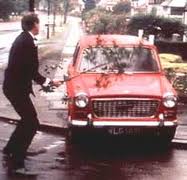
If I had been faced with that dilemma, I think I would have taken the same way out as Basil Fawlty does in “Gourmet Night” faced with the grisly task of having to introduce a Mr and Mrs Twitchen, to two other dinner guests, one of whom has a facial twitch.  He attempts with “Colonel and Mrs Hall, may I introduce you to Mr and Mrs… phahbarma…”  and when that doesn’t work, fakes an fainting episode.


“So sorry, I fainted”


[I had hoped to put the clip here, but can’t find it online. Anyway, from the same episode, Basil losing it with his car “I’ve laid it on the line to you time and time again…. I’m going to give you a damn good thrashing”]


http://www.youtube.com/watch?v=78b67l_yxUc


fawlty

“Oh don’t leave me alone like this” – the legal test on Stays

Apologies both for the lack of blogging (have been on puppy-adoption leave) and bringing East 17 into this. Possibly the first time East 17 and the Children Act 1989 have been combined together, unless there was a case conference about whether having your child dressed head to toe in Burberry was emotionally harmful…

I thought I’d share the relatively recent decision on applications for Stays in care proceedings, firstly because it filled a gap in caselaw  (it remains a source of amazement and inspiration to me that nearly twenty years after the Children Act took effect, there are still gaps to be filled in), and secondly because I was trying to find this the other week, knowing that it existed and what the gist of it was, and I had a hell of a job…

The tl:dr version is that the case (Haringey 2011) derives these five principles to be applied in any application for a stay :-

  1. The Court must take into account all the circumstances of the case
  2. A stay is the exception rather than the general rule
  3. The applicant seeking the stay should provide cogent evidence that the appeal will be stifled or rendered nugatory unless a stay is granted
  4. The court applies a balance of harm test, in which the prejudice to the successful party must be carefully considered
  5. The Court should take into account the prospects of the appeal succeeding, and only consider a stay where there are strong grounds of appeal or a strong likelihood of success.


The word nugatory struck me as being potentially interesting, as well as having good ‘mouth-feel’  (like the word I got from Inky Fools this week ‘apricate’ meaning to bask in the sun)  and so I double-checked it  – it means ‘trifling’ or ‘of no value’  and derives from Latin meaning ‘jester’ or ‘trifler’


Neutral Citation Number: [2011] EWHC 3544 (Fam)

Case No: BT 09 C 00235

IN THE HIGH COURT OF JUSTICE
FAMILY DIVISION

Royal Courts of Justice
Strand, London, WC2A 2LL

7th October 2011

B e f o r e :

MR. JUSTICE MOSTYN
____________________

Between:

NB

Applicant

– and –

LB OF HARINGEY

Respondent

____________________

____________________

MISS TERESA PRITCHARD (instructed by Eskinazi & Co.) for the Applicant
MR. JUSTIN AGEROS (instructed by LB Haringey) for the Respondent
MISS JANE PROBYN (instructed by Donald Galbraith & Co.) for the Guardian

____________________

HTML VERSION OF JUDGMENT
____________________

Crown Copyright ©

MR. JUSTICE MOSTYN:

  1. Yesterday, at 5.30 p.m., the North London Family Proceedings Court made an interim care order in respect of JG, who I think is nearly 3 years old. The application before me today is for a stay pending an appeal of that decision, which appeal would likely be heard on 28th October 2011 by the Circuit Judge in the Barnet County Court.
  1. Given the nature of the application and of the decision I have to make, it is important that I do not say more than is strictly necessary to decide the application and do not say anything which might influence the outcome of the appeal one way or the other.
  1. The application was made against a backdrop of considerable chaos in the life of this child. His mother is an admitted drug user who claims to have foresworn the use of drugs until comparatively recently, six weeks ago. She is a person who has not complied with agreements and directions for testing for drugs notwithstanding the plainest warning to her on the face of an interim order of the court that were she not to do so the inevitable inferences would be drawn; and she is a person who maintains a close relationship with her partner who is in prison convicted of serious domestic violence upon her.
  1. The position of the mother before the justices was that the interim threshold was not passed. In contrast, the position of the guardian was that the interim threshold was indeed passed but that an interim supervision order rather than an interim care order should be made. The position of the local authority was that the interim threshold was passed and an interim care order should be made. The result of the case was that an interim care order was made. The magistrates produced their reasons in an extremely abbreviated period of time. Inevitably, analysis of those reasons reveals that they may have been better put but the pressure of time meant that defects were almost inevitable.
  1. A complaint is that section 5 of the written decision relies only on the risk of domestic violence at the hands of a man who is in prison and will remain in prison until the matter is next considered by the justices, and does not make any explicit reference to the other matters, although in their account of the history it is clear that those other matters were at the forefront of their mind, which is hardly surprising given that the mother herself had given oral evidence before them.
  1. The appeal is governed by Part 30 of the Family Procedural Rules 2010 and Rule 30.8 states that an appeal notice does not operate as a stay of any order or decision of the lower court unless the lower court or appeal court orders otherwise. There are numerous authorities bearing on whether a stay should be granted although, rather surprisingly, there is none so far as I am aware on whether those tests are modified in a case involving a child, whether in private law proceedings or public law proceedings. Plainly, the test which I will adumbrate in a moment has to be seen through the welfare prism that overarches all family proceedings. That said, the principles cannot, in my judgment, be materially different whatever the nature of the dispute in hand.
  1. The leading authorities are Hammond Suddard Solicitors v Agrichem International Holdings Ltd [2001] EWCA Civ 2065, Leicester Circuits Ltd v Coates Bros plc [2002] EWCA Civ 474, Contract Facilities Ltd v The Estates of Rees (decd) [2003] EWCA Civ 465, the old Court of Appeal case of Wilson v Church (No. 2) [1879] 12 Ch Div, 454, an unreported decision of the Court of Appeal, Winchester Cigarette Machinery Ltd v Payne (No. 2), 15th December 1993, and a helpful decision which seeks to draw all the authorities together given by the Chief Judge of the High Court of Hong Kong, Ma J, Wenden Engineering Services Co Ltd v Lee Shing UEY Construction Co Ltd, HCCT No. 90 of 1999. In that latter case the Chief Judge stated:

“7. The existence of merely an arguable appeal cannot by itself amount to a sufficient reason to justify a stay. It can be put this way, the existence of an arguable appeal, that is one with reasonable prospects of success, is the minimum requirement before a court would even consider granting a stay. In other words, however exceptional the circumstances may be otherwise justifying a stay of execution, if the court is not convinced that there exists arguable grounds of appeal no stay will be granted. Conversely, however, the existence of a strong appeal or a strong likelihood that the appeal will succeed, will usually by itself enable a stay to be granted because this would constitute a good reason for a stay. (See Winchester Cigarette Machinery Ltd)

8. In most cases the court will not be dealing with the extreme situations I have referred to. Often, it will be faced with simply the existence of an arguable appeal. Here, it becomes necessary for the appellant to provide additional reasons as to why a stay is justified. The demonstration of an appeal being rendered nugatory is one example albeit a common one. Here, where it is demonstrated that an appeal would be rendered nugatory if a stay was not granted the court may require no more than the existence of an arguable appeal. Correspondingly, where it cannot be shown that an appeal would be rendered nugatory if a stay were not granted, the court will require in the absence of any other factors the applicant to demonstrate strong grounds of appeal or a strong likelihood of success.

From these authorities I derive the following five principles in relation to the application before me. First, the court must take into account all the circumstances of the case. Second, a stay is the exception rather than the general rule. Third, the party seeking a stay should provide cogent evidence that the appeal will be stifled or rendered nugatory unless a stay is granted. Fourth, in exercising its discretion the court applies what is in effect a balance of harm test in which the likely prejudice to the successful party must be carefully considered. Fifth, the court should take into account the prospects of the appeal succeeding. Only where strong grounds of appeal or a strong likelihood of success is shown should a stay be considered.”

  1. In this case, given the proximity of the appeal hearing and given the nature of the dispute, namely, the effective residence of the child for the next three weeks and one day, there is no question that the appeal will be stifled were a stay not to be granted. It therefore follows, in my view, that in order for a stay to be awarded it has to be demonstrated today that there are strong grounds of appeal or a strong likelihood of success. I find it impossible on the material before me to reach that conclusion. Indeed, in circumstances where it was accepted by the guardian, and indeed positively asserted by the local authority, that the interim threshold had been passed, it likely becomes a simple question of analysing whether the exercise of discretion made by the justices to award an interim care order rather than an interim supervision order has miscarried or it is otherwise demonstrated to be plainly wrong. On the material before me I cannot say that that is the case, although I am not, I emphasise, deciding the appeal. What I am deciding is that I am not satisfied on the material before me that there are strong grounds of appeal or a strong likelihood of success and the application is therefore refused.