Category Archives: case law

Watching the detectives

This is a quirky little case. I should tell you at the outset that we don’t get a conclusion and all of the answers. Half of the answer, with perhaps another half to come at a later stage.

The question arose in care proceedings. One of the issues in the case was whether the mother had genuinely separated from the father, or whether they were simply pretending to have done so and carrying on the relationship in secret. This happens from time to time in care proceedings.

The Local Authority paid a private investigator to watch the father, and the private investigator produced evidence that the father was staying overnight at the mother’s home, for about a week. (However, the evidence did not show whether or not the mother was also there, allowing the parents to run a defence that the father had been staying at that property but that mother and the children had not been)

Two legal issues arose in the case.

1. Whether the LA had obtained the proper consents under the Regulation of Investigatory Powers Act (RIPA) to conduct covert surveillance of a person, whether this was a breach of article 8 of the Human Rights Act and thus whether damages should flow from it. (which is the really interesting bit of the case and which SPOILERS doesn’t get answered)

and

2. If there was a failure to obtain the proper RIPA consents, is the evidence inadmissible?

The latter is of interest, because it may impact on other scenarios where evidence is improperly obtained (and of course, we are thinking here of clandestine recordings whether audio or video, done without the knowledge of those being filmed)

We DO get an answer to that.

This is a decision of a circuit Judge, so it is not binding case law, but it is an interesting overview of the law (and I agree with the conclusions)

Re E and N (no2) 2017

http://www.bailii.org/ew/cases/EWFC/OJ/2017/B27.html

2. In the course of the hearing before me the applicant local authority sought to rely on surveillance evidence which covered the period of 28 and 29 April 2017. The evidence showed that the father had stayed at the mother’s address in circumstances where the parents had maintained that they have been separated since November 2016. The local authority accepted that the evidence did not show that the mother was present during the aforementioned period. The local authority relied on this evidence as part of a wider canvas to prove an allegation that the parents have remained in a relationship despite their maintained assertion that they have separated.

3. Both parents agreed that due to the father’s difficult personal circumstances at that time, with the mother’s permission, he stayed at the mother’s address. The mother was staying at her own mother’s property and she was not present when the father stayed at her address.

4. At the conclusion of the hearing the parties made detailed submissions. This included submissions about the surveillance evidence and the local authority’s asserted overzealous approach to the parents in attempting to prove its case. The parents invited me to make a number of findings in this regard. I decided to give a separate judgment on these issues so as not to jeopardise an expeditious resolution to the last hearing before me.

5. The local authority in its written submissions dated 7 June 2017 and refined in its written replies to the parents’ submissions dated the same, invites me to;

a. Endorse the decision to conduct such surveillance as reasonable, or to make no findings in circumstances where the court has not received any evidence on this issue, or

b. Make no comment about it (given that it does not go to the central issue of the disputed findings), or

c. Find that it would be inappropriate to make any findings on the mother’s submissions that go to or are capable of going to the issues of alleged breaches of her Article 8 rights, or

d. Transfer the decision on this issue to a different tier of the judiciary, and

e. Confine my judgment to the issues arising out of the hearing.
6. The mother having taken the lead on these submissions and supported by the father, invites me to find that;

a. The actions of the local authority were misjudged and deeply unfortunate given the duty on the local authority to act in a fair way within litigation against individuals,

b. The authorisation for the surveillance (if any) and the surveillance itself were not fair, reasonable or proportionate,

c. The local authority has not complied with the terms of the Act (below),

d. The mother has been unlawfully subjected to surveillance;

e. This is an example of an over-zealous prosecution of the local authority’s case against her,

f. The directed surveillance is a breach of her rights under Article 8 of the European Convention for the Protection of Human Rights and Fundamental Freedoms (1950).

The father further submitted that there is no justifiable reason or purpose for the surveillance to have extended to following the father to the reception area at the contact centre and at the father’s solicitors’ offices.

The Judge looked at the safeguards about agencies of the State carrying out covert surveillance of members of the public, that are set out within RIPA – the surveillance needs to be properly authorised under s28, and the officer authorising it must be approved under s30 to do so. (Here, what seems to have happened is that a senior manager of Children’s Services authorised it, which is not RIPA compliant)

28 Authorisation of directed surveillance.

(1)Subject to the following provisions of this Part, the persons designated for the purposes of this section shall each have power to grant authorisations for the carrying out of directed surveillance.

(2)A person shall not grant an authorisation for the carrying out of directed surveillance unless he believes—

(a)that the authorisation is necessary on grounds falling within subsection (3); and

(b)that the authorised surveillance is proportionate to what is sought to be achieved by carrying it out.

(3)An authorisation is necessary on grounds falling within this subsection if it is necessary—

(a)in the interests of national security;

(b)for the purpose of preventing or detecting crime or of preventing disorder;

(c)in the interests of the economic well-being of the United Kingdom;

(d)in the interests of public safety;

(e)for the purpose of protecting public health;…

(4)The conduct that is authorised by an authorisation for the carrying out of directed surveillance is any conduct that—

(a)consists in the carrying out of directed surveillance of any such description as is specified in the authorisation; and

(b)is carried out in the circumstances described in the authorisation and for the purposes of the investigation or operation specified or described in the authorisation

The real point of this is that the authorisation of covert surveillance is firstly not a rubber stamp, and secondly, the decision about whether or not to authorise is taken by a RIPA officer someone who is trained in the application of the Act and the principles within it and not have a stake in the outcome of the investigation – i.e to scrutinise whether cover surveillance is really appropriate and proportionate.

The Judge did not reach a conclusion on whether the LA had failed to comply with RIPA or whether the parents article 8 rights had been breached – they would have to issue a claim and have proper evidence about this issue before a Court could rule on it. However, from what is said, I don’t think that what the LA did complied with RIPA (That doesn’t mean that they DIDN’T – they may have got a RIPA authorisation and not put that before the Court – though that seems a strange decision if so…)

In addition to the surveillance report, the only direct evidence in this connection is a document entitled “REQUEST FOR AUTHORISATION TO COMMISSION A PRIVATE INVESTIGATOR”. This documents was signed on 26 April 2017 by the “Director of Children and Learning Skills”. It is far from clear if the signature is that of the person making the application or the person authorising the request. On the face of it, the form does not appear to be a form authorising surveillance. This illustrates the evidential difficulties in the relief that the parents are seeking. These are exacerbated by further fundamental difficulties which include the lack of any formal application and the consequential lack of any formal reply. Therefore, having regard to the guidance that I have detailed above and the evidential difficulties that I have identified, in my judgment it would be entirely inappropriate for me to make any findings in respect of the local authority’s conduct, decision making processes and any alleged breaches of the parents’ Article 8 rights. Similarly, in my judgment it would also be entirely inappropriate for me to endorse the local authority’s actions. If there is to be such an enquiry into these issues, it must be undertaken in accordance with the guidance that I have set out above and by way of a formal application following which the court will give the necessary directions. Inevitably this will include the filing and service of appropriate evidence.

Anyhow, that whole issue will have to wait for part 3, if there is to be a part 3.

What we are left with is whether evidence that may have been obtained improperly is capable of being admissible, or whether it should not even get before the Court if it was obtained improperly.

15. However it is clear that the surveillance evidence is relevant to the issues in the case. Goddard LJ in the Court of Appeal decision in Hollington v. F. Hewthorn and Company Limited, and Another [1943] KB 587, at 593 and 594 explained the test in the following terms;

“Before dealing with the authorities, let us consider the question in the light of modern law relating to evidence … We say “modern law” because in former days, it is fair to say, the law paid more attention to competency of the witnesses that to the relevance of testimony …

It was not till the Evidence Act. 1843, that interested witnesses, other than the parties, their husbands and wives were rendered competent, and by the Evidence Act, 1851, the parties, and by the Evidence Act, 1853, their spouses, were at last enabled to give evidence …

But, nowadays, it is relevance and not competency that is the main consideration, and, generally speaking, all evidence that is relevant to an issue is admissible, while all that is irrelevant is excluded”.

Furthermore, the test for deciding “relevance” was succinctly expressed in the House of Lords decision by Simon LJ Director of Public Prosecution v Kilbourne [1973] 1 All ER 440, at 460 J in the following terms;

“Your Lordships have been concerned with four concept in the law of evidence: (i) relevance; (ii) admissibility; (iii) corroboration; (iv) weight. The first two terms are frequently, and in many circumstances legitimately, used interchangeably; but I think it makes for clarity if they are kept separate, since some relevant evidence is inadmissible and some admissible evidence is irrelevant in the sense that I shall shortly submit). Evidence is relevant if it is logically probative or disprobative of some matter which requires proof.”
16. Keeping the concepts of “relevance” and “admissibility” separate, I will first deal with the issue of relevance before turning to consider the issue of admissibility. The factual matters that the local authority sought to prove included an allegation that the parents remain in a relationship. Therefore on a cursory analysis of the facts that remained in issue and required the court’s determination, it is clear that the surveillance evidence was relevant to this allegation. Indeed no party has sought to submit that it was not.

17. As to the question of admissibility, I have made it clear earlier in this judgment I am not making any findings in respect of the local authority’s conduct or whether the surveillance is compliant with the provisions of the Act. However the questions of compliance and legality have a close connection to the question of admissibility. There is no automatic bar to admissibility of evidence that has been improperly or illegally obtained. In the context of family law, this was considered and illustrated in the Court of Appeal decision in Imerman v Tchenguiz and others [2011] 1 All ER 555where at paragraph 177 Lord Neuberger MR concluded that;

“Accordingly, we consider that, in ancillary relief proceedings, while the court can admit such evidence, it has power to exclude it if unlawfully obtained, including power to exclude documents whose existence has only been established by unlawful means. In exercising that power, the court will be guided by what is “necessary for disposing fairly of the application for ancillary relief or for saving costs”, and will take into account the importance of the evidence, “the conduct of the parties”, and any other relevant factors, including the normal case management aspects. Ultimately, this requires the court to carry out a balancing exercise, something which, we are well aware, is easy to say in general terms but is often very difficult to effect in individual cases in practice.”

A Local Authority v J [2008] EWHC 1484 (Fam) is an example where surveillance evidence was admitted by the court, although Hogg J in this case was not asked to consider the provisions of the Act.

Furthermore, Re DH (A MINOR) (CHILD ABUSE) [1994] 1 FLR 679 whilst predating the Act and concerning an individual, Wall J admitted the covert recording of a child by the child’s father.
18. In these circumstances I have assessed the surveillance evidence to be relevant and admissible. Accordingly I have admitted the same as evidence in the case. I made the relevant findings in my first judgment after considering the surveillance evidence together with a number of other pieces of evidence and have considered it in the context of the totality of the evidence that was before me. However the issue of admissibility of evidence is entirely separate to the requirements of public authorities and public bodies to comply with statutory provisions that regulate their conduct and their duties to the public. In circumstances where a public authority or public body has acted in breach of statutory provisions and where any evidence that is adduced as a consequences of those actions is admitted by the court, this will not absolve the public authority or body from its duties under any relevant enactment

Evidence, if it is relevant, can still be admissible even if it was obtained unlawfully. I have wondered for a long time whether Re DH’s principle survived the HRA. As this is not precedent, and of course, a Circuit Judge can’t overrule the principle that Wall J set down in a superior Court, but it is an interesting debate that might be had at a later stage.

The Judge draws the interesting distinction that whilst the evidence itself might be admissible, that doesn’t stop a Court taking action about the improper or unlawful conduct – just because they got to use the evidence, doesn’t mean that they get away scot-free if they behaved badly in obtaining it.

Morocco Mole too…. inspired by my trip to Marrakech

Fasting for Ramadan and Court of Protection


An interesting Court of Protection case which might prove useful for other professionals.


IH (Observance of Muslim Practice) 2017

http://www.bailii.org/ew/cases/EWCOP/2017/9.html


Cobb J was presented with an application by the Official Solicitor on behalf of IH, a man of Muslim background who lacked capacity, for a declaration that IH should not have to fast during the period of Ramadan as would be culturally usual for Muslims who had capacity.

At the same time, IH’s family sought a direction that IH’s body hair should be trimmed.


  • There is no dispute that IH lacks capacity to make the decisions which are the focus of these applications; the diagnostic and functional criteria contained in, respectively, sections 2 and section 3 MCA 2005 are clearly established on the evidence. Specifically, to have capacity to make the decision to fast for Ramadan, a person would be expected to understand (section 3(1)(a)):


i) What fasting is; the lack of food and liquid, eating and drinking;

ii) The length of the fast;

iii) If for religion, for custom (family or otherwise), for health-associated reasons, or for other reasons;

iv) If for religion reasons, which religion and why;

v) The effect of fasting on the body;

vi) What the consequences would be of making a choice to fast and the risks of choosing to not fast or of postponing the decision.


  • Dr. Carpenter is clear that IH is not able to understand any of the six points listed in [20] above. It is further agreed between the parties, having received Dr. Carpenter’s advice, that, given the nature of his disability, IH will not ever acquire capacity to make such decisions (section 4(3)).
  • To have the capacity to make a decision in relation to the trimming or removal of pubic or axillary hair for religious or cultural reasons, a person would be expected to be able to understand:


i) Which parts of the hair are being removed – pubic, axillary, perianal, trunk, beard, leg, torso, or head;

ii) Whether the reason for the hair trimming/removal is religious, for the maintenance of good hygiene, custom, or some other;

iii) If for a religious reason, which religion and why;

iv) What the consequences would be of making a choice to have hair trimmed/removed, and of not trimming/removing the hair.


  • Dr. Carpenter is clear that IH is not able to understand any of the four points listed in [22] above. He opined that while IH may give the superficial appearance of engaging in prayer, by responding to the familiar practice of the adults in the family turning to prayer (he holds his hands up, or places them behind his ears), he has no understanding of the purpose or higher meaning of the act of prayer. It is further agreed between the parties, having received Dr. Carpenter’s advice, that, given the nature of his disability, IH will not ever acquire capacity to make such decisions (section 4(3)).


Cobb J outlined the religious principles involved in these issues, and in particular that the Islamic faith already has provision for those who lack the ability to make their own decisions and who are therefore exempt from obligations that might be placed upon others.

Islamic religious observance for those without capacity.


  • The Five Pillars of Islam (‘shahada‘ [faith], ‘salat‘ [prayer], ‘zakat‘ [charity], ‘sawm‘ [fasting] and ‘hajj‘ [pilgrimage]) are the foundation and framework of Muslim life, and are regarded as obligatory for Muslims. Not all actions or observances within Islam, however, are obligatory; some are recommended, others optional, some actions are reprehensible, and others prohibited. In Islam, a Muslim will commit a sin if he/she violates something which is obligatory or prohibited, will be rewarded for carrying out something which is recommended; a minor sin is committed for not doing something which is recommended, and for doing something which is reprehensible.
  • Significantly for present purposes, Islam stipulates different arrangements for those who lack ‘legal competence’. ‘Legal competence’ in Islamic terms is defined by Dr. Ali as “a capacity or a potential for mental functioning, required in a decision-specific manner, to understand and carry out decision-making. Competence is always presumed; its absence or inactivity has to be affirmed by a court.” It is normal (per Dr. Ali) to defer to medical practitioners or experts on the issue of legal (mental) competence; their opinion would be likely to be deemed valid and authoritative in the Shari’a. The evidence filed in these proceedings, most notably from Dr. Carpenter, would be sufficient, I was advised, to form the basis in Islamic law to declare IH to be “legally incompetent”; all parties agree that IH is not legally competent under Islamic law.
  • Dr. Ali advises that the legally incompetent person (along with the terminally ill, the disabled and minors) is perpetually in a heightened state of spirituality, hence he or she is exempt from practising the major rituals of Islam including adherence to the Five Pillars.
  • On the specific issues engaged in this application, Dr. Ali advises as follows:


Fasting in Ramadan

i) Fasting during the daylight hours of Ramadan is one of the Qur’anically mandated obligations for all Muslims who are legally competent, and who are not exempt. Certain groups are exempt from fasting; they include the incapacitous, minors, the ill, pregnant women, those who are travelling. Those who are exempt are not morally culpable for not keeping the daylight fast.

Trimming or shaving of pubic and axillary hair

ii) Cleaning pubic or axillary hair is a religiously sanctioned practice deemed in Islam to be a normal human ‘right’ (‘fitrah‘);

iii) The rationale is founded in a quest for ritual purity and cleanliness; (the aphorism ‘cleanliness is next to godliness’ is of course familiar to many religions);

iv) The removal of pubic and axillary hair for the legally competent Muslim is ‘mustahab‘ or ‘recommended practice’; while it is not obligatory (‘wajib‘) it would be viewed as a ‘minor sin’ if unattended (see [26] above);

v) As IH does not have ‘legal competence’ it is not even recommended practice for him (see [28] above); there is no obligation on his carers to carry out the removal of IH’s pubic or axillary hair, and his religious rights are not being violated by not attending to this;

vi) It is highly recommended and praiseworthy for carers (of whatever religion) to shave or shorten a patient’s pubic or axillary hair, in the same way as it is for them to assist the incapacitous in other routine care tasks;

vii) There are differences of opinion between Islamic commentators as to the preferred manner of hair removal; any method would be deemed acceptable;

viii) The time limit within which the hair needs to be cleaned or trimmed or removed is also a matter of assorted opinion, though the majority of commentators favour a 40-day limit;

ix) While it would be not permissible for a competent Muslim to expose their genitals, it would not be contrary to the Shari’a for a Muslim without capacity who requires assistance with his care, for his carers to clean his genitals or shave them; that said, “carers must be sensitive that the client’s dignity is not violated”;

x) ‘No hurt no harm’ is a cardinal principle of Islamic bioethics; avoidance of harm has priority over the pursuit of a benefit of equal or lesser worth. Therefore it would be wrong to create a situation in which observance of Islamic custom would, or would be likely to, cause harm to the person (i.e. IH) or his carers; if there is a risk of harm, then this principle would absolve even the capacitated person from performing an obligatory requirement.

Is it in IH’s best interests to be relieved of his obligation to fast during Ramadan?


  • As indicated above ([29](i)) there is no Islamic obligation on IH to fast given his lack of capacity. IH has never been required to fast by his family, and has not fasted while in their care. He has not, thus far, fasted while in the care of the Local Authority.
  • If this had been a case in which IH had some appreciation of the religious significance of fasting in Ramadan (as a means to attaining taqwa, i.e. the essence of piety, protecting one’s self from evil) there may be said to be some benefit in him doing so. But he has no such appreciation.
  • IH, I am satisfied, would not in fact understand why food and water was being withheld for the daylight hours in the month of Ramadan; the absence of food/water would be likely to cause him stress, or distress; this may cause him to become irritable and/or aggressive in the ways described above ([13]) increasing the risks to staff and himself. There is some minor anxiety that fasting and/or mild dehydration would increase the side effects of any one of his multiple medications. It is plainly not in his interests that he should fast, and the declaration will be granted.


Is it in IH’s best interests for his pubic and axillary hair to be trimmed?


  • Health or social care bodies who make the arrangements for the care for adults who lack capacity owe an obligation, so far as is reasonably practicable and in the interests of the individual, to create a care environment and routine which is supportive of the religion of P, and to facilitate P’s access to, or observance of religious custom and ritual. All forms of liturgy should, where practicable, be accessible to persons with disabilities. This view is consistent with Article 9 of the European Convention on Human Rights, and the right enjoyed by those who lack capacity as for those who have capacity, to freedom of religion and freedom, either alone or in community with others and in public or private, to manifest his religion or belief, in worship, teaching, practice and observance. While no specific protection in this regard appears to be offered by the UNHR Convention on the Rights of Persons with Disability, the rights enshrined in the ECHR (above) “are for everyone, including the most disabled members of our community” (Baroness Hale in P (by his Litigation Friend, OS) v Cheshire West & Others [2014] UKSC 19).
  • The duty outlined above is consistent with the expectation that in best interests decision-making for someone who lacks capacity, the court will take account, so far as is reasonably ascertainable “the beliefs and values” of that person which would be likely to influence his decision if he had capacity (section 4(6)(b)); these must include, where relevant, religious beliefs and values. This is illustrated in the instant case by the fact that the Local Authority provides IH with a Halal diet even though IH himself would not know that the food he ate was Halal, or the significance of the source and/or preparation of the food. The Local Authority recognise the need to respect IH’s religion.
  • Of the “relevant circumstances” which require consideration in deciding on this issue, TH has placed the religious significance of the proposed procedure at the centre of the decision-making, and I turn to this first.
  • The frame of reference for consideration of the issue has altered since the start of the litigation. At a best interests meeting on 9 September 2016, TH advanced the proposition that there was a religious “duty” to remove or shave IH’s pubic and axillary hair. In the same manner, his early written evidence (see [14]) referred to the “very essential” and “compulsory” nature of the activity, a view pronounced apparently on the authority of an Imam. This indeed is how Roderic Wood J characterised the issue, in passing, in the case of A Local Authority v ED & others [2013] EWCOP 3069, in which he referred (at [12]) to a “duty” to remove the pubic hair of a Muslim woman (albeit recognising the exemption for the incapacitous). Dr. Ali’s evidence, on which he was not challenged, was to different effect.
  • In short, as is clear from [29](v) above, there is simply no religious duty, or obligation on a person who lacks capacity (‘legal competence’ in Islam) to trim or shave his or her pubic and axillary hair, or on his carer to do so for them. IH does not need to acquire this state of ritual cleanliness in order to derive spiritual benefit as he already occupies an elevated status by virtue of his incapacity. Moreover, I am satisfied that IH himself derives no religious ‘benefit’ by having the procedure undertaken, as he would not understand its religious significance. It is of no consequence to me, in the consideration of these facts, that the carers may be blessed in the eyes of Islam in undertaking a ‘praiseworthy’ activity by trimming the hair; their interests are not my concern.
  • I agree with TH, and with Mr. Jarrod, when they separately expressed the view that if IH had capacity he probably would have observed this custom.


And in conclusion

Conclusion


  • I have faithfully endeavoured to consider these issues from IH’s point of view, while ultimately applying a best interests evaluation. IH has a life-long developmental condition and has never had the capacity to understand the tenets of Islam; the benefits of adherence to such rituals do not obtain for him, but for others. The fact is that by reason of his disability IH is absolved of the expectation of performing this recommended procedure, and there is no other clear benefit to him. The trimming of the pubic and axillary hair would serve no other purpose. I am anxious that IH should be spared additional stresses in his life, and wish to protect him and the staff from the risk of harm – an approach which itself has the endorsement of Islamic teaching (see [29](x) above).
  • For those reasons, and having reviewed the circumstances extensively above, I have reached the conclusion that:


i) The parties are right in agreeing, and I confirm, that IH should be relieved of the obligation to fast during Ramadan;

ii) It is not in IH’s best interests that his pubic and/or axillary hair be trimmed in accordance with Islamic custom for capacitous followers of Islam.


Reid ’em and weep

The peculiar goings-on in the case of Westminster v Associated Newspapers Ltd

 http://www.bailii.org/ew/cases/EWHC/Fam/2017/1221.html

This was a specific hearing arising from a set of care proceedings in which both parents were asserting forcefully that their son H was very ill indeed. The Court, having heard a great deal of evidence and had that evidence tested by lawyers, including lawyers acting for the parents, decided otherwise


I found, firstly, that the parents had misreported and exaggerated H’s medical symptoms. I concluded that this had led not only to his emotional harm but to his physical harm. In consequence, particularly of the exaggerated gastrointestinal pain, there was the unnecessary insertion and thereafter the prolonged use of a Hickman line, which exposed H not merely to the risk of short-term infection, but to the risk of liver failure in the long term. It perhaps requires to be underlined that in consequence of his parents’ actions H’s life was placed in peril.


4.I went on to find that the mother, through bullying and bombastic behaviour, had intimidated medical professionals and others to the extent that she confused and undermined their confidence in their own professional judgement. In the hospital it generated a febrile atmosphere in which there was an elevated risk of clinical error, I found this compromised H’s safety.


5.In particular, and this requires perhaps to be emphasised too, in April 2016, on the most compelling of evidence, I found that both parents had, on separate occasions, tampered with H’s TPN pump. The effect of this, though it did not immediately threaten H’s health was, again, to cause confusion and alarm on the ward and jeopardise professional objectivity.


6.The father has both directly and passively acquiesced in the mother’s distorted perspective of H’s health and medical needs. The mother presented H to the world as dying, in extremely alarming e-mails. Moreover, on the evidence, she inculcated in H himself, a view that he was dying. The parents’ actions led to prolonged stays in hospital, the consequence of which was that H has been robbed of much of his childhood and teenage years.


7.This is of course a desperate situation made all the more depressing by the fact that H has an outstanding, lively, irrepressible intellect and a keen and zany sense of humour. It is a tragedy that these talents have not been allowed to flourish and grow as they ought to have been. I reiterate, in order that the point is not lost in the detail of my judgment, the harm caused to H by his parents, protracted over many years, exposed him to significant harm at the most serious end of the spectrum, ultimately risking his life.


The parents, not being in agreement with the judicial decision, sought to involve some crusading journalists to fight their case in the court of public opinion. The Telegraph and the Mail ran sympathetic pieces.


I wrote a long passage here, but actually I’m not going to bother with it. My readers already know whether they think Christopher Booker is a champion for justice or something else, and they are all entitled to their own views.

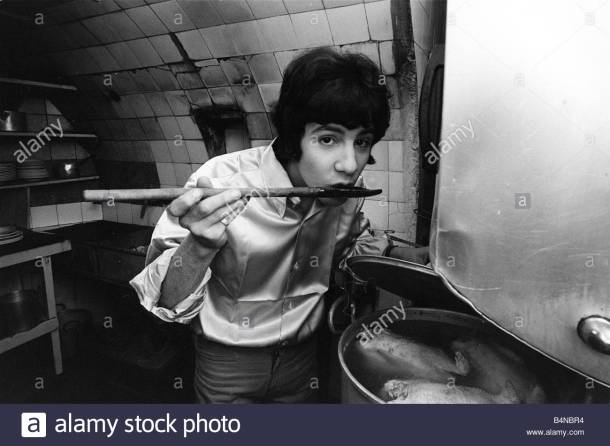
So instead of the long passage where I try to be balanced and reasonable and just annoy everyone on both sides of the argument, here’s a a photo of a young Cat Stevens tasting some food. I can’t tell if the food in the pan is fish, chicken or even pigs (the curly bits could be tails?).   If you are only familiar with beardy old Cat Stevens, DAMN he was a handsome young fellow.


My own recipe for rough emotional week – First Cut is the Deepest swiftly followed by Father and Son, get it out and move on

Anyway, this secondary decision was as a result of the child being visited in hospital by a journalist and interviewed by said journalist, who had not been open and transparent about who she was when making the visit.


15.I was informed during the course of the hearing, by the local authority, that it suspected that a reporter from The Daily Mail had visited H in ‘Unit A’ on 8th May. That reporter, I was told, was thought to be a Ms Sue Reid, though the visitor book bore an inscription that a Susan Odette Brown, recorded as ‘a friend’, had visited that day. I indicated to the local authority that they should make inquiries to establish such facts as they could. In pursuance of that, they drafted the following questions which were relayed to The Daily Mail. They are succinct questions and they are responded to with equal clarity. They require to be set out:


“Do you (i.e. The Daily Mail) employ or commission a journalist called Sue Reid or Susan Odette Brown? Answer: yes.”


“Did this journalist visit [the unit] on 8 May 2017 or at all? Answer: Yes.


What was the purpose of this visit? Answer: Miss Reid has confirmed that she visited in order to see H and see his social situation.


How was the visit arranged?”


The response was as follows:


“A campaign group alerted Miss Reid to H’s living arrangements and asked her to pay him a social visit. H’s parents also wanted Miss Reid to visit him and accordingly they passed on H’s mobile phone number. Miss Reid rang the number and spoke to H, who invited her to visit him and gave her a suitable time to do so.”


The final question was framed thus:


“Did you have permission to talk to H, a young person aged 15, and if so who gave you permission? Answer: Yes, H and his mother.”


16.These questions had in mind the protection afforded to young people and particularly to those who are vulnerable, by the Codes of Practice (2016), Independent Press Standards Organisation (IPSO). It is convenient that the relevant guidance be set out here:


“Clause 8 protects patients in hospitals and similar institutions from intrusion. It requires journalists to identify themselves and to obtain permission from a responsible executive to enter non-public areas. The clause applies to all editorial staff, including photographers.


The clause covers the newsgathering process, so the Code can be breached even if nothing is published. The clause also requires that, when making inquiries about individuals in hospitals and similar institutions, editors need to be mindful of the general restrictions in Clause 2 of the Code on intruding into privacy.


[Some readers may remember certain press scandals about Russell Harty, a celebrity whom certain sections of the Press believed was hospitalised because of AIDS and reporters donning medical gowns in order to gain access clandestinely to the hospital. ]


Of particular relevance is:


Identification and permission


Journalists must clearly identify themselves and seek permission from a responsible executive to comply with the Code. The use of the term “executive” implies that permission can be obtained only from a person of sufficient seniority. A journalist who attended a London hospital after the Canary Wharf terrorist bomb photographed an injured victim in the company of a relative and another person who he thought had obtained permission from hospital staff.


When medical staff complained, the PCC found the Code had been breached. It said: “The Commission was not persuaded the reporter in this particular case had followed the provisions of the Code: it was not enough to assume that his identity was known or to rely on the comment of an individual who was clearly not a responsible executive, although the reporter had done so in good faith.” Hutchison v News of the World: http://www.pcc.org.uk/cases/ adjudicated.html? article =MTkwMA


What the Code says


  1. i) Journalists must identify themselves and obtain permission from a responsible executive before entering non-public areas of hospitals or similar institutions to pursue enquiries.


  1. ii) The restrictions on intruding into privacy are particularly relevant to enquiries about individuals in hospitals or similar institutions. A public interest exemption may be available.


Non-public areas


In most cases, what constitutes a non-public area will be clear and will certainly include areas where patients are receiving treatment.


See: Stamp v Essex Chronicle

A man v Daily Mail


17.The code purposefully set a strong objective to safeguard children. The following requires emphasis :


Clause 6


Children


The Code goes to exceptional lengths to safeguard children by defining tightly the circumstances in which press coverage would be legitimate. For the most part, this applies up to the age of 16 – but the requirement that pupils should be free to complete their time at school without unnecessary intrusion provides a measure of protection into the sixth form. In the absence of a public interest justification, pupils cannot be approached at school, photographed or interviewed about their own or another child’s welfare, or offered payment, unless consent is given by the parent or guardian.


The welfare of the child includes the effect publication might have.


A complaint from an asylum seeker was upheld after a newspaper interviewed and identified some of his children. The PCC said the article was likely to provoke a strong reaction in readers, which might affect the children’s welfare.


Kenewa v Sunday Mercury


There is a public interest defence available to editors, but here again the bar is raised in favour of protecting children and the Code states that “an exceptional public interest” would need to be demonstrated.


What the code says


  1. i) All pupils should be free to complete their time at school without unnecessary intrusion.


  1. ii) They must not be approached or photographed at school without permission of the school authorities.


iii) Children under 16 must not be interviewed or photographed on issues involving their own or another child’s welfare unless a custodial parent or similarly responsible adult consents.


  1. iv) Children under 16 must not be paid for material involving their welfare, nor parents or guardians for material about their children or wards, unless it is clearly in the child’s interest.


  1. v) Editors must not use the fame, notoriety or position of a parent or guardian as sole justification for publishing details of a child’s private life.


A public interest exemption may be available. See Page 96.


Consent


The press has to establish which is the competent authority to grant consent in each case.


See: A woman v Derby Telegraph

Brecon High School v Brecon and Radnor Express


18.In order to advance their own explanations, the parents both filed statements in which the broad thrust of the answers given by The Daily Mail were or appeared to be disputed. It has been necessary for me today to inquire as to what in fact led to the visit, which all agreed took place, between Ms Reid and H at the unit on 8th May.


19.As the evidence has unfolded it has funnelled into a very narrow area of agreement and disagreement. Today there were filed, on behalf of Ms Reid, a number of e-mail communications, which have been helpfully set out by Mr Browne QC and Mr Wolanski, who represent her through Associated Newspapers Limited. A key communication is an e-mail sent at 18:30 on 6th May by H’s mother to a Miss Miray Kester, whom she describes as a friend. It is clear from that email and the earlier discourse that it was intended to provide a summary of H’s situation from the mother’s own perspective. It is, characteristically, a gross distortion of the facts. It presents H, in melodramatic terms, brutalised and neglected by the system. Yet again the mother describes H as suffering from serious illness. As those reading my earlier judgment will appreciate and as time has now borne out, H is not suffering from any serious illness. Those conditions which he does have are not seriously debilitating.


20.It is unnecessary for me further to burden this judgment with the details of the email communications because a number of factors are clear. Firstly, I am satisfied that, in the context of the email communication as a whole, the email I have referred to above was written by the mother as a briefing document for the press. The document, which I do not propose to read into this judgment, speaks for itself. Secondly, Ms Reid obtained H’s telephone number and spoke to him directly before she spoke to the mother. This she agreed in evidence. Thirdly, Ms Reid later spoke to the mother on the telephone and the conversation lasted some 40 or so minutes. In that conversation Ms Reid plainly formed the view that the mother was at her wits’ end, very distressed and agitated. Much of the content of the e-mail of 6th May seems to have been replicated in that conversation, which Ms Reid agrees took place.


21.The mother asserts that the move to the unit is a tragedy for her son. As she puts it, it is ‘a violation of his human rights’. She refers to his ‘being locked away’ and she caricatures it as a focus on ‘mental disorder’ rather than the contemplated across the board evaluation of his needs that I have described. This is all deep-seated, the mother has been hostile to Great Ormond Street now for many years. It was very much a feature of her evidence in January and February of this year. The mother denies giving Ms Reid permission to speak to her son. However, she says: had this journalist asked me directly if she could have permission to speak to my son, I would have said yes. But, she says, ‘it was never asked’.


22.It is plain, having listened to the mother’s evidence and Ms Reid’s evidence, that the mother not only was enthusiastic about H having an opportunity to meet a journalist but never at any point in the conversation gave Ms Reid even the slightest suspicion that she had the remotest anxiety about it. The mother is highly manipulative, as Ms Reid has now plainly found out. I think it unlikely that she gave her express permission but I am quite clear that she enthusiastically contrived with Ms Reid to facilitate the interview. Ms Reid told me, and I accept, that the mother gave her the address and details of the unit.


23.In her evidence Ms Reid told me that she would “never trust anybody again”, by which she explained she meant those who organise and promote particular causes and agendas. This struck me as a somewhat bizarre observation from a journalist of Ms Reid’s seniority. She is the ‘Special Investigations Editor’ for the Daily Mail. I should have thought that a healthy degree of scepticism would underpin everything she does.


24.The facts are now, as I see it, uncontroversial. Ms Reid went to Unit A. She did not make herself known to the staff. She did not identify herself as a journalist and she did not seek permission from a responsible executive to enter these non-public areas. It is also clear and again she accepts that she was aware that H was subject to a Care Order (in fact it is an Interim Care Order but that is of no consequence here).


I’m going to repeat paragraph 23, because I think it is significant


In her evidence Ms Reid told me that she would “never trust anybody again”, by which she explained she meant those who organise and promote particular causes and agendas. This struck me as a somewhat bizarre observation from a journalist of Ms Reid’s seniority. She is the ‘Special Investigations Editor’ for the Daily Mail. I should have thought that a healthy degree of scepticism would underpin everything she does.


Long carefully balanced paragraph removed, because it even made me throw up a little.


Instead, who would like to see a picture of Cat Stevens and some kittens? Of course you would.


There are dog photos too, but this blog has been dog-centric, and time for cat-rebalancing


Only click on the link if you’re comfortable with being a bit sad for a few minutes whilst simultaneously awestruck. (And see – handsome…)


Failure to bury a child


Quick warning – this case is about a child who has died, and the issue in the case was disposal of the child’s cadaver. So it may be distressing or upsetting to some readers – I will do my best to treat the subject matter with gravity and sensitivity. There’s nothing intentionally detailed or gruesome within the piece, but obviously the central issue is upsetting.


Also, there’s a criminal trial pending, so please no speculation about the identity of the parents or what may or may not have happened to the child – nobody wants to run the risk of prejudicing a fair trial.


http://www.bailii.org/ew/cases/EWHC/Fam/2017/1083.html

Re K (A Child : deceased), Re [2017]


The child died in July 2016. The Coroner released the body in October 2016. In March 2017, the child had still not been buried and no arrangements had been made for a funeral. The child’s half-sibling had been involved in care proceedings and the Local Authority, having done all that they could to persuade the parents to make those funeral arrangements, sought permission from the Court to step in and arrange the funeral themselves.


5.It was common ground during the course of submissions that the starting point in establishing a jurisdictional basis for orders relating to the burial of a child is to be found in Buchanan v Milton [1999] 2 FLR 844 at 845/846 per Hale J, as she then was:


“There is no right of ownership in a dead body. However, there is a duty at common law to arrange for its proper disposal. This duty falls primarily upon the personal representatives of the deceased (see Williams v Williams (1881) 20 ChD 659; Rees v Hughes [1946] KB 517). An executor appointed by will is entitled to obtain possession of the body for that purpose (see Sharp v Lush (1879) 10 ChD 468, 472; Dobson v North Tyneside Health Authority and Another [1997] 1 FLR 598, 602, obiter) even before the grant of probate. Where there is no executor, that same duty falls upon the administrators of the estate, but they may not be able to obtain an injunction for delivery of the body before the grant of letters of administration (see Dobson).”


  1. In Re JS (disposal of body) [2016] EWHC 2859 (Fam) Peter Jackson J observed:


“47. The law in relation to the disposition of a dead body emanates from the decision of Kay J in Williams v Williams [1882] LR 20 ChD 659, which establishes that a dead body is not property and therefore cannot be disposed of by will. The administrator or executor of the estate has the right to possession of (but no property in) the body and the duty to arrange for its proper disposal. The concept of ‘proper disposal’ is not defined, but it is to be noted that customs change over time. It was not until the end of the 19th century that cremation was recognised as lawful in the United Kingdom, and it was in due course regulated by the Cremation Act 1902. Nowadays cremation is chosen in about 3 out of 4 cases in this country.


  1. Thus, in English law, there is no right to dictate the treatment of one’s body after death. This is so regardless of testamentary capacity or religion. The wishes of the deceased are relevant, perhaps highly so, but are not determinative and cannot bind third parties. For discussion of the impact of the European Convention on Human Rights on the common law in this respect, see Burrows v HM Coroner for Preston [2008] EWHC 1387 (QB) and Ibuna v Arroyo [2012] EWHC 428 (Ch).”


[The Justice Peter Jackson case is one you might recall – where the teenaged child wanted to be cryogenically frozen after death, mum supported it and dad wasn’t keen. It was unusual.]

Whilst there is no legal ownership of a cadaver, the general principle is that the immediate family of the deceased have responsibility for arranging the funeral. What happens where, as here, the family do not take any action?


In Anstey v Mundle [2016] EWHC 1073 (Ch) Mr Jonathon Klein sitting as Deputy Judge of the Chancery Division concluded that the Court could not determine or direct where or how the deceased would be buried, but could declare who had the power and duty to bury the deceased, among the various contending parties. The judge adopted the reasoning of Ms Proudman QC, as she then was, in Hartshorne v Gardner [2008] EWHC 3675 (Ch).


“24. …In that case, Ms Sonia Proudman QC, sitting as a Deputy High Court Judge, was invited to exercise the court’s inherent jurisdiction to direct to whom the deceased’s body should be released for the purposes of its burial. The judge accepted, as Hart J had apparently done before her, that the court has such an inherent jurisdiction. In that case, the claimant and the defendant were equally entitled to a grant of representation. It is perhaps notable that the judge did not exercise any section 116 jurisdiction. In that case, the judge identified factors which were relevant to the exercise of the court’s jurisdiction, although she did not seek to limit the relevant factors to those she listed.


  1. The factors she identified were: one, the deceased’s wishes; two, the reasonable requirements and wishes of the family who are left to grieve; three, the location with which the deceased was most closely connected; and, four, to quote the judgment, “the most important consideration is that the body be disposed of with all proper respect and decency and if possible without further delay”. I have concluded that in this case those are also the relevant factors which I should consider.”

10.Mr Sharp contends that the factors identified at points two and four above are plainly relevant here. I agree. I would also stress that I consider proper respect and decency is not presently being shown to K’s body. I would also emphasise that there has been wholly unacceptable delay. I note that the Births and Deaths Regulations 1987 Reg 51(2) provides that if the registrar learns (after a delay of 14 days from the date on which he should have received notification of the date, place and means of disposal of the body) that the body has not been disposed of he must, unless he is informed that the body is being held for the purposes of the Human Tissue Act 2004, report the matter to the officer responsible for matters of environmental health for the district in which the body is lying. This, to my mind, indicates that as a matter of public policy, a body should be disposed of with due dispatch.


This next statutory provision arises more often with deaths in the elderly community with those who have no relatives, and is for public health grounds

Section 46(1) of the Public Health (Control of Disease) Act 1984 provides:


“It shall be the duty of a local authority to cause to be buried or cremated the body of any person who has died or been found dead in their area, in any case where it appears to the authority that no suitable arrangements for the disposal of the body have been or are being made otherwise than by the authority.”


Whilst this does not directly illuminate any of the issues that fall to be considered here it does indicate the general promotion of respect and decency for a body and the obligation for it to be disposed of with proper dispatch that is reflected in the case law that I have set out above


The Court here was asked whether under the inherent jurisdiction, the Court could authorise for the Local Authority to undertake the burial.


the concept of ‘a wise parent acting for the true interests of the [particular] child’ is integral to both the parens patriae and the inherent jurisdiction. It is, to my mind, axiomatic that a ‘wise parent’ would attend to the burial of a child. Thus having regard to the historical base and underlying philosophy of the inherent jurisdiction and the case law to which Mr Sharp has drawn my attention, I am satisfied that, pursuant to the inherent jurisdictional powers of the High court, I can authorise the Local Authority to make arrangements for the disposal of K’s body by way of burial or cremation, making the necessary funeral arrangements and if the body be cremated the disposal of the deceased remains. There are pressing practical reasons why this requires to be attended to expeditiously which are too distressing to incorporate within this judgment and need not be.


One of the obvious things that I wondered was whether there was some forensic reason connected with the criminal trial (i.e a second opinion autopsy or similar exercise) why the parents had been reluctant.


The Court was appraised of a letter from father’s counsel in criminal proceedings raising just that suggestion, but this is confused rather because there were representations from his criminal solicitor to a rather different effect. In any event, the Court was not satisfied that arranging a funeral would interfere with the parents right to a fair criminal trial.

In a postscript, the Court notes that the funeral took place and thankfully both parents attended

Bone marrow transplants and struck off doctors


This is a very peculiar Court of Protection case, decided by the President.  Very peculiar is a massive understatement, to be frank.

SW, Re [2017] EWCOP 7 (12 April 2017)

http://www.bailii.org/ew/cases/EWCOP/2017/7.html


As the acronyms are a bit confusing, I’ll give us a cast list


SAN – a man who has cancer. It is said that he needs a bone marrow transplant to save his life, as a result of this.


SW – SAN’s adopted sister, and a woman about whom it is alleged lacks capacity to make decisions in her own right.


Son – the son of SW, who does have capacity, and who applied to Court for a declaration to be made that SW undergo surgery in order to donate bone marrow to SAN and that the surgery be undertaken by the next two members of our cast.

Dr Waghorn – a surgeon, who coincidentally is the husband of SW and the father of Son. He has ‘relinquished his membership with the General Medical Council in order to continue his specialized medical practice’

Dr Jooste – another surgeon – a family friend and colleague of Dr Waghorn. He too has ‘relinquished his membership with the General Medical Council in order to continue his specialized medical practice’


The intention is that Dr Waghorn and/or Dr Jooste would carry out the transplant surgery.  By the way, don’t assume that SAN is keen on having this surgery. Or even that Son, Dr Waghorn or Dr Jooste have recently asked him if he wants it or consents to it.


Are you a dreadful cynical hard-bitten creature? Are your internal alarm bells going off loudly and causing dogs in your vicinity to bark furiously at the hellish clamour that was produced by the ‘relinquished his membership with the GMC’ bit?


This is the size of dog that is proportionate to how loudly my ‘WARNING’ alarm bell is ringing


(If Amazon suddenly get a spike in DVD orders for that film, I should get a cut. If you haven’t seen it,     ch-ch-ch-ch-check it out)

The Judge explored that a little further


6.In fact, both Dr Waghorn and Dr Jooste have had their names erased from the Medical Register following determinations by different Fitness to Practise Panels of the Medical Practitioners Tribunal Service, the one, in the case of Dr Waghorn, on 26 July 2013 and the other, in the case of Dr Jooste, on 17 February 2014. In each case the Panel’s findings make for very disturbing reading.


7.In relation to Dr Waghorn the Panel said this


“The Panel accepts that the matters before it relating to patient care arise from the treatment of one patient. However, they represent such a wide-ranging and serious set of clinical failings and such a cavalier and uncaring approach to patient safety that, even viewed in isolation, they demonstrate misconduct that is fundamentally incompatible with the practice of medicine. That misconduct is compounded by the fact that it occurred with foreknowledge of the wholly inadequate conditions under which Patient A was to be treated and it involved the criminal offence of carrying on a hospital without registration with the CQC. The misconduct is also exacerbated by Dr Waghorn’s breaches of the conditions that had been put in place to prevent any repetition and by his dishonesty in trying to disguise the extent of his subsequent work at the same clinic.”


In fact, as appears from the Panel’s determination, Dr Waghorn had been convicted at the City of Westminster Magistrates’ Court on 9 June 2011 of an offence contrary to section 11(1) of the Care Standards Act 2000 of carrying on an Independent Hospital without being registered in respect of it under Part II of the Act.

8.In relation to Dr Jooste the Panel said this:


“Dr Jooste is a risk to patient safety …


The Panel also considers that there is a risk to patient safety in Dr Jooste’s unwillingness to accept or comply with the authority of his regulator, in that he seems not to acknowledge any restriction or control on his practice and will not be called to account. Dr Jooste has behaved in an outrageous manner in his conduct towards the Interim Orders Panel and witnesses and in the entirely unmeritorious applications he has made to the High Court.


The Panel has received no evidence of any mitigating factors …


The panel has concluded that suspension would be wholly inadequate to mark the seriousness of Dr Jooste’s misconduct or to protect public confidence in the profession.


… The Panel has rarely encountered a doctor to whom so many of the indicative criteria for erasure apply. In short, Dr Jooste’s misconduct is fundamentally incompatible with his continued registration as a doctor.”


What is your prediction, at this point, as to whether the President is going to allow two doctors with this record to perform surgery on a woman with no capacity (who happens to be the wife of one of them…) ?


Yeah, me too.


To echo erstwhile comedian and labelled-welly-wearer Jimmy Cricket, come here, there’s more


9.As appears from his application form and the attached Annex E, the son made the application as SW’s attorney under a Lasting Power of Attorney (Health and Welfare) purportedly executed by SW on 18 October 2014 and registered on 9 January 2015. He had also been appointed SW’s attorney under a Lasting Power of Attorney (Property and Financial Affairs) purportedly executed by SW and registered on 17 June 2015. SW’s signature on the first of these documents had been witnessed by Dr Waghorn. The certificate declaring that SW understood what she was doing and was not being pressurised was given by Dr Jooste on 23 October 2014, who described himself as SW’s “friend for 10 years.” Both Dr Waghorn and Dr Jooste were described as “Dr” though each had by then been struck off.


There had also been litigation in the Court of Protection involving not SW as the vulnerable person but SAN

On 8 December 2014, Newton J gave judgment in the Court of Protection in proceedings (COP12599814) relating to SAN and the proposed treatment of his condition, in which Dr Waghorn appeared on behalf of SAN apparently pursuant to a lasting Power of Attorney (Health and Welfare) granted on 5 September 2013.


11.So far as material for present purposes, what Newton J said was this:


“… in order for the Court to exercise jurisdiction, in the Court of Protection, there has to be evidence that the patient does not have capacity …


The short [point] here is that all the evidence, in fact, points the other way. In fact there is absolutely no evidence that he lacks capacity at all, indeed quite the reverse. My attention has been drawn to the letter dated 16th October 2014 from Dr Bray which makes it clear that Dr Hunter, who is the consultant haematologist who is currently treating [SAN], is sure that he has full capacity regarding the decisions concerning his own health, but did not wish to pursue those other treatments.


Enquiries both of the insurers, and the legal advice by the medical group confirm that [SAN] has capacity, there is therefore no need for any best interests decision involving his power of attorney. In fact, Dr Bray spoke to [SAN] and he made it very clear that he did not wish for this matter to be pursued at that time and would like things left as they were. That point of view was reiterated by [SAN] himself as recently as Thursday of last week, when enquiries were made on behalf of NHS England. He made it plain that he was currently in remission, that he did not wish for the treatment to be pursued, and that he did not wish there to be court action.


Dr Waghorn feels that that very acutely, not least because of his expertise as a doctor, but also I have no doubt because of his concern and affection for his brother-in-law, he is deeply anxious that his brother-in-law simply does not grasp the full effect and indeed understanding of (A) his illness, and (B) what may be done to alleviate or assist him. And that is a point to which Dr Waghorn has repeatedly returned. But, counsel has pointed out, it seems to me correctly that that is for those are dealing with matters or treatment, and it is not for me in arrangement without first being able to establish lack of capacity …


It is a short point. As I explained to Dr Waghorn, in order for the Court to deal with the matter I have to have jurisdiction: there is no reason to believe, that he does not have capacity, as the lawyers or doctors understand it. His own treating clinician believes that he has capacity, she having treated him for some time. It is clear, as I understand the evidence, that he has consented to and understands his medical condition and the treatment options, as is plain from the papers. [SAN] himself does not agree that he lacks capacity: he believes that he has capacity to make decisions about his medical treatment and does not, in fact, agree with this application being made. The practitioner who spoke to him as recently as last week also considered, that he also did not lack capacity.


Therefore, whilst I understand the position in which Dr Waghorn has found himself, in my judgment I do not think, and indeed I am entirely satisfied that I do not have the jurisdiction to make any decisions in relation to [SAN’s] medical condition and treatment. I have no jurisdiction because there is no evidence that he does not have capacity, even on an interim basis (indeed quite the contrary).”


A company then sought to judicially review the NHS decision in this case not to allow surgery. Coincidentally, two directors of that company were Dr Waghorn and Dr Jooste. That application was dismissed on 9 June 2015 by Hayden J as being “totally without merit.” The judge observed that “The claim is at best vexatious, nor is it presented in any coherent or logical manner.”

The President remarks :-

13.There is a common thread to all three sets of proceedings, the purpose in each case being to obtain from the court relief facilitating or enabling Dr Waghorn and/or Dr Jooste to carry out an allogeneic bone marrow transplant from SW to SAN.


Dr Waghorn sought to involve the Anthony Nolan charity as interveners. Unsurprisingly, they declined. In much the same way that I would decline an invitation to “Tequilla-Fueled Sword Swallowing for Beginners, followed by candlelight dinner with Katie Hopkins and Eric Pickles”


15.Dr Waghorn sought to enlist the interest, and indeed involvement as intervenor in the present proceedings, of the well-known Anthony Nolan charity. On 28 February 2017 he received this stinging rebuff:


“… I would like to underline that we do not want to be involved in this case.

[Almost word for word what I said to Katie and Eric, btw. Well, actually, my response had certain rhyming qualities with the description of these two doctors in the title of the blog post…]


Anthony Nolan’s position is that allogeneic stem cell transplantation should be provided by registered specialist transplant physicians in an accredited NHS or accredited private transplant centre setting.


As such we do not want to be involved in this case in any way.


Please do not contact us again about this case.”


Dr Waghorn’s riposte was to threaten the writer of that letter with a subpoena to attend the hearing on 3 March 2017 – a threat which appears not to have been carried through.


The Judge then considers the position of SW, noting that the evidence as to her capacity or lack thereof was rather deficient. Her IQ was now around 78, having been previously about 90. That isn’t of itself, suggestive of a lack of capacity.


25.Quite apart from the issue of SW’s capacity, there are three particularly striking features of this application:


  1. i) First, there appears to have been, so far as I can see, and I pressed the son on this point, no discussion or consultation with SW about this application. I was told nothing about her wishes and feelings. What are they? More fundamentally, there seems to have been a wholesale failure to have regard to the fundamentally important principle in section 4(4) of the 2005 Act, requiring, “so far as reasonably practicable, [a decision-maker to] permit and encourage [SW] to participate, or to improve [her] ability to participate, as fully as possible in any act done for [her] and any decision affecting [her].”


  1. ii) Secondly, there appears likewise to have been no discussion or consultation with SAN about his wishes – a particularly egregious omission given everything Newton J had said as recently as December 2014. All the son could say, in answer to my probing, was words to the effect that ‘obviously he will agree because no-one wants to die.‘ Even as a general proposition this is not without its difficulties; in the present case it does not begin to address the obvious questions flowing from Newton J’s findings. This omission is also very significant for another reason for, according to the son’s skeleton argument, allogeneic bone marrow transplantation carries “a significant risk of mortality” for the donee.


iii) Thirdly, the application is put before me by the son explicitly on the basis that those with “clinical responsibility” for SW are two individuals who, although this was concealed from me, have in fact both been struck off the medical register, and that the relevant “treatment” is to be provided by one of these two struck off doctors. A prudent judge probably never says “never”, but I find it impossible to conceive of circumstances where the Court of Protection would ever contemplate authorising treatment of a kind referred to in PD9E (and this is such treatment: see PD9E, para 6(b), following Re Y, pages 116-117) where the treatment is to be given by a doctor who has been struck off.

26.A curious observation at the very end of the son’s skeleton argument, makes me wonder what, and who, are really driving this application. He is SW’s son, and puts himself forward as making the application as her attorney, yet he says of the declaration he seeks:


“If granted, such a Declaration will enable the public to obtain these life-saving, and curative treatments, from family members – not only for haematological cancers such as leukaemia, lymphoma and myeloma but also for solid tumours, with minimal residual disease, such as metastatic breast, colon & pancreas.”


Is there some wider agenda at work here, and, if so, whose agenda is it?


I like “a prudent Judge probably never says Never”


As we all suspected, the application was dismissed, leaving just issues of costs and anonymity in any published judgment


33.As it has been presented to the court, this scarcely coherent application is totally without merit, it is misconceived and it is vexatious. It would be contrary to every principle of how litigation ought to be conducted in the Court of Protection, and every principle of proper case management, to allow this hopelessly defective application to proceed on the forlorn assumption that the son could somehow get his tackle in order and present a revised application which could somehow avoid the fate of its predecessor.


34.The application must be struck out.


35.There remain two other matters I have to decide.


36.The first relates to costs. The HTA seeks costs which it invites me summarily to assess in the sum of £7,671.


37.As against the son, the claim for costs could not, in my judgment, be clearer. Given everything I have said, this is the plainest possible case for departing from the ordinary rule, set out in rule 157 of the Court of Protection Rules 2007, and applying the principles set out in rule 159. In saying this I make clear that I attribute no responsibility at all to the son for the previous litigation; but his conduct of the present proceedings is of itself more than adequate justification for ordering him to pay the costs. The amounts claimed are, in my judgment, plainly reasonable, and he has not sought to challenge any of the individual items or amounts. He says that he is “at this present moment” unable to afford the costs, praying in aid the fact that the Jobseekers Allowance he was previously receiving terminated in January 2017. That may be, but inability to pay is not, of itself, any answer to an otherwise appropriate order for costs and, in all the circumstances, I see no reason why he should not be ordered to pay the costs, and in the amount claimed. Impecuniosity does not provide immunity from the normal consequences of forensic folly.


38.As against Dr Waghorn and Dr Jooste, the question is not quite so simple because they, of course, were not applicants in the proceedings. But, and it is a very significant but, they each sought to be joined as a party and expressed themselves as consenting to the application; without any challenge on their part, they were put forward by the son as having clinical responsibility for SW; as I have already described, they seemed throughout the hearing to be making common cause with the son; and Dr Waghorn himself sought relief from the court. In these circumstances, and having regard to the principles expounded in Dymocks Franchise Systems (NSW) Pty Ltd v Todd [2004] UKPC 39, [2004] 1 WLR 2807, and Deutsche Bank AG v Sebastian Holdings Inc and another [2016] EWCA Civ 23, [2016] 4 WLR 17, to which Ms Khalique referred me, both Dr Waghorn and Dr Jooste, in my judgment, are persons against whom a costs order can be made even though are not, formally, parties to the litigation – and, if that is so, then for the same reasons as in relation to the son, it is, in my judgment, fair and just to order them to pay the costs.


39.I shall, therefore, order the son, Dr Waghorn and Dr Jooste to pay the costs, summarily assessed, in the sum of £7,671.


40.The remaining matter relates to the reporting restriction order. There is no reason why either SW or SAN should be named, and, indeed, every reason why they should not. Nor, in all the circumstances, is there any reason why the son should be named. Dr Waghorn and Dr Jooste, however, stand in a very different position. There is a very strong public interest in exposing the antics which these two struck-off doctors have got up to, not least so that others may be protected from their behaviour. I appreciate that the effect of naming Dr Waghorn may make it a matter of simplicity for anyone minded to do so to put names to both SW and SAN, but for reasons which will be all too apparent they also need to be protected, for example if there were to be any further attempt to embroil them in litigation. The balance is properly held, in my judgment, by varying the reporting restriction order so as to permit the naming of Dr Waghorn and Dr Jooste while continuing to forbid the naming of SW, SAN and the son.

In which MacDonald J asks the question and answers it in paragraph 1 of the judgment


Which is something that I’d like to see more often.


The question before me is whether the High Court has power, under its inherent jurisdiction, to make a costs funding order against a local authority requiring it to fund legal advice and representation for a parent in wardship proceedings brought by the local authority where that parent has lawfully been refused legal aid. I am satisfied that the answer to that question is ‘no’.


In essence, that question arose because the Local Authority had read some of the previous authorities on radicalisation or alleged radicalisation of children to suggest that they ought to be issued as wardship proceedings (which doesn’t get non-means, non-merits legal aid) rather than care proceedings (which do).  That doesn’t feel right, because parents in such cases really do need legal representation.

A scheme so cunning you could put a tail on it and call it a weasel was devised (either nobody invited the LA to simply issue an application for care proceedings so that there would be legal aid for the parents or they did and the LA refused, I don’t know), but anyway an intricate scheme was attempted instead.

As you can see, MacDonald J said no to that.

HB v A Local Authority & Another  (Wardship Costs funding order) 2017

http://www.bailii.org/ew/cases/EWHC/Fam/2017/524.html


However, MacDonald J clarified that in his mind, there was no obligation for an LA on a radicalisation case to issue solely in wardship and not in care proceedings.

In the circumstances, I am satisfied that, contrary to the view taken by the local authority, neither Hayden J nor the President have sought to lay down a general rule, or purport to give general guidance to the effect that the inherent jurisdiction should be used in preference to care proceedings in all cases of alleged radicalisation.


MacDonald J shoots up in the league table of my estimation by also dissecting the much discussed homily that the ‘powers of the inherent jurisdiction/magical sparkle powers are theoretically limitless’


I am satisfied that the inherent jurisdiction of the High Court does not give the court the power to require a local authority to incur expenditure to fund the legal representation of a litigant in wardship proceedings who has been lawfully refused legal aid in accordance with the statutory legal aid scheme put in place by Parliament.


  • Whilst the inherent jurisdiction is theoretically unlimited, it is, in reality, constrained by proper limits. In London Borough of Redbridge v SA [2015] 3 WLR 1617 Hayden J observed as follows at [36]:


“The High Court’s inherent powers are limited both by the constitutional role of the court and by its institutional capacity. The principle of separation of powers confers the remit of economic and social policy on the legislature and on the executive, not on the judiciary. It follows that the inherent jurisdiction cannot be regarded as a lawless void permitting judges to do whatever we consider to be right for children or the vulnerable, be that in a particular case or more generally (as contended for here) towards unspecified categories of children or vulnerable adults.”

In R v Central Independent Television Plc [1994] Fam 192 at 207-208 Waite LJ noted:

“The prerogative jurisdiction has shown a striking versatility, throughout its long history, in adapting its powers to the protective needs of children in all kinds of different situations. Although the jurisdiction is theoretically boundless, the courts have nevertheless found it necessary to set self-imposed limits upon its exercise for the sake of clarity and consistency, and of avoiding conflict between child welfare and other public advantages.”


  • Within this context, I am satisfied that the limits that are properly imposed on the exercise of the inherent jurisdiction for the sake of clarity and consistency, and of avoiding conflict between child welfare and other public advantages in this case are those that must be applied when considering the nature and extent of the court’s jurisdiction to order a public authority to incur expenditure. As Lord Sumption pointed out in Prest v Petrodel Resources Ltd [2013] 2 AC 415 at [37], courts exercising family jurisdiction do not occupy a desert island in which general legal concepts are suspended or mean something different. Imposing the limits that I am satisfied must apply, I regret that I cannot accept the submission of Mr Hale and Mr Barnes that the inherent jurisdiction of this court is wide enough to encompass a power to order a public authority to incur expenditure in order to fund legal representation in wardship proceedings for a parent who does not qualify for legal aid because that parent does not satisfy the criteria for a grant of legal aid laid down by Parliament, notwithstanding the considerable benefits that would accrue to the parent, and to the child, from such funding.


Now wash your hands


The thing that makes family law worthwhile is that every time you think you’ve seen everything, a case comes along and makes you go “nope, not yet.”

This is one of those.


East Sussex v AG (Finding of Fact) 2017

http://www.bailii.org/ew/cases/EWHC/Fam/2017/536.html


This involved an infant, now aged 13 months old, but only a couple of months old when the strange things occurred. He spent time at three different hospitals, and in each of these, he was observed to have very high levels of alcohol in his system – high enough to be potentially life-threatening, and also high levels of anti-histamine.

How did the alcohol get there?

Well, the defence deployed by the parents (chiefly the mother) is that it must have happened through the application of sterilising hand-wash, which contains alcohol. He was in a hospital, parents wanted to make sure he didn’t get any germs, so hand-wash was liberally applied. It must have been that.


Mother’s case ended up being that she was rubbing hand-sanitiser into the baby’s arms thirty or forty times per day. That sounds like a hell of a lot – could a baby end up with alcohol levels like these as a result?

Here’s what the expert had to say about it:-


  • Whilst considerable time was spent on the validity of Dr McKinnon’s calculations of the amount of alcohol by volume that would be required to cause the levels of alcohol that were found in AG’s system (he having undertaken such calculations in response to being requested to provide an opinion on the likely doses given to AG), the central point made by Dr McKinnon, both in his report and in his oral evidence, is that, absent any evidence to suggest that the analysis of AG’s samples was compromised (and Dr McKinnon was clear that he had no reason to believe that the tests had not been performed satisfactorily), the samples taken from AG showed that he had very high levels of alcohol in his system on three occasions and a level of antihistamine in his system on one occasion.
  • Within this context Dr McKinnon was at pains to emphasise that, with respect to alcohol, the actual readings from the samples taken from AG indicated clearly that AG had been administered significant amounts of alcohol independent of the calculations that attempted to work out the precise doses of alcohol in milligrams required to cause those readings. Dr McKinnon repeatedly emphasised that the alcohol readings obtained from the samples were “extremely” high and, on occasion, the highest he had ever seen, or heard of, in an infant. Indeed, he was aware of no reported cases in which the readings had been higher. Dr McKinnon was clear that this indicated AG had ingested a large amount of alcohol.
  • Dr McKinnon was pressed extensively on the mother’s contention that the explanation for the high levels of alcohol in AG’s system were the result of her alleged use of high levels of hand sanitiser on AG. Accepting that calculations can only be approximate in circumstances where the physiology of individuals varies and the physiology of adult skin is different to that of infant skin, Dr McKinnon was nonetheless very clear that even had the mother used the hand sanitiser at a higher level than she claims, this would still not have been enough to produce the levels of alcohol seen in AG, even assuming a generous level of absorption of alcohol through the skin of an infant of 10% (the level of absorption in adults being between 2.5% and 5%). Within this context, Dr McKinnon also emphasised that the mother states that she used the hand sanitiser over the course of a day and that, accordingly, any alcohol that was absorbed would have begun to be eliminated between applications, further negating the possibility of alcohol from the hand sanitiser accumulating in AG’s blood to the levels seen. Dr McKinnon further stated that for the blood alcohol levels to be caused by AG ingesting hand sanitiser he would have needed to have ingested the equivalent of 44 “squirts” of that substance to reach the highest blood alcohol concentrations seen, ruling out, in his view, accidental ingestion from hands or toys as cause of the levels seen.
  • With respect to the anti-histamine, whilst conceding that anti-histamine can be passed from mother to infant in breast milk, Dr McKinnon noted that the mother had not been breast feeding for a considerable period of time prior to the antihistamine being detected in AG’s system, negating as a possibility that route of administration.


Note the ‘ingested the equivalent of 44 squirts of the hand-sanitiser above” – that’s not had it put on him, that’s ingesting it – swallowing it or such.


The Judge considered that possibility very carefully


  • I am further satisfied that the alcohol and anti-histamine that I have concluded was present in AG’s system and that caused each of the then unexplained episodes was deliberately administered to AG on repeated occasions as opposed to entering his system by way of some species of accidental or inadvertent administration.


(i) Hand Sanitiser


  • By the conclusion of their oral evidence, both parents appeared to be moving towards accepting that the levels of alcohol found in AG could not have been caused by the application of hand sanitiser to his hands and arms, the father being, ultimately, perhaps more accepting of this than the mother. In any event, I am satisfied that the levels of alcohol found in AG’s system were not caused by the use of hand sanitiser containing alcohol. I have reached this conclusion for two reasons.
  • First, I am not satisfied that the mother is telling the truth in respect of the levels at which she used hand sanitiser on AG whilst he was an in-patient having regard to the following matters:


i) The use of hand sanitiser assumed no significance at all in either of the police interviews of the parents conducted immediately after their arrest in May 2016. The mother claims that this was because she was not aware at the time of the interview that the hand sanitiser contained alcohol.ii) The mother’s first statement, directed by the court specifically to address the question of hand sanitiser and dated 14 August 2016, details lower rates of application than those for which the mother now contends, she stating that she first used hand sanitiser on AG on 26 April 2016, using two doses. Specifically, the mother stated “I also put 2 pumps into my hand and wiped it over both of AG’s hands and arms” (my emphasis). She states that she did the same on 28 April 2016. At the Evelina Children’s hospital the mother states that she used hand sanitiser on AG 30 to 40 times per day “at the highest”. Dr McKinnon’s report ruling out the use of hand sanitiser as the cause of the levels of alcohol found in AG is dated 4 November 2016. The mother thereafter filed a second statement dated 25 January 2017 in which she said of her first statement “what I mean is that I used two pumps on the left hand and arm and two pumps on the right hand and arm”, amounting to between 120 and 160 pumps per day. The mother denied that she inflated her account in her second statement to match the emerging medical evidence. However, given the size of the discrepancy between the two descriptions and the fact that the second statement followed the report of Dr McKinnon, I am satisfied that this is evidence of the mother having changed her account of the level of use in response to the conclusions reached by Dr McKinnon.

iii) In circumstances where the mother contends that her use of hand sanitiser on AG continued in the PICU the local authority sought confirmation as to whether members of staff saw the mother use hand sanitiser at the levels she claims whilst AG was on the PICU. By an email dated 25 August 2016, Professor Ian Murdoch, Professor of Paediatric Intensive Care at the Evelina confirmed that medical staff had not witnessed the mother use hand sanitiser on AG. Whilst that confirmation is in the form of an email rather than a statement in the proper form, it is corroborated to an extent by the evidence of the father who stated in his written and oral evidence that he saw the mother use hand sanitiser on only two occasions, stating in cross examination by Mr Bennett that he did not see the mother apply it with the frequency she claimed and did not himself see excessive use. In the circumstances, no person who came regularly into contact with the mother and AG whilst at hospital appears to have seen her using hand sanitiser on AG at the levels she claims.

iv) The clarification contained in her second statement is to the effect that the mother was using high levels of sanitiser from the outset, commencing that use on 26 April 2016. However, this appears to be at odds with a text exchange between the parents in respect of “hand gel” on 28 April 2016. On that date the father texted the mother stating “The reason I told you to use the gel stuff is cos there’s at least four kids in here with pneumonia including rose (sic) in front of us and her mum gave you a cuddle”). The mother replied “Oh ok I’ll make sure I use it a lot then”. In my judgment this exchange is inconsistent with the mother’s evidence to the effect that she was using between 120 and 160 doses a day on AG from 26 April 2016.


  • In the circumstances, I am satisfied that the evidence before the court suggests strongly that the mother has sought to construct, after the fact, an account of excessive use of hand sanitiser to seek to explain the high levels of alcohol found in AG’s system. This conclusion is of course also relevant to the question of whether the court can identify who administered alcohol to AG and I deal with this further later in this judgment.
  • Second, and in any event, I accept the expert evidence of Dr McKinnon that even on the revised figures for dosage provided by the mother in her second statement, the level of use suggested by the mother would not result in the levels of alcohol found in AG even if administered all at once and assuming a generous figure for absorption of ten percent to account for an infant’s skin being more porous than the skin of an adult. More importantly, I note again that Dr McKinnon was clear that the manner in which the mother contends she in fact administered the hand sanitiser, namely repeatedly over the course of the day, would not have been able to result in the levels seen because AG would have begun eliminating each dose over time after it was applied, meaning it could not accumulate to the levels seen. On this basis, even assuming a greater absorption than in adults, the use of hand sanitiser at the level contended for by the mother could not result in very high concentrations of alcohol seen. Dr McKinnon was equally clear that the father’s contention that AG might have ingested alcohol by means of hand sanitiser on his (AG’s) hands and toys was not a plausible explanation for the levels of alcohol seen in AG.
  • In the foregoing circumstances, I am satisfied that the high levels of alcohol in AG were not caused by the use of hand sanitiser on him


The Court found that the alcohol and anti-histamine at high levels in the baby’s test results were as a result of him having been administered those substances by one of his parents.

(ii) Human Agency


  • There is no evidence before the court of any other accidental or inadvertent mechanism for the administration of alcohol to AG whilst he was an in-patient. There is no suggestion of an organic cause for the levels of alcohol found in AG. In the circumstances, and being satisfied that the levels were not the result of the use of hand sanitiser, I am satisfied that there is no explanation for the administration of alcohol to AG other than human agency.
  • Whilst the father posits the possibility of negligent administration by medical staff or the use of antihistamine as part of AG’s treatment regime that medical staff subsequently failed to record, neither parent seeks to suggest that antihistamine came to be in AG’s system other than by way of the same being administered to him by somebody. On the evidence of Dr McKinnon, it is clear that fact that the mother in the past took antihistamine does not explain its presence in AG in May 2016 in circumstances where the mother had not been breast feeding for a month prior to the antihistamine being detected. There is no explanation before the court for the levels of antihistamine found in AG on 17 May 2016 beyond administration by human agency. I accept the evidence of Dr Ward that the presence of antihistamine in AG’s system indicates that someone administered that substance to him.


Perpetrator(s)


  • Satisfied as I am for the reasons set out in the foregoing paragraphs that the alcohol and antihistamine found in AG’s system whilst he was in hospital was administered to him at that time by human agency, I turn now to consider the question of who administered those substances to AG. In summary, I am satisfied that the alcohol and antihistamine were deliberately and covertly administered to AG by one or other of his parents or both of them.
  • There is no evidence before the court that alcohol and antihistamine were administered to AG by one of his treating doctors or nurses. As I have already observed, neither parent has sought to suggest explicitly that the alcohol and antihistamine found in AG’s system was administered by a member of medical staff. Further, in my judgment, there is evidence before the court that positively points away from a conclusion that it was one of AG’s treating doctors or nurses who was responsible. Namely, that AG suffered unexplained episodes that I am satisfied were caused by the administration of alcohol and/or antihistamine in three different medical locations that do not share common staff. In my judgment this undisputed fact militates against the possibility that a member of staff was responsible. This conclusion is in my judgment reinforced by the fact that AG’s unexplained episodes ceased immediately upon the parents being arrested notwithstanding that AG remained an in-patient in hospital for a period of time thereafter. Neither parent has sought to allege it was another family member who administered alcohol and anti-histamine to AG and there is no evidence to that effect before the court.


The Judge carefully explained to the parents that it would be in their best interests now to be honest about what had happened.


parents who fail to be frank with the court regarding how their child came to suffer harm may often believe that they thereby put themselves at an advantage. In fact, the very opposite is true. The family courts are not concerned with punishment but with the welfare of the child. An early and frank admission by a parent who has harmed their child allows the court to establish accurately what occurred, to direct a fully informed assessment of risk and, in an appropriate case, to formulate and approve a plan for the safe return of the child to the parent, if necessary with a tailored package of support to address the deficits that first led to the harm. Conversely, where a parent or parents make a conscious decision to hide the truth, the court is much more likely to be left in a position where it will be unable to conclude that the parent can safely parent the child in the future. This is especially the case where the court is compelled to conclude (as it is entitled to do) that the harm was caused by one or other or both of the parents but that it is not possible to tell which. In such a situation, additionally, the parent who did not inflict the harm is materially prejudiced by the failure to be frank of the parent who did.


CONCLUSION


  • In conclusion, I make the findings set out in the Schedule appended to this judgment. I will allow a short period for the parents to consider the findings made by the court and to respond by way of a further statement to those findings. I will then give directions for the welfare stage of this hearing.
  • Finally, for the reasons I have set out, I am satisfied that neither of the parents has been entirely frank with the court. I am satisfied that they have each made a conscious choice to withhold certain matters rather than giving an account of all that they know about the circumstances in which AG came to have extremely high levels of alcohol and levels of antihistamine in his system. Within this context I have had to try and divine what happened to AG in circumstances where his parents have chosen not to assist the court fully with that task. This judgment represents my considered attempt to discharge the duty of the court in those circumstances on the evidence available to me at this hearing. In so far as the mother and the father consider that this judgment does not represent the full picture of what befell AG, the responsibility for that lies solely at their respective doors.
  • There now comes a very important decision for the parents. To adopt the words of Lord Nicholls of Birkenhead in Lancashire CC v B at 588, in the present case AG is proved to have sustained significant harm at the hands of one or other or both of his parents. Within this context, the parents have a choice. They can consider the findings of the court and choose now to provide the information that I am satisfied that they have thus far withheld from the court to ensure that the local authority assessment that will follow this hearing constitutes a fully informed assessment of risk and allows the court the best possible opportunity to determine whether AG can be safely returned to their care. Conversely, they can continue to withhold information from the court and from professionals and increase thereby the risk of the court of having ultimately to conclude that AG cannot be safely returned to their care.
  • That is my judgment.


SCHEDULE OF FINDINGS 

  • Whilst an in-patient at the local hospital and the Evelina Children’s Hospital in London, AG experienced repeated unexplained episodes of unusual limb movements, apnoea, unconsciousness and coma, some of which incidents were life threatening and required intubation and ventilation.
  • No medical explanation for AG’s episodes was found despite extensive testing being undertaken.
  • Specialist blood tests undertaken on 17 May 2016 identified high levels of alcohol in samples of AG’s blood taken on 27 April 2016, 10 May 2016 and 17 May 2016.
  • Specialist urine analysis undertaken on 17 May 2016 identified high levels of alcohol and levels of antihistamine in AG’s urine.
  • Analysis of a sample of AG’s gastric aspirate taken on 17 May 2016 identified high levels of alcohol and levels of antihistamine in his gastric aspirate on that date.
  • The levels of alcohol found in the samples taken from AG were extremely high and would have caused serious toxicity and could have been potentially fatal to him but for the emergency treatment he received as an in-patient.
  • Each of the unexplained episodes experienced by AG at the local hospital and the Evelina Children’s Hospital in London were caused by AG being administered alcohol and / or antihistamine, including those episodes in respect of which blood and urine testing was not undertaken.
  • Each of the unexplained episodes was caused by the mother or the father or both of them deliberately and covertly administering alcohol and /or antihistamine to AG.
  • In deliberately and covertly administering alcohol and /or antihistamine to AG, the mother or the father or both of them caused AG to be subjected to extensive, unnecessary, uncomfortable and painful invasive tests to try and ascertain the cause of the episodes (including but not limited to MRI imaging, electrophysiology, two lumbar punctures, genetic and metabolic testing and video telemetry) and extensive, unnecessary uncomfortable and painful treatments (including, but not limited to, extensive blood testing, catheterisation, intravenous and arterial cannulation, intubation, mechanical ventilation and the administration of antibiotic, anticonvulsant and anti-reflux medication).


Extraordinary case – I’ve never come across anything like it.  Luckily, when it comes to matters of hand-washing within a hospital setting, we have the Marx Brothers to give us a visual demonstration.   (In this scene, Groucho has been pretending to be a physician, Dr Hackenbush. He is about to be unmasked by a real doctor, Dr Steinberg. What follows is a masterclass in stalling for time)


Jack Russell and lackadaisical assessments

In which a Judge describes family placement assessments as ‘lackadaisical’  and orders fresh assessments with the LA to pay for them. And in which I try, but fail, to avoid the pun of “ruff justice”

Cheshire East Borough Council v PN & Ors (Flawed Local Authority Assessments) [2017] EWFC 20 (03 March 2017)

http://www.bailii.org/ew/cases/EWFC/HCJ/2017/20.html


it is a matter of very considerable dismay to the court that it has been necessary, on the second day of this final hearing and having heard the evidence presented by the local authority in support of its case, not only to grant the maternal aunt’s application for a further assessment of her and her partner by an independent social worker, but to direct a further assessment of the paternal great aunt and her husband by an independent social worker, in order to remedy patent defects in the local authority’s assessments caused by social work that has, at best, been lackadaisical and, at worst, is in plain contravention of the applicable statutory guidance and long established good practice.


Let us explore further


There were two assessments – one  was of maternal aunt and her partner, and one of paternal great aunt to care for a baby where there had been findings that the parents had caused him significant head injuries.


Problem 1  – although the assessment was of the aunt and her partner, the assessor hadn’t in fact met the partner – she had one short phone conversation with him, whilst he was at work.  AND she just ended the assessment once she knew of the findings, unilaterally.


19.The assessment conducted by Ms Fallows makes it plain that the assessment was intended to be of both the maternal aunt and her partner, CS (at times incorrectly referred, as I have already noted, to as ‘CN’ in the assessment). Notwithstanding this, Ms Fallows was forced to concede in cross-examination that, apart from a very brief conversation with him on the telephone whilst he was at work, she had not spoken to CS as part of her assessment. It would appear that whilst Ms Fallows had planned to speak to CS (and indeed had cancelled a number of appointments with him) she changed her mind after becoming aware of the outcome of the finding of fact hearing, apparently concluding without discussing the findings with CS (and possibly before she had discussed the findings with the maternal aunt) that the findings made by the court were simply fatal to any proposed placement of PN with the maternal aunt and CS.


20.Having listened to the evidence of Ms Fallows, I was left entirely unclear why she considered she was justified in drawing such a definitive conclusion without first speaking to CS to establish the extent to which he constituted a protective factor and, accordingly, the extent to which his presence in the household mitigated any concerns Ms Fallows had regarding the maternal aunt’s capacity to protect PN from the identified risk of harm presented by the mother and the father. Whilst it might be the case that CS does not constitute a protective factor, it might also be the case that he does. The point is that Ms Fallows made no professional effort whatsoever to assess the position before reaching her conclusion that the assessment of the maternal aunt and her partner was negative.


21.In particular, Ms Fallows took no time to explore with CS his understanding of the findings made by the court, his acceptance of those findings, his attitude towards those findings and, in light of the information provided by him, the nature and extent of his ability to protect PN from the identified risk of harm consequent upon the findings of the court, including those in respect of the maternal aunt. This despite the fact that Ms Fallows’ task was to assess the capacity of the maternal aunt and CS to protect PN from harm, including from any person who presents a risk of harm to her. In the circumstances, Ms Fallows assessment of the maternal aunt and her partner contains a patent lacuna and is fundamentally flawed.


Call me old-school, but it is rather tricky to assess someone without meeting them.


Problem 2  – the key issue in the assessment of great aunt was obviously going to be her  ability to keep the baby safe from the parents. That wasn’t covered in the assessment at all.  The section on risk dealt solely with stair guards, the green cross code and a Jack Russell.   (I am not even kidding)


22.The assessment of the paternal great aunt and her partner by Mr Twigger gives the court even more cause for concern and is of extremely poor quality. It comprises little more than a collection of bare statements of fact with virtually no evaluation or analysis, leading to conclusions that are so simplistic and anodyne as to be little more than a statement that the paternal great aunt and her husband have successfully raised children before and would be able to promote PN’s identity.


23.However, of most concern is the manner in which the purported assessment deals with the key issue when assessing the viability of the placement, namely the ability of the paternal great aunt and her partner to protect PN against the identified risk of harm presented by the mother and the father. In this respect, the relevant part of the initial assessment in November 2016 and the same part of the updated assessment completed following the finding of fact hearing read in the following identical terms:


“Ensuring safety (Describe the applicant’s capacity to protect the child from harm and danger, including any person who presents a risk to them.)


[NM] and [HM] would wish to ensure that PN is taught age appropriate life and safety skills as she grows older and matures in their care. From an early age this would include issues such as safety around the home and they would of course ensure that they had the necessary safety equipment in place once PN became mobile. This would incorporate such items as stair gates and plug guards etc. As PN grows older she would be taught basic road safety and personal safety e.g. not talking to strangers and always telling someone where she is going which is what the couple have taught their own children and then grandchildren.


The couple have a dog that is a Jack Russell dog. As stated elsewhere in this report [NM] and [HM] have stated that they are aware that PN becomes alarmed by sudden noises and for this reason if their application were to be successful they have suggested that they would be willing to re-home the dog to their nephew who also has a Jack Russell”


24.Despite the Form C prompting the need to include harm and danger from any person who presents a risk to them, there is no reference at all in the updated assessment to the plainly identified risk of harm presented by the parents or to any engagement with the paternal great aunt and her husband regarding their response to that identified risk of harm and the manner in which they would propose to ensure PN is protected from such risk. Indeed, the courts detailed findings of fact do not appear to be set out anywhere within the body of the updated assessment.


25.Of further concern is that the relevant part of the initial assessment in November 2016 and the same part of the updated assessment completed following the finding of fact hearing are in identical terms. Indeed, it is plain that the latter has simply been ‘cut and pasted’ from the former. Within this context, the concern engendered by Mr Twigger’s assessment is heightened still further by Mr Bolt confirming during his oral evidence that the paternal aunt and her husband have not been shown the finding of fact judgment of this court, are not aware of the precise terms of the court’s findings against the mother and the father and that the same have not been discussed with them by the local authority.


26.In the circumstances, Mr Twigger’s assessment of the paternal great aunt and her husband is wholly inadequate and fundamentally flawed. Whilst Mr Twigger deals with road safety, stairgates and a loud Jack Russell, there is no assessment or evaluation whatsoever of the central question of the ability of the paternal great aunt and her husband to protect PN against the clearly identified risk of harm presented by the mother and the father, nor does any attempt at all appear to have been made to undertake such an assessment. The inevitable result is that there is no assessment of this cardinal issue before the court in relation to those proposed carers.


See, I told you I wasn’t kidding…

An unmanageable risk


27.Finally, there were also very real difficulties with the evidence of Mr Bolt when it came to the question of the capacity of the paternal great aunt and her husband to protect PN against the identified risk of harm presented by the mother and the father.


28.Despite the fact that he claimed to have considered the assessments of both Ms Fallows and Mr Twigger when arriving at his final care plan, Mr Bolt demonstrated a marked inability to recall even basic elements of the contents of those assessments relevant to the question of capacity to protect. In particular, he had apparently not identified the patent and obvious deficiencies in each of those assessments that I have outlined above. Further, he was not able to assist the court with even the most basic information concerning other matters highly relevant to the question of the capacity of the paternal aunt and her husband to protect PN from harm. For example, having revealed that the father had, between his release from a recent custodial sentence and until last Thursday, been permitted by the paternal great aunt and her husband to sleep at their property because the paternal great aunt was not prepared to see the father sleep on the streets, and that the father had not disclosed this information, Mr Bolt was unable to assist the court with answers to the very obvious questions that flowed from that information and which the court would have expected an allocated social worker to investigate.


29.In particular, Mr Bolt was entirely unable to assist the court with how long the father had stayed with the paternal great aunt and her husband for, whether the paternal great aunt and her husband had volunteered the information that the father had been staying with them or had been discovered allowing him to do so and whether the paternal great aunt and her husband considered it appropriate to allow the father to reside with them when they were putting themselves forward as carers for PN. Mr Bolt’s evidence reached a remarkable nadir when he claimed, in answer to questions put by the maternal aunt regarding number of contacts the paternal great aunt had had with PN (in the context of the paternal great aunt having only recently commenced contact with PN and her husband having had only one contact with PN despite the fact he is retired and does not have work commitments), that it was “not necessary” for him to know the details of how many times the paternal great aunt had had contact with PN since the very recent commencement of that contact.


30.Accepted good practice in respect of assessments is plainly established by statutory guidance and longstanding good practice. The statutory guidance Working Together to Safeguard Children (HM Government March 2015) sets out at [35] the principles and parameters of good assessment.


31.These principles and parameters include the need for such assessments to be rooted in child development and informed by evidence, to involve children and families, to adopt an integrated approach, to be a continuing process and not an event and to be transparent and open to challenge. It is self-evident that the need for the assessment to involve children and families and to be informed by evidence will require information to be gathered from all of those adults in the child’s household or in the household it is proposed the child should live.


32.The three domains of the assessment specified at paragraph [36] of the guidance should be the child’s developmental needs, the parents’ or carers’ capacity to respond to those needs and the impact and influence of wider family, community and environmental circumstances. Once again, it must be self-evident that an assessment of the carers capacity to respond to the child’s needs (including their capacity to respond to the child’s need for protection against an identified risk of harm) must involve contact and communication with each of the carers who are, or it is proposed will be, responsible for meeting the child’s needs.


33.At [37] the guidance makes clear that the interaction of these domains requires careful investigation during the assessment and that it is important that (a) information is gathered and recorded systematically, (b) information is checked and discussed with the child and their parents/carers where appropriate, (c) differences in views about information are recorded and (d) the impact of what is happening to the child is clearly identified. With respect to the assessment and management of risk, at [47] the guidance further provides that in order to manage risks, social workers and other professionals should make decisions with the best interests of the child in mind, informed by the evidence available and underpinned by knowledge of child development. Overall, Working Together makes clear that the aim of an assessment is to use all the information to identify difficulties and risk factors as well as developing a picture of strengths and protective factors.


34.Within this context, when undertaking an assessment concerned with establishing capacity to protect against an established risk of harm, in addition to ensuring that an assessment of the carers capacity to respond to the child’s need for protection against an identified risk of harm involves discussions with each of the carers who are, or it is proposed will be, involved in meeting the child’s needs, it is also surely self-evident that the assessment must include a process that ensures that those who are the subject of the assessment of their capacity to protect from risk of harm are aware of what the precise nature of the risk of harm is. Further, it must likewise be self-evident that having been made aware of the precise nature of the risk of harm, each of those being assessed must be the subject of a comprehensive evaluation of their understanding of and attitude towards that risk in order to establish the extent to which they have, or do not have, that capacity.


35.Having regard to the summary of the deficiencies set out above in respect of each of the assessments, and to the summary of the applicable statutory guidance also set out above, I am entirely satisfied that the assessments completed by Ms Fallows and by Mr Twigger are inadequate and fundamentally flawed. I am further satisfied that, in the circumstances, the assessments do not permit the court to reach a properly informed or fair decision at this final hearing as to which of the placement options before the court best meets PN’s identified welfare needs or, indeed, whether either is capable of doing do. The patent deficiencies in the assessments are such that, the court having heard Ms Fallows and Mr Bolt give evidence and be cross-examined, Mr Haggis on behalf of the local authority has been compelled to concede that the assessments were each insufficient to allow the court to reach a properly informed and fair decision. Notwithstanding the concession made by the local authority I make clear that this is my conclusion in any event having read the assessments and heard the oral evidence to which I have referred.


36.With respect to the assessment of the paternal aunt and her partner it is plain that the local authority simply decided, unilaterally, that the finding of fact judgment justified it terminating the assessment notwithstanding that that assessment of the couple was plainly incomplete and failed properly to address the key issue with which the court would be concerned at the final hearing. With respect to the assessment of the paternal great aunt and her husband, the assessment is entirely cursory and fails to engage in any meaningful way with the key issue that the court is required to resolve in determining whether the placement can meet PN’s identified welfare needs. It is apparent that, following the outcome of the fact finding hearing, the local authority felt that it could simply take a short cut by terminating prematurely the assessment of the maternal aunt and her partner and by undertaking the most cursory of updating assessments of the paternal great aunt and her partner. That is an entirely impermissible approach in circumstances where the process of assessment must not only constitute a comprehensive assessment of the child’s identified welfare needs and how those needs are best met in accordance with the statutory guidance, but also must be fair and be seen to be fair.


37.Before the court takes a final decision as to the welfare of a child it must be astute to ensure that the case has been fully and properly investigated and that all the relevant evidence necessary for the decision is in place, both to ensure that the court makes a fully informed decision as to the child’s welfare and to ensure that the proceedings are fair, the former being an aspect of the latter. Having regard to the matters set out above, I am wholly satisfied that the court is not in a position to conclude that the central question of respective capacities of the maternal aunt and her partner and of the paternal great aunt and her husband to protect PN from the identified risk of harm from the mother and father has been full and properly investigated and that all relevant evidence necessary to determine that issue is in place before the court.


38.Within this context, and with much regret, I am entirely satisfied that it is not possible to conclude the final hearing fairly without further assessment of the maternal aunt and her partner and the paternal great aunt and her husband, in particular as to the central question of their respective capacities to protect PN from the identified risk of harm from the mother and father. In the circumstances I have set out above, those additional assessments are plainly necessary for the court to deal with this case justly. I am further satisfied that the additional assessments should be conducted by an Independent Social Worker and should be funded by the local authority. In light of the patent omissions in the assessments of the local authority as identified above, those who are to again be assessed cannot reasonably be expected to have any confidence in a further local authority assessment. Further, in circumstances where the further assessments are required solely by reason of the local authority having comprehensively failed to discharge its duties I am entirely satisfied that it should pay for the additional assessments that are require in consequence of that default.


No comment


This rather leapt out at me in a Kent County Court case. No great legal significance. But. Well, no comment

http://www.bailii.org/ew/cases/EWFC/OJ/2017/B5.html


Kent County Council v B, W & S (Combined Judgment : Delay : Refusal to Split Siblings) [2017] EWFC B5

12.For completeness, I recall that matters were somewhat delayed by the revelation that the woman Solicitor representing Mr. S, the father of the youngest child, was having some sort of relationship with the mother’s brother, Mr. B, a witness and Intervener in the case which might have produced some sort of confusion and conflict. That Solicitor, perhaps unwisely, has attended both this Court Hearing and been seen in the public foyer, and also attended at the Crown Court, presumably to support Mr. B. It was necessary therefore for Mr Kenny, Mr. S’s Counsel, having properly notified the Court of this, to receive his professional instructions from a newly appointed Solicitor in order to ensure a scrupulously fair Article 6 complaint Hearing.


13.This matter was reported to the Designated Family Judge for Kent and also to this Court’s High Court Family Liaison Judge. I gather that some sort of complaint has now been made by the Local Authority about that Solicitor’s conduct.


14.Regrettably this is the third occasion to my own direct knowledge when an issue of conflict has arisen through this particular Solicitor’s potentially conflictual behaviour in becoming personally close to parties or witnesses. I do not need to spend any more time on that issue beyond reflecting that it causes delay by having to have a new Solicitor representing a client and also, no doubt, causes extra costs to the Legal Aid Fund.


Keehan as mustard ? Costs order against Lord Chancellor


Just when you think you’ve seen it all regarding Human Rights damages claims tacked onto care proceedings and costs, Keehan J delivers this curveball.


Re H (A minor) v Northamptonshire CC 2017

http://www.bailii.org/ew/cases/EWHC/Fam/2017/282.html


And we’re now seeing two High Court Judges waving to each other from opposite sides of the Grand Canyon on this. On one side, Keehan J is doing everything possible to make sure that the parents get their damages un-gulped up by the Legal Aid Agency and the stat charge, and on the other, Cobb J is saying that Parliament set up the stat charge in this way and if they’d intended to make an exception for the stat charge applying on care proceedings so that all the damages got swallowed up, they’d have done that. And that damages aren’t always the answer anyhow.

(Keehan J is playing a Lord Denning type role here, in manipulating and coaxing the law into shapes like a Venetian glassblower to get to the morally right outcome. I think myself that Cobb J is right in law, but who knows until the Court of Appeal tell us?)


The stat charge is tricky to understand here, so here’s an analogy.

Larry goes to a restaurant. As he is leaving, he steps on a woman’s foot. He shouldn’t have done it, he was being careless. He apologises, and offers to buy the woman a drink. She’s happy with that solution. The restaurant manager, however, says  “This woman ate a 3 course meal here for free tonight because she had a voucher, but that cost me money. So if you want to pay for a drink for her, that’s fine, but you have to give me all of the money that her food would have cost. If you don’t want to do that, you can just give me the money for the drink, but she get no drink and no money”


(Parents get free legal aid in care proceedings, even if they are millionaires. But if they win any money from a ‘connected’ case – even if that is damages for being badly treated, that money goes FIRST to pay back the legal aid agency not just in the case where they won the money but ANY legal aid they’ve had. Even though it was ‘free’. Only if there’s anything left does the parent get anything.  Because the legal costs in the care proceedings will usually dwarf the damages (just as a 3 course meal is more expensive than a drink), the only way that the parent can get any money is if the costs are paid too. And that’s tricky, because the law on costs is very clear that there are limited circumstances in which that is possible.


(The Kirklees blog spells all of that out, but I thought people might welcome an easier solution)


In this case, the parents had encountered a breach of their human rights, relating to section 20 abuse (but even this now, may be overtaken by the Court of Appeal guidance in the Hackney case where they suggest that failure to follow the guidance on s20 isn’t automatically a human rights breach). The LA made an offer to settle, and the parents lawyers understandably wanted to know, before they accepted or refused it, whether the parents would get that money, or whether it would be swallowed up by the Legal Aid Agency.

The LAA initially told them that the stat charge would bite and gobble up all of the damages. They then changed their mind, faced with being told that they’d be joined as a party to the High Court proceedings to fight that out.

It was submitted by the Lord Chancellor that HRA damages should be assessed without regard to the fact that the claimant is legally aided. I agree and accept that the assessment of the quantum of damages in a HRA claim should be made without regard to the fact that the claimant is legally aided. Where I part company with the Lord Chancellor is in respect of the submission that the impact of the statutory charge on the extent to which the claimant will receive any part of the damages awarded is irrelevant to a court assessing damages and then considering whether to make consequential orders for costs. I emphatically disagree.


(This is the exact opposite of Cobb J’s conclusion in the Kirklees case)

A very cunning scheme was devised, making use of CPR  rule 46.2  (That noise you hear is every family lawyer in the country shuddering at the mention of the Civil Procedure Rules. It gives us the same visceral reaction as the idea of standing up and addressing the Stade Francais in our schoolboy/girl French)


“46.2.— Costs orders in favour of or against non-parties

(1) Where the court is considering whether to exercise its power under section 51 of the Senior Courts Act 1981 (costs are in the discretion of the court) to make a costs order in favour of or against a person who is not a party to proceedings, that person must—

(a) be added as a party to the proceedings for the purposes of costs only; and

(b) be given a reasonable opportunity to attend a hearing at which the court will consider the matter further.

(2) This rule does not apply—

(a) where the court is considering whether to—

(i) make an order against the Lord Chancellor in proceedings in which the Lord Chancellor has provided legal aid to a party to the proceedings;

(ii) make a wasted costs order (as defined in rule 46.8); and

(b) in proceedings to which rule 46.1 applies (pre-commencement disclosure and orders for disclosure against a person who is not a party).”


And the scheme here was complex (and I don’t think anyone will ever get away with it again, so I’m not going to spell it out in detail) –  the parents get the damages, the LA pay the costs. The Court then ordered the Lord Chancellor to pay MOST of the LA’s costs, to compensate them for the fact that it is only the Lord Chancellor failing to waive the stat charge in this case (which she has the statutory power to do) that led to the LA having to pay the costs.

There’s very little in law that I enjoy more than the Lord Chancellor losing in Court – a pleasure I did not get tired of during Chris Grayling’s wondrous tenure, and though Liz Truss hasn’t been in post long, she hasn’t really done herself any favours, so this is a fun read (though very very technical)

But I don’t think it is an entirely safe decision.


Firstly,


  • The local authority is forcibly critical of the second email sent on behalf of the LAA by Mr Rimer on 22 December. Mr Tyler submitted that the position of the LAA as set out in that email, namely that the statutory charge would apply to any damages awarded to H in respect of costs incurred under his public funding certificate in respect of the care proceedings, was clear and unequivocal. In his and Mr Mansfield’s skeleton argument it is asserted:


“48. The LAA has inappropriately – almost certainly unlawfully – sought to recoup the cost of the provision of the ‘non-means, non-merits’ legal aid available for the claimant from the award of damages to which he is entitled due to the breaches of his human rights.

49. Only at the eleventh hour – and when faced with the prospect of a High Court trial on the issue – has it adopted an approach which is correct in law.

50. In so doing, it has caused the unnecessary attenuation of both the HRA and the care proceedings.”


Okay, those are submissions and not the judgment, but I don’t think you can properly conclude that the LAA was unlawful in following the LASPO provisions. The provisions are stupid and ugly and unkind and mean-spirited, but they are lawful provisions. There isn’t (yet) a section 6 challenge that the LASPO provisions in this regard are themselves incompatible with the HRA. It would be interesting to see the outcome if someone takes it that far – LASPO is far from beloved as a piece of legislation.

The point, I presume is making use of Keehan J’s previous side-step of the stat charge by claiming that the HRA proceedings ‘are not connected’ to the care proceedings.  I am afraid that I am with Cobb J on that – there may be occasions when the damages case is genuinely ‘not connected’ to the care proceedings, but these clearly were.


Glad you're back George

Glad you’re back George


But more importantly


  • Ms Stout’s principal submission was that the court had no power, on the facts of this case, to make an order for costs. She relied upon the provision of the CLA(C)R 2013 and in particular on Part 3 and regulations 9(1), 9(2) and 10. In a case where one party is legally aided (i.e. the claimant) and one party is not legally aided (i.e. the local authority) she contended that the effect of regulation 9(2) was that an order for costs could only be made against the Lord Chancellor if all the conditions set out in regulation 10 are satisfied.
  • It is common ground between the parties that the conditions of this regulation are not satisfied in this case.


So not possible to make the costs order against the Lord Chancellor, because the power to do so sets out a condition that has to apply and the condition doesn’t.

That wasn’t the end of it though

  • I regret I do not accept the submission that the court does not have the power to make a costs order against the Lord Chancellor in this case. I so decide for the following reasons.
  • The provisions of s.26 LASPO only apply where costs have been awarded against a legally aided party. In these circumstances the order for costs “must not exceed the amount (if any) which it is reasonable for the individual to pay having regard to all the circumstances …”: s.26(1) LASPO. A s.26(1) costs order “means a costs order against a legally aided party where cost protection applies”: reg.2(1) CLA(C)R 2013. The phrase ‘cost protection’ means “the limit on costs awarded against a legally aided party in relevant civil proceedings, set out in section 26(1) and (2) of the Act: reg.2(1) CLA(C)R 2013. All of these provisions are based on a costs order having been made against a legally aided party. In this case, of course, no order for costs has been or will be made against the claimant.
  • The only possible basis on which the Lord Chancellor’s submissions on this issue could succeed is if I interpret s.26 LASPO and the CLA(C)R 2013 to mean that it applies if there is the ‘potential’ for a costs order being made against a legally aided party. The clear wording of the section and the regulations simply do not permit such an interpretation.
  • Regulation 9 of CLA(C)R 2013 is headed ‘Effect of this Part’. Regulation 9(1) provides that ‘This Part applies where cost protection applies’. If I insert the clause set out in Reg 2(1) for the definition of ‘cost protection’, reg.9(1) would read ‘This Part applies where the limit on costs awarded against a legally aided party in relevant civil proceedings set out in section 26(1) and (2) of [LASPO] applies’. Cost protection does not apply in this case and thus the provisions of Part 3 of the CLA(C)R 2013 do not apply in this case, most especially regulation 9(2).
  • It is plain that regulations 9 and 10 apply in respect of the Lord Chancellor as the funder of legal aid to a party to civil proceedings. Reg.10 only applies where ‘proceedings are finally decided in favour of a non-legally aided party’. It is designed to provide recompense to that party, in specified and limited circumstances, where there is a shortfall between the costs incurred by that party and the limited costs which the legally aided party is ordered to pay, in consequence of which the non legally aided party will suffer financial hardship. Once again those circumstances do not arise in this case.
  • I am completely satisfied that


(a) the CLA(C)R 2013 has no application or relevance to this case; and(b) they do not preclude the court from making a costs order against the Lord Chancellor in appropriate circumstances, still less do they provide the Lord Chancellor with a ‘blanket immunity’ against an order for costs as a third party or otherwise.


Keehan J summoned up the spirit of JPR Williams and  David Duckham and jinks and weaves to make his side-steps work. It is beautiful to watch.  But I think there’s a forward pass in there somewhere.