Author Archives: suesspiciousminds

Child questioned on FORTY FOUR occasions about alleged abuse by father

Such abuse turning out to have never happened and having been fabricated by the mother.


This is an extraordinary case heard by MacDonald J

AS v TH (False Allegations of Abuse) [2016] EWHC 532 (Fam) (11 March 2016)    

http://www.bailii.org/ew/cases/EWHC/Fam/2016/532.html

It was a private law case, though one threaded through by involvement with social workers, police officers and therapists.  It began when the mother of two children N and S, left TH (the father of S) and moved from Scotland to England.

She then made a series of allegations of abuse by TH, both against her and against the children.

To turn to the paragraph that gave this post its headline


78. Namely, that between 11 August 2014 and 29 July 2015, and when account is taken of the intervention by CAMHS that I will detail later in this judgment, the children were questioned with respect to, or seen as a consequence of the allegations made in this case, often in the presence of each other and their mother, by no less than nineteen professionals on no less than twenty occasions for S and no less than forty-four occasions for N. Five different police officers were involved with interviewing the boys.


The Judge notes at the end of the judgment, the comments of the Guardian.

235. The Children’s Guardian attended each day of this fact finding hearing. Having listened to the evidence in this case the Children’s Guardian told the court that she considered this case to be “quite extraordinary“. Surveying the conduct of professionals in this case she concluded that “it is as if a sort of hysteria took over and prevented people from asking certain questions“. I cannot help but agree.


To be honest, the case is peppered with judicial despair/horror about what had happened, and I could pluck critical paragraphs from almost anywhere.

But the opening gives you a flavour of where things are going:-


  1. This is very troubling case. In Re E (A Minor)(Child Abuse: Evidence) [1991] 1 FLR 420 at 447H Scott- Baker J observed:
      1. “It is disappointing that, despite the passage of time since the Cleveland report, several witnesses had either not read the report at all or, if they had, they ignored its conclusions in many respects. Permeating the whole case is the underlying theme of ‘the child must be believed’. Of course what any child says must be listened to and taken seriously, but the professionals must be very careful not to prejudge the issue”.
  2. Seventeen years later Holman J felt compelled to make similar observations in the case of Leeds City Council v YX & ZX (Assessment of Sexual Abuse) [2008] 2 FLR 869 at [143] as follows:
      1. “I wish only to stress…the very great importance of including in any assessment every aspect of a case. Very important indeed is the account of the child, considered, of course, in an age appropriate way. An express denial is no less an account than is a positive account of abuse. It is also, in my opinion, very important to take fully into account the account and demeanour of the parents, and an assessment of the family circumstances and general quality of the parenting…Even 20 years after the Cleveland Inquiry, I wonder whether its lessons have fully been learned.”
  3. Eight years after the decision in Leeds City Council v YX & ZX and nearly 30 years after the Cleveland Inquiry I have found myself during the course of this hearing asking myself the self-same question as that posed by Holman J.


And the closing


  1. 230. I am satisfied that that N and S have been the subject of emotional abuse by their mother by reason of her conduct towards them as set out above. I am satisfied that as a result of the conduct of the mother detailed in this judgment both children have suffered significant emotional harm.
  2. As I stated at the outset of this judgment, this is a very concerning case. In August 2014 the mother manufactured alarm using a falsified version of past events in an attempt to avoid returning the children to Scotland. Using a combination of emotional pressure, inappropriate exposure to adult discussions and, on occasion, coaching, the mother proceeded to recruit the children to her cause. With the aid of repeated and persistent poor practice by a range of professionals the mother further succeeded in enclosing the narrative she had created within a hermetically sealed bubble, thereby succeeding in preventing professionals carrying out the checks that would have revealed that the allegations that were being made first by the mother, and then by the children required, at the very least, a critical and questioning appraisal. Indeed, by reason of their almost entirely unquestioning approach towards the mother, a number of professionals simply acquiesced to their confinement in that bubble. Had professionals adhered to well established guidance and procedure they would have discovered that the allegations lacked credibility.
  3. It is important to recognise that the professional failures I have set out have had consequences. By reason of the failure of the relevant agencies to follow the clear and well established guidance and procedure the children were not only left in a situation where a parent was permitted to persist in conduct that was harmful to their emotional welfare but, by their omissions, those agencies actively contributed to that harm.
  4. Child abuse, including child sexual abuse, exists as a terrible reality in society. Professionals charged with safeguarding the welfare of children must be constantly vigilant. As Ms Lot rightly pointed out to me, professionals are trained to adopt an approach by which they recognise that such abuse can happen anywhere. However, in circumstances where false allegations of abuse are also a reality in society, it is essential that this professional vigilance is allied firmly to the rigorous application of practice and procedure designed to ensure the proper investigation of allegations of abuse if injustices are to be avoided.
  5. Within this context, this case suggests that it is once again necessary to re-iterate the importance of the principles set out at Paragraphs 22 to 52 above. When investigating allegations of child abuse, including allegations of child sexual abuse, it is imperative that all professionals involved adhere to the law and guidance set out in those paragraphs so as to ensure the rigorous and fair investigation of allegations that is the foundation of ensuring the children concerned are safeguarded.
    In terms of detail, the Judge described one of the ABE interviews. Apologies that some of the questions are graphic, but I’m afraid that’s the nature of the allegations. Bear in mind that the ABE guidance is really clear and strong about the need for the account to emerge from the child and the need to avoid leading questions.
      1. 188….DC Hackworthy’s had concluded that S was not suitable for interview. S’s interview on 5 March 2015 took place in the context of him having little notice that it was going to take place, having been removed early from school for the interview, not having eaten and being given snacks prior to the interview, which he consumed during the interview. It is clear from watching the interview that this creates a distraction for S. The items he was given to snack on during the interview were given to him by his mother immediately before the interview commenced and were considered by S to be treats. As with N, at the outset of S’s interview at the outset of the interview DC Glendenning told S that “If you say something really, really interesting she is going to write it down“. DC Glendenning thus, once again, created a cue for S whereby he would know what the “interesting” answers were by watching the officer’s pen.
      2. During the course of his interview S stated that his father had hit him on the arm and had choked him. He said this happened when the mother went to “Nanny S’s” with N but his father said he could not go. S also alleged that his father gave him wine (a new allegation). Later S also alleged that TH punched him in the neck (also a new allegation). Thereafter S repeatedly made clear to DC Glendenning that that is the sum of what had happened he has nothing more to say. From watching the interview it is clear that S is very firm in this regard. Notwithstanding this, DC Glendenning continued to push S to reveal further matters. At this point the interview departed even further from the precepts of the guidance.
      3. After S has stated eight times that nothing else happened DC Glendenning embarked on the following exchange with S:
          1. Q: Right, what about when you are alone with your dad?

A: When I’m alone with my dad he’s been a, he’s been nice but when Grandma was, is here, he’s been nice when, when she isn’t here, she’ he hasn’t been nice.

Q: OK, has your dad ever done anything dirty to you? Dirty, that you didn’t like:

A: Mmm, nothing else.

Q: Nothing else, erm, also its very important today that we find out everything, erm and also we’ve been speaking to your brother and he said some things that your dad did that wasn’t very nice to him, and that were dirty. Had your brother told you about these?

A: No.

Q: As he ever told you anything that your dad did to him?

A: Mmm mmmm, hasn’t seen and I’ve forgot…nothing.

Q: Nothing, are you sure there’s nothing else that’s worrying ye and?

A: There’s nothing else.

Q: Nothing?

A: Mmmmm.

      1. Prior to this point S has not used the word “dirty” at any stage. In seeking to explain why she had introduced this DC Glendenning said in evidence that it was because it was “difficult to get him to open up” and she was trying to put “it” in S’s terms of something possibly sexual. DC Glendenning appeared initially to be unaware of the forensic difficulties created by the interviewer introducing the concept of “dirty” events in the context of S being alone with TH before S had raised the issue in any way. However, ultimately DC Glendenning accepted in cross examination it was wrong to introduce the word. DC Glendenning accepted that S may well have perceived this as her wanting him to say that his father had done something dirty to him.
      2. Notwithstanding that S had again made clear in response to the foregoing questions that nothing else had happened, DC Glendenning still persisted. She next informed S that she was aware that S had said things to Ms Khanom. DC Glendenning conceded in cross examination that she had no note of what it was that S was said to have said to Ms Khanom and, as set out above, that Ms Khanom had no clear recollection. Within this context the following exchange took place:
          1. Q: Can you remember what you told her?

A: I told her the same as I just told you.

Q: Nothing else?

A: I told her a little bit of it but not that much.

Q: I think she says you like to say it in its parts and its part 1 and part 2 when your talking about things.

A: Mmmm.

Q: And that you said that part 1 was dirty, can you, it’s really, really important if you could tell me what part 1 is today and then you don’t need to tell me again, can you tell me what part 1 is? What your dad did?

A: Mmmm, really don’t want to tell that bit.

Q: It’s just.

A: I really I really don’t like telling that bit.

Q: I know you really don’t like telling it but see, N’s been very very brave today and he’s told us part 1 and part 2, what happened to him. And obviously, we want to make sure that your safe and that you’re here safe with your mum so we need to know what [TH] did, so that we can make sure that your nice and safe and make sure if he’s a bad person that nothing else will happen to anybody else, do you understand that? And I know it’s, it’s scary telling strangers about things that happened but it’s very very important that we know, so that we can do the right thing and we can make sure that the bad man is dealt with, do you understand that? And Mihema (sic) told me that you told her, so just, if you just told me just that once, then I can sort, I can make it all sorted.

A: Well mummy told the nurse but I don’t want told her, the nurse parts1.

Q: I know.

A: Mum told that the bad, bad dirty man done it to me.

Q: I know, but it’s good that your mum told us, but we really need you to tell us, so that.

A: Mmmm

Q: So that we know exactly what happened, you only need to tell it once because that’s why the cameras are here cause one you tell it that’s it. And then you can go back and nobody will be annoying you again. Understand it is very very important. Could you just tell me it really, really quickly?

A: Mmm, Mmm, I couldn’t say it that quickly.

Q: Can’t say it that quickly, how about then, we go back, was it, was it in your dad’s house? In the flat?

That pain in your forehead is because you just banged your head on your desk or keyboard, or any solid object close at hand at how terribly leading that interview is. Oh. My. God.

    1. It is difficult to know where to start with respect to summarising what is wrong with the approach by DC Glendenning set out above. Indeed, the passage largely speaks for itself as an example of extremely poor interviewing practice. DC Glendenning’s questions start from the premise that something “dirty” has happened to S, that TH is the perpetrator (pre-cast by the questioning into the role of the “bad person” and the “bad man”), place emotional pressure on S by telling him that N and his mother are “brave” and “good” for telling what happened and that a statement by him is needed to keep others safe and make promises to S that are unjustified (i.e. if he tells it once he will not have to tell it again). In addition, certain of DC Glendenning’s questions were misleading in other respects. In particular, N had not in his interview made his allegations in terms of “part 1” and “part 2”. Finally, it is clear that S has plainly overheard his mother making allegations to a “nurse” that “the bad, bad dirty man done it to me“.
    2. Within this context, DC Glendenning’s was forced to concede during cross examination that she had during this phase of the interview placed grave pressure on a five year old child to make an allegation against his father. DC Glendenning further conceded that following this passage of questioning that S may well have felt he had little choice but to give DC Glendenning what she wanted.


And yet, we’re STILL not done with how bad this ABE could get.

    1. Following the exchange set out above DC Glendenning then proceeded to question S in detail starting, as can be seen, from the premise that something has happened. S told DC Glendenning that what occurred had occurred in Scotland, that he was wearing the pirate costume that he was wearing in the interview (which seems unlikely) and that N was not present. S said that his father did “a naughty thing“. When asked what this was S again limited his allegation to “He. He choked me and he hit me and, and he punched me, and and he, he made me drink that wine“.
    2. DC Glendenning tried yet again. Finally, after telling DC Glendenning that he only wanted to talk to one person, after it was proposed that the other officer leaves the room, and after DC Glendenning said “And you can quickly tell me what happened and then that’s it, would that be OK” S stated that TH “asked me to put his willy in my bum“. S went on to state that “he, he only asked though” and “He didn’t try he just asked“. When DC Glendenning asked “did he ever try and put his willy in your bum” S was adamant that he had not.
    3. Still DC Glendenning refused to accept that as the final position and re-introduces Ms Khanom, asking (again without having access to any recording of what S actually said to Ms Khanom) “Right, erm, when you speaking to Mihema (sic) earlier on, she says that your told her that your dad [TH] put his willy in your bum“. DC Glendenning did not seek to explore with S different versions he had given to Dr Haji and Ms Ille. When, at the end of this exchange, DC Glendenning askes S “Have you ever touched his willy?” S replies “Mmmm of course not“. Later in the interview S states that TH “didn’t do anything to mum“.
    4. Following the interview of S DC Glendenning completed an additional comments form. On that form DC Glendenning recorded her impression of S during the interview as being one of child who “appeared nervous, frightened and confused over what was right or wrong“. Within this context, during cross examination regarding the interviews of S and N on 5 March 2015 DC Glendenning conceded that she was concerned during the interviews that both the children had been coached and that that concern never fully left her during the course of those interviews.


The social work interview with the children took place WHILST the mother was present and in front of EACH OTHER. I apologise if you now have another blinding pain in the head. Sorry.  Pause for a moment, and pop a pillow in front of you. You will still feel the head-desk urge, but you will now have a softer landing.


On 8 December 2014 both children were seen by a social worker from Westminster, a Ms Ille. The records demonstrate that the children were repeatedly questioned by the social worker together and in the presence of the mother and in a highly leading manner that paid no heed at all to proper practice.


Once again, I am entirely unclear why Ms Ille, a qualified social worker, saw fit to question the children in company of each other and in front of their mother and to allow the mother to participate in that questioning and to reveal her worries and concerns in the presence of the children. Efforts to secure the attendance of Ms Ille for cross examination proved unsuccessful.


Have you got that pillow or soft object handy? If not, get it now. Because we’re going back to a bit about the ABE interview that I didn’t dare tell you before.  DEPLOY your pillow now.  Actually, get a second pillow. Use that too. You are seriously not going to believe this.


  1. Further, DC Glendenning stated that she realised straight away that N had notes with him. She further stated that she was concerned that it was possible someone had helped him write those notes. In evidence the mother claimed that N compiled these the night before the interview by himself upstairs. She denied that she talked to him about what he should say in the interview. DC Glendenning was clear in her view that the mother had seen the notes prior to the interview and said as much. DC Glendenning was also certain that the mother had known N was writing the notes and had read the notes prior to the start of the interview. DC Glendenning said she was concerned that N had been prepared for the interview.
  2. Notwithstanding her concerns that N had been prepared for the interview, DC Glendenning proceeded to interview N with his notes available to him. DC Glendenning justified this course of action by reason of N being “desperate” to have access to the notes. N’s desperation to have the notes is clear from the DVD of the interview which I have seen. In particular, it is significant that when it became apparent to N that his notes may be removed, N became flustered and gave a confused answer which indicated that his recollection was not firm.


You say notes, I say script, let’s call the whole thing off. Yes, let’s…..


There’s another social work investigation, but the social worker doesn’t speak to anyone other than mum and the children, having been told by mum that it is too dangerous for the family for anyone who knows dad to be approached. The social worker had to accept that she had approached the case as though all of the allegations were true, and commended mum for taking protective action when closing the case.


  1. I have made reference above to the social worker, Ms Salamant. The refuge made a referral to Hackney Children’s Services on 8 September 2014. Hackney commenced a s 47 investigation on 9 September 2015, which assessment was concluded on 23 October 2014. Ms Salamant was the allocated social worker. There were patent deficiencies in her assessment.
  2. The assessment was completed solely based on information from the mother or information for which the mother was the only source and, latterly, on information gleaned from the children at a series of meetings and, in respect of N, an ABE interview. During her evidence Ms Salamant conceded that, in complete disregard of the principles of good practice that I have set out above, she at no point contacted either father of the children or any member of the children’s extended maternal or paternal families and at no point contacted the children’s previous schools or the health services previously engaged with the children. Ms Salamant further conceded that she did not speak to the mother’s new partner, ER, nor sought to carry out police checks with respect to him (notwithstanding that the refuge expressed concern regarding this relationship).[2] Indeed, until told in the witness box Ms Salamant did not know his address or that he too had children.
  3. Ms Salamant’s omissions were grounded in an apparent unquestioning acceptance of the mother’s claim that it was too dangerous to contact the fathers, the maternal and paternal extended families, the children’s former schools and doctors or the local authorities from whose area they had moved for fear that TH would locate the family. Ms Salamant accepted without question the allegations made by the mother that that TH and BC had “colluded” to find the mother’s address in England, that TH was linked to drug dealers, that “someone” may be sent to England to find the family, that TH was seeking to kidnap the children and that her own mother might accept money from TH to disclose the family’s whereabouts. Ms Salamant made no efforts to investigate whether these matters that the mother claimed prevented a full assessment were, in fact, credible. As I have already set out above, each of the assertions by the mother were, it transpires, entirely un-evidenced and, I am satisfied, untrue.
  4. Finally, and as a consequence perhaps of her one dimensional assessment, it was plain to me having heard her in the witness box that Ms Salamant had proceeded at all times on the basis that the allegations made by the mother and the children regarding domestic and sexual abuse were, without question, true. At no point did Ms Salamant interrogate this assumption.
  5. In light of the findings I set out in the Schedule at the conclusion of this judgment, it is sobering to note that when she closed the case on 23 October 2014 Ms Salamant stated that the mother:
      1. “…has taken all the necessary steps to ensure that N and S are safe from harm and has demonstrated a capacity to reflect on her experiences and provide the children with a sense of stability and safety during this uncertain time.”

On behalf of the mother, Ms Krish concedes, very properly, that Ms Salamant’s assessment, when viewed, as it must be, through the prism of the guidance set out in the Cleveland Report and Working Together to Safeguard Children 2015, was fundamentally flawed and lacked even the basic information upon which to base judgments regarding the welfare of the children or the credibility of their and their mother’s allegations.


There was a pre ABE meeting in October 2014, and unfortunately, the recollections of the social worker and police officer as to what happened at that meeting do not only fail to match but they are diametrically opposed.


  1. As a result of the mother’s report of what N and S had said on 11 September 2014 the children were seen at the refuge by two Police Officers, DC Card and DC Bishop, and Ms Salamant. The account of DC Bishop and that of Ms Salamant as to what N said on this occasion are diametrically opposed. Neither DC Bishop nor Ms Salamant took contemporaneous, or near contemporaneous notes of their conversation with the children. S refused to speak despite encouragement from his mother in the presence of the two Police Officers and Ms Salamant.
  2. Ms Salamant stated in evidence that upon arrival there was a brief discussion between the adults present in the presence of the children. Ms Salamant stated that this was a “general conversation” at which it was explained to the children that police officers present to ensure they were safe and well. Ms Salamant could not however recall the full conversation. DC Bishop said the mother was with the children for the whole of the introductory conversation during which DC Bishop was talking to the children. In contrast to Ms Salamant, DC Bishop estimated that that conversation lasted 15 to 20 minutes. No record of that conversation was made.
  3. With respect to the allegations said to have been made by N, Ms Salamant could not recall what N had actually said nor the context in which he said it. After returning to the office and nearly three hours after the meeting had begun Ms Salamant made an entry in her records, namely that (a) TH had played with S’s privates, (b) TH tried to drown me and gave me “Chinese” burns and (c) he witnessed TH hit his mother. Ms Salamant also recorded that “N made a disclosure stating that [the mother] is isolated and is not in touch with friend and family“. She conceded that N would not have used the form of language in the record she completed and accepted that her recording was wholly inadequate. She further recalled that the mother had made the same allegations as those she ascribed to N and appeared, ultimately, to be uncertain as to whether that which is recorded in her record came from N or from the mother.
  4. Within this context DC Bishop, having also participated in the conversation with N, recorded in her pocket book only that N “stated that his brother’s dad had hurt him when he dropped food on the floor.DC Bishop readily conceded that her notes were very poor. DC Bishop was however very clear in her oral evidence that N made only one allegation. DC Bishop said that she did not hear N say anything about the matters recorded by Ms Salamant in the social work records. In my assessment, DC Bishop was a more reliable historian that Ms Salamant


Interview by GP


(vii) Appointment with Dr Haji on 8 October 2014

  1. On 8 October 2014 N and S were taken to see Dr Haji, a general practitioner. It would appear that at the outset of the appointment the mother gave Dr Haji an account of the family’s background and of the allegations of sexual abuse in the presence of both N and S. The social work entry records that, in front of S, Dr Haji asked N to describe what he had seen TH doing to S and that (in another slightly different account) N is recorded stated that TH “touched S down below and entered him.”
  2. Dr Haji records that S was “unfortunately present” when N pointed to his penis and said he tried to put this into S’s back passage. Within this context, the social work record of this appointment states that at this point, and several times thereafter, S interjected forcefully and said “that’s a lie, that didn’t happen“. Dr Haji’s note records that S shouted that “this had not happened“. Within this context Dr Haji is recorded as having contacted children’s services to express his initial concern that S (given the context I suspect the recording is mistaken and Dr Haji in fact said N) may have been asked to disclose the sexual assault allegation.
  3. I am entirely unclear why Dr Haji saw fit to take a history from the mother of the family’s issues in front of the children. Notwithstanding that it produced several forceful, and forensically significant, denials from S, I am equally unclear why Dr Haji considered it to be proper to permit N recite his allegation concerning the sexual abuse of S in S’s presence


There were allegations at school, and the procedures there too were not followed


  1. The most recent safeguarding training at the school, a copy of which I have also seen, makes clear under that the ‘Cause for Concern Form’ must include exact information, the name of the child and the date. The training makes clear that the teacher receiving the allegation must not ask questions and should not tell carers of concerns unless part of an agreed strategy.
  2. Both Ms Lot and Ms Duggan appear to have failed comprehensively to follow their own school’s safeguarding guidance and training and the accepted good practice with regard to the recording of allegations made by children. In the case of Ms Lot, in addition to not making any written record, she proceeded to question N and informed the mother (apparently in N’s presence) of what he had said. These are in my judgment serious omissions on the part of a teacher fulfilling a child protection role. As a result, the court is left with no accurate record of what N said and no clear idea of when he said it.


The Judge was satisfied that the father had not abused the children and that the mother had fabricated the allegations. There’s a lot of detail in the judgment about this, if you are sceptical, I’d point you towards reading that. (Being fair, just because the investigative process was flawed does not mean that the allegations were untrue, so you would need to read those passages to be sure).


  1. Standing back to survey the broad canvas of the evidence, I am satisfied for the reasons I have given that not only were the allegations made by the mother and the children false, but further that the allegations made by the children were generated by the mother placing unwarranted emotional pressure on the children by herself making false allegations regarding TH and making them known to the children, by inappropriately involving the children in adult discussions and by, on occasion, actively coaching the children to make allegations against TH.
  2. In the case of Re W (A Child) [2014] EWCA Civ 772 Ryder LJ (as he then was) observed as follows with respect to the significance of parents who make or cause to be made false allegations of physical and sexual abuse:
      1. “Given the prevalence of false allegations made by parents against each other in private law proceedings, conduct at this level by a parent should be understood to be serious child abuse that will usually necessitate intervention by a court.”
  3. Within this context, and having regard to the extensive matters set out above, I am satisfied that that N and S have been the subject of emotional abuse by their mother by reason of her conduct towards them as set out above. I am satisfied that as a result of the conduct of the mother detailed in this judgment both children have suffered significant emotional harm.


The Judge also outlined that the failure of all of the professionals to follow proper procedures had harmed the children and compounded the emotional harm that the mother was causing them.


  1. I am further satisfied on the evidence that the actions of certain professionals in this case breached well-established principles of good practice, actively contributed to the difficulties that I have set out above and materially prejudiced the welfare of both children:
    1. i) Almost all the professionals and agencies involved with the children proceeded on the unquestioning basis that the mother was telling the truth and failed to interrogate that assumption by carrying out basic enquiries. The most acute example of this was the assessment of Ms Salamant. Ms Krish properly concedes that the social worker never really challenged the mother’s account and that the most basic independent professional enquiries were not undertaken. Ms Salamant’s failure to challenge the mother’s account and accept it at face value meant that she permitted the mother to dictate completely the frame of reference for the actions of the local authority and other agencies and meant that mother succeeded in portraying herself and the children as victims of serious physical and sexual abuse when in fact they were not. Ms Salamant’s failure to make enquiries of the fathers, the children’s extended families, the children’s schools, doctors and previous local authorities was particularly egregious in circumstances where such enquiries would have revealed a fundamentally different picture to that being painted by the mother.

ii) A number of professionals failed in their duty to keep accurate records of what the mother and the children were saying. This failure was particularly acute (a) on 12 September 2014 where neither DC Bishop nor Ms Salamant kept accurate records of their meeting with the family, resulting in accounts of what the children said that were diametrically opposed, (b) at N’s school in September and October 2014 where Ms Duggan and Ms Lot failed to make any record at all of the allegations made by N in breach of the schools own safeguarding policy, Ms Lot attempting to pass this failure off as a feature of the case being open to social services and (c) on 29 October 2014 when DS Hackworthy took no notes at all of his pre-ABE interview with N and S. Outside the interviews of the children, not one professional recorded a contemporaneous or near contemporaneous account of what the children said to them.

iii) A number of professionals took it upon themselves to question the children with respect to the allegations outside the regulated confines of an ABE interview. There was a particular failure to follow the guidelines by (a) Dr Haji on 8 October 2014 who proceeded to elicit an account from N in front of S, (b) Ms Lot at N’s school between September and October 2015, who took it upon herself to ask multiple questions of N, (b) Ms Ille on 8 December 2014 who repeatedly questioned both children in a highly leading manner (having never met the children) and (d) Ms Khanom who likewise proceeded to question the children in a leading manner.

iv) There was an apparent failure of agencies to co-ordinate their interventions in respect of the children. The most extreme symptom of this was the number of professionals the children were spoken to by in respect of the allegations. As set out above, between 11 August 2014 and 29 July 2015, and when account is taken of the intervention by CAMHS, the children were questioned with respect to, or seen as a consequence of the allegations made in this case, often in the presence of each other, by no less than nineteen professionals on no less than twenty occasions for S and no less than forty-four occasions for N with five different police officers were involved with interviewing the boys.

v) For the reasons I have set out above both DC Bishop and DC Glendenning failed to apply, in the case of DC Bishop, Achieving Best Evidence, and in the case of DC Glendenning, the Guidance on the Joint Investigative Interviewing of Child Witnesses in Scotland. The results of this failure are plain from the passages of the interviews set out above. DC Glendenning conceded that the sole purpose of the interviews on 5 March 2014 was “to get evidence of sexual abuse“. DC Glendenning’s conduct of the interviews on 5 March 2014 with N and S represent in my judgment particularly serious examples of poor interviewing practice.

vi) Finally, ahead of any findings of fact being made or criminal conviction in respect of the allegations, CAMHS intervention in this case extended to therapeutic intervention for N by three psychiatric and psychological specialists in addition to group therapy over 29 sessions and for S over six Play Therapy sessions on the basis that both children had been abused in the manner alleged by the mother.



Taking photographs in Court

If you’ve ever been to Court, you probably saw at some point amongst all the pinstripes, cufflinks and bags under the eyes, signs telling you that you aren’t allowed to take photographs.

It is a criminal offence to take photographs in Court, you might even have had security staff take a camera away from you to be collected later.

The law about this is s.41 of the Criminal Justice Act 1925 (CJA 1925).   Of course, in 1925, it was probably an awful lot easier for a security guard to detect that you have come in with a camera in your possession


Are you illicitly taking a photograph? "No, just please stand very still for 20 minutes longer though"

Are you illicitly taking a photograph? “No, just please stand very still for 20 minutes longer though”


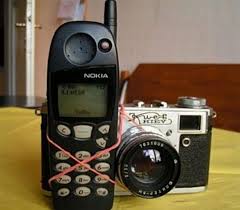
Nowadays, most people have camera phones. And not necessarily ones as obvious as this


As designed by Jermaine from Flight of the Conchords

As designed by Jermaine from Flight of the Conchords


Not only can you not take a photograph inside a Court room, any photographs within the building are within the offence. One of the photographs within a reported case R v Vincent D (Contempt of Court: Illegal Photography) [2004] EWCA Crim 1271 was taken in the Court canteen.  (You can insert your own Ronnie Corbett style joke about Court canteens if you wish)

You can’t make clay models of people either, or sketch them. Yes, even those Court artist sketches aren’t allowed to actually happen within the Court room, the artist has to do them later from memory, which explains a lot.

No, to be fair this witness MIGHT have been Kevin Bacon after twelve months in Guantanamo and then being possessed by a demon.

No, to be fair this witness MIGHT have been Kevin Bacon after twelve months in Guantanamo and then being possessed by a demon.

I wrote about the weird intricacies of the law on photographing in Court buildings years ago, here


If I had a photograph of you


That was an imaginary judgment. It is quite unusual to see a real judgment about someone being prosecuted for doing this, but that’s the subject of this blog. In particular, it deals with the situation where the taking of photographs wasn’t something which just happened, but where it was indicative of defiance and contempt for the Court process, particularly where the photographs were then placed on social media and comments added to them.


HM Solicitor General v Cox and Another 2016

http://www.bailii.org/ew/cases/EWHC/QB/2016/1241.html


This case involved a nasty murder trial, where the accused (later convicted) was said to have filmed the murder and watched it on a mobile phone for enjoyment later. Two of his friends attended Court, and photographs were taken and placed on social media.


  • Parker-Stokes, aged 18 by 4 August 2014, had arrived at the Crown Court during the morning session. He noticed that another friend of his was appearing in Court 2. He went into Court 2. There, he took a photograph on his mobile phone of his friend on the screen, appearing by video-link. In the afternoon, Parker-Stokes was in the public gallery of Court 2 with Cox, Sheppard’s family and other friends, for the sentencing of Sheppard. From there, on his mobile phone he took five photographs and a short video of Sheppard in the dock. Some images show dock officers. Some images, and the video, include part of the notices prohibiting the use of mobile phones; the composition of the pictures suggests that that was deliberate.


Hint, if you are later going to argue that you hadn’t seen the signs saying that mobile phones and photography weren’t allowed – DON’T ACTUALLY PHOTOGRAPH the signs themselves.


  • Cox, now just 18, had also arrived at the Crown Court in the morning. He went into Court 10 where HHJ Picton was sitting. At 10.57 a.m. he used his mobile phone to take a photograph of the judge. The court was in session but it appears that no case was actually being heard. Cox was later present in Court 2 for Sheppard’s sentencing hearing.
  • Some of the images were uploaded on to various Facebook pages, with comments. On 4 August 2014, Parker-Stokes uploaded an image of Sheppard in the dock on to Sheppard’s Facebook page, adding the comment: “Respect g at least u had the balls to admit it accept some slaggy little girls who are two shock to admit it that had to try to blame it on u nuf love xx.” The two girls referred to were the acquitted co-defendant and a key prosecution witness. That same day, Cox uploaded the same image on to his own Facebook page, adding this: “Ride or Die Certified Southwest G”. It was not seriously disputed but that “G” was in common use as a shorthand for gangster, and “Southwest G” was a self-descriptor used among the likes of Sheppard and his friends, that is to say youth within the criminal justice system in Weston-super-Mare. Cox also commented on Sheppard’s Facebook page, under the image of Sheppard in the dock: “Ride it g love ya loads snm anyone got summat to say say it love ya kid xx”. On 6 August 2014, Cox uploaded on to his own Facebook page the picture which he had taken of HHJ Picton in court, adding the words “Fuk the judge!”.


Again, you have to admire the later chutzpah of Cox claiming that the comment ‘Fuk the judge!” was not directed at the Judge in particular, but the judiciary in general. I’m sure the Court loved that.


  • At that time, Sheppard’s Facebook page was accessible by 276 “friends”, and Cox’s by 1406 “friends”. 25 people “liked” the posting on Sheppard’s Facebook page, with 7 commenting on it. 63 “liked” the posting of the image of Sheppard, with commentary on Cox’s Facebook page, with 3 commenting; 43 “liked” the posting of the image of HHJ Picton, with its comment.
  • The family of the murder victim, Mark Roberts, brought the Facebook postings to the attention of the police team which had investigated his murder and, later, court staff did the same. HHJ Ford QC was informed of this and that the police were proposing to refer the matter to the Attorney General’s Office, once the investigation was complete. He asked that the Attorney General be informed that it was, in the judge’s view, important that the Attorney General appreciate that the image of Sheppard had been taken during the sentencing hearing for an offence of murder, and at a time when the deceased’s family was in court; and that the text material attached to the images suggested that they were being treated as “trophy images”.
  • Parker-Stokes was arrested and interviewed on 25 September 2014. He admitted taking the picture of Sheppard in the dock and posting it on Sheppard’s Facebook page, with the accompanying text, but said that he did not know it was an offence to take pictures in court. He “apologised” for his actions. It was only later that the other photographs and video on his mobile phone were discovered, and he was interviewed again in December 2014. He admitted taking them but maintained his ignorance that taking photographs was an offence. He denied having read or seen the signs at the Crown Court prohibiting the use of mobile phones in court. He again said that he “apologised” to the court and to the family of Mr Roberts, but continued to deny committing any contempt.
  • Cox was interviewed the day after Parker-Stokes was first interviewed. He admitted taking and posting the image of HHJ Picton, but also said, untruthfully, that he, not Parker-Stokes, had taken the image of Sheppard in the dock and had uploaded it to Facebook; indeed, he claimed that he had taken all the photographs. He refused to tell the police where the mobile phone was, giving “no comment” answers to questions about it. He too “apologised” for his actions, but denied knowing he was committing an offence.
  • Neither Cox nor Parker-Stokes are unfamiliar with courts and their procedures: Cox has been convicted on 9 occasions of a total of 16 offences, 4 of which related to police, courts or prisons. He was last convicted in March 2014, and was on licence on 4 August following a custodial sentence arising from earlier breaches of court orders; Parker-Stokes has been convicted on 21 occasions of 54 offences, with an extensive history of breaching court orders. 27 of his offences related to police, courts or prisons. His most recent conviction was in September 2014.
  • There are signs at the entrance to every court room at Bristol Crown Court, slightly larger than A4 size, saying: “Notice to All Court Users. The use of mobile telephones, recording equipment and personal stereos is not allowed in the courtrooms”. Another sign at the entrance to courtrooms, and it appears to be the one visible in the photographs taken by Parker-Stokes from the public gallery, states: “Switch off mobile phones. Please ensure all mobile phones are switched off before entering court or hearing room.” At the entrance to the public gallery for Court 2 is a sign saying, among a short list of requirements, “….Mobile phones should be switched off and remain out of sight.” The general information board has a notice saying: “It is an offence to take photographs, record video clips or make unauthorised audio recordings anywhere in this hearing centre.”
  • Parker-Stokes’ affidavit for these proceedings stated that his comments were meant to congratulate Sheppard for having the courage to admit what he did, unlike the two girls who were with him at the time, and who blamed it all on him. “Respect” was a greeting. “G” was simply something that his friends called each other; he did not know that it meant “gangster”. He wanted Sheppard to know that he was thinking of him. It was not done to glorify Sheppard. Mr Willmott on his behalf submitted that no alternative meaning had been put forward. He had no intention of interfering with the course of justice, and “did not foresee that justice might be interfered with”. He had not been to the Crown Court before and was unaware of the prohibition on taking photographs. He was distressed to learn that the victim’s family had seen the photographs and comment, since they would not understand what he was saying; he would like to apologise to them. Parker-Stokes was in custody at the time of the contempt hearing, and declined to come to court. He had the opportunity to give evidence before us, but in effect declined it.
  • Cox decided to give no evidence either, but he had failed to provide the required affidavit for that purpose anyway. We focus on the submissions made on behalf of Parker-Stokes, since, after the hearing, Cox admitted that he was guilty of contempt of court, and was therefore in a position to apologise for his contempt, as he did. This was a course of action for which he will receive credit.


The prosecution here were concerned that taking photographs in Court particularly of criminal trials, and particularly whereas here it seemed to be as a trophy and act of defiance, was increasing in prevalence, and the punishment required more than the level 3 fine of £1000 allowed by the 1925 Act. They sought to commit on the basis of contempt, which can obviously carry a custodial sentence.

For non-lawyers, the Latin here – actus reas and mens rea may seem a bit confusing. Any criminal act requires two ingredients – the guilty act (actus reus)  the thing you did, and the guilty mind (mens rea)  what was in your mind at the time.  The actus reas is always the easy bit to understand  “Did X stab Y, Did X take the DVD player from Y’s house, Did X take photographs inside a Court room?”.  The mens rea can be trickier – some offences can be Strict Liability  (just doing the act is enough, you don’t need the mens rea element – many driving offences, for example), some are “Intent”  – the prosecution need to prove that X intended to injure Y, or to dishonestly deprive him of the DVD player etc, and some are “Recklessness”  – that X did the act without proper care and attention as to what might be a likely or possible consequence of that.   [Sorry, I have just squashed about 3 weeks of Criminal Law into one paragraph, so it is necessarily a rough summary]


(a) Submission of the Solicitor General


  • Mr Watson on behalf of the Solicitor General submitted that the use of mobile phones to take photographs in courts, and in criminal courts especially, and then to disseminate the images on social media was an increasing concern. The Solicitor General sought to establish clearly that these were indeed contempts by both the taking of the photographs and by their subsequent publication on social media, which Parker-Stokes continued to dispute, and that these two forms of contempt were to be taken very seriously indeed, with commensurate punishment.
  • Although s.41 of the Criminal Justice Act 1925 (CJA 1925) makes it an offence to take pictures in court, and also to publish them, each punishable on summary conviction by a Level 3 fine, the Solicitor General considered that such summary proceedings would inadequately reflect the gravity of the conduct in the present case and the wilful defiance and affront to the authority of the court. The context in which the photographs were taken, followed by their publication on social media, together with the “trophy” or “glorifying” element of taking and publishing the images, were among the main factors aggravating the contempts; the murder itself had been videoed by a person present at the scene, and the images of Sheppard had been designed, it should be inferred, to capture the prohibition on what was being done in the images themselves. The contemptuous statements accompanying the images on Facebook were another serious aggravating feature, as was the distress which such postings would obviously cause (and had in fact caused) to the victim’s family. The criminal records of Parker-Stokes and Cox, and the nature of their offending, were further aggravating features.
  • Mr Watson submitted that the actus reus of the contempts was made out in relation to the taking of photographs in court and their publication by the very fact that each was an offence under s.41 of the CJA 1925: it is an offence to take in any court any photograph under s.41(1)(a), or to publish any photograph taken in contravention of s.41(1)(a) under s.41(1)(b). The fact that the photograph of HHJ Picton in his court was taken at a time when no case was being heard did not prevent that being an offence in view of s.42(2)(c), which deems a photograph to have been taken in court if it is taken in the courtroom or in the building or its precincts. The use of the mobile phones for taking the photographs was also in breach of the various orders posted around the court buildings, which should be taken as judicial or judicially sanctioned orders made for the purpose of preventing interference with the due administration of justice. The publication of the images through the Facebook postings constituted a contempt for the same reasons. It was itself an offence, and it compounded or was a purpose of the contempt committed by the taking of the photographs. Orders prohibiting the use of mobile phones and photography prohibit, by necessary and obvious implication, the publication or other use of images obtained by breaching them.
  • Mr Watson did not contend that, on the facts of this case, the comments relating to the images of Sheppard, although significant aggravating features, were separate acts of contempt themselves. Cox, in interview denied that he had any feelings of hostility towards HHJ Picton; “Fuk the judge” was directed at the judiciary in general, personified for these purposes by the image of HHJ Picton in court. Although the offence of scandalising the judiciary was abolished by s.33(2) of the Crime and Courts Act 2013, the Act provided that an act of “scandalising the judiciary”, remained punishable as a contempt if it was also another form of contempt. We agree that on the facts of this case those words may not amount to another form of contempt, but that they should be regarded as an aggravating feature of the contempt committed by Cox’s admitted contempts in taking and publishing the photograph of HHJ Picton.
  • Mr Watson contended that the mens rea of contempt relevant here was that each of those acts was deliberate, though he also submitted that if a specific intention to prejudice the course of justice were required, this Court should infer that that intention had been proved on all the evidence.


What did the defence say? Well, unsurprisingly, they focussed on the mens rea element, as they were bang to rights on having actually taken the photographs.


b) Submission on behalf of Parker-Stokes


  • Mr Willmott submitted on behalf of Parker-Stokes that the actus reus of contempt was the creation of a real risk that the course of justice, in some not insignificant way, would be prejudiced or impeded. The fact that taking photographs in court was a criminal offence did not make the act of itself a contempt of court; nor of itself would the fact that an act was done in disobedience to a direction of the court. It would not be right to extend the ambit of contempt in this way when the statutory offence under the CJA 1925 had been created to deal with this particular issue. There was no evidence that the signs about the use of mobile phones were based on any order of the court. There was nothing in the photograph of Parker-Stokes’ friend appearing by video-link which could interfere with the administration of justice. There had to be a specific intention to impede or prejudice the course of justice, and that could not be proved here.
  • The issues revolved therefore around the actus reus and mens rea for contempt of court in the illegal taking and publication of the photographs.


The defence here are arguing that for contempt (rather than the statutory £1000 fine under the CJA 1925) the mens rea had to be that there was a SPECIFIC INTENTION to impede or prejudice the course of justice. The prosecution would have to prove that.


What did the Court decide on actus reas?

(3) The actus reus of contempt

(a) The interference with the proper administration of justice


  • The taking and subsequent publication of the photographs on Facebook, in our view, each constitute the actus reus of contempt. First, illegal photography will in general interfere with the proper administration of justice through the very fact that it defies the criminal law relating to the administration of justice. Second, the statutory prohibition on photography in court is also a reflection of the serious risk to the administration of justice necessarily inherent in photography in court without the permission of the court which can be given under the relevant statutory provisions in very limited circumstances. This prohibition is underlined by the notices forbidding the use of mobile phones and photography in court buildings. These were plainly worded as orders, obviously made to protect court proceedings and clearly made with the approval of the court to protect its proceedings from interference. Such photography inevitably poses serious risks to proceedings or participants in them; those serious risks may be continued or enhanced by the use made of illegal photographs, whether by publication or some other use. The facts of this case illustrate both those serious risks.
  • The real and specific risk of serious interference with the proper administration of justice are evident. Although the taking of the photographs was not noticed by any responsible person at the time, and these illegal acts did not in those circumstances disturb proceedings, the serious risk posed by photographs taken during the sentencing hearing to its proper conduct is obvious. If the taking of the photographs had been observed, the proceedings would have suffered a grave distracting interruption, perhaps at a very sensitive stage, adding greatly to the stress and grief of the victim’s family and friends; and perhaps to some of Sheppard’s. It would have been obvious that it was a friend of Sheppard who had taken the photograph. Furthermore, and especially in the context of the previous use of a video to record and revel in the murder, it is not hard to see not only the immense distress it would have caused to the family of the murder victim but also the public order consequences which could have arisen. Some of the photographs included the dock officer, and although he could not be identified from the photographs directly, it is possible that digital enhancement could reveal who he was. The taking of the photographs was also the necessary precursor to the publication of one on two Facebook pages, with offensive commentaries.
  • The photograph, taken in breach of the criminal law and of the various orders posted around the court building, of Parker-Stokes’ friend appearing in the morning over the court video-link, created the real risk of interference through disruption of the proceedings, though less sensitive, even if no use was to be or had been made of them. The same also applies, as is now accepted, to the photograph of HHJ Picton, taken by Cox.
  • The publication of the illegally taken images was itself a contempt, and one which aggravated the contempt committed by the taking of the images. The publication of an illegally taken image is an offence. It was also by obvious and necessary implication, contrary to the orders posted in the court building which forbad the images being taken at all. Any such publication shows, even boasts, that the criminal law and authority of the court, in its orders, has been successfully flouted, diminishing its necessary authority over the conduct of its proceedings and its role in upholding the rule of law.
  • The illegally taken photograph of Sheppard was published as the vehicle for comments which on any view were designed to express public support to the murderer, on behalf of his friends. Parker-Stokes’ and Cox’s posting showed to the public, constituted by their selection of Facebook friends and others, a successful breach of the prohibition on photography, which one of them had got away with, and which those with access to the image could then use for their own amusement or for support of a murderer. Those involved in other cases, in whatever form, but not least the youth of Weston-super-Mare, would be aware that a prohibition which they might equally wish to breach, could be breached for their own purposes. Those involved in upholding the proper operation of the criminal justice system, including witnesses, would be aware of the publicity which could be given to them through the use of illegal photographs. That obviously creates a serious risk to the due administration of justice.
  • The sentencing stage of criminal proceedings is serious for all concerned, including the family and friends of the victim, who are entitled to see, their loss notwithstanding, that the law and the authority of the court has prevailed and their status as victims of the most serious crime were properly respected. Instead, publication of the photograph of Sheppard, and the opportunity this gave for the various comments, underlined his friends’ affront to the proper administration of justice. Here, at a time when it sentenced Sheppard for murder, the authority of the court had been flouted by a friend of the murderer by taking the photographs, and then again by his two friends in the publication of the image on the two Facebook pages, aggravated by the commentary. The publications told the murderer’s friends that Parker-Stokes and Cox had got away with breaking the law and breaching the court’s orders; that they had no regard to the feeling of the murder victim’s family. It is important to recall that the sentencing of a criminal and its immediate aftermath and the respect to which victims are entitled are an essential part of the due administration of justice; the actions of Parker-Stokes was a grave interference.
  • We reject Mr Willmott’s contention that there had been no real risk to the course of justice from publication, even if he were right that digital enhancement could not lead to the identification of the dock officer. True it is that no court official could be identified; the photographs gave no information about the layout of the court which could not be obtained from a quick glance from the public gallery; the trial itself was over; the Facebook postings could not interfere with the actual sentencing hearing since that stage, the last in the process, had concluded before they were made. However, he entirely overlooked the grave interference and serious risks which did arise, as we have set them out, in enumerating others which might not.
  • Although the criminal proceedings were ended, absent any appeal, at the conclusion of the sentencing hearing, the interests of the due administration of justice did not simply end there, as we have explained. The CJA 1925 prohibition on taking photographs does not end; the prohibitory notices in the court building continued to have effect. Participants, including witnesses and jurors, may face reprisal, intimidation, abuse. One witness and the acquitted co-defendant did face such abuse through the comments accompanying one of the Facebook postings. The judiciary faced abuse. The due administration of justice plainly also includes the protection of victims and their families from the use of illegally taken photographs for whatever purpose, including to undermine or belittle the outcome of the criminal process or the authority of the court.
  • The fact that taking photographs in court and publishing them are criminal offences, does not prevent those acts being punishable as contempts of court as, for the reasons we have given, these actions pose serious risks to and interfere with the due administration of justice: the court obviously has power, as it needs, to deal immediately with anyone seen taking photographs, in order to maintain control over its proceedings, and to avoid it standing powerless while the law designed to protect the administration of justice is broken before it. With the current technical capabilities of mobile phones and the internet, such photographs can be published almost immediately, or emailed from the phone for later retrieval or use by others. Whilst the later publication of such photographs may not be a contempt in the face of the court, it is still a contempt, quite apart from the fact that it is a criminal offence, since publication for a variety of reasons may be the very purpose behind the taking of the photograph illegally. While a summary criminal charge may be the appropriate response to some illegal photography, there are other cases in which it will not be and needs either swifter or more condign action by the court to uphold the due administration of justice; this was such a case. It clearly required the Attorney General to bring proceedings for contempt, taking into account the gravity of the risks and of the interference with the due administration of justice.


And on mens rea. Firstly, the Court gave a judgment as to whether on the facts of this case, even the highest form of mens rea “Specific intent” was made out, and were satisfied that it was


  • First we will assume that it is necessary to prove specific intent. On the facts of this case, we are sure that the mens rea was proved on that basis to the criminal standard. It is sufficient mens rea, for the specific intent to impede the course of justice, if the contemnor intends to risk impeding the course of justice by his acts, even if he did not intend the precise manner in which his acts will have that effect.
  • Mr Willmott submitted that the acts were not ones which would obviously interfere with the course of justice. Subjective foresight was required at the time the acts complained of were done. The photographs created no risk to the administration of justice, but even if they did, there was no basis upon which it could be concluded that a young man with no record of significant educational achievement, doing acts which were not obviously likely to affect the administration of justice, had any intention of creating such a risk. The comments with the postings did not target the victim or his family. Neither taking the photographs nor publishing them could show an intent to interfere with the course of justice unless that accorded with his understanding of the course of justice and what would interfere with it. We reject this submission.
  • First, we are sure that, although Parker-Stokes did not know of the CJA 1925, he did know that the use of a mobile phone was prohibited in court, and that would include its use for taking and publishing the resulting photographs. Parker-Stokes denied knowing that he was not allowed to take photographs at court, as he was “too worried about Ryan Sheppard to notice any signs”. We reject this evidence as plainly untrue. There were many and clear notices which he would have passed, during his idle time at the Crown Court, telling him what the position was. He was there for some time, and went into two courts. No one noticed him taking the photographs, which suggests that he took them surreptitiously; that was because he knew it was prohibited. He did read enough at court to enable him to go into a different court in the morning where he had seen that a friend was appearing over the video–link. He also managed to capture relevant parts of the signs in the photographs themselves – from which it is obviously to be inferred that he wanted to demonstrate his contempt for the prohibition, his deliberate defiance of it and his disregard for the proper administration of justice. He had experience of court precincts and procedures. He also had convictions for offences of dishonesty. Mr Willmott pointed out that dishonesty was not necessarily to be equated with untruthfulness and his previous convictions did not involve telling lies; however he also has convictions for offences which show a willingness to disregard court orders. Parker-Stokes did not attend to give evidence and to be cross-examined on the basis of his affidavit, and there were many questions which merited being asked. We are entitled to draw the inference that he did not attend because he had no good answer to them: how could he miss the signs? How could he have been so anxious as to miss them all? Did he not see them as he photographed them? How it was nobody noticed him if it were not done surreptitiously and if so why so? What did he think that the purpose of the prohibition was?
  • Second, we are satisfied that, just as he lied over not knowing of the notices, he lied over the absence of intent to impede the course of justice. He knew that the taking of photographs was prohibited. It follows that he must have realised that it was equally prohibited to publish prohibited photographs. He must have realised that the prohibition served the due administration of justice, even if he may not have known precisely how. We are sure that he understood well the problems which he risked creating if he were seen taking the photographs. The one of his friend on the video-link would also obviously have interrupted the proceedings. The ones taken during the sentencing hearing, aware as he says he was of the distress which the Facebook postings caused and which he had therefore not intended relatives to see, would have caused obvious distress and disruption as he was well aware, if he had been seen taking them.
  • We are also satisfied that he intended to impede or to risk impeding the course of justice by the publication of the image on Facebook. That demonstrated that he intended to show to his friends and associates that he had breached the prohibition, and had got away with it. He knew that, as the prohibition served the administration of justice, so its breach would impede it. His deliberate act intended what he knew would happen, putting the course of justice at risk in that or in some future case by showing that he could disobey a court order for his own and his friends’ amusement, and do so by adding his offensive comments supportive of a recently sentenced murderer. The comments which he posted on the Facebook entry are relevant to what intent we infer he had. He may not have intended that the relatives or the police or courts should see it. But he intended that his breach of the prohibition should be seen by others, among whom would be the criminal youth of his area. That is damaging to the course of justice in other cases as people realise that a protection for them can be breached, or court orders disobeyed for their own purposes.
  • Although our conclusion on these matters puts the guilt of Parker-Stokes beyond doubt, on the assumption that we accept Mr Willmott’s on the required intent, we will also express our view on whether specific intent is in fact required as we have heard full argument. We do so even though we consider that the lack of specific intent will rarely arise in practice, given the inferences that can generally be drawn.


But then went on to decide that specific intent was not going to be necessary  (although someone who is able to evidence, for example that they genuinely could not read the signs prohibiting photograpy – perhaps they don’t speak English or cannot read, could be found to NOT have committed contempt)


(d) Conclusion on the intent required for this type of contempt


  • The circumstances in which contempts of court arise are too varied, in our judgment, for one mens rea to be applicable to all forms of contempt. Nor is that the law. We are not concerned with contempt in publication cases, where there is no court order prohibiting publication, and what we say does not apply to it. Nor are we concerned with the sort of order or act involved in the Spycatcher or Leveller Magazine cases. Nor may all acts be readily pigeonholed in to one broad and general category of contempt or another. But we are concerned with acts which fall into the broad category of contempt in the face of the court or contempts closely related to such contempt.
  • The general description of the nature of contempt in Robertson and Gough, at paragraph [29] of its decision, is a good starting point: “conduct that denotes wilful defiance of, or disrespect towards, the court or that wilfully challenges or affronts the authority of the court or the supremacy of the law itself”. The purpose of contempt proceedings is “effectively to protect the rights of the public by ensuring that the administration of justice shall not be obstructed or prevented”; Salmon LJ in Morris v Crown Office [1970] 2 QB 114, 129, cited by the Law Commission in consultation paper 209 “Contempt of Court” at paragraph 5.8. A judge must be able to control proceedings so that they do not get out of order. Contempt in the face of the court, suggested the Law Commission at paragraph 5.3, borrowing from paragraph 10.2 of Arlidge, Eady and Smith on Contempt concerns “some form of misconduct in the course of proceedings, either within the court itself or, at least, directly connected with what is happening in court”. Such contempt need not be witnessed by the judge, and the concept of the face of the court is interpreted broadly; the photograph taken in the canteen in Vincent D is an example.
  • Contempt in the face of the court may require speedy action, whether by removing or detaining a person or lawful warning that that may happen if an act is repeated. If a person is seen taking photographs, the court has to have the power to seize his phone, for the images to be checked and if necessary deleted, for any onward transmission to be prevented, and for the person to be removed from court to the cells for inquiries to be made, followed by any punishment later that day. In the overwhelming majority of cases, it will no doubt be readily inferred that the person deliberately taking photographs intended to interfere with the due administration of justice.
  • However there may be rare cases where that is not the inference; in such cases it should be no bar to those steps for the person taking the photographs deliberately to say that he was unaware of the CJA 1925, or that he had not read or understood the prohibitory notices, for example if he were illiterate or foreign, or that he had no intention of interfering with the administration of justice, but had tried to take his photographs unobtrusively, just wanting a personal souvenir. It is therefore necessary to decide whether a specific intent is required. In our view, it is not. It is sufficient mens rea that the acts must be deliberate and in breach of the criminal law or a court order of which the person knows.
  • No specific intent is required beyond that. The substance of this part of the common law is to enable courts to prevent and punish interference with the administration of justice by acts done in the face of the court. The intent required cannot depend on the foresight, knowledge or understanding which the ignorant or foolish might have of the ways in which his acts risk or actually do interfere with the administration of justice. The ignorant and foolish, who are unaware of the law or who read prohibitory notices but do not understand their purpose, and do not realise the risks which their acts may create for the trial or other court process, and who may be right when they say that the risk or the actual harm was not what they ever intended, could not be dealt with at all for contempt in the face of the court. Yet they may cause the most serious harm. A defence that the contemnor is not guilty because he did not realise what could happen, and intended no interference, would put the court proceedings at greater risk the more ill-informed the contemnor was prepared to say he was, or actually was. The power of the court to react swiftly to acts of this sort, which risk interference with the administration of justice, cannot be dependent on any further specific intent to interfere with the course of justice, without creating a serious risk of neutering the court in the exercise of its powers when it may need them the most.
  • The fact that the contempt may not be noticed at the time and may be dealt with by an application for committal as here, cannot mean that the same acts must be accompanied by a different intent for the contempt to be proved. The question of what mens rea is required is not dependent on the form in which the contempt proceedings are brought. (There was at one time a suggestion on behalf of the respondents, but rightly not pursued, that the provisions of CPR Part 81 provided some assistance on these issues. But that is misconceived; those procedural provisions do not provide or change the substantive law of contempt.)
  • In the case of the person breaching the criminal law, it is not necessary that he should know what the law is before his deliberate and illegal act, risking interference with the due administration of justice, can be treated as a contempt; no court order, whether in the form of a notice or not, is necessary for that crime to constitute a contempt. A person cannot defend himself by evidence that, ignorant of the criminal law and unaware of the prohibition on photography, he could not intend to interfere with the administration of justice. If there were no signs prohibiting the taking of photographs in the part of the building where the act takes place or prohibiting the use of mobile phones in court, and there may be none say in canteens, the court could not be left powerless to deal with the risk created to the administration of justice as a result of ignorance of the criminal law on the part of the person whose acts create or risk creating the interference. The same applies to publication of illegally taken photographs in the Facebook postings.
  • Where the act which constitutes a contempt in the face of the court, or one closely akin to such a contempt, is not a crime, the deliberate breach of a court order of which he has notice will be sufficient. It is not necessary that the person additionally intended by his breach to interfere with the administration of justice, though for the reasons we have set out and which were considered in Dallas, it will generally readily be inferred that such an intention is established. It does not matter in principle whether the order is specific, as in a judge’s direction to a jury on internet searches, or general, as in the public notices in court buildings. The latter are there, either reflecting the criminal law, or, where not, expressing what every judge requires and relies on to let the public and participants know what is required for the administration of justice. Where a person knows of the court order and deliberately breaches it, he knows that the prohibition which he breaches was put in place to prevent interference with the course of justice. Therefore, the questions whether the breach was knowing and deliberate and whether it was intended to interfere with the course of justice amount to the same question, even if the person may not have realised or understood quite how the administration of justice could be interfered with. He would know that it would be put at risk.
  • The Facebook postings may not be contempt in the face of the court, as we have observed at paragraph 31 above. There were obviously no signs saying that illegally taken photographs could not be posted on the internet or published in some other way. However, even if such publication is not a contempt in the face of the court, the required mens rea should be no different from that applicable to contempt in the face of the court. First, the deliberate publication of illegally taken photographs is a crime under the CJA 1925. Second, the taking of photographs does involve a contempt in the face of the court, and their publication is directly connected to the purpose and effect of that contempt; it may take place almost simultaneously. Third, the prohibition in notices on the taking of photographs and the use of mobile phones must carry with it by necessary implication the prohibition on the publication of what their use achieves. The publication of what are known to be illegally taken photographs must be regarded as a breach of the same prohibitions. It is also a form of contempt which, in our judgment, can be dealt with by the summary procedure, if the circumstances are apt for it.
  • The authorities support this approach to mens rea for this sort of contempt. We do not need to repeat what is derived from Vincent D, Ivanov and Robertson and Gough; they plainly support it. We gain no assistance from authorities which do not deal with this sort of situation. The real issue is whether Dallas shows that to be wrong, as Mr Willmott contended. Mr Watson submitted that Dallas was not a case dealing with contempt in the face of the court, for which the tests were different.
  • Dallas did not consider the mens rea required for deliberate acts which were not in breach of some order of which the contemnor knew, but which were in breach of the criminal law. Whether ignorance of the criminal law by the contemnor is described as providing no defence, or whether there is a presumption that a person knows the criminal law, the contemnor is taken to know of the existence of the criminal law, and so a deliberate act, which is an offence, is treated as a knowing breach of the equivalent of an order. If punishable as a contempt in the face of the court on the basis of a deliberate act, it is punishable also on an application to commit on the basis of a deliberate act.
  • The Divisional Court did decide in Dallas, in our judgment, that a knowing and deliberate breach of a court order sufficed to provide the mens rea of contempt. The oral exchanges, noted but not relied on by the Strasbourg Court, support what is the clear meaning of [38] and [39] of the Divisional Court judgment in Dallas. We are satisfied that Dallas in the Divisional Court is wholly consistent with the conclusion to which we have come. The Strasbourg Court did not regard it as changing the law. This explains why Davey and Beard, above, in its very brief introduction to the law, treated Dallas in the Divisional Court as no different from cases which had referred to the need for a specific intent.
  • The Strasbourg Court was right that there is no difference in that sort of case between the answers to the questions of whether there was an intent to interfere with the course of justice, and whether the breach of the order was deliberate and knowing. The need for some specific intent over and above the deliberate and knowing breach of an order, made for the protection of the administration of justice, is not required. It is proven in reality by the deliberate and knowing breach itself.
  • In Schot and Barclay, to which we have referred at paragraph 51 above, it was accepted that mens rea was required but it suggests, p398 C-E, that evidence that someone did not want to disrupt proceedings by refusing to reach a verdict, had provided evidence that they lacked the relevant intent, and it was also for question whether they had foreseen that the judge would discharge the entire jury, rather than just the two jurors, so enabling the trial to continue. The real issues in that case revolved around the procedure adopted by the judge, and the exposure of jury deliberations. The debate about mens rea would now have to be read in the light of the several later decisions, and ones more applicable to the sort of acts of contempt here. Spycatcher shows that intent and desire are different; what the juror wanted is not the issue. It is interference which must be intended, and the precise course of disruption which followed does not have to be intended or foreseen. The risk of interference appears not to have been considered at all. This decision is not now, in our judgment, of any real assistance in ascertaining the mens rea for contempt.
  • If a deliberate act which breaches the criminal law suffices, as in our judgment it does, then Parker-Stokes would have been guilty of contempt of court by the deliberate taking of the photographs and by the deliberate Facebook posting of one of them, even absent the specific intent we have found as established to the criminal standard of proof.


[Just the deliberate act of taking the photographs and posting them on Facebook was sufficient. ]

The men were convicted of contempt. They have not yet been sentenced, but I would expect a custodial sentence. Obviously the Court are going to be much sterner on a criminal trial, particularly on a murder trial, but it is a warning that photographs taken for the purpose of defying the Court and put up on social media run the risk of not just the £1000 fine, but a prison sentence.


FGM and future risk

The Independent recently reported that there had been more than 1,200 reported cases of FGM (Female Genital Mutilation) in 3 months. More than 2 per cent – about 24 cases, were on children.

http://www.independent.co.uk/life-style/health-and-families/health-news/more-than-1200-cases-of-fgm-recorded-in-england-in-just-three-months-a7069901.html


I don’t think the caption under the photograph is correct – I think they could accurately say “no successful prosecution” because we already know about THIS

http://www.theguardian.com/society/2015/feb/04/first-female-genital-mutilation-prosecution-dhanuson-dharmasena-fgm


In the High Court, Holman J had to deal with an application to make 3 children wards of Court and for orders under the Female Genital Mutilation Act 2003.

Buckinghamshire County Council v MA and Another 2016


http://www.bailii.org/ew/cases/EWHC/Fam/2016/1338.html


  • The parents are both Somali who were brought up in Somalia. The father travelled to Britain as a refugee in 2002 and has lived here ever since. The mother, as his wife, was enabled to join him here in 2005. She also has lived here ever since then. The parents have altogether seven children, of whom five are daughters and two are sons. Three of those children were born here in England after the mother arrived here in 2005. The eldest four were all born in Somalia.
  • It is a fact that the two eldest daughters have been subjected to female genital mutilation in Somalia. That must necessarily have been over ten years ago. The father says that it took place without his knowledge, let alone his consent, in the period after he had travelled to Britain, whilst the mother and the four eldest children were still living in Somalia.


That leaves three daughters who have not been subject to FGM, and of course everyone wants to ensure that this doesn’t happen. Given that it happened in Somalia to their two older sisters, there’s some sort of risk there.


If the family were intending to visit Somalia on holiday, that’s going to make professionals anxious. Of course one has to properly take into account that (a) The father says the FGM to his two eldest daughters took place without his knowledge or consent, and in fact whilst he was in England, (b) The family were living in Somalia at the time, where FGM does happen and is not viewed in anything like the same way that it is in the UK and (c) It was at least eleven years ago, and the family have been living in the UK since that time and have probably acquired a greater understanding of the cultural norms of the UK and why FGM is considered to be not only abusive but a criminal act.


  • Over the last several years the family have lived in the area of several different local authorities. There is clearly a history here of different local authorities at various times having acute concerns that the youngest three daughters might similarly become the victims of female genital mutilation. As a result, there were proceedings in 2012 and 2014 and again this year. It is said that the consequence of a rather last minute application by another local authority in 2014 was that the mother and children were unable at the last minute to travel on a planned holiday to Somalia. If that was the necessary and inevitable consequence, it is obviously a matter of the utmost regret; the more so as, before the actual booked date of travel, a judge sitting as a High Court Judge had given permission to go.
  • What gave rise to the current proceedings was that in early April 2016 Buckinghamshire County Council learned that the mother and two of the daughters, together with one of the sons, had travelled to Somalia without their prior knowledge, even though at that time there was quite considerable engagement between the family and that local authority. This resulted in a without notice order being made on 8th April 2016 and these proceedings ultimately coming before myself on notice here today.
  • Later in April the mother and children did duly return from Somalia. The two daughters who had been there were medically examined, and there was no evidence or indication of any genital mutilation or other interference with their genitalia. The result is that today Buckinghamshire County Council have proposed and sought that all the proceedings which they commenced last month should be dismissed or otherwise discontinued or brought to an end, and all current orders of a continuing nature discharged. I have been expressly told today by Ms. Mehvish Chaudhry, who appears on behalf of Buckinghamshire County Council, that in the opinion of Buckinghamshire County Council there is currently a low risk of any of the three youngest daughters being subjected to female genital mutilation.


So, what happens the next time the family want to go to Somalia? Are they stopped by Court orders, as happened in 2014? Or do they go without the knowledge of the Local Authority, as happened in 2016 (with no adverse consequences)?


Counsel for the parents was keen for the Court to deliver a judgment on what the future risk of FGM for this family was. Having travelled to Somalia with no incident, was it right for the prospect of Court applications every time they wanted to visit Somalia to see family to be hanging over them? Or conversely, given that two children in the family have been mutilated in Somalia, is it right that the three daughters should have that protection of only going to Somalia if a Court seized of all the facts felt it was safe for them to do so?


  • Mr Alistair Perkins, who appears on behalf of both parents today, has urged that there should nevertheless be a “fact finding” hearing at which the court should consider and give a suitably detailed and analytical judgment as to whether there is any future risk of any of these three daughters being subjected to female genital mutilation. He stresses that this is now the third set of proceedings in relation to this issue, and that the proceedings in 2014, in particular, had the undesirable consequence (it is claimed) that the planned travel of the mother and children to Somalia was aborted. He submits that unless there is a fully reasoned judgment after hearing oral evidence there is a risk that there will be yet further future sets of proceedings of this kind. Whilst I do have considerable sympathy with these parents and with that argument and submission of Mr Perkins, it seems to me that a so-called “fact finding” hearing cannot really achieve the finality from any future legal proceedings that Mr Perkins seeks.
  • The issue in this case does not relate essentially to past facts, but to future risk. The headline past facts can be very shortly stated. The two eldest daughters did undergo female genital mutilation in Somalia. The three youngest daughters have now travelled on one occasion to Somalia for a fortnight last month and have not ever been subjected to genital mutilation. It would, of course, be open to a court to hear at a little length from each parent about their attitudes to female genital mutilation and their future intentions. A court might indeed conclude, as the local authority already have done, that there is only “low risk” of future female genital mutilation. But it seems to me that no court could ever responsibly, on the facts and in the circumstances of this case, rule out altogether any risk of female genital mutilation. The inescapable fact is that, whilst in Somalia, two of the daughters in this family were genitally mutilated. So it does not seem to me that the parents could realistically ever achieve some fact finding judgment that rules out altogether any future risk of genital mutilation.
  • The inescapable fact is that if, on some future date, on some future facts, a local authority with a proper interest in these children (essentially the local authority for the area in which they are from time to time living) had concerns that one or more of these children was at risk of being genitally mutilated, it would be the duty of that local authority to take whatever action seemed to them to be appropriate. It seems to me, therefore, that the proposed future so-called fact finding hearing that Mr Perkins seeks could not achieve the finality or certainty that he and his clients aspire to; and it would, frankly, be a considerable further waste of court time and public money, all parties in these proceedings being publicly funded. For those reasons, I decline to give directions for a future so-called fact finding hearing.
  • However, as I have already stated, Buckinghamshire County Council, who have clearly displayed proper concern for the wellbeing of these children, are now currently satisfied that there is, at most, a low risk of any of these children being subjected to female genital mutilation. The trigger to the present applications and round of proceedings was, as I have already said, Buckinghamshire learning that two of these daughters had already travelled to Somalia with their mother.
  • The father himself has said in paragraph 29 of his recent statement in these proceedings that:


“I confirm to the court at this stage that I did not inform Buckinghamshire County Council of the trip as I did not think that I had to. There were no orders in place that required me to inform them of any planned holidays. Further, it had never been discussed during child protection meetings or child in need meetings in either Surrey or Buckinghamshire that they would have to be informed. At no stage did I try to keep the holiday secret from the local authority and if it had been made clear to me that they had to be informed of all trips abroad, I would have shared this information and avoided the need for this matter to come before the court once again.”


  • Pausing there, one can see from that paragraph that the father himself has said that if he had appreciated the importance of giving to the local authority due warning or notice of a proposed trip abroad, and in particular one to Somalia, then he would have told them in good time. As I understand it, having learned the hard way of the importance of keeping an involved and concerned local authority well aware in good time of a trip of this kind, the father will do so in the future.


The Judge concluded that it was not possible to tie the hands of either Buckinghamshire, or any future Local Authority deciding that the children were at risk of FGM, but did his best to put a clear scheme in place so that the parents would know what was expected of them


  • That being so, I am very content to record on the face of the order which I will make today:


(1) In the opinion of Buckinghamshire County Council, there is currently a low risk of any of the daughters being subjected to female genital mutilation; and

(2) On the evidence currently available to the court, I (the court) am not satisfied that the parents (whether separately or together) present or are likely to present a risk of female genital mutilation to the youngest three daughters during their minority, or that the parents will fail to prevent others from causing them to undergo female genital mutilation.

I couple that with stating (although it cannot be the subject of any undertaking or order since all proceedings are now coming to an end) that, before any of the children travel again to the continent of Africa, the parents should give to the local authority for the area in which they then reside not less than twelve clear weeks’ notice of the proposed trip, and permit a social worker or similar professional to discuss the risks of female genital mutilation with the parents at that time.


  • I am further very content to state on the face of the order that if, in the future, the relevant local authority (whose duty and discretion must remain unfettered) consider that there is a risk of female genital mutilation such that they must seek a legal remedy, they should do so without delay and as long as possible in advance of the proposed trip. The words “whose duty and discretion must remain unfettered” in that formulation are very important. I must, and do, make quite clear that if, at some future date, some local authority – whether Buckinghamshire County Council or any other local authority – do have a current concern that any of these children are at risk of female genital mutilation, they are under a very high duty to take whatever steps then appear to them to be necessary and appropriate to protect the child or children concerned.
  • Equally, it is obviously highly undesirable if there are late or last minute applications, particularly if made without notice, for orders shortly before a proposed trip or, as in this case, whilst a planned holiday is already under way and the children are already abroad. So there is a very clear tie in between the expectation, on the one hand, that the parents will be open and up front with any relevant local authority and give to them very good notice (i.e. not less than twelve clear weeks) of any proposed trip by any of the children to the continent of Africa; and, on the other hand, an expectation that if, having been given that notice, the local authority are sufficiently concerned, they really must bring legal proceedings very promptly and not leave it to the last minute.
  • I make clear that I simply cannot give a judgment in terms, or to the effect, that there is no risk of these children being genitally mutilated. As two of their older siblings already have been, it is impossible to exclude all future risk. But Buckinghamshire County Council, who have recently been very concerned about these children, have satisfied themselves that any risk now is a low one. I am not myself aware of any evidence or material to suggest that the risk, such as it is, is any higher than that which Buckinghamshire County Council have assessed it to be.


That seems to me a very sensible form of order for such cases, where there is not likely to be a risk of the FGM happening in this country (though it does happen, the procedure is much more likely to happen in an overseas country where the practice is culturally accepted and not illegal).  It strikes a good balance of the risks being assessed and the family knowing in advance whether they are able to take the holiday.  (Let’s not forget that telling people that they can’t take their children to their country of birth or to see relatives is a significant interference with their family life)


Yet more IVF misery due to clinic mistakes with paperwork


You write one up, then another one appears.


Again the President, again Miss Deidre Fottrell QC, again failure by an IVF clinic to get the paperwork right in an IVF process and meaning that the parents need to go to the High Court to get their legal status as parents sorted out.


And again, a hospital trust being pretty unsympathetic and feeble in how they picked up the pieces. (“Oh parents, there are some pieces. Mind how you go. No, we’re not picking them up.”   Actually, that sarky summary seems to be an improvement on the bedside manner employed in this particular case, where a doctor rang them up to tell them that one of them was not the child’s legal parent, and didn’t offer them an appointment or even explain it in more detail in a letter. Cheers for that.)


Re N 2016


http://www.bailii.org/ew/cases/EWHC/Fam/2016/1329.html


Here’s the mistake itself


The issue

  1. Adopting the terminology I have used in previous cases, the problem in the present case is very shortly stated. Before the treatment began, X signed a Form PP. Y did not sign a Form WP. Both of them signed a Form IC, though it was not in precisely the same form as the Forms IC I have had to consider in previous cases. The central issue is this: Did Y give her consent to X becoming the father of her child? In my judgment the answer is clear: she did.
  2. I can take the matter quite shortly. The only material difference between the Form IC used in this case and the other Forms IC which I have previously had to consider, is that X’s declaration was in these terms:
    1. “I am not married to [name] but I acknowledge that she and I are being treated together and that I will take appropriate action to become the legal father of any resulting child.”

Below this there was the following Note:

“NOTE: The centre is not required to obtain a partner’s acknowledgement in order to make the treatment lawful, but … it is advisable in the interests of establishing the legal parenthood of the child.”

  1. Whatever might otherwise be the effect of the words “I will take appropriate action …” there is, on the facts of this case, no problem, because X subsequently signed the Form PP.
  2. In these circumstances, the application of the principles set out in the earlier authorities is simple and the answer is clear: Y gave the relevant consent and X is entitled to the declaration he seeks.


And here is what the President said about the emotional strain on the parents and the clinic’s approach


 final matter

  1. I have drawn attention in my previous judgments to the devastating impact on parents of being told by their clinic that something has gone ‘wrong’ in relation to the necessary consents (see In re A, para 69, Case G, para 31, and Case I, para 28). I commented (Case G, para 32) that these were situations calling for “empathy, understanding, humanity, compassion and, dare one say it, common decency, never mind sincere and unqualified apology.” In both Case G and Case I, I was very critical of those clinic’s behaviour in this respect. Here again, unhappily, the clinic’s response fell far short of what was required.
  2. In the present case, X and Y were similarly affected as had been the parents in other cases. X, who received the initial telephone call from the clinic, says he “cannot describe the shock I felt.” “It is impossible to describe what it feels like to be told so baldly over the telephone that the child you believed you were the legal parent of was not your legal child.” He was initially unable to contact Y. When she got home “I was beside myself; I was not crying but I was distracted, shaking and unable to function at all.” The impact on him was graphically illustrated by the fact that he was unable to remember either the name or the telephone number of the doctor who had telephoned him. Y remembers the “shocking state” X was in when she got home. In her statement, she voiced her anger that “a doctor should think it reasonable to ring someone up and give them such terrible news over the phone and then not back up the news with an offer of an appointment to discuss the issues in person, an offer of counselling and not to confirm the advice in writing.” By the time there was further communication, about a week later, X and Y had lost all confidence in the clinic and decided to seek their own legal advice.
  3. The contrast with other events, before and after, is poignant and telling. X recalls how “I quite literally burst into tears when I found out [Y] was pregnant.” And the intense emotion, the enormous joy, the immense happiness with which X and Y reacted in court as I announced my decision was the most powerful and moving indication which it is possible to imagine of all they had had to go through.
  4. Unhappily, they did not receive from the clinic the support they were entitled to look for. The clinic declined to meet X and Y, as they wished. The clinic was tardy in confirming, though eventually it did, its unqualified assurance that it would pay their reasonable costs. Even worse, and despite earlier correspondence in which they had sought disclosure, the solicitors X and Y instructed had to make an application to the court before the clinic finally disclosed the relevant records.
  5. In F v M and the Herts and Essex Fertility Centre [2015] EWHC 3601 (Fam), Pauffley J was, as it seems to me with every justification, unsparingly critical of the behaviour of the clinic in that case after their mistakes had been discovered. Referring to guidance issued by the HFEA following the judgment of Cobb J in AB v CD and the Z Fertility Clinic [2013] EWHC 1418 (Fam), [2013] 2 FLR 1357, Pauffley J observed (para 14):
    1. “The underlying message was clear. Clinics should have been supporting and assisting parents. They have an obligation to be open and transparent – most particularly with those whose parenthood was potentially disturbed by administrative incompetence. The parents were (and are) the individuals in most need of advice and assistance; they are entitled to and should have been treated with respect and proper concern.”

I repeat what I said I have said previously (Case G, para 33), I agree with every word of that. Pauffley J went on to criticise in particular the tardiness of the clinic in that case in disclosing the relevant patient files to the parents.

  1. What is required in all these cases, I emphasise, is immediate, full and frank disclosure by the clinic of all the relevant files as soon as they are requested by the parents. Legal professional privilege apart, which can hardly apply to the original medical files, there can be absolutely no justification for refusing such a request.
  2. I have now had the experience of watching too many parents in these cases sitting in court, as they wait, daring to hope for a happy outcome. The strain on them is immense. If the process is delayed because of obstruction on the part of the clinic, that is shocking. The original administrative incompetence in these cases is bad enough; to have it aggravated by subsequent delay, prevarication or obstruction on the part of the clinic merely adds insult to injury. Ms Fottrell, on instructions, tells me that her clients were shocked and upset by the clinic’s conduct and experienced great distress and anguish in the weeks and months following the initial telephone call. I am not surprised. The only mitigation is that when the clinic came to file its evidence, the “person responsible” who made the statement adopted a more seemly and appropriate stance, expressing “sincere apologies” for the clinic’s error and for its effect on X and Y.


And hooray, this time there were consequences


The clinic must pay X and Y’s reasonable costs in full: both the costs of the solicitors they originally instructed and who obtained the order for disclosure of the documents, and the costs of the solicitors they subsequently instructed to bring their substantive claim to court.

Ticking ALL the boxes


Another one of the cases where due to failures in completing the paperwork with IVF treatment, one of the parents did not acquire the legal parental responsibility that they should have acquired, leading to painful and possibly expensive Court proceedings.  The failure in this particular case, leading to the parents to have to make an application in the High Court and get Deidre Fottrell QC  to represent them, is that the Clinic failed to make sure that the form when completed had shown a tick in the right box to indicate consent.


So, in this case, whilst a tick in a box may be quite continental, double-checking is a mum’s best friend.  I’m here all week, try the chicken.

The President identified these problems first in

A and Others (Human Fertilisation and Embryology Act 2008)  2015

http://www.bailii.org/ew/cases/EWHC/Fam/2015/2602.html


IVF and declarations of paternity – major cock-ups in IVF clinics


The individual cases have kept rumbling on, and the High Court has been rather scathing from time to time of the mess that the Hospital management / legal department have been handling things.

For example here :-


Striking ineptitude from an organisation.


This particular decision is Re J 2016


http://www.bailii.org/ew/cases/EWHC/Fam/2016/1330.html


Following IVF treatment provided by a clinic at Guy’s and St Thomas’ NHS Foundation Trust, which is and was regulated by the HFEA, Y gave birth to their child. X seeks a declaration pursuant to section 55A of the Family Law Act 1986 that he is, in accordance with section 36 of the 2008 Act, the legal parent of the child. Y is wholeheartedly supportive of X’s application. 

In this case, the failure was not a failure to use the right forms, or indeed to ensure that the parents had signed them, but here, that the parents had failed to put what the judgment calls a “v”  (but I think must be a tick) in the right box.


The issue

  1. Adopting the terminology I have used in previous cases, the problem in the present case is very shortly stated. Before the treatment began, X signed a Form PP. Y signed a Form WP. There is no problem with the Form PP. The problem arises because when Y signed the Form WP, which otherwise was properly completed, she omitted to place a v in the box in section 3 opposite the text “I consent to my partner (named in section two) being the legal parent of any child born from my treatment.” The central issue is this: Did Y give her consent to X becoming the father of her child? In my judgment the answer is clear: she did.
  2. I can take the matter quite shortly. This case is not unlike Case I where, as I said (para 21):
    1. “a v was inserted in the wrong place and, as it were, against the wrong piece of text. It was, as [counsel] submits, a simple undetected clerical error. In the circumstances, this obvious mistake can, in my judgment, be ‘corrected’ as a matter of construction, and without the need for rectification.”
  3. That there has been a mistake in this case in the completion of the Form WP is obvious, for the very purpose of completing the form is to give the consent indicated by the placing of a v in the relevant box. And it is plain what was meant. After all, Form WP is headed “Your consent to your partner being the legal parent.” What did Y think she was doing when she completed and signed the Form WP, if not to give her “consent to [her] partner being the legal parent”? The answer is obvious: by signing the Form WP she intended to and believed she was giving that consent. The only defect in the completed document is, as was the defect in Case I, a simple undetected clerical error. In the present case, as in Case I, this obvious mistake can, in my judgment, be ‘corrected’ as a matter of construction, and without the need for rectification.
  4. In these circumstances, the application of the principles set out in the earlier authorities is simple and the answer is clear: Y gave the relevant consent and X is entitled to the declaration he seeks.
  5. A final matter
  6. On the same day as she signed the defective Form WP to which I have referred, Y, at the invitation of the clinic, also signed another Form WP to ‘correct’ an error which, she was told, had been made in the Form WP she had signed some years before in connection with earlier successful IVF treatment. The earlier Form WP had been wrongly dated. What ensued was quite remarkable, as the clinic committed itself to – blundered into – what, were these matters not so sensitive and grave, one might be tempted to call a comedy of errors. First, the suggested ‘error’ in the earlier Form WP was quite immaterial for, as I noted in In re A (para 78), “the precise date is not material; what is vital is that the form was signed … before the treatment.” Secondly, it is quite clear that a mistake in a Form WP (or for that matter a Form PP) cannot be corrected retrospectively after the treatment by the signing of a substitute form. Thirdly, precisely the same error (the omission of the v in the box in section 3) appears in each of the two Forms WP signed by Y on this occasion. Fourthly, one might have thought that the clinic, having, as it thought, detected an error in the earlier Form WP, would have been more than careful to ensure that each of the new Forms WP was correctly completed. Not a bit of it!
  7. The lack of understanding of the critically important legal framework with which it had to comply, and its seemingly lackadaisical failure to ensure proper completion of the new Forms WP in the face of what it believed to be its previous error, cast a sadly revealing light on the managerial and administrative failings of a clinic which one really might have thought would have been able to do better.
  8. Not for the first time I am left with the feeling that the medical staff in these clinics, who seem to have been given the responsible for ensuring that all the necessary medical and legal consent forms were properly completed, wholly failed to appreciate the critical need to ensure that the legal consent forms were properly, indeed meticulously, completed. I repeat what I said in In re A (para 111):
    1. “the approach to checking that the Form WP and the Form PP have been fully and properly completed is surely just as important, and demands just as much care, attention and rigour, as would be demanded in the case of a legal document such as a contract for the sale of land, a conveyance or a will – indeed, in the context of parenthood, even more important.”

These administrative failures, which have been so characteristic a feature of every one of the cases I have had to consider, unhappily seem indicative of systemic failings both of management and of regulation across the sector. I can only hope that what all this litigation has revealed will by now have led to very significant improvements in understanding and practice.


Sadly, I suspect that it is only going to be when the Hospitals are hit with compensation claims or costs orders that things will improve.


Sick note

I had to research this issue for a real case last week, and because it was quirky and hard to winkle out, I thought I’d share it.

It does happen from time to time that a party to Court proceedings is too ill to participate in a key hearing, perhaps even the final hearing, and seeks an adjournment. Sometimes they really are ill, sometimes they are pulling a Ferris Bueller.


“You fake a stomach cramp, and when you’re bent over moaning and wailing, you lick your palms. It’s a little childish and stupid, but so is the Family Court….”


What is needed is a doctor’s note. No doctor’s note, no adjournment. But what if there is a doctor’s note? How is the Court supposed to decide whether to grant the adjournment or not.


Oddly, I couldn’t find any reported family law cases saying how bad the illness has to be, or what test the Court has to apply. It turned out the relevant case law was a Probate case, and not a very old one either. Levy v Ellis-Carr and others 2012


We’ll come back to it. I’d like to share with you my story of the worst ever application for an adjournment I had to make.  It was a private law case, my client was going down like the Hindenberg, and it was the final hearing. Two days before, my client rings me and says that he can’t come to the final hearing, it needs to be put off. For a few months. I explain that I’ll need a doctor’s note, and he gives me a sigh which is intended to convey to me how utterly unreasonable I am being.

I receive the doctor’s letter minutes before I need to set off to Court, so I slap it on the photocopier, do 3 copies and start walking down to Court with my bundle.

The first paragraph of the letter reads like this, in type


I saw Mr J on 12th March 2009. He had a headache.”

[I’m thinking that this probably doesn’t cut it, but wait. In handwriting, familiar handwriting, the same handwriting as I’ve got in my bundle on the various threatening letters sent by my client to the children’s mother, there’s an annotation”]

“and a broken leg”


Next paragraph, in type :-  I recommended aspirin for his headache.

Handwriting floating above the sentence, as though the doctor had forgotten this and added it afterwards, silly doctor.

Handwriting “And I put his leg in plaster

Type :- As the headache was very minor, he would be perfectly able to attend Court.

Handwriting “But not with his broken leg, which means that he can’t come”


I had to hand this in to the other side, who had the decency to do all of their laughter in another room, and then later to the Judge.

I was not successful in my application. My client rang later that day to ask if his contact for the weekend was still on. He lived a four hour drive from the children.

“But Mr J, ” I said, “How will you drive all that way with your broken leg?”

“Oh that,” he said, “It’s got better.”


Anyway, here’s the authority.


Levy v Ellis-Carr and Others 2012

http://www.bailii.org/ew/cases/EWHC/Ch/2012/63.html


In this case, the appellant wanted an adjournment of a hearing, and produced a doctor’s letter


  • First, there is a letter from a Doctor dated 24 May 2011 (the date of the hearing before Registrar Derrett) which says :


“The above named saw me today very distressed and upset with multiple problems. My diagnosis is that he is suffering from anxiety depression. And he is prescribed medication for it. If his problem persist or get worse I will refer him to a Consultant Psychiatrist.”

The Court refused the adjournment, and he appealed it.

The High Court, in the form of Norris J, dealt with this aspect of the appeal like this.

  • 32. I will deal first with the ground of appeal which asserts that the Registrar erred in law in failing to grant an adjournment. This ground is directly related to the Appellant’s failure to attend the trial. The decision whether to grant or to refuse an adjournment is a case management decision. It is to be exercised having regard to the “overriding objective” in CPR 1. Showing that the exercise of discretion was outside the generous ambit within which there is reasonable room for disagreement is not an easy task: see Khudados v Hayden [2007] EWCA Civ 1316. In Fitzroy Robinson v Mentmore Towers [2009] EWHC 3870 (TCC) Coulson J at paragraph [8] set out some of the factors that might be relevant to an 11th hour application to adjourn a trial. But each case must turn on its own facts (and in particular upon how late the application is made).
  • Registrars, Masters and district judges are daily faced with cases coming on for hearing in which one party either writes to the court asking for an adjournment and then (without waiting for a reply) does not attend the hearing, or writes to the court simply to state that they will not be attending. Not infrequently “medical” grounds are advanced, often connected with the stress of litigation. Parties who think that they thereby compel the Court not to proceed with the hearing or that their non-attendance somehow strengthens the application for an adjournment are deeply mistaken. The decision whether or not to adjourn remains one for the judge. The decision must of course be a principled one. The judge will want to have in mind CPR1 and (to the degree appropriate) any relevant judicial guidance (such as that of Coulson J Fitzroy or Neuberger J in Fox v Graham (“Times” 3 Aug 2001 and Lexis). But the party who fails to attend either in person or through a representative to assist the judge in making that principled decision cannot complain too loudly if, in the exercise of the discretion, some factor might have been given greater weight. For my own part, bearing in mind the material upon which and the circumstances in which decisions about adjournments fall to be made (and in particular because the decision must be reached quickly lest it occupy the time listed for the hearing of the substantive matter and thereby in practice give a party relief to which he is not justly entitled) I do not think an appeal court should be overcritical of the language in which the decision about an adjournment has been expressed by a conscientious judge. An experienced judge may not always articulate all of the factors which have borne upon the decision. That is not an encouragement to laxity: it is intended as a recognition of the realities of busy lists.
  • In the instant case the Appellant has to demonstrate that on the material then before her the Registrar exercised her discretion wrongly as a matter of law, and he has also to demonstrate that in fact he had a good reason not to attend the trial.
  • In my judgment there were ample grounds upon which the Registrar could properly refuse the adjournment (whether she expressly referred to them or not). There was a history of making applications for adjournments at each stage. The hearing before her was itself a re-listed hearing. There was evident non-cooperation in preparing for the trial. Even on the Appellant’s own case he had made his application for an adjournment at the last possible moment. He adduced no medical evidence. His solicitor deliberately withdrew instructions from Counsel and told Counsel not to attend the hearing. The solicitor on the record made a conscious decision not to attend the hearing. The application was already a year old (partly because the Appellant had sought adjournments to put in evidence and had then not done so) and related to a bankruptcy that had commenced in 1994. The Court could if the hearing proceeded take into account such evidence as he had adduced (even if it did not have the benefit of the criticisms he wanted to make of the trustee’s case all the benefit of any argument he wanted to advance in support of his own). The Appellant would always have available the opportunity afforded by CPR 39.3.
  • Can the Appellant demonstrate on this appeal that he had good reason not to attend the hearing (as he would have to do under CPR 39.5)? In my judgment he cannot. The Appellant was evidently able to think about the case on 24 May 2011 (because he went to a doctor and asked for a letter that he could use in the case, plainly to be deployed in the event that an adjournment was not granted): if he could do that then he could come to Court, as his wife did. He has made no application to adduce in evidence that letter (and so has not placed before the court any of the factual material necessary to demonstrate that a medical report could not with reasonable diligence have been obtained before the hearing before the Registrar). But I will consider that additional evidence. In my judgment it falls far short of the medical evidence required to demonstrate that the party is unable to attend a hearing and participate in the trial. Such evidence should identify the medical attendant and give details of his familiarity with the party’s medical condition (detailing all recent consultations), should identify with particularity what the patient’s medical condition is and the features of that condition which (in the medical attendant’s opinion) prevent participation in the trial process, should provide a reasoned prognosis and should give the court some confidence that what is being expressed is an independent opinion after a proper examination. It is being tendered as expert evidence. The court can then consider what weight to attach to that opinion, and what arrangements might be made (short of an adjournment) to accommodate a party’s difficulties. No judge is bound to accept expert evidence: even a proper medical report falls to be considered simply as part of the material as a whole (including the previous conduct of the case). The letter on which the Appellant relies is wholly inadequate.
  • The Appellant complains that the failure to grant the adjournment is a breach of his human rights. The complaint is misconceived. The Appellant’s right to a fair trial means that he must have a reasonable opportunity to put his case. He had that right on 9 February 2011 (but asked the Court to postpone it). He was urged to exercise that right by the trustee’s solicitors on 23rd May 2011: but he and his legal representatives chose not to avail themselves of it.
  • This ground of appeal fails.


The medical evidence which the person seeking an adjournment relies upon is to be treated as a piece of expert evidence. The Court does not HAVE to accept its conclusions. It has to contain with particularity (details) what the medical condition is, why that prevents participation in the court process, provide a future prognosis, and set out that the author of the report (a) has examined the person (b) has made the diagnosis of the medical condition and on what basis and (c) is qualified to do so.


If the medical evidence comes up to those standards, the Court will then consider the adjournment based on the over-riding objectives set out in the Family Procedure Rules


1.1.—(1) These rules are a new procedural code with the overriding objective of enabling the court to deal with cases justly, having regard to any welfare issues involved.

(2) Dealing with a case justly includes, so far as is practicable—

(a)ensuring that it is dealt with expeditiously and fairly;

(b)dealing with the case in ways which are proportionate to the nature, importance and complexity of the issues;

(c)ensuring that the parties are on an equal footing;

(d)saving expense; and

(e)allotting to it an appropriate share of the court’s resources, while taking into account the need to allot resources to other cases.


Obviously with a genuine medical complaint, there’s a tension between resolving the case ‘expeditiously’ and resolving it ‘fairly’ and it will be for the Judge to decide on which side of the scales the particular application for an adjournment falls.


In Care proceedings, an application for adjournment that would take the case beyond 26 weeks has the additional hurdle of the revised section 31 following the Children and Families Act 2014 which set the duration of care proceedings as 26 weeks, and that a party seeking to extend the proceedings beyond that has to show that it is NECESSARY


5)A court in which an application under this Part is proceeding may extend the period that is for the time being allowed under subsection (1)(a)(ii) in the case of the application, but may do so only if the court considers that the extension is necessary to enable the court to resolve the proceedings justly.

(6)When deciding whether to grant an extension under subsection (5), a court must in particular have regard to—

(a)the impact which any ensuing timetable revision would have on the welfare of the child to whom the application relates, and

(b)the impact which any ensuing timetable revision would have on the duration and conduct of the proceedings;

Muhammad Ali

It’s been a pretty bad year for losing excellent people.

I had a pair of boxing gloves when I was a kid, and I often used to put on my dad’s dressing gown and those boxing gloves, and pretend to be Muhammed Ali. I had a book called Boxing for Boys, or something, which gave a good footwork exercise of placing glass bottles around the floor and whilst shadow boxing you’d be evading those and that would sharpen up your footwork.  It certainly sharpened up my skills with a dustpan and brush.

When I was a kid, I never understood the things about Ali that make me admire him so much now, I just knew that he was The Greatest.


And you KNOW that he would have kicked Superman’s ass.


The Boy in Blue, Goes Down in Two

The Boy in Blue, Goes Down in Two


Of course, Superman claims that he was letting Ali win because the safety of the world depended on it. That’s a Roberto Martinez excuse, as far as I’m concerned. Ali won.


Yeah, right, Superman MEANT to lose the whole time. Sure he did.

Yeah, right, Superman MEANT to lose the whole time. Sure he did.


I think my favourite Ali story I read in Norman Mailer’s “The Fight”, the account of the Rumble in the Jungle. And if you’ve never read it, you are in for a treat.

It relates to a meal where Ali was present, and doing his “I’m so tough, I’m the toughest man that ever lived, I’m so mean I make medicine sick” schtick. And ITV Boxing correspondent, Reg Gutteridge got tired of this eventually and told Ali that he wasn’t so tough. “You think you’re a tough guy? I’ll show you what tough is.”

Reg then picked up a steak knife from the table and thrust it hilt deep into his own left leg, not even flinching.

“Now,” said Reg, “Let’s see you do that”.

That shut Ali up, not knowing that Reg had a wooden leg.

I don’t know if it is a true story or an apocryphal one, but I love it anyway.

http://www.theguardian.com/media/2009/jan/27/obituary-boxing-reg-gutteridge-television

Term-time holidays – Isle of Wight v Platt

No, the Isle of Wight isn't full of these blue-eyed fiends. Different sort of Wight

No, the Isle of Wight isn’t full of these blue-eyed fiends. Different sort of Wight

I don’t normally do Education law here, but this case was a major news item when it was decided, and it has taken quite a while to get the judgment to be able to see what the Court ACTUALLY said.  [Also, as it relates to non school attendance, that’s something that does come up within care proceedings from time to time, so has relevance]


Isle of Wight Council v Platt 2016


http://www.bailii.org/ew/cases/EWHC/Admin/2016/1283.html


Mr Platt took his daughter on a holiday from 13th April 2015 to 21st April 2015. This was in school term times. He had asked the head teacher of the school for permission and the head teacher had refused. Head teachers have been advised as part of Government policy to only allow parents to take children out of school for holidays in exceptional cases.


The Government policy is based on the idea that children missing school is bad for their education, and disruptive for classes generally as missed lessons mean the teacher having to spend time in later classes bringing that child up to speed with what has been missed.

On the other side of the coin, many parents are unable to afford the hike in prices for holidays set by travel companies during school holidays. (That’s not just because travel companies are evil and exploitative, it is also economics – all prices are set by supply and demand – if supply is limited and demand is high prices will go up. With summer holidays, more people want to go on holiday in July and August, so the prices are more because demand has increased without the supply increasing)


The Isle of Wight Council sent Mr Platt a notice of the fine he would have to pay for unauthorised absence. (Some parents have found that the fine is less than the savings they make by going on holiday in term time, so again economically it makes sense to take the holiday and pay the fine)

Mr Platt decided that he did not want to pay the fine, so the Council took him to Court, prosecuting him for non school attendance


  1. The relevant provisions of section 444, Education Act 1996 are as follows:
    1. “(1) If a child of compulsory school age who is a registered pupil at a school fails to attend regularly at the school, his parent is guilty of an offence.

(1A) If in the circumstances mentioned in subsection (1) the parent knows that his child is failing to attend regularly at the school and fails without reasonable justification to cause him to do so, he is guilty of an offence.

(2)Subsections (3) to (6) below apply in proceedings for an offence under this section in respect of a child who is not a boarder at the school at which he is a registered pupil.

(3)The child shall not be taken to have failed to attend regularly at the school by reason of his absence from the school—

(a) with leave,

(b) at any time when he was prevented from attending by reason of sickness or any unavoidable cause, or

(c) on any day exclusively set apart for religious observance by the religious body to which his parent belongs.

(8)A person guilty of an offence under subsection (1) is liable on summary conviction to a fine not exceeding level 3 on the standard scale.

(9)In this section ‘leave’, in relation to a school, means leave granted by any person authorised to do so by the governing body or proprietor of the school.”


With regard to the school’s power to give leave of absence, Regulation 2 of the Education (Pupil Registration) (England) (Amendment) Regulations 2013, SI 2013/756, amended Regulation 7 of the Education (Pupil Registration) (England) Regulations 2006, SI 2006/1751, so as to provide that leave must not be granted unless the school considers that leave of absence should be granted due to the exceptional circumstances relating to that application.

The legal argument hinged (as many legal arguments do) on interpretation of a single word


 If a child of compulsory school age who is a registered pupil at a school fails to attend regularly at the school, his parent is guilty of an offence.


The Council said that for the prosecution, the period of time covered is that in the indictment. I.e, between 13th April 2015 and 21st April 2015 had Mr Platt sent his child to school regularly?  Well, no, because she hadn’t been at school at all during that period.

Mr Platt argued that ‘regularly’ should be taken to cover the school year as a whole. I.e that someone whose child was at school nearly all the time, but then missed a week, was still at school ‘regularly’

The Magistrates who originally heard the case decided in favour of Mr Platt and that he had not committed the offence. The case went to the High Court on appeal.


The High Court also agreed with Mr Platt, and refused the appeal.

Now, it is not quite as clear as the Press reports have said. This case is not authority for


You can’t be prosecuted for taking an unauthorised term-time holiday

It is okay to take an unauthorised term-time holiday

Those things are okay IF your child’s school attendance is above X amount

The Government Regulations about term-time holidays only being approved in exceptional circumstances are no more

or Anyone who has been refused permission to go on holiday can go

or Anyone who has been fined is okay to just tear it up

or Anyone who has paid a fine is entitled to their money back


All of those things are possible implications, but the High Court did not decide on any of them.


It is, however, authority for – when deciding whether a parent has failed to ensure that their child attended school, the Court is entitled and should consider the issue of regular attendance in light of overall attendance

In this case, the question whether attendance had been regular could not be ascertained solely by reference to the period of absence. It was necessary to have regard to the period of absence in a wider context of attendance. The magistrates were bound to consider whether there was regular school attendance in the light of all the evidence including the school’s record of attendance. In this case, I note that the education authority placed before the court M’s record of attendance from 1 September 2014 to 7 July 2015. I consider that the magistrates correctly had regard to that wider picture. Moreover in all the circumstances of this case I am unable to say that their conclusion was not one reasonably open to them. 


It is also authority for, simple unauthorised absence during term time does not automatically mean that the offence is committed


I am unable to accept Mr Jackson’s submission that consideration of Regulation 2 of the 2013 Regulations makes the intention of Parliament clear. He submits that its effect is that parents cannot simply take their children out of school to take them on holiday or for any other unauthorised reason, and such application should only be granted by the school in exceptional circumstances. First, the regulation is, of course, secondary legislation. Secondly, the regulation does not have the effect of amending the statute. In my view, the nature and scope of the offence created by section 444(1) remain unchanged. In particular I would reject the suggestion that Regulation 2 has the effect that any absence without statutory excuse necessarily constitutes an offence under section 444(1).


The Court were invited to go down a path of “without a clear definition of what regular means, the offence is too vague and thus unfair to prosecute any parent for non school attendance”   – presumably more with a view to the High Court attempting a definition of ‘regular’ rather than saying there’s no such thing as truancy any longer. The High Court did NOT fall into this trap, and made it clear that any Court contemplating such a thing would have to have representatives from the Department for Education in Court.


  1. I should record that in his wider case, set out in his outline submissions, Mr Greatorex points to the absence of a definition of “regular” and submits that the provision is far too vague to be the basis of a criminal offence, let alone an offence of strict liability. He submits that section 444(1) is not sufficiently clear and certain for a parent to know before taking a child out of school whether he or she is committing a criminal offence, and in this regard he draws attention to the observations of Elias J, as he then was, in Barnfather v London Borough of Islington [2003] 1 WLR 2318, at paragraph 57:
    1. “I recognise that the penalties are small, being only a fine, and that is a factor which can properly be considered when determining whether an offence of strict liability is justified. However, in my opinion there is nonetheless a real stigma attached to being found guilty of a criminal offence of this nature. It suggests either an indifference to one’s children, or incompetence at parenting, which in the case of the blameless parent will be unwarranted.”
  1. I draw attention to these submissions by Mr Greatorex without expressing any concluded view on them. It is not necessary for the court to consider these issues in order to dispose fairly of this case. Had the court considered it necessary to do so, in my view we should have had to consider whether the Department of Education should be served as an interested party in order that it might have the opportunity to make submissions on these wider issues. I would therefore answer the question posed by the magistrates in the case stated as follows:
    1. The magistrates did not err in law in taking into account attendance outside the offence dates 13 April to 24 April 2015 as particularised in the summons when determining the percentage attendance of the child.


Where the unauthorised term time holiday falls against a backdrop of otherwise good or average school attendance, Platt certainly makes it HARDER for a Council to go to Court to prosecute a parent who refuses to pay a fine.  [And if there’s less of a risk – there’s certainly not NO risk, then a parent may well be less inclined to pay the fine, and schools and Councils may be less inclined to send out fine notices not wanting to take their chances in Court if the fine isn’t paid]


But just because in this individual case, the Court were reasonable in deciding that there had been regular attendance because the overall school attendance was just above 90% does not mean that another Court could not decide that school attendance of 90.3% for the school year was NOT regular attendance.

That’s important. There isn’t some clear interpretation of ‘regular’ here that says “If the child has been absent less than X, then it is fine to have a term time holiday, if not then it would be a valid prosecution”


The High Court have not set parameters or definitions for what is, or is not regular attendance. They have just ruled that the Magistrates were right to take the whole context of school attendance into account, not just the unauthorised holiday period, and that it was then within their discretion to decide whether there was ‘regular’ school attendance or not.  Another Magistrates Court could consider exactly the same facts and reach a different conclusion without Platt meaning that they were wrong  (they would be wrong not to take ACCOUNT of school attendance overall, and I expect Platt would be waved under their nose and there would be heavy hints of an appeal if the Magistrates decided that 95% attendance wasn’t ‘regular’)

I suspect that we will see an amendment to s444 of the Education Act 1996, to put into statute the Government’s aim that holidays should not be taken within term time.  (They could say for example that ‘regular school attendance for the purpose of the Act can mean either (i) ensuring that the child attends school regularly throughout the school year or (ii) does not have an unauthorised absence of longer than 5 school days in any period of 31 days without a medical certificate or (iii) both.’   )


That probably won’t happen before this summer holiday, however.


What is hard to fathom, of course, is why a parent living in the Isle of Wight would want to take their child away on holiday when the Isle of Wight is Earth’s greatest holiday destination anyway?


[This post sponsored by the Isle of Wight Slightly Overstated Tourist Board]

10 reasons for returning divorce petitions

Her Majesty’s Court Service have published their top ten reasons for returning divorce petitions


http://www.familylaw.co.uk/news_and_comment/top-10-reasons-for-returning-divorce-petitions#.V08ctuQ1Oud


I feel that HMCTS could have spiced these up a bit, so here are my 15 reasons why divorce petitions might be rejected.


  1. Jurisdiction section answered in a haiku.  Whilst the petitioner carefully used the exact number of syllables, in the 5-7-5 format, a true haiku has to be about nature, and thus fails the test.
  2. Instead of cheque or fee exemption form, petitioner had enclosed a note saying “I’m waiting for Wonga to get back to me”
  3. Instead of cheque or fee exemption form, petitioner had offered to “pay it out of my winnings”
  4. On the section that provides the details of the Respondent, it is unacceptable to write the words “Here be Dragons”
  5. Petitioner claims to be married to Tony Blair. Petitioner is not Cherie Blair.
  6. In the grounds section, Petitioner has written simply the word “BI-ATCH”
  7. In motor oil
  8. In the grounds section, Petitioner has submitted photograph of Respondent giving her a practical Christmas present (including, but not limited to – a pressure cooker, vileda supermop, colander, new ironing board, new ironing board cover, perfumed drawer liners)
  9. Petitioner in the grounds section has pleaded adultery, but has named the Co-Respondent as Lilo Lil.  Adding “THAT TART” did not remedy this deficiency.
  10. Divorce petition submitted on what was originally believed to be vellum, but which has on the back page a tattoo that says “Margaret”
  11. Petition too tear-stained to read  (variant 9a – petition too Chardonnay/Stella Artois stained to read)
  12. Marriage certificate, whilst the original, has a jewel-encrusted dagger piercing it.
  13. Petition sent to one of the many divorce Courts that we have now closed down. Send it again, properly. Oh, we lost your cheque though. And your marriage certificate.
  14. Petition when read aloud, opened portal to another dimension where skunks breathe green fire
  15. Petition was simply Tammy Wynnette sent to the counter to sing the application.

Cheshire Cat, Cheshire Act


Following the Supreme Court decision in Cheshire West, which greatly expanded the definition of restriction of liberty to the point where the system has almost entirely broken down due to the huge increase in volume, the Law Commission have published an interim report on Deprivation of Liberty.

Unsurprisingly, they say that there’s no hot-fix available for the current mess we are in, and their recommendation is for Parliament to produce a brand new Act to put things right.

Given that Deprivation of Liberty was brought about as a solution for the Bournwood gap when the ECHR finally dealt with that case and told us that there was a truck-sized plot hole in our legislation about restricting the liberty of people who were not criminals and not mentally ill,  “for their own good”,  it probably did well to last as long as it did before crumbling like, well like, Cheshire cheese.


Click to access law_commission_deprivation_of_liberty_dols_mental_capacity_interim_statement.pdf


1.4 We have concluded that legislative change is the only satisfactory solution to the problems we outline below. During the next phase, the Law Commission will
produce draft legislation and a final report. The process of developing draft legislation is likely to result in some changes of substance to the approach outlined here.
This statement should not be construed as necessarily representing our final position.
1.5 The final report and draft legislation will be published before the end of 2016. It will then be for the Government to decide how the recommendations will be taken
forward.
Why, Government, here is some convenient long grass

Why, Government, here is some convenient long grass


GO ON THEN!

GO ON THEN!


The Law Commission had a healthy response to its consultation, and this bit was, I think, telling


Finally, a significant number of consultees argued that any system which is based on Cheshire West
will be unsustainable. It was argued that the acid test defies common sense, the most frequently quoted examples being end-of-
life care andintensive care units. Most concerns related to the practical implications of Cheshire West .
Local authorities reported significant increases in the numbers of referrals locally (often above the tenfold national figure), widespread
non-compliance with time-scales for assessments and many “low-level” or “community” cases being left unassessed. Many queried why the
Law Commission was not seeking to legislate away the acid test.
Onto some detail
1.37 Nevertheless, it is our view that the new scheme must demonstrably reduce the administrative burden and associated costs of complying with the DoLS by
providing the maximum benefit for the minimum cost. With this in mind, we have therefore concluded that the new scheme should focus solely on
ensuring that those deprived of their liberty have appropriate and proportionate safeguards,and should not seek to go as widely as the protective care scheme.
1.38 We propose to recommend a more straightforward, streamlined and flexible scheme for authorising a deprivation of liberty. The responsibility for establishing
the case for a deprivation of liberty will be shifted onto the commissioning body (such as the NHS or local authority) that is arranging the relevant care or
treatment, and away from the care provider. This should provide greater clarity,since the body directly responsible for the proposed deprivation of liberty would
need to provide evidence to support its case. The required evidence would include a capacity assessment and objective medical evidence of
the need for a deprivation of liberty on account of the person’s mental health condition. The commissioning body would also be required to undertake certain
steps such as arranging for the provision of advocacy (or assistance from an appropriate person) and consulting with family members and others.
1.39 All those deprived of liberty would be eligible for safeguards to secure the protection of their rights under article 5 of the ECHR. For example, all those
deprived of their liberty (as well as others, such as family members and advocates) would have rights to seek reviews of their deprivation of liberty and
bring legal proceedings to challenge the deprivation of liberty. There will also be comprehensive rights to advocacy.
Sounds good, but the real test is going to be how possible it is going to be for a family member to challenge restrictive care arrangments and what help the State will provide them to do so. We know for example, that the Neary case showed up huge problems with the DoLs regime and had to be fought with tenacity by an exceptional human being to get the right outcome in the end. You could ask Mark Neary whether the protections that were in place and the mechanism for family members to be able to challenge were robust enough and simple to follow. I suspect I know what his answer would be.  It shouldn’t require that a vulnerable person needs someone as remarkable as Mark to stand up for them, not every vulnerable person has that luxury.
http://www.lag.org.uk/magazine/2014/07/the-court-of-protection-steven-neary’s-story.aspx
The Law Commission touch on the Neary case here, and suggest some additional safeguards
1.41 By way of amendments to the rest of the Mental Capacity Act, we will also seek to maintain, as much as possible, the article 8 ECHR protections that were
contained in the supportive care elements of the scheme, but in such a way as to minimise the demand upon services. These amendments will be aimed primarily
at ensuring that there is proper consideration, in advance of the decision being made, of the necessity of removing individuals from their own home and placing
them in institutional care in the name of their best interests.
The failures of public bodies in this regard have been evident in high-profile cases such as London Borough of Hillingdon v Neary and Essex County Council v RF
The amendments would also aim at giving greater priority to the person’s wishes and feelings when a best interests decision is being made, and qualifying the
immunity from legal action in respect of best interests decisions under section 5 of the Mental Capacity Act so as to provide additional procedural safeguards in
respect of certain key decisions by public authorities.
1.42 In addition we are considering whether a defined group of people should receive additional independent oversight of the deprivation of their liberty, which would be undertaken by an Approved Mental Capacity Professional. Owing to the vast number of people now considered to be deprived of their liberty
following Cheshire West, it would not be proportionate or affordable to provide such oversight to all those caught by article 5 of the ECHR. Whilst
we are still working to develop the precise criteria that would operate to identify this group, we envisage that this group would consist of those who are subject
to greater infringement of their rights, including, in particular, their rights to private and family life under article 8 of the ECHR.
And it wouldn’t be a civil service consultation without an omphaloskepsis exercise of deciding what it should be called
1.47 At consultation we provisionally proposed that the First-tier Tribunal should review cases under our new scheme, thereby replacing the role of the Court of
Protection. This proposal was supported by a significant number of consultees.
We were told that the advantages of a tribunal system included its accessibility, informality and speedy decision-making. But others pointed to the existing levels
of knowledge and expertise in the Court of Protection and the difficulties of demarcation or overlap with the remainder of the Mental Capacity Act if a tribunal
jurisdiction was introduced. We have not yet reached a final decision and will be considering our position further over the coming months.
1.48 Finally, perhaps the issue that provoked most debate at consultation was the nomenclature associated with the DoLS. Most consultees felt that the term
“deprivation of liberty safeguards” was at best unhelpful and, at worst, meant that people were being denied access to legal rights. Some consultees were similarly
critical of our proposed new terminology, including the label “protective care”. A number of consultees suggested the name “liberty safeguards”, whilst the next
favourite was “capacity safeguards”. However, there was no consensus on the terminology that should be adopted. Therefore we invite further
views (by 23 June 2016) on the name that should be given to the new scheme.
Please send your suggestions to Olivia.Bird@lawcommission.gsi.gov.uk.
There are some legitimate issues here about how naming something creates a set of preconceptions about what the scheme is for and whether it is intended to be a rights-based or a patrician cotton wool scheme, or where on the scale it falls, but this sort of thing always does remind me of Douglas Adams, writing about a bunch of middle-managers and marketing execs who fled their own planet and find themselves living on Earth in the stone age, trying to rebuild society from the ground up.
Well, you’re obviously being totally naive of course“, said the girl, “When you’ve been in marketing as long as I have, you’ll know that before any new product can be developed it has to be properly researched. We’ve got to find out what people want from fire, how they relate to it, what sort of image it has for them.”
The crowd were tense. They were expecting something wonderful from Ford.
Stick it up your nose,” he said.
“Which is precisely the sort of thing we need to know,” insisted the girl, “Do people want fire that can be fitted nasally?
“And the wheel,” said the Captain, “What about this wheel thingy? It sounds a terribly interesting project.”
“Ah,” said the marketing girl, “Well, we’re having a little difficulty there.”
“Difficulty?” exclaimed Ford. “Difficulty? What do you mean, difficulty? It’s the single simplest machine in the entire Universe!
The marketing girl soured him with a look.
“Alright, Mr. Wiseguy,” she said, “if you’re so clever, you tell us what colour it should be.